Suez Canal History, British Egypt, and the War They Don't Teach You
Britain occupied Egypt in 1882 to protect a canal it didn't own. The crisis that followed, 74 years later, ended the British Empire. You can walk the water today.

Quick Facts
- Best time to visit
- October to March. Pleasant temperatures, lower humidity, and comfortable walking conditions along the corniche. Avoid July and August when humidity in the Canal Zone regularly exceeds 80 percent.
- Entrance fee
- Ismailia Museum approximately EGP 100 (about $3 USD). Port Said National Museum approximately EGP 80 (about $2.50 USD). Canal viewing from public corniche areas is free.
- Opening hours
- Ismailia Museum daily 9am to 4pm, closed Friday midday. Port Said National Museum 9am to 4pm Tuesday through Sunday. Canal observation points are accessible at all hours.
- How to get there
- East Delta buses from Cairo Turgoman Station to Ismailia cost EGP 45 to 60 (approximately 2 hours). To Port Said: EGP 65 to 80 (approximately 3 hours). To Suez city: EGP 40 to 55 (approximately 2 hours). Private taxi Cairo to Ismailia approximately EGP 600 to 800 negotiated.
- Time needed
- Minimum one full day for Ismailia alone. Two to three days to visit all three canal cities meaningfully. Do not combine all three in a single day.
- Cost range
- Budget EGP 400 to 700 per day including bus transport, museum fees, and meals. Mid-range EGP 1,200 to 2,000 per day with hotel and private transport.
Britain never officially colonized Egypt. Ask any Egyptian historian and they will say this with a particular kind of dry humor, because what Britain did was arguably worse: it occupied the country for 74 years, extracted its cotton and its labor, ran its finances, stationed its soldiers along 193 kilometers of waterway, and called the arrangement a "veiled protectorate." The canal at the center of all of it, the Suez Canal, was not even British. It was built by Egyptian and French hands, and when Egypt finally nationalized it in 1956, three countries launched a military invasion to take it back. They failed. Understanding that sequence of events is understanding modern Egypt.
The canal today is not a monument. It is a working artery carrying roughly 15 percent of global seaborne trade, including 8 percent of the world's liquefied natural gas. Container ships the length of four football fields queue at Port Said and Ismailia waiting their turn. You can watch them pass from a corniche café while drinking tea that costs less than a euro. This is not a heritage site where you reconstruct the past from labeled ruins. The past and the present are the same water.
Quick Facts
Best Time to Visit: October through March. The canal operates year-round but the Ismailia corniche and Port Said waterfront are genuinely pleasant in cooler months. Summer humidity in the Canal Zone is serious, topping 80 percent in July and August.
Entrance Fees: The Suez Canal Authority Museum in Ismailia charges approximately EGP 100 (roughly $3 USD). The de Lesseps House in Ismailia, now a heritage property, is sometimes accessible through guided visits; check locally as access varies. The Suez Canal itself is free to observe from public viewing points along the corniche in Ismailia, Port Said, and Suez city.
Opening Hours: Ismailia Museum is generally open daily 9am to 4pm, closed Friday midday. Port Said National Museum opens 9am to 4pm. The canal never closes.
How to Get There: From Cairo's Turgoman Bus Station, East Delta buses run to Ismailia (approximately 2 hours, EGP 45 to 60), Port Said (approximately 3 hours, EGP 65 to 80), and Suez city (approximately 2 hours, EGP 40 to 55). Private taxis from Cairo to Ismailia cost roughly EGP 600 to 800 negotiated. There is no passenger train service along the canal corridor itself.
Time Needed: Ismailia alone warrants a full day. Combining Ismailia, Port Said, and Suez city requires two to three days minimum. Do not try to do all three in one day.
Cost Range: Budget EGP 400 to 700 per day including transport, food, and entry fees. Mid-range EGP 1,200 to 2,000 per day with hotel and private transport.
Why This Place Matters
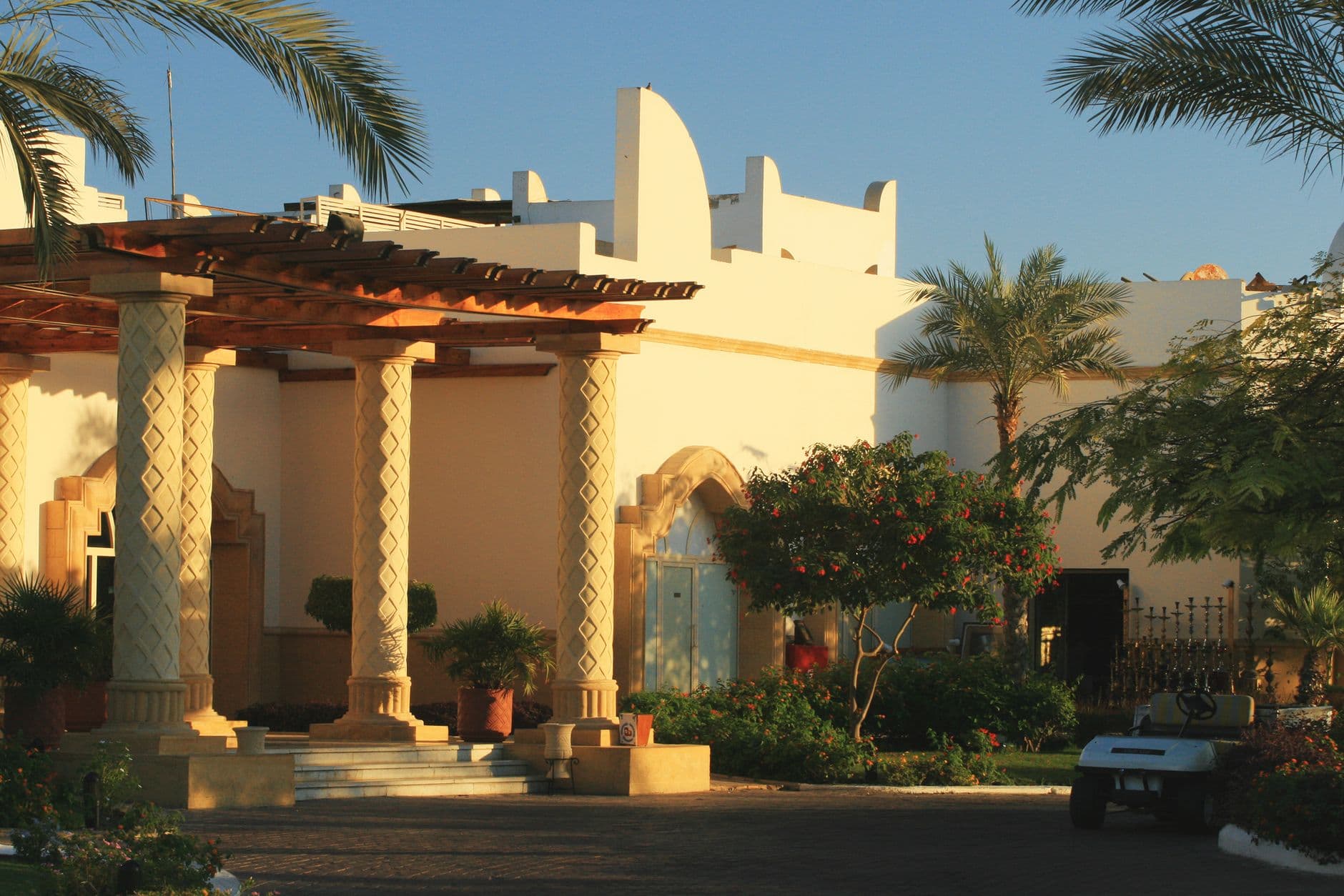
The idea of a canal linking the Red Sea to the Mediterranean is not a modern one. Pharaoh Senusret III ordered a canal connecting the Nile to the Red Sea around 1850 BC, not through the Sinai isthmus but via the Wadi Tumilat valley, making it one of the world's first artificial waterways for commercial navigation. The Romans used a version of it. It silted up repeatedly and was eventually abandoned. When Napoleon arrived in Egypt in 1798, his engineers actually surveyed the isthmus for a direct sea canal, concluded incorrectly that there was a ten-meter elevation difference between the two seas that would make it catastrophic, and the idea was shelved for another half century.
Ferdinand de Lesseps, a French diplomat with no engineering background, revived it. He built the canal between 1859 and 1869 using a combination of French investment, Egyptian state funding, and forced Egyptian labor. At peak construction, 1.5 million Egyptian workers were conscripted through the corvée system, an Ottoman-era form of compulsory labor that de Lesseps lobbied to maintain despite British opposition. Tens of thousands of Egyptian workers died during construction, from disease and overwork, and the Egyptian government under Khedive Ismail took on such crushing debt to fund its share that the country was effectively bankrupt by 1875. That bankruptcy was the specific mechanism by which Britain entered Egypt.
Ismail sold Egypt's 44 percent stake in the Suez Canal Company to the British government for 4 million pounds in 1875, a transaction orchestrated by Prime Minister Benjamin Disraeli using a personal loan from the Rothschild banking family because parliament was not in session to authorize public funds. Britain went from owning nothing in the canal to owning 44 percent of it overnight, through a private banking deal. Six years later, citing a nationalist uprising under Ahmed Urabi, Britain sent troops and has never entirely left the argument about whether it should have.
The Three Cities and What They Tell You
Ismailia: Where the Canal Was Lived
Ismailia is the city de Lesseps built for himself and his engineers, and it still carries that imprint. The old European quarter has wide tree-lined streets, colonial villas with iron balconies, and a general sense of a planned city that was designed to be comfortable for its administrators and inconvenient to ignore for everyone else. The de Lesseps House, the villa where the canal's builder lived during construction, still stands near the Timsah Lake waterfront. Inside, or as close as you can get depending on the day, you will find original furniture and the peculiar atmosphere of a man who understood that he was making history and arranged his domestic life accordingly.
The Ismailia Museum holds one of Egypt's less-visited but genuinely useful collections: artifacts from the Wadi Tumilat region that document the ancient canal predecessors, alongside documentation of the 1869 construction. What most visitors miss is the mosaic floor, dating to the Roman period, preserved on site, a reminder that the canal corridor has been strategically significant for two millennia before Suez Canal history in the British Egypt era became the dominant frame.
The Sweetwater Canal, which de Lesseps built parallel to the main canal to bring Nile water to workers and settlers, still runs through Ismailia. Locals use its banks for evening walks. It is one of the few places in the Canal Zone where you feel the human infrastructure of the project rather than just the industrial scale of it.
Port Said: Duty-Free, Defiant, and Underrated
Port Said was founded in 1859 as the northern terminus of the canal, the point where the Mediterranean meets the man-made channel. During the British occupation period, it became one of the most cosmopolitan ports in the world, with Greek, Italian, Jewish, Syrian, and Maltese communities all maintaining neighborhoods and commercial networks. The wooden Ottoman-style buildings with their covered balconies on the main streets near the port are what remain of that period, and they are genuinely worth an hour of slow walking.
The National Museum of Port Said covers the 1956 Suez Crisis, which the Egyptians call the Tripartite Aggression, with particular attention to the city's role. Port Said was bombed by British and French aircraft and then occupied by paratroopers. The Egyptian resistance during that period is documented with a specificity that Western accounts usually omit. The museum is not sophisticated by international standards, but it is honest in a way that official British accounts of the same events were not.
Port Said's lighthouse, built in 1869 for the canal's inauguration, was the first lighthouse in the world to be built from reinforced concrete. That fact surprises most visitors, who assume the technology was much later.
Suez City: The End of the Canal and the Start of a War
Suez city sits at the southern terminus where the canal meets the Gulf of Suez. It is the least architecturally interesting of the three canal cities and has been heavily rebuilt after the damage of the 1967 and 1973 wars, when it was almost entirely evacuated. The population of the entire Canal Zone, roughly 750,000 people, was displaced between 1967 and 1973, one of the largest forced civilian evacuations in Middle Eastern history outside of the Palestinian displacement, and one that rarely appears in Western accounts of the Arab-Israeli conflict.
For the Suez Canal history in the British Egypt context, the city's significance is as a boundary marker: this is where the British maintained their last formal military presence, at the Suez Canal Base, a garrison of 80,000 troops and the largest British military base in the world, until the 1954 Anglo-Egyptian Agreement negotiated by Nasser forced their withdrawal. They left two years before Nasser nationalized the canal and triggered the crisis that ended British military prestige permanently.
The Connections: Layers That Most Visitors Miss
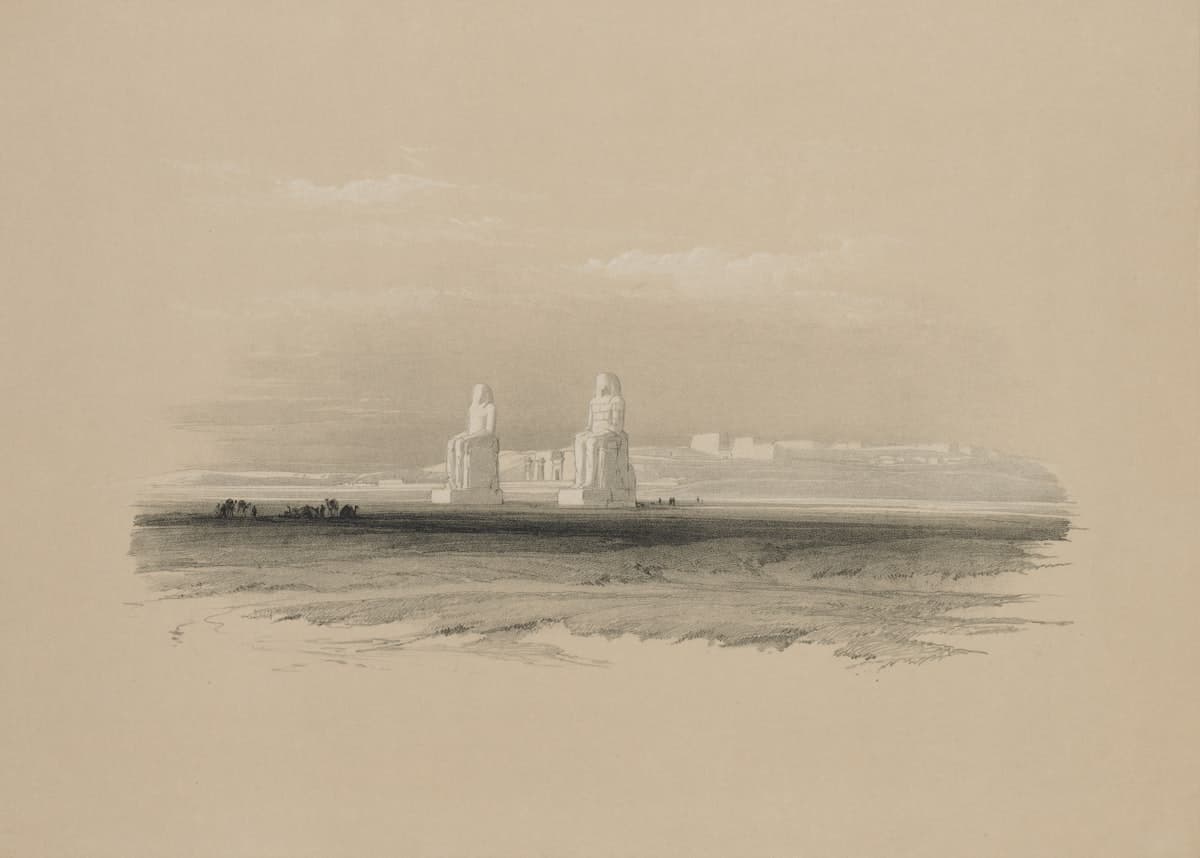
The 1956 Suez Crisis is usually taught as a Cold War event, a moment when the Americans and Soviets both pressured Britain and France to withdraw, demonstrating that European imperial power had a new ceiling. What this framing obscures is that Nasser nationalized the canal on July 26, 1956, deliberately choosing the anniversary of King Farouk's abdication four years earlier. The date was not operational. It was theatrical. Nasser broadcast the nationalization speech from Alexandria, and the codeword for Egyptian engineers to seize the canal installations was the name "de Lesseps," spoken aloud in the speech. When canal workers heard it on the radio, they moved.
The canal connects to Coptic history through the Wadi Tumilat, the route Moses is traditionally associated with in the Exodus narrative, and the route along which the ancient canal to the Red Sea ran. The monastery of Saint Anthony near the Red Sea coast, the oldest inhabited Christian monastery in the world, founded around 356 AD, is three hours from Suez city and almost no visitors to the canal zone make the connection. They should.
The Canal Zone's cotton economy, which Britain controlled through the Egyptian state from the 1880s onward, directly financed the construction of Cairo's downtown grid, the Khedival Cairo neighborhoods built in the 1860s to 1880s to look like Paris. The money extracted from Egyptian agricultural labor paid for the boulevards that Egyptian elites then used to perform European modernity. The irony was not lost on Egyptian nationalists of the early twentieth century.
Common Mistakes
Treating this as a single-day trip from Cairo. The canal zone is three distinct cities across 193 kilometers. One day gives you a window from a moving bus, not an understanding of a place. Stay at least one night in Ismailia.
Going only to Port Said. Port Said is the most accessible and most touristed of the three cities, which means it is also the least representative. Ismailia has more historical texture and significantly fewer other foreigners trying to take photos of the same things.
Taking the organized "Canal Tour" offered by Cairo travel agencies. These cost EGP 900 to 1,400 per person, run on a fixed schedule that prioritizes a boat crossing over actual history, and give you less time in any one place than arriving independently by bus and spending a morning on the Ismailia corniche with a guide you hire locally for EGP 200 to 300. Skip the packaged tour.
Missing the Ismailia Museum for the corniche boat ride. The ferryboat across the canal at Ismailia is popular with tourists because it puts a container ship in frame for photographs. The museum two blocks away holds two millennia of canal history and is almost always empty. Prioritize accordingly.
Assuming the canal is visible from everywhere. The canal is not easily seen from the road in most places. The best viewing points are the Ismailia corniche, the Port Said harbor front near the lighthouse, and specific observation points that locals know. Ask at your hotel.
Overlooking the 1973 war sites near Suez. The October War Museum in Cairo gets more visitors, but the actual crossing points on the canal near Suez city, where Egyptian forces used high-pressure water cannons to collapse the Israeli Bar-Lev Line sand fortifications in what military historians consider one of the most innovative river-crossing operations of the twentieth century, are marked and accessible. Most tourists to the canal zone do not know these sites exist.
Expecting a museum-quality presentation of British colonial history. Egyptian state museums present the British period through the lens of nationalist resistance, which is accurate but selective. Read Robert Tignor's "Modernization and British Colonial Rule in Egypt" before you go if you want the economic argument, and Khaled Fahmy's work for the Egyptian perspective grounded in Arabic sources. Arrive informed. The sites will make more sense.
Practical Tips
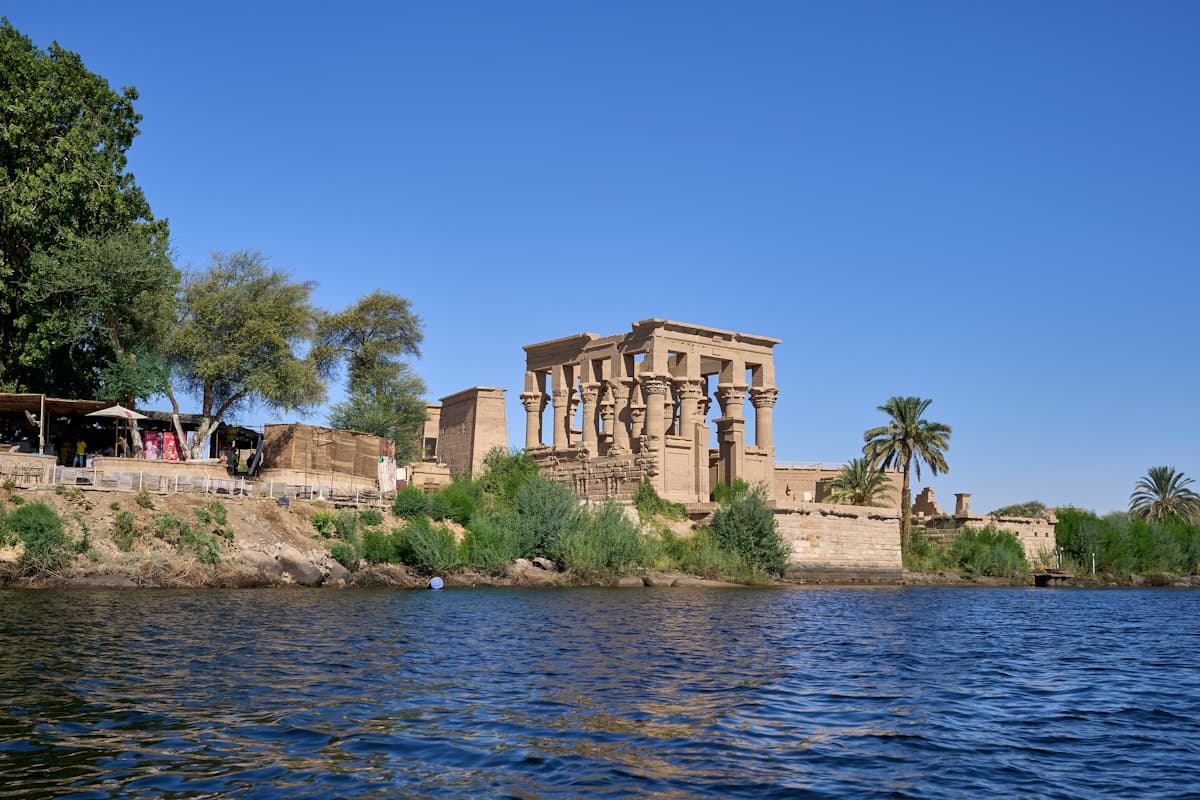
Ismailia is the logical base. Hotels range from EGP 600 to 1,800 per night. The Mercure Forsan Island on the lake is comfortable without being excessive, and the lake view means you are not looking at a highway.
Hire a local guide in Ismailia for the morning rather than using a Cairo-based operator. The Ismailia Tourist Authority can refer names, and local guides know which villas in the colonial quarter are accessible on a given day, which changes. Expect to pay EGP 250 to 400 for a half-day.
Friday mornings are quieter on the corniche. Friday midday everything related to tourism effectively stops for prayers and lunch. Plan museum visits for weekday mornings.
Bring a hat and water if visiting between May and September. The canal zone has no shade infrastructure oriented toward pedestrian visitors.
Photography of canal operations, specifically the movement of military or official vessels, is technically restricted. Photographing container ships from public areas is fine and no one will stop you. Use judgment near official installations.
The food in Ismailia is quietly excellent. The fish restaurants on the lake serve tilapia and mullet from Lake Timsah, and a full meal with bread and mezze costs EGP 150 to 250 per person. Do not eat at the tourist-facing restaurants near the bus station.
Frequently Asked Questions
The Weekly Dispatch
More on Egypt, every Friday.
Cultural depth and places most guides never mention.
No spam. Unsubscribe anytime.