Suez Canal History, British Egypt, and the Waterway That Broke Empires
Britain occupied Egypt to protect a canal it didn't build, didn't own, and couldn't afford to lose. The full story is stranger than the textbooks admit.

Audio Guide: Suez Canal History, British Egypt, and the Waterway That Broke Empires
Quick Facts
- Best time to visit
- October to April, temperatures 18 to 26 degrees Celsius. Summer heat adds nothing and the Canal Zone has no shade infrastructure worth mentioning.
- Entrance fee
- Canal Authority Museum Ismailia: EGP 50 (approx $1.60 USD). Ismailia National Museum: EGP 80 (approx $2.60 USD). Canal viewing areas: free.
- Opening hours
- Canal Authority Museum: Saturday to Thursday 9am to 2pm, closed Friday. Port Said Military Museum: daily 9am to 3pm except Tuesday.
- How to get there
- East Delta bus from Abbassia, Cairo: EGP 45 to 70, 1.5 hours to Ismailia. Private taxi Cairo to Ismailia: EGP 400 to 600. Trains to Ismailia and Port Said from Cairo: EGP 25 to 60 second class.
- Time needed
- Half day for Ismailia. Full day combining Ismailia museums and corniche. Two days for Ismailia plus Port Said seriously.
- Cost range
- Budget EGP 400 to 700 per day including transport and meals. Mid-range EGP 1,200 to 2,000 per day with a driver and hotel in Ismailia.
Quick Facts
Best time to visit: October to April, when temperatures in the Canal Zone sit between 18 and 26 degrees Celsius. Summer is punishing and adds nothing to the experience.
Entrance fees: The Suez Canal Authority Museum in Ismailia: approximately EGP 50 (about $1.60 USD). The Canal viewing areas in Port Said and Suez are free. The Ismailia National Museum: EGP 80 (about $2.60 USD).
Opening hours: Canal Authority Museum, Ismailia: Saturday to Thursday, 9am to 2pm. Closed Fridays. The waterway itself is visible from public corniche areas at all hours.
How to get there: From Cairo, buses to Ismailia depart East Delta terminal in Abbassia every 30 to 45 minutes; cost is approximately EGP 45 to 70. Travel time is roughly 1.5 hours. Taxis from Cairo to Ismailia run EGP 400 to 600 depending on negotiation. Trains are available to Ismailia and Port Said with fares from EGP 25 to 60 for second class.
Time needed: Half a day for Ismailia alone. A full day if you extend to Port Said's colonial waterfront. Two days if you want to trace the Canal Zone from Port Said to Suez seriously.
Cost range: Budget EGP 400 to 700 per day including transport and meals. Mid-range EGP 1,200 to 2,000 per day with a driver and hotel.
---
Britain invaded Egypt in 1882 to protect an investment it hadn't made in a canal it didn't build. The Suez Canal was conceived by a French diplomat, financed by French and Egyptian capital, and dug by Egyptian labor under conditions that historians increasingly describe as forced. When it opened in 1869, Britain owned not a single share. Four years later, a cash-strapped Khedive Ismail sold his 44 percent stake to the British government for 4 million pounds, and suddenly the canal became the artery of empire. The British stayed for 74 years. They left only when Gamal Abdel Nasser threatened to make staying politically impossible, and even then they came back once, disastrously, in 1956.
This is the story the Canal Zone tells if you know where to look.
Why This Place Matters
The Suez Canal did not simply connect the Mediterranean to the Red Sea. It erased approximately 7,000 kilometers from the Europe to Asia sea route by eliminating the need to round the Cape of Good Hope. When it opened, journey times from London to Bombay dropped from roughly 24 days by steam around Africa to about 17 days through the canal. The economic consequences restructured global trade within a decade.
What most visitors do not know is that the canal was not built through empty desert. The route followed, in significant stretches, ancient waterways that dated to Pharaonic times. Necho II, the 26th Dynasty pharaoh who ruled from 610 to 595 BC, began a canal connecting the Nile to the Red Sea via the Bitter Lakes. Darius I of Persia completed it. The canal fell into disuse, was reopened by Trajan, and silted up again by the 8th century AD. Ferdinand de Lesseps, the French diplomat who championed the modern canal, was not starting from scratch. He was reopening a corridor that Egyptian and Persian engineers had understood for two and a half millennia.
The British occupation that followed the canal's success had specific, measurable consequences for Egypt. Between 1882 and 1914, the cotton monoculture that British administrators encouraged stripped Egyptian agriculture of diversity it had maintained since antiquity. The irrigation networks that Lord Cromer's administration rebuilt were designed to maximize cotton yields for British mills, not food security for Egyptian farmers. The Suez Canal history and British Egypt are inseparable from this agricultural transformation, which shaped Egyptian poverty well into the twentieth century.
What You Will Actually See: Ismailia
Ismailia is the city that Ferdinand de Lesseps built to house the Canal Authority, and it remains the Canal Zone's most coherent urban artifact. The de Lesseps House, where the engineer lived during construction, still stands near the lake shore. It is modest by the standards of his ambition: a two-story colonial structure with shuttered windows and a garden that has seen better decades. Inside, the Canal Authority Museum holds original construction documents, maps, and photographs of the corvée labor system that the Egyptian government used to supply workers before international pressure forced its abolition in 1864.
The photographs are worth stopping for. The canal was dug largely by hand in its first years. Estimates suggest that between 1.5 and 2 million Egyptian workers were conscripted between 1859 and 1864, many working under conditions that included inadequate food and no pay. When forced labor was banned, de Lesseps replaced it with steam dredgers, which paradoxically accelerated the project. The canal took ten years and cost roughly twice its original budget.
The Ismailia corniche along Lake Timsah gives you something no photograph prepares you for: the sight of a container ship the length of four football fields gliding silently through what appears to be a flat suburban landscape. The ships are so large and the banks so low that they seem to be moving through the city itself. Locals drink tea and watch them pass with the same mild interest you might give to a bus. The cognitive dissonance is complete.
What You Will Actually See: Port Said
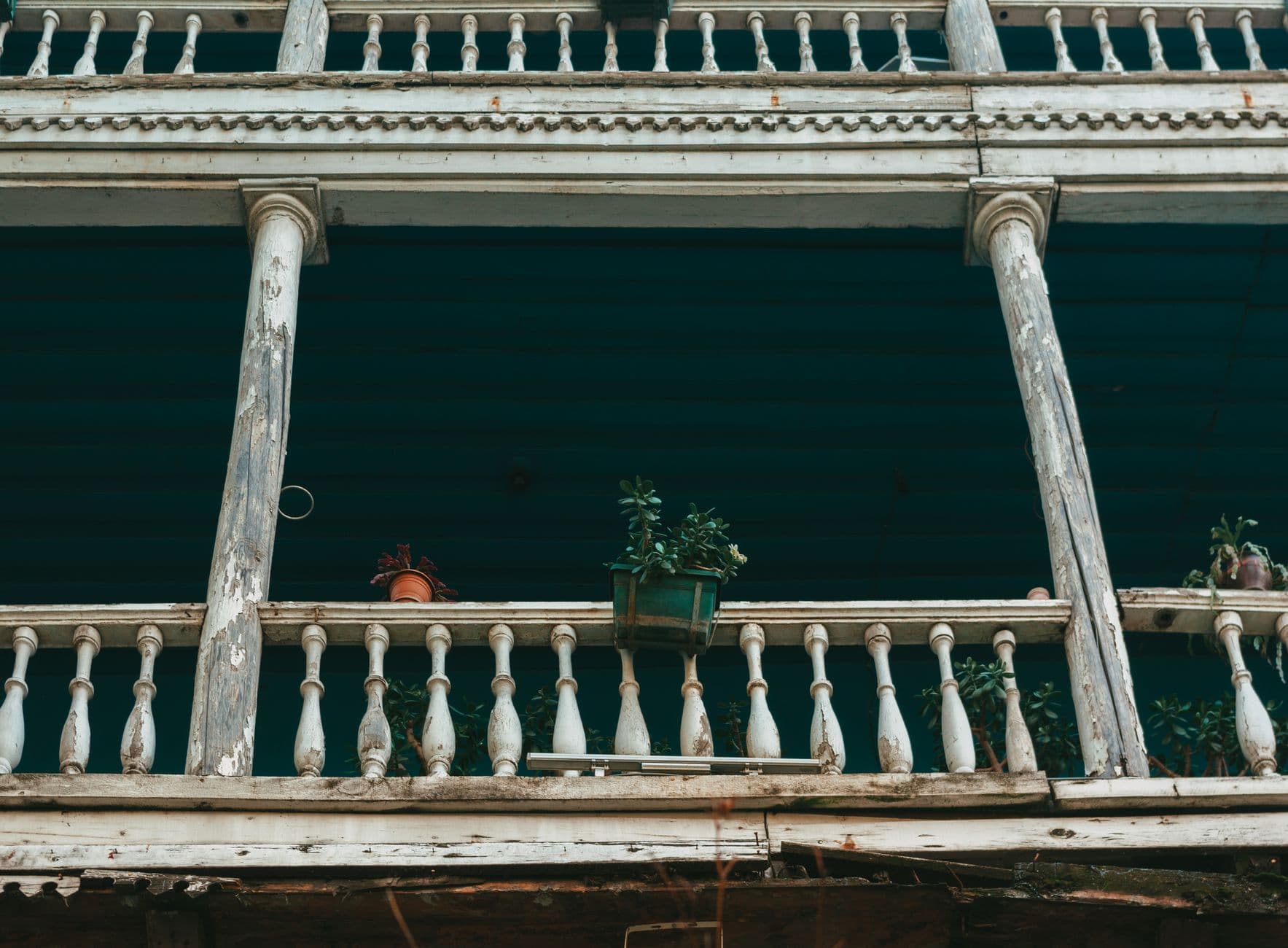
Port Said is the canal's Mediterranean face, and it is the most architecturally layered of the three Canal Zone cities. The colonial-era buildings along the waterfront are a specific type: wooden-balconied structures built on iron stilts over reclaimed land, designed by Levantine and European architects for a merchant class that was neither fully Egyptian nor fully foreign. The style has no precise name. Historians sometimes call it Canal Zone vernacular. Most of it is deteriorating.
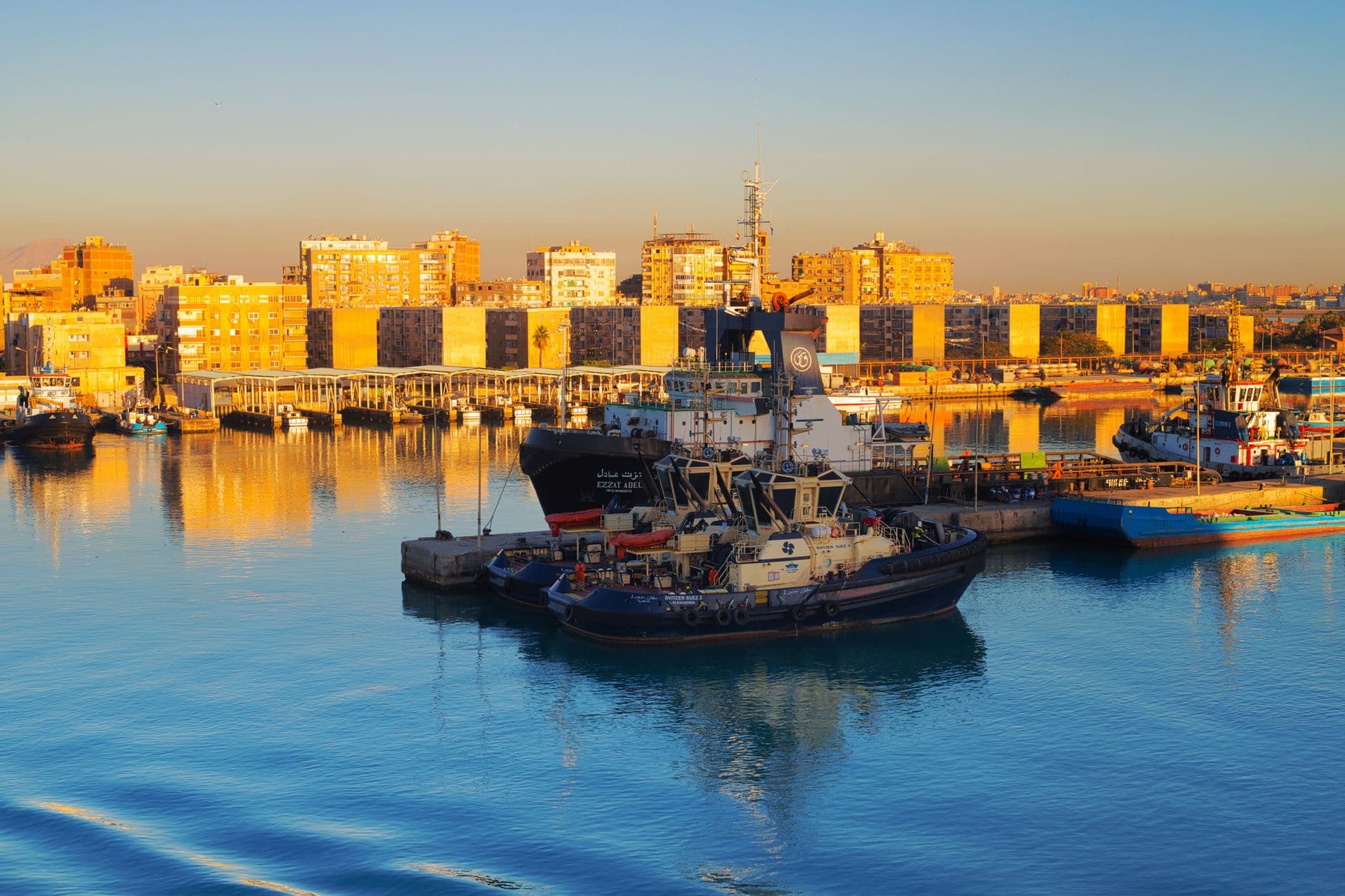
At the mouth of the canal, you can watch northbound and southbound convoys stage their passages. The canal operates as a one-way system with passing lanes at specific points, the main one being the Great Bitter Lake. A canal transit takes roughly 13 to 16 hours for a commercial vessel. The Canal Authority collects approximately $9 to $10 billion USD in transit fees annually, making it one of the most lucrative 193-kilometer stretches of water on earth.
Port Said's Military Museum covers the 1956 Suez Crisis with a directness that surprises visitors expecting official triumphalism. The exhibits document both the British and French airstrikes that followed Nasser's nationalization announcement on July 26, 1956, and the subsequent American pressure on Britain to withdraw. The fact that the United States threatened to sell British pound reserves unless Britain stood down is not widely taught in British schools. The museum makes it explicit. Nasser did not defeat Britain militarily in 1956. Eisenhower did it economically.
The Connections
The British presence in Egypt was never only about the canal, though the canal made it permanent. When General Wolseley defeated Urabi Pasha at the Battle of Tel el-Kebir in September 1882, the 13,000-strong Egyptian nationalist army collapsed in under an hour, partly because Wolseley marched his forces overnight across the desert to attack at dawn, an approach Urabi had not anticipated. The battlefield near Zagazig, roughly 80 kilometers west of Ismailia, is largely unmarked today, but it is the site where Egyptian sovereignty effectively ended for 74 years.
The canal also connects to Coptic history in a way that surprises most visitors. The ancient Pharaonic-era waterway that preceded the modern canal was, by the Byzantine period, called the Canal of the Commander of the Faithful after Amr ibn al-As reopened it in 641 AD to transport grain from Egypt to the Hejaz. The Coptic communities along the Nile delta had managed the canal's irrigation links for generations before the Arab conquest, and their administrative knowledge was essentially absorbed intact by the new Islamic administration. Egyptian infrastructure has always outlasted the empires that claimed it.
The connection to modern Egypt is Nasser's July 26, 1956 speech. He embedded the word "de Lesseps" as a code word in his speech that night, and when listeners heard it on state radio, it was the signal for Egyptian forces to seize the canal installations simultaneously. The speech lasted four and a half hours. The nationalization was complete before it ended.
Common Mistakes
Treating this as a canal-only trip. The Suez Canal history and British Egypt overlap most clearly in Ismailia, but the broader Canal Zone story requires Port Said and, if you have serious interest in the 1956 crisis, the Military Museum there. Visiting only one city gives you a partial picture.
Going on a Friday. The Canal Authority Museum in Ismailia is closed Fridays. Most travelers discover this at the door.
Expecting organized historical signage. The Canal Zone is not curated for foreign visitors. The de Lesseps House has minimal English-language interpretation. Bring a specific book. Robert Tignor's "Egypt: A Short History" covers the British period precisely. Robert McNamara's Suez chapter in any decent Cold War history prepares you for Port Said's Military Museum.
Paying for the Cairo day trip packages to the canal. Several Cairo operators sell Suez Canal day trips that spend two hours at a canal viewing area in Suez city, which has almost none of the colonial-era architecture or museum context of Ismailia or Port Said. The view of a ship from Suez is not materially different from the view from Port Said, and Port Said has significantly more to understand and examine. These packages cost EGP 800 to 1,200 per person and deliver very little.
Skipping the Bitter Lakes. Most tourists have never heard of the Great Bitter Lake, which sits midway along the canal. From 1967 to 1975, fourteen cargo ships were trapped there by the closure of the canal following the Six-Day War. The crews, from eight different countries, formed their own society, organized sporting competitions, printed stamps, and established a governing council. They called themselves the Yellow Fleet. When the canal reopened eight years later, only two of the ships were still seaworthy enough to complete their passage.
Underestimating distances. Port Said to Suez by road is nearly 200 kilometers and takes over two hours. They are connected by the canal, not by a convenient road that hugs it. Plan accordingly.
Ignoring Ismailia's residential neighborhoods. The streets immediately behind the corniche contain some of the finest intact Orientalist colonial architecture in Egypt: large villas built for Canal Authority officials between 1880 and 1920, with Moorish revival arches and tiled courtyards. None of them are museums. Most are inhabited or gradually being converted. They are disappearing. Walk through them now.
Practical Tips
The best base for a Canal Zone trip is Ismailia, not Port Said. Hotels in Ismailia are cheaper (EGP 600 to 1,200 per night for a clean mid-range option), the city is more walkable, and the lake views in the evening are genuinely worth having. Port Said has more nightlife and better seafood but the hotels on the waterfront cost considerably more.
For the canal viewing experience itself, the north end of the Ismailia corniche near the Yacht Club gives you the clearest sight lines and the strangest juxtaposition: ships moving through what looks like a residential street. Arrive between 9am and noon when northbound convoys are typically in transit.
Female travelers should note that Ismailia is considerably more relaxed than Cairo in terms of street attention. It is a Canal Authority company town with a long history of international presence and is generally straightforward to navigate alone.
If you read Arabic, the Canal Authority's own archive publication, available at the Ismailia museum shop, contains construction-era photographs that are not reproduced anywhere online. It costs EGP 120 and is worth every pound.
The Ahmed Hamdi Tunnel carries road traffic under the canal near Suez for free. Crossing it is a small experience that earns its minute: you pass under one of the world's most consequential stretches of water in a tunnel that took Egypt eleven years to build and opened in 1980. There is no plaque. There rarely is.
Frequently Asked Questions
The Weekly Dispatch
More on Egypt, every Friday.
Cultural depth and places most guides never mention.
No spam. Unsubscribe anytime.