Suez Canal History, British Egypt, and the Waterway That Changed Everything
Britain occupied Egypt in 1882 partly to protect a canal it didn't build and didn't own. The full story of that contradiction still runs through Ismailia today.

Quick Facts
- Best time to visit
- October through March. Canal-side humidity in summer is severe. Winter convoys transit in clear morning light ideal for photography.
- Entrance fee
- Ismailia National Museum: EGP 40 (approx $1.30 USD). De Lesseps House Port Said: EGP 60 (approx $2 USD). Canal viewing areas: free.
- Opening hours
- Museums open daily 9am to 3pm, generally closed Friday mornings. Canal viewing areas accessible at all hours, best before 9am for convoys.
- How to get there
- Bus from Turgoman Station Cairo to Ismailia: EGP 45 to 60, 90 minutes. Train from Ain Shams Station Cairo: similar time, EGP 30 to 45. Private taxi Cairo to Ismailia: EGP 400 to 500. Ismailia to Port Said by microbus: EGP 20 to 30, 90 minutes.
- Time needed
- Half day for Ismailia museums and corniche. Full day for both Ismailia and Port Said. Overnight in Ismailia recommended if combining both cities.
- Cost range
- Budget EGP 300 to 500 per day including transport, entry, and meals. Mid-range EGP 800 to 1,200 per day with waterfront hotel accommodation.
Suez Canal History, British Egypt, and the Waterway That Changed Everything
Britain did not build the Suez Canal. France and Egypt did, at a cost of roughly 120 million francs and the lives of an estimated 120,000 Egyptian laborers who died during the decade of construction between 1859 and 1869. Britain opposed the canal repeatedly, lobbied against it diplomatically, and then, the moment it opened and proved its staggering commercial value, maneuvered to buy controlling shares, occupied Egypt militarily in 1882, and effectively ran the country for the next 74 years. The canal that defined modern Egypt was built by Egyptians, financed by French capital, inaugurated by Empress Eugenie of France, and then handed to the British Empire through a combination of debt, diplomatic pressure, and gunboats. Gamal Abdel Nasser nationalized it in 1956. The reverberations of that decision still shape Egyptian identity in ways that no temple inscription ever could.
Quick Facts
Best time to visit: October through March. Ismailia and Port Said are comfortable in winter. The summer humidity on the canal corridor, between two bodies of water with minimal shade, is not a character-building experience. It is simply unpleasant.
Entrance fees: The Suez Canal Authority Museum in Ismailia charges approximately EGP 40 (around $1.30 USD). The De Lesseps House Museum in Port Said charges approximately EGP 60 (around $2 USD). Neither requires advance booking. The canal itself is free to observe from public viewing areas along the banks in Ismailia and Port Said.
Opening hours: Museums generally open 9am to 3pm, closed Fridays. The canal viewing areas along the Ismailia corniche are accessible at any hour, though morning light before 9am is ideal for photography and for watching northbound convoys transit.
How to get there: From Cairo, buses run from Turgoman Bus Station to Ismailia every hour from 6am, approximately EGP 45 to 60 (around $1.50 to $2 USD), journey time 90 minutes. Taxis from Cairo run around EGP 400 to 500 ($13 to $17 USD) for a private car. Port Said is a further 90 minutes by microbus from Ismailia, EGP 20 to 30. Trains from Cairo to Ismailia depart from Ain Shams, not Ramesses Square station, which confuses most visitors.
Time needed: Ismailia alone needs half a day. Port Said adds another half day. The full Suez Canal historical circuit, including the Canal Authority Museum, the De Lesseps House, the Martyrs Monument in Port Said, and the waterfront viewing areas in both cities, is comfortably a full day, or one night in Ismailia with an early departure.
Cost range: Budget EGP 300 to 500 per day including transport, museum entry, and meals. Mid-range EGP 800 to 1,200 per day if staying at one of the reasonable hotels along the Ismailia waterfront.
Why This Place Matters
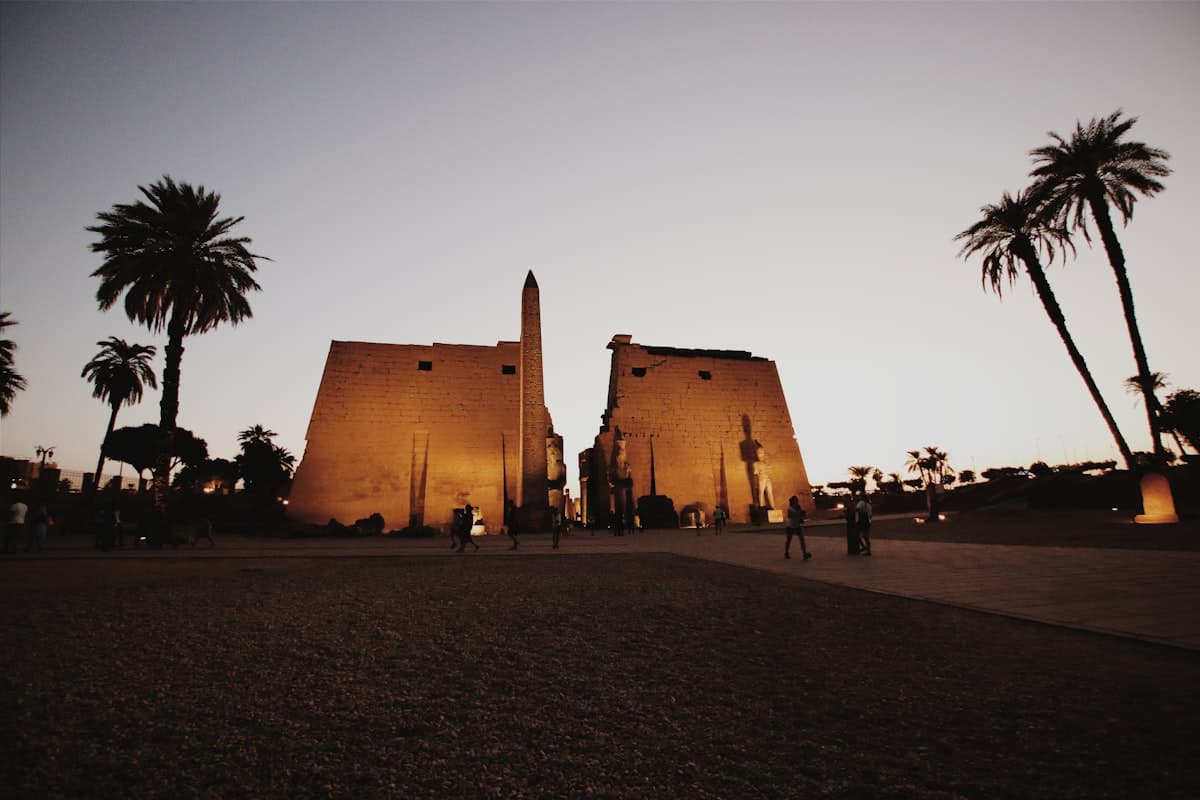
The Suez Canal is 193 kilometers long and connects the Mediterranean at Port Said to the Red Sea at Suez. Before it opened on November 17, 1869, any ship traveling from London to Bombay had to sail around the entire African continent, a journey of roughly 10,500 nautical miles. The canal cut that to approximately 5,900 nautical miles. The economic consequence was immediate and seismic: freight costs collapsed, trade volumes surged, and every maritime empire on earth recalculated its strategic priorities around this narrow strip of Egyptian desert.
What most visitors to Egypt do not know is that the canal is not the first attempt to connect the two seas. A canal between the Nile and the Red Sea was dug and abandoned at least four times in antiquity. Pharaoh Senusret III attempted it around 1850 BC. Necho II of the 26th Dynasty began construction again around 600 BC but stopped after an oracle warned that the work would benefit foreigners. Darius I of Persia completed it around 510 BC, and it was still functioning when Herodotus visited. The Romans reopened it under Trajan around 100 AD. Each version followed a different alignment, none of them the direct sea-to-sea route Ferdinand de Lesseps eventually chose. The idea of a Suez crossing is older than the Roman Empire. It just took the age of steam to make it economically irresistible.
The British occupation of 1882 is where the Suez Canal history and the political history of modern Egypt become inseparable. When Khedive Ismail, the ruler who presided over the canal's opening and threw an inauguration party so extravagant it included commissioning Verdi to write an opera (Aida), bankrupted Egypt and was deposed by the Ottoman Sultan in 1879, Egypt's debts fell to Anglo-French creditors. When nationalist army officer Ahmed Urabi led a popular uprising against foreign control in 1882, Britain sent a naval fleet, bombarded Alexandria, landed troops at Ismailia, and defeated Urabi at the Battle of Tel el-Kebir in September 1882. The "temporary" occupation lasted until 1956.
What You Will Actually See in Ismailia
Ismailia is one of the stranger cities in Egypt. It was designed and built from scratch during canal construction as a European administrative enclave in the middle of Egyptian desert, and parts of it still look like a provincial French town that lost its way and ended up on the wrong side of the Mediterranean. The streets around the De Lesseps district are lined with bougainvillea, European-style villas, and wide boulevards that were explicitly built to house the canal company's foreign staff apart from the Egyptian workers they employed.
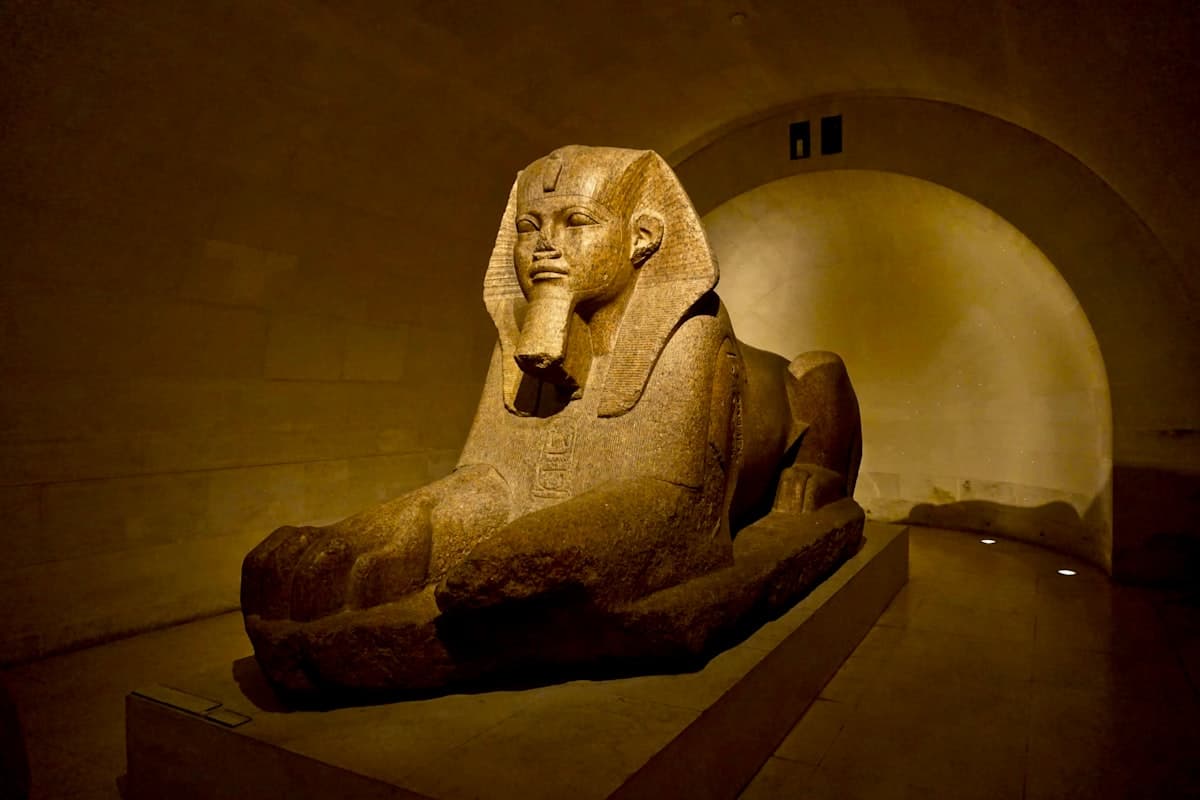
The Ismailia National Museum sits beside the banks of the Sweetwater Canal, a 19th-century freshwater channel built specifically to supply drinking water to canal construction workers, since the Suez region has no natural freshwater. The museum holds a remarkably good collection for its size: Pharaonic artifacts including stelae from the Wadi Tumilat that document the ancient canal routes, Greco-Roman objects, and exhibits covering the construction and successive nationalizations of the waterway. The sphinx outside the entrance was discovered in the garden of the De Lesseps House itself.
The De Lesseps House, built for Ferdinand de Lesseps, the French diplomat who organized the canal project, still stands near the waterfront. De Lesseps was neither an engineer nor a financier but a promoter of genius, a man who convinced two governments and thousands of investors to fund a project that every British expert of the era declared technically impossible. His statue stood in Port Said until 1956, when Nasser had it removed the day after announcing nationalization. De Lesseps himself died in 1894, having later attempted to build a sea-level Panama Canal with the same approach and failing catastrophically, an engineering disaster that helped bring down the French Third Republic in a corruption scandal.
Port Said and the Weight of 1956
Port Said sits at the Mediterranean end of the canal, and it carries the weight of 1956 more visibly than anywhere else in Egypt. When Nasser announced the nationalization of the Suez Canal Company on July 26, 1956, Britain, France, and Israel launched a coordinated military attack on Egypt in October of that year. Britain bombed Port Said. British and French paratroopers landed here. Egyptian civilians fought back with whatever they had, and the city took significant damage before international pressure, led by the United States and the Soviet Union in one of the Cold War's stranger diplomatic alignments, forced Britain and France to withdraw.
The Martyrs Monument in Port Said commemorates the Egyptians who died resisting the 1956 invasion. It is not on most tourist itineraries, and it should be. This is where modern Egyptian nationalism found its defining moment. Nasser's nationalization speech, delivered in Alexandria and broadcast across the Arab world, was three hours long, and embedded within it was a code word: every time Nasser said the name "de Lesseps", Egyptian engineers already positioned throughout the canal simultaneously seized control of its operations from the company's foreign staff. It was one of the most precisely choreographed acts of political theater in modern history, and it worked. The canal has been Egyptian-run ever since.
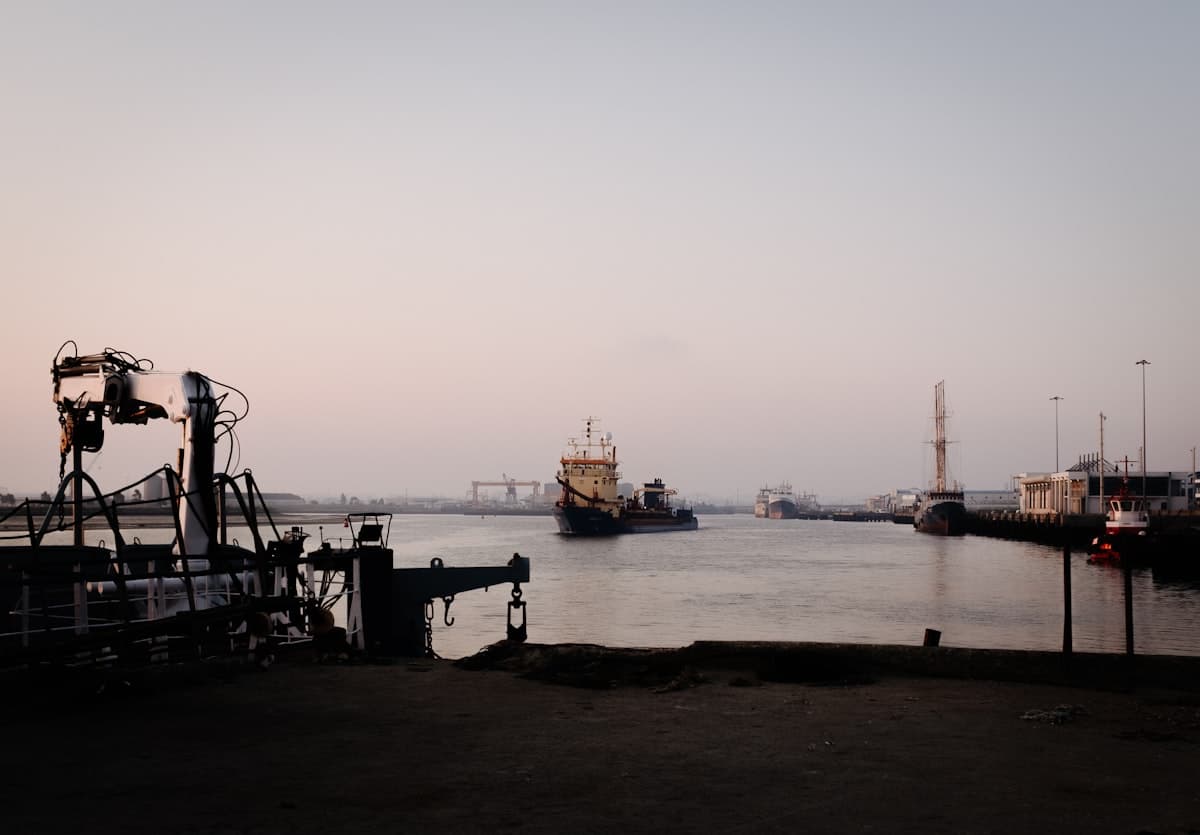
From the Port Said waterfront you can watch container ships, tankers, and bulk carriers transit slowly northward into the Mediterranean. The vessels are enormous at close range, close enough that you can read their names and their ports of registry. Watching a supertanker pass 50 meters from where you are standing, in a channel cut through desert that was still intact desert in 1858, is a specific kind of disorienting that no museum exhibit fully replicates.
The Connections
The canal corridor does not exist in isolation from the rest of Egyptian history. The Wadi Tumilat, the ancient dried-up Nile branch that points eastward toward Ismailia, is almost certainly the route the biblical Israelites took during the Exodus, if the Exodus occurred as a historical event. Egyptian records from the 19th Dynasty describe the closing of the eastern border gates to prevent the escape of Semitic laborers, language that maps uncomfortably well onto the biblical account.
The city of Suez itself, at the southern end of the canal, was built on the site of ancient Clysma, a Roman port that was the eastern terminus of the Trajan Canal. When Arab armies conquered Egypt in 641 AD, they briefly reopened the ancient canal to ship grain from Egypt to Arabia, but Caliph al-Mansur had it blocked again in 767 AD to cut off supplies to a Medinan revolt. The idea of strategic canal control is not a British invention. It is a consistent theme across four thousand years of Egyptian history.
In Cairo, the connection to the canal appears in unexpected places. The Abdin Palace district, built by Khedive Ismail using revenue he expected the canal to generate, was where the British resident essentially governed Egypt for 74 years while nominally deferring to the Khedive. The opulence of Ismail's Cairo, including the Opera House built for the Aida premiere, the new boulevards modeled on Haussmann's Paris, was financed by canal debt that eventually cost Egypt its sovereignty.
Common Mistakes
Visiting only from Cairo as a rushed day trip. The bus schedule back from Ismailia to Cairo becomes difficult after 5pm. If you are serious about seeing both Ismailia and Port Said, either overnight in Ismailia or plan a dedicated two-day circuit. Rushing between the two cities and catching an evening bus back to Cairo means you will see nothing properly.
Skipping Port Said because it sounds industrial. Port Said has a specific atmosphere, a colonial waterfront architecture that survived partly intact, the canal mouth itself, the Martyrs Monument, and the feeling of a city that genuinely fought back against a military power and won. It is worth the extra 90 minutes from Ismailia.
Paying for the Suez Canal boat cruise tours advertised in Cairo. Several operators sell canal cruise excursions at prices between EGP 800 and EGP 1,500 per person. You can watch canal traffic for free from the Ismailia corniche or the Port Said waterfront. The boat tours add nothing except the sensation of being on the water, and the canal banks are not scenic in the landscape sense. Save the money.
Assuming the museums are professionally curated. They are not. The Ismailia National Museum is genuinely interesting but labeling is inconsistent, some displays have no English translations, and the chronology requires some prior knowledge to follow. Read about the canal's construction history before you go, not after.
Visiting on a Friday morning. Both museums close Friday morning for prayers and reopen in the afternoon if they reopen at all. Saturday is the safest day for the full museum circuit.
Missing the morning convoy. Northbound ships transit through Ismailia in convoy, typically passing between 6am and 10am. If you want to watch the ships, be on the corniche by 7am. By late morning the canal often appears empty, which is disorienting after the morning spectacle.
Expecting Ismailia to feel Egyptian in the way Luxor or Cairo feel Egyptian. It does not, and that is precisely what makes it interesting. It is a purpose-built colonial city that Egyptians then inhabited and made their own. The contrast between the European residential grid and the organic street life that now runs through it is the story of modern Egypt in compressed form.
Practical Tips
Ismailia has a handful of reasonable hotels near the waterfront. The Mercure Forsan Island, on a small island in Lake Timsah, runs around EGP 1,200 to 1,800 per night and offers canal views. Budget travelers can find clean guesthouses in the city center for EGP 300 to 500.
For food, the fish restaurants along the Ismailia waterfront serve fresh tilapia and mullet from Lake Timsah. Order the grilled tilapia with rice and salad. A full meal costs around EGP 80 to 120. Port Said is known throughout Egypt for its seafood and for a specific kind of local halawa (sesame candy) that is sold in nearly every shop near the waterfront.
Female travelers should be aware that Ismailia is more relaxed about dress codes than Upper Egypt but slightly more conservative than Cairo's downtown. Standard travel-modest clothing is appropriate.
Bring a hat, water, and sunscreen. The canal viewing areas in both cities have minimal shade and the reflective water intensifies the sun significantly.
For the Suez Canal history in documentary form, the Egyptian Canal Authority maintains a small display at the canal offices in Ismailia that is technically for official visitors but is usually accessible if you ask politely at the gate. The staff are accustomed to curious travelers and are often willing to explain the current operation of the canal, including how the 2021 Ever Given grounding affected transit schedules for weeks.
Frequently Asked Questions
The Weekly Dispatch
More on Egypt, every Friday.
Cultural depth and places most guides never mention.
No spam. Unsubscribe anytime.