Suez Canal History, British Egypt and the Waterway That Changed the World
Britain occupied Egypt in 1882 over a canal it didn't build and didn't own. The fallout shaped the modern Middle East. Here's how to read it all on the ground.

Quick Facts
- Best time to visit
- October to March. Canal humidity makes summer visits uncomfortable. October and November offer the best light and manageable crowds.
- Entrance fee
- Suez Canal Authority Museum (Ismailia): EGP 40 (approx $1.30 USD). De Lesseps House Museum: EGP 60 (approx $2 USD). Canal embankment: free. Port Said National Museum: EGP 50 (approx $1.60 USD).
- Opening hours
- Suez Canal Authority Museum: Tuesday to Sunday, 9am to 4pm, closed Monday. De Lesseps House: Saturday to Thursday, 9am to 3pm. Port Said National Museum: Tuesday to Sunday, 9am to 4pm.
- How to get there
- East Delta bus Cairo to Ismailia: EGP 60 to 80 from Turgoman station, 90 minutes. Service taxi Cairo to Port Said: EGP 80 to 100 per person. Private driver Cairo return: EGP 600 to 900. No convenient train for day trips.
- Time needed
- Ismailia alone: 4 to 5 hours minimum. Port Said: 3 hours. Combined day trip from Cairo is possible but rushed. Overnight in Ismailia recommended.
- Cost range
- Budget EGP 400 to 600 per day including Cairo transport. Mid-range EGP 1,200 to 2,000 including Ismailia hotel and restaurant meals.
Quick Facts
Best time to visit: October to March, when Port Said and Ismailia temperatures sit between 15 and 22 degrees Celsius. Summer along the canal is genuinely punishing, high humidity off the water and no shade on the embankments.
Entrance fees: The Suez Canal Authority Museum in Ismailia: EGP 40 (approx $1.30 USD). The Ferdinand de Lesseps statue area and canal viewing embankment in Port Said: free. The De Lesseps House Museum in Ismailia: EGP 60 (approx $2 USD). Most of what matters here costs almost nothing.
Opening hours: Suez Canal Authority Museum: Tuesday to Sunday, 9am to 4pm, closed Mondays and public holidays. The canal embankment in Port Said is accessible at all hours.
How to get there: From Cairo's Turgoman bus station, East Delta buses to Ismailia run every 30 to 45 minutes from around 6am, journey time 90 minutes, fare approximately EGP 60 to 80 (under $3 USD). Service taxis from Cairo to Port Said depart from the same area, fare EGP 80 to 100 per person. A private car from Cairo costs roughly EGP 600 to 900 return through a local driver. The canal is not well served by rail for day trips.
Time needed: Ismailia alone deserves four to five hours. Port Said adds another three. Combined, this is a full day with an early start, or a comfortable overnight.
Cost range: Budget EGP 400 to 600 per day including transport from Cairo. Mid-range EGP 1,200 to 2,000 including a decent hotel in Ismailia and a proper lunch.
---
The British Empire occupied Egypt in 1882. The stated reason was financial disorder and a nationalist military revolt. The real reason was 44 percent: Britain's shareholding in the Suez Canal Company, purchased in 1875 by Prime Minister Disraeli for 4 million pounds from a debt-stricken Khedive Ismail, using money borrowed overnight from the Rothschild banking family because Parliament was in recess. No vote. No debate. A country bought a stake in another country's infrastructure in a single evening, and the consequences took a century to unwind.
Today you can stand on the embankment at Ismailia, watch a container ship the length of four football fields slide silently past at close range, and feel the full weight of that transaction.
Why This Place Matters
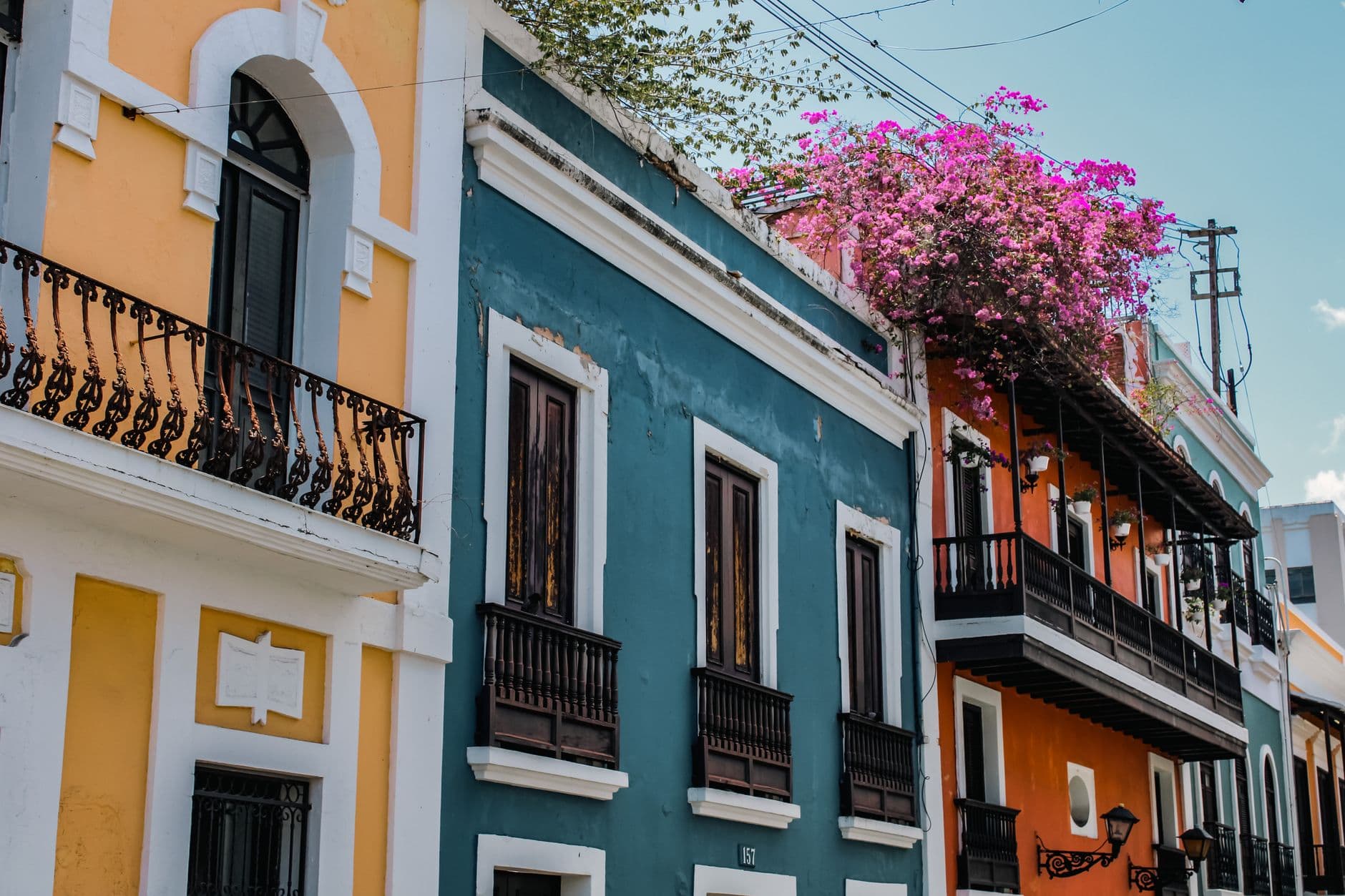
The canal did not begin with the British, and it did not begin with Ferdinand de Lesseps either, though his statue in Port Said would have you think otherwise. Ancient Egyptians dug a precursor canal connecting the Nile to the Red Sea as early as the reign of Senusret III, around 1850 BC. The Persian King Darius I restored it in the sixth century BC. The Romans used it. It silted up, was reopened, silted up again. When Napoleon arrived in Egypt in 1798, his engineers surveyed the isthmus for a modern canal and miscalculated the elevation difference between the two seas by ten meters, concluding incorrectly that a canal without locks was impossible. That error delayed the project by fifty years.
De Lesseps, a French diplomat with no engineering background, finally pushed the Suez Canal through between 1859 and 1869 using a combination of political connections, Egyptian forced labor called corvée (approximately 1.5 million Egyptian workers passed through the construction camps, with an estimated 125,000 dying from disease and exhaustion), and a financial structure that gave Egypt 44 percent of shares but almost no operational control. When Egypt's Khedive needed cash in 1875, those shares went to London, and the stage was set for the occupation that followed seven years later.
Understanding this sequence is the entire point of coming here. The canal is not just an engineering achievement. It is the physical origin story of modern colonialism in Egypt, and everything that followed: the 1919 Revolution, the Free Officers' coup of 1952, Nasser's nationalization of the canal in 1956, the Suez Crisis that ended Britain and France as imperial powers, and Egypt's slow reconstruction of sovereignty over its own geography.
Ismailia: The Colonial City That Time Didn't Quite Erase
Ismailia was built from scratch as the canal's administrative headquarters, and it shows. The ville européenne (European quarter) laid out in the 1860s survives almost intact: wide tree-lined boulevards, colonial villas with covered verandas, a freshwater lake on one side and the canal on the other. It looks like a suburb of Lyon that somehow ended up in the Egyptian desert, which is precisely what it was designed to be.
The Suez Canal Authority Museum sits in the European quarter and contains something most visitors overlook entirely: the original survey maps and engineering drawings from the construction period, showing the corvée labor camps in detail. There is a section documenting the 1869 opening ceremony attended by Empress Eugénie of France, Emperor Franz Joseph of Austria, and Crown Prince of Prussia, a party so extravagant that Khedive Ismail essentially bankrupted Egypt hosting it. The opera house he built in Cairo for the occasion (Verdi was commissioned to write Aida for the opening, though it premiered two years late) cost more than the Egyptian national education budget for three years.
The De Lesseps House, now a museum, is a modest colonial villa where the canal's architect stayed during construction. The more interesting detail is what it tells you about the British presence that came after: the occupation's administrative nerve center moved to Cairo, but the canal zone itself remained under British military protection until 1956, a strip of foreign soldiers on Egyptian soil for 74 years.
Walk the embankment in the evening. Ships pass at eye level, close enough to read the names on their hulls. The canal is 193 kilometers long, 24 meters deep, and approximately 205 meters wide at the waterway surface. A ship transit takes between 12 and 16 hours. Watching one pass in silence, moving at a mandatory speed of 14 kilometers per hour, is one of the stranger experiences Egypt offers.
Port Said: Where the Canal Meets the Mediterranean
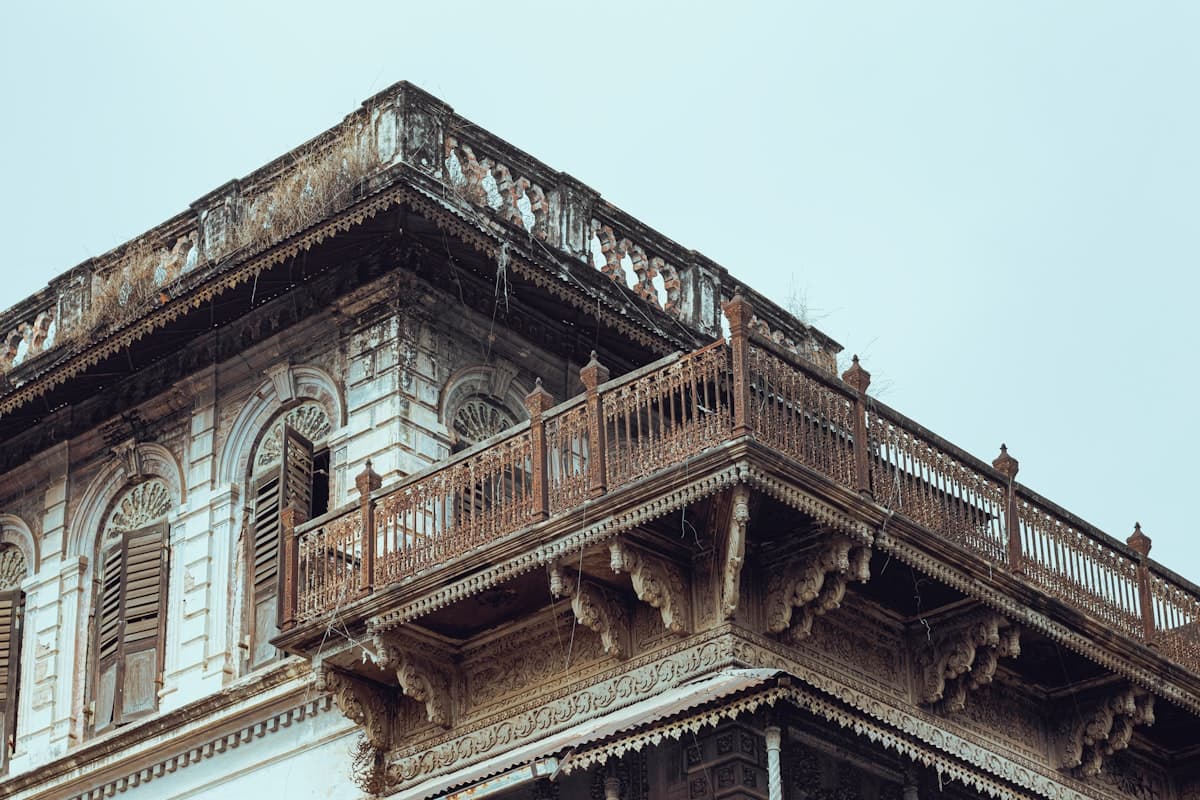
Port Said sits at the canal's northern entrance, and it feels different from Ismailia in the way a port city always feels different from an administrative one: louder, more chaotic, more honest about what it is. The city was founded simultaneously with canal construction in 1859 and was initially built on sand dredged from the isthmus. The entire northern district floats, essentially, on excavated desert.
The statue of Ferdinand de Lesseps that stands at the canal entrance is a replica. The original was pulled down during the Suez Crisis in 1956, a detail the tourist information boards do not mention. The current version was erected decades later as a gesture of Franco-Egyptian reconciliation, which tells you something about how carefully Egypt now manages the canal's symbolic history.
The Port Said National Museum has a floor dedicated to the Suez Crisis, including photographs of British and French paratroopers landing on the city in November 1956 and documentation of the bombardment that killed hundreds of civilians. This is where the Suez Canal history and British Egypt narrative becomes visceral rather than abstract: you are looking at photographs of a city being bombed by the country that had occupied it for 74 years, after it had nationalized the canal that Egyptian workers died building. The museum is rarely busy. It should not be skipped.
Port Said also has one of the best preserved collections of late nineteenth and early twentieth century colonial architecture in Egypt, largely because the city was designated a duty-free zone in 1976 and investment went into commerce rather than demolition. The wooden latticework balconies (mashrabiya adapted for a European vernacular) on the corniche buildings represent a genuine architectural hybrid that developed nowhere else.
The Connections
The canal cannot be read in isolation from Cairo. Khedive Ismail's financial ruin funding canal construction and its opening ceremonies directly led to the British debt commission that supervised Egyptian finances from 1876, which led to the nationalist resentment that produced the Urabi Revolt of 1879 to 1882, which gave Britain its pretext for military occupation. The neighborhood of Garden City in Cairo, where the British residency stood, was laid out by the occupation administration. The Abdeen Palace ceremonies you might visit in central Cairo were shaped by the political theatre of Khedival Egypt performing sovereignty it had already surrendered.
The canal also connects to Upper Egypt in a way that surprises most visitors. The corvée labor that built the Suez Canal was drawn heavily from the fellahin of Upper Egypt, the same rural population that had supplied forced labor for Pharaonic monuments 3,000 years earlier. The continuity is not metaphorical. The administrative mechanisms were genuinely similar: village quotas, conscripted men, distant overseers. When the labor reforms that ended corvée were finally passed in 1882, they were passed by the British, who used the reform as both genuine humanitarian policy and propaganda against the Khedival government they had just overthrown.
Nasser's nationalization speech on July 26, 1956 was delivered in Alexandria and was itself a coded signal: he worked the name of Ferdinand de Lesseps into the speech, and when Egyptian intelligence officers heard that name, it was their cue to seize the canal installations simultaneously. The word 'de Lesseps' was the go signal. A colonial-era name used to undo colonial-era control.
Common Mistakes
Treating this as a day trip from Cairo without a plan. The canal zone spans three cities: Suez, Ismailia, and Port Said. Trying to cover all three in a day means you race through each. Pick one city and do it properly. Ismailia is the best choice for history, Port Said for architecture and the crisis narrative.
Going to Suez city expecting canal atmosphere. Suez is an industrial port city with heavy traffic and almost no visitor infrastructure. The Suez Canal Authority headquarters is here, but it is not open to the public. The southern entrance to the canal is not walkable or scenic. Most travel content about the canal that is illustrated with dramatic shipping photography was shot in Ismailia or Port Said. Suez city itself is not worth the trip for this purpose.
The Canal Panorama Experience in Port Said. This is a paid boat tour marketed to tourists at approximately EGP 300 to 400 per person that circles the canal entrance for forty minutes. You can see more, for longer, for free from the public embankment. Skip it.
Missing the Port Said National Museum because it looks closed. It often has erratic hours and the entrance is not well signed. It opens at 9am and the guards are accustomed to nudging it open slightly late. Knock. It is nearly always staffed. This is one of the more honest museums in Egypt about the British occupation period and is worth twenty minutes of patience.
Assuming the Canal Authority Museum in Ismailia has English labeling. It mostly does not. Consider hiring a local guide through your Ismailia hotel for two to three hours, cost approximately EGP 200 to 350, who can translate the engineering maps and labor documentation. The context they provide changes the experience entirely.
Not walking the European quarter at dusk. The colonial architecture in Ismailia photographs badly in midday light and looks completely different in the hour before sunset, when the bougainvillea on the villas catches the last light and the canal embankment empties out. This is when the place tells you what it is.
Confusing the new canal expansion with the old one. Egypt opened a parallel canal channel in 2015 at a cost of $8 billion USD, funded by public subscription bonds sold to Egyptian citizens in a single week. It reduced average transit waiting times from 18 hours to 11 hours. The 2015 channel is north of Ismailia. The historically significant original channel, built 1859 to 1869, is what you came for. They are not the same thing and run parallel in places.
Practical Tips
The Ismailia embankment gets genuinely busy on Friday afternoons with Egyptian day-trippers from Cairo. Go on a weekday if you can. Tuesday to Thursday mornings are the quietest.
Book your East Delta bus from Cairo's Turgoman station at least an hour before departure in summer. In winter, just show up. The journey is comfortable and air-conditioned.
Ismailia has two good hotels in the mid-range: the Mercure Forsan Island sits on an island between the Sweet Water Canal and Lake Timsah, and costs approximately EGP 1,800 to 2,500 per night. The canal views from the upper floors are genuinely worth paying for. Budget accommodation in the city center starts around EGP 400 to 600 per night and is adequate.
For food: the fish restaurants along the Lake Timsah corniche in Ismailia serve tilapia, mullet, and canal shrimp at prices aimed at Egyptian families rather than tourists. A full lunch with beer costs EGP 200 to 350 per person. Avoid the tourist-menu places near the De Lesseps House.
If you are combining this with a broader Egypt trip focused on Suez Canal history and British Egypt, the logical sequence is: Cairo (one day covering the British residency site in Garden City, the Egyptian Museum's British-era acquisitions, and the Abdeen Palace) followed by Ismailia (one day) followed by Port Said (one day). Three days gives you a coherent narrative arc from occupation to crisis to independence.
Frequently Asked Questions
The Weekly Dispatch
More on Egypt, every Friday.
Cultural depth and places most guides never mention.
No spam. Unsubscribe anytime.