Suez Canal History, British Egypt, and the Waterway That Remade the World
Britain occupied Egypt in 1882 to protect a canal it didn't build and didn't own. The full story is stranger than that.

Quick Facts
- Best time to visit
- October to March. The Delta humidity in July and August is genuinely punishing, and October specifically brings sharp light, manageable temperatures, and peak shipping traffic on the canal.
- Entrance fee
- De Lesseps House and Suez Canal Museum in Ismailia: approximately EGP 60 each (under $2 USD). Port Said National Museum: EGP 100 (approx $3.30 USD). Canal embankment viewing areas: free.
- Opening hours
- Ismailia museums: Tuesday to Sunday 9am to 4pm, closed Mondays. Port Said National Museum: Daily 9am to 4pm. Arrive by 3pm to allow adequate time before closing.
- How to get there
- Bus from Cairo Turgoman Station to Ismailia: EGP 60 to 90, approximately 1.5 hours. Service taxi Ismailia to Port Said: EGP 30 to 50 per person, 1 hour. Private car from Cairo for full circuit: EGP 1,200 to 1,800.
- Time needed
- Ismailia alone: one full day minimum. Port Said: half day. Combined canal zone trip: two days is comfortable and recommended.
- Cost range
- Budget EGP 400 to 700 per day including transport, food, and entry. Mid-range with private driver and Ismailia hotel: EGP 1,500 to 2,500 per day.
Quick Facts
Best time to visit: October to March, when the Delta heat is tolerable and the light over the canal is sharp and clear.
Entrance fees: The Suez Canal Authority Museum in Ismailia costs approximately EGP 60 (under $2 USD). Port Said National Museum runs EGP 100 (roughly $3.30 USD). The canal itself, meaning the embankment and viewing areas, is free and publicly accessible.
Opening hours: Ismailia Museum: Tuesday to Sunday, 9am to 4pm, closed Mondays. Port Said National Museum: Daily 9am to 4pm.
How to get there: From Cairo, buses to Ismailia depart from Turgoman Station roughly every 30 minutes; the journey takes about 1.5 hours and costs EGP 60 to 90. Service taxis to Port Said from Ismailia run EGP 30 to 50 per person. A private car from Cairo to Ismailia and back, including waiting time, runs approximately EGP 800 to 1,200 through any reputable app or hotel driver.
Time needed: Ismailia alone deserves a full day if you want to walk the colonial quarter and see the museum. Port Said adds another half day. Combining both sites plus the canal embankment is a very comfortable two-day trip from Cairo.
Cost range: Budget EGP 400 to 700 per day including transport, food, and entry fees. Mid-range, with a private driver and a decent hotel in Ismailia, runs EGP 1,500 to 2,500.
---
Why This Place Matters
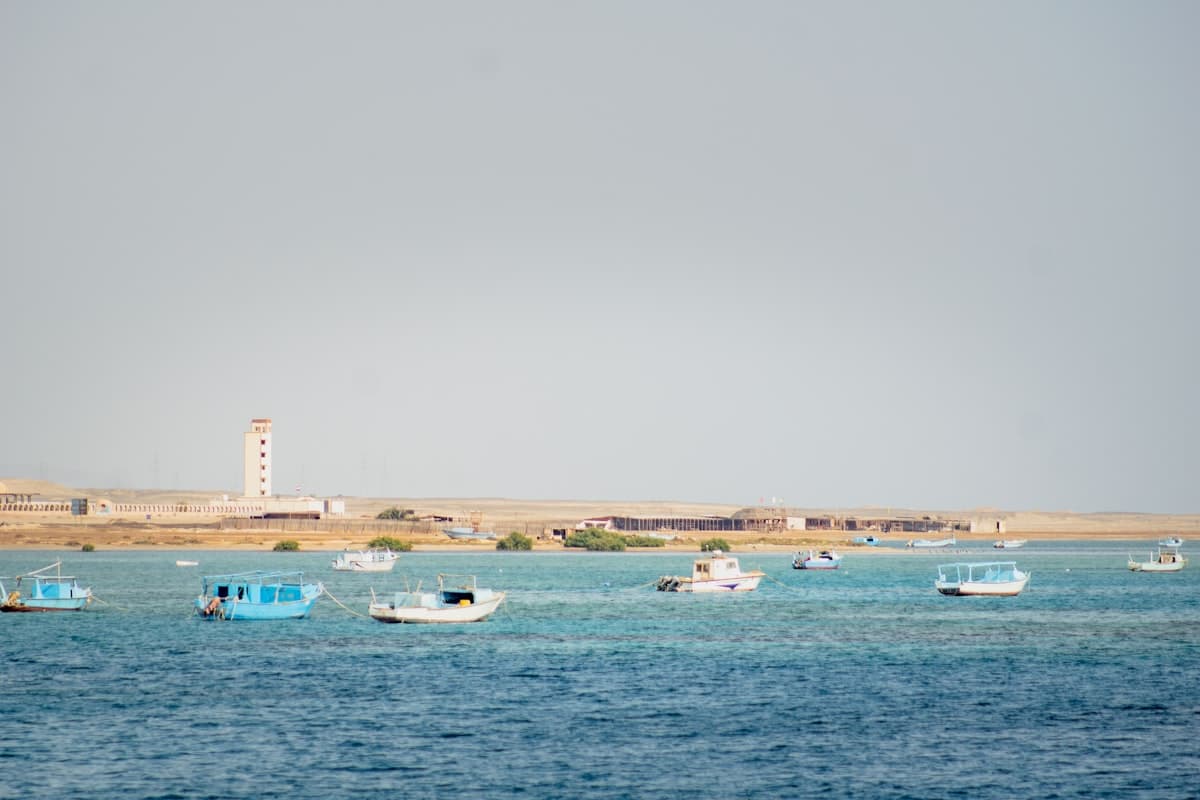
The Suez Canal was dug by Egyptian labor, financed by French capital, built under a French engineer named Ferdinand de Lesseps, and then seized by Britain, which initially wanted nothing to do with it. In 1875, the British government bought a 44 percent stake in the Suez Canal Company from a financially desperate Khedive Ismail for 4 million pounds, a purchase arranged in 48 hours by Prime Minister Disraeli using a personal loan from the Rothschild banking family because Parliament was in recess. Seven years later, Britain invaded Egypt to protect that investment, beginning a 70-year occupation that shaped every political crisis in the Middle East that followed.
This is not ancient history in the way the Pyramids are ancient history. The Suez Canal history in the British Egypt era is the architecture of the modern world. The 1956 Suez Crisis, when Gamal Abdel Nasser nationalized the canal and Britain, France, and Israel launched a military operation to retake it, ended with the United States forcing all three to back down and effectively ended British imperial power. The canal is where the old world ended. Ismailia, the company town built by de Lesseps on the lake between the two great waterways, is where you can still read that ending in the brickwork.
---
The Canal the Pharaohs Dug First
Here is the fact that recalibrates everything: the Suez Canal was not an original idea. The ancient Egyptians built a canal connecting the Nile to the Red Sea, running east through the Wadi Tumilat, as far back as the reign of Senusret III around 1850 BC. It was later expanded by the pharaoh Necho II in the 7th century BC, who according to Herodotus killed 120,000 workers in the attempt before an oracle told him to stop. The Persian emperor Darius I completed it. The canal was called the Canal of the Pharaohs, and it functioned, with periods of neglect, for roughly 1,500 years. When the Arab general Amr ibn al-As conquered Egypt in 641 AD, he reopened it to ship grain to Arabia during a famine. The Abbasid caliph al-Mansur had it deliberately blocked in 767 AD to cut off a rival political faction's grain supply.
The canal de Lesseps dug between 1859 and 1869 was a newer, more direct route, cutting straight through the isthmus rather than using the Nile valley. But the idea of linking the Mediterranean to the Red Sea is not 19th century European genius. It is a pharaonic concept that the Europeans arrived late to.
What the 19th century version did, that the ancient canal never achieved, was eliminate the Cape of Good Hope route entirely for steam shipping. Before 1869, the journey from London to Bombay by sea was approximately 10,800 nautical miles around the southern tip of Africa. Through the Suez Canal it dropped to 6,200 nautical miles. That difference reshaped global trade so completely that within a decade of the canal's opening, the volume of British shipping through it accounted for over 75 percent of all canal traffic.
---
Ismailia: The Company Town That Time Half-Forgot
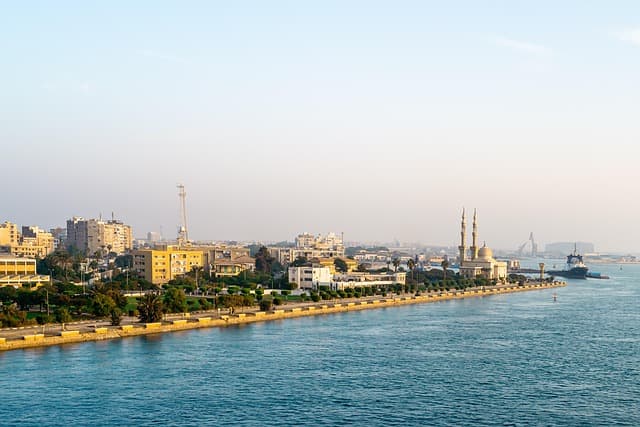
Ismailia exists because Ferdinand de Lesseps needed a base of operations for the canal construction, and he built it the way a French engineer would build a city: with tree-lined boulevards, a European quarter of villas with terracotta roofs, a freshwater canal running through the center, and a clear separation between where the administrators lived and where the workers did not.
The de Lesseps house still stands on the banks of Lake Timsah, now a museum, with his original furniture inside and a garden that smells of jasmine and cut grass in the cooler months. The museum is chronically underfunded and the labeling is inconsistent, but the objects are real: surveying equipment, original maps of the canal route, correspondence in French and Arabic, photographs of the 1869 opening ceremony attended by Empress Eugenie of France and Emperor Franz Joseph of Austria.
The opening of the canal in November 1869 was one of the most expensive parties in recorded history. Khedive Ismail spent approximately 28 million francs on the inauguration celebrations, including commissioning an opera house in Cairo specifically for the occasion. He commissioned Giuseppe Verdi to write an opera set in ancient Egypt for the premiere. Verdi was too busy finishing another work to meet the deadline. The opera house opened with Rigoletto instead. The opera Verdi eventually wrote for Egypt was Aida, which premiered in Cairo in December 1871.
Walk Ismailia's Mohammed Ali Quay along the lake at 7am, before the families arrive, and the colonial morphology of the city is completely clear. The French Quarter buildings are weathered but intact, their wrought-iron balconies still gesturing at a particular European idea of civil administration in the tropics. The Sweet Water Canal, the freshwater channel built alongside the Suez Canal to supply workers and eventually the cities along the route, runs through the town and is still in use. Children fish in it. Old men sit beside it. It is approximately 170 years old.
---
Port Said: Where the Canal Meets the Sea
Port Said was built from nothing in 1859. Before the canal, there was a sandbar. The city that exists now, a grid of streets running to the Mediterranean, is entirely a product of the Suez Canal history and the British Egypt period. The British-era buildings in central Port Said are extraordinary in the way that colonial architecture always is: technically confident, culturally dissonant, and now slowly being swallowed by humidity and deferred maintenance.
The Port Said National Museum contains one of the most underrated Egyptian collections outside Cairo, including Ptolemaic artifacts recovered from the harbor and objects from the Tell el-Farama site nearby, which was the ancient city of Pelusium, where Julius Caesar received the severed head of Pompey in 48 BC. That is the kind of civilizational density that Egypt delivers without warning.
The harbor itself is where you see the canal's contemporary reality most clearly. Container ships, their hulls painted in the colors of the major shipping lines, queue in the roads outside the harbor waiting for convoy passage. The canal runs as two-way traffic in some sections now, following a parallel channel opened in 2015, but container ships still travel in convoys through the single-channel sections, which means at any hour of the day you can watch a 400-meter vessel slide past what looks like an ordinary city street with the eerie slowness of a very large thing moving at the wrong scale.
---
The Connections: Nasser, 1956, and Why None of This Is Over
The 1952 Free Officers Revolution, which ended the Egyptian monarchy and eventually brought Nasser to power, was planned in part by men who had fought in the 1948 Arab-Israeli War and returned to a country still effectively managed by British interests. The canal zone itself, a 120-kilometer strip of territory around the waterway, was garrisoned by British troops until 1956, years after Indian independence had already demonstrated that the British Empire was not eternal.
When Nasser nationalized the Suez Canal Company on July 26, 1956, he announced it in a speech in Alexandria that used the name of Ferdinand de Lesseps as a code word. When Nasser said "de Lesseps," Egyptian officers stationed at the canal authority offices knew to move immediately and take control of the installations. The speech was 2.5 hours long. It contained his entire argument for why Egypt should own what Egypt built with Egyptian labor and Egyptian soil.
The military operation that followed, a coordinated Israeli, British, and French assault, began in October 1956 and was halted by American pressure within weeks. The United States threatened to sell its sterling reserves, which would have crashed the British pound, unless Britain withdrew. Britain withdrew. It is the most explicit demonstration in postwar history of how financial leverage replaced military force as the mechanism of international coercion. Ismailia was bombed during the crisis. Some of the damage is still visible if you know where to look.
The canal was blocked again in 1967 when Israeli forces captured the Sinai Peninsula. Fifteen ships were trapped in the Great Bitter Lake when the canal closed, and they remained there, in a kind of accidental community called the Yellow Fleet, for eight years. Their crews formed a governing council, organized sporting events, and printed their own postage stamps. The ships were finally freed in 1975 when the canal reopened after the 1973 war and subsequent negotiations.
---
Common Mistakes
Treating this as a day trip afterthought. Most Cairo-based tours that mention Ismailia give it three hours as a stopover. That is not enough time to understand what you are looking at. Book a night in Ismailia, walk the colonial quarter in the morning, and arrive at the museum when it opens.
Going to Port Said only for the shopping. Port Said is a duty-free zone and Egyptians come from Cairo specifically to shop there. The harbor area and the museum deserve more attention than most visitors give them before retreating to the electronics markets.
Skipping the sound and light show at the Suez Canal Authority. Actually, yes, skip it. The show costs EGP 200 and tells you a version of the canal's history so simplified and nationalistic that it actively contradicts the complexity of what happened here. Read this article instead.
Expecting the canal to be dramatic. First-time visitors sometimes expect the canal to look like the photographs from space: a blue line cutting through desert. At ground level, it looks like a very wide river with enormous ships on it. This is extraordinary in its own way, but recalibrate your visual expectations before you arrive.
Missing Ismailia's food entirely. The fish restaurants on Lake Timsah serve grilled tilapia and mullet caught from the lake itself, with bread baked in the restaurant's own oven and a salad of local tomatoes. This is one of the better meals available within three hours of Cairo. Do not eat at the hotel buffet.
Arriving without Egyptian pounds. Port Said and Ismailia have ATMs, but they are not always stocked. Bring cash from Cairo.
Conflating the canal with the Canal Authority Museum and missing the de Lesseps House. The two are different institutions, a ten-minute walk apart. The de Lesseps House is smaller and less labeled, but the physical objects there, including his desk and his original surveying instruments, are more affecting than anything in the larger museum.
---
Practical Tips
The Ismailia train from Cairo's Ain Shams station is slower than the bus but more comfortable for anyone who finds service taxis stressful. The journey takes approximately two hours and costs EGP 35 to 55 depending on class.
For the canal embankment at Port Said, the Shuhada Bridge area gives you the best sightlines for watching convoy traffic. Arrive before 8am or after 4pm in summer to avoid the full force of the humidity.
The de Lesseps House in Ismailia sometimes closes without notice for government functions. Call the Ismailia Governorate cultural office the day before to confirm it is open. The number is available from any hotel in the city.
Dress conservatively, particularly in Ismailia's older neighborhoods. This is a working-class canal city, not a tourist corridor, and you will be treated accordingly if you arrive with the cultural attentiveness that Egyptian cities reward.
In October, the weather along the canal is close to perfect: dry, warm in the day, cool in the evenings. This is also when the canal traffic tends to be heaviest, as shipping companies accelerate deliveries before the northern hemisphere winter slowdown. If you want to watch the largest ships, October and November are your months.
Frequently Asked Questions
The Weekly Dispatch
More on Egypt, every Friday.
Cultural depth and places most guides never mention.
No spam. Unsubscribe anytime.