Suez Canal History, British Egypt, and the Waterway That Rewired the World
Britain occupied Egypt in 1882 to protect a canal it didn't build and didn't own. The resulting 74-year entanglement remade the Middle East. Here's the full story.

Quick Facts
- Best time to visit
- October through March. November and February are ideal: canal-side wind keeps temperatures comfortable and crowds are light. Avoid July and August when humidity from the Bitter Lakes makes outdoor exploration genuinely miserable.
- Entrance fee
- Ismailia Canal Museum: EGP 80 (approx $1.60 USD). Port Said National Museum: EGP 200 (approx $4 USD). Canal corniche viewpoints: free. De Lesseps House Ismailia: approx EGP 50 (approx $1 USD), call ahead for hours.
- Opening hours
- Museums generally Tuesday to Sunday 9am to 4pm or 5pm. Canal corniche areas: open access dawn to dusk. Closed Mondays. Friday morning hours may be reduced.
- How to get there
- East Delta buses from Cairo Turgoman Station: Ismailia EGP 60 to 80 (2 hrs), Port Said EGP 80 to 100 (3 hrs). Microbus from Ramses Square to Ismailia: EGP 50. Private taxi between Ismailia and Port Said: EGP 400 to 600. Car rental from Cairo: EGP 600 to 900 per day recommended for covering all three cities.
- Time needed
- Ismailia alone: full day. Port Said alone: full day. Full canal zone (Ismailia, Port Said, Suez): 2 to 3 days minimum.
- Cost range
- Budget EGP 800 to 1,200 per day including accommodation, food, transport. Mid-range EGP 2,000 to 3,500 per day. Mercure Forsan Island Ismailia: EGP 2,500 to 4,000 per night. Budget hotels near bus stations: EGP 400 to 700 per night.
Suez Canal History, British Egypt, and the Waterway That Rewired the World
Britain never legally owned the Suez Canal. What it owned was 44 percent of the Suez Canal Company's shares, purchased in a single weekend transaction in November 1875 when Prime Minister Disraeli borrowed four million pounds from the Rothschild banking house because Parliament was not in session and he needed the money by Monday. That purchase did not give Britain control of the canal. It gave Britain a reason to manufacture control of Egypt, which it did seven years later by bombarding Alexandria and installing a military occupation that lasted, depending on how you count, until 1954. The canal was 163 kilometers of dug earth. The consequences were a century of geopolitics, two world wars, the collapse of the British Empire, and a crisis in 1956 that almost triggered a third.
This guide is for travelers who want to understand what they are looking at when they stand at Port Said and watch a supertanker pass close enough to read the hull markings, who want to walk Ismailia's colonial boulevards and understand why French villas sit alongside Khedival palaces, and who want to visit Suez Canal territory not as a curiosity but as one of the most consequential corridors of modern history.
Quick Facts
Best time to visit: October through March. The canal corridor is flat and exposed, and summer temperatures in Ismailia and Suez regularly exceed 40°C (104°F) with high humidity near the lakes. November and February are ideal: cool enough to walk, dry enough to be comfortable.
Entrance fees: The Suez Canal Authority Museum in Ismailia charges approximately EGP 80 (roughly $1.60 USD). Port Said's National Museum charges EGP 200 (approximately $4 USD). The De Lesseps statue viewpoint and canal-side corniche in Port Said are free. The Suez Canal itself is not a tourist attraction you enter; you observe it from designated public corniche areas at no charge.
Opening hours: Ismailia Museum: Tuesday to Sunday, 9am to 4pm. Port Said National Museum: Tuesday to Sunday, 9am to 5pm. Canal viewing points along the corniche: open access, dawn to dusk.
How to get there: From Cairo, buses to Ismailia depart from Turgoman Bus Station roughly every 30 minutes and cost EGP 60 to 80 (approximately $1.20 to $1.60 USD), journey time around 2 hours. East Delta buses to Port Said cost EGP 80 to 100 and take 3 hours. Ismailia is also reachable by microbus from Ramses Square for around EGP 50. Taxis between Ismailia and Port Said cost approximately EGP 400 to 600 hired privately. There is no passenger rail service to Port Said.
Time needed: Ismailia alone is a full day if you visit the museum, the Khedival quarter, and the canal bank. Port Said requires another full day. If you are driving and combining both cities with a transit crossing, allow two to three days across the canal zone.
Cost range: Budget travel EGP 800 to 1,200 per day including accommodation, food, and transport. Mid-range EGP 2,000 to 3,500 per day.
Why This Place Matters
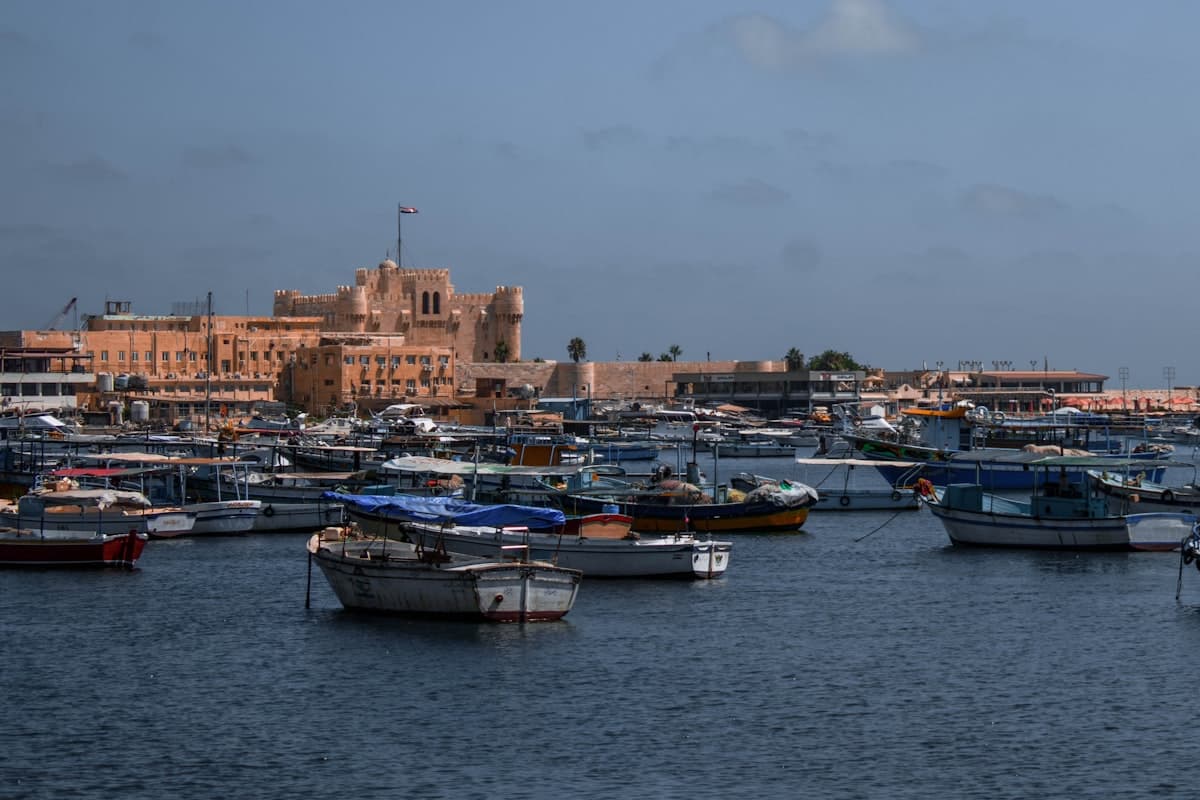
Before the Suez Canal opened in November 1869, the sea route from Britain to India required sailing around the Cape of Good Hope, a journey of approximately 19,000 kilometers. The canal reduced that distance to 11,000 kilometers. Within a decade, 80 percent of the canal's traffic was British, which is the precise reason Britain invaded a country it had no territorial claim over and occupied it for 72 years.
The canal was a French project, conceived by Ferdinand de Lesseps, a diplomat with engineering ambitions and extraordinary political connections through his friendship with Said Pasha, the Egyptian Khedive who granted the original concession in 1854. Construction began in 1859 and required an estimated 1.5 million workers over ten years, many of them corvée laborers, meaning Egyptian peasant farmers compelled to work under conditions that killed tens of thousands. The official death toll has never been established. Egyptian historian Ahmad Ahmad Ezzat has estimated it between 125,000 and 200,000. The canal company's own records, preserved in Paris, suggest 10,000 deaths from cholera alone in a single 1865 outbreak.
Khedive Ismail, who inherited the project midway through, spent so lavishly on the opening ceremony in 1869 that Egypt's national debt increased sixfold in six years. He commissioned a new opera house in Cairo, ordered Verdi to write an opera for the occasion (Aida arrived two years late), and invited European royalty to a celebration that cost more than Egypt could afford. By 1875, he needed cash urgently enough to sell his canal shares to Disraeli. By 1879, European creditors had forced the Ottoman Sultan to depose him. By 1882, Britain was bombing Alexandria.
The British Occupation: What Actually Happened
The standard narrative presents the British occupation of Egypt as beginning with a crisis and ending with a handshake. The reality is considerably more tangled, and walking the canal zone makes that tanglement visible.
Britain sent Admiral Seymour's fleet to Alexandria in July 1882, ostensibly to suppress a nationalist uprising led by Colonel Ahmed Urabi, an Egyptian army officer of rural fellah origin who had become a symbol of resistance to both Khedival corruption and European financial control. Urabi's movement was genuine popular nationalism, not the chaos Britain described. After the bombardment, which killed approximately 2,000 Egyptian civilians and destroyed large sections of Alexandria, British forces defeated Urabi at the Battle of Tel el-Kebir on September 13, 1882. The battle lasted 35 minutes. Egypt was then occupied for what British officials described as a temporary stabilization period.
That temporary period lasted until 1954.
Ismailia is where you see British occupation most clearly in built form. The city was planned as the administrative headquarters of the Suez Canal Company in the 1860s, and the British arrival simply layered another colonial grammar on top of the French one already there. The Garden City quarter of Ismailia, with its bungalows and jacaranda trees, looks like a fragment of Surrey dropped into the Egyptian desert. The Canal Company's French villas sit on one side of Muhammad Ali Square. British administrative buildings occupy the other. The Khedival palace where Ismail received European guests is now a government building locals walk past without looking up.
What most visitors do not know: the British commander Evelyn Baring, who effectively governed Egypt from 1883 to 1907 under the title Consul-General, deliberately kept Egypt's infrastructure spending below the level needed for real development. He did this consciously, explaining in his own dispatches that an educated Egyptian population would be harder to manage. He blocked the creation of an Egyptian university for fifteen years. The first modern Egyptian university, now Cairo University, opened in 1908, the year after he left.
The 1956 Crisis and What Port Said Remembers
On July 26, 1952, the Egyptian monarchy ended when King Farouk boarded a yacht at Alexandria harbor. By July 26, 1956, four years to the day, President Gamal Abdel Nasser stood in Alexandria and announced the nationalization of the Suez Canal Company in a speech that lasted three and a half hours. He used the name "de Lesseps" as a code word: every time he said it, Egyptian officers listening on the radio were ordered to seize canal company offices across the country. He said "de Lesseps" eleven times.
Britain, France, and Israel coordinated a military response without informing the United States. Israel invaded Sinai in October. Britain and France issued an ultimatum both sides rejected, then bombed Egyptian airfields and landed paratroopers at Port Said in November. What followed was not a military defeat for the coalition: Britain, France, and Israel were winning on the ground. What ended the intervention was American economic pressure. President Eisenhower threatened to sell US holdings in the pound sterling, which would have collapsed the British currency. Britain withdrew. France followed. The episode ended the era of European imperial intervention in the Middle East and confirmed American primacy in the region.
Port Said still carries the marks. Walk the corniche and look at the waterfront buildings: many still show patchwork repairs to facades damaged in the 1956 bombardment. The Port Said Military Museum, housed in a building that was itself British-built, contains photographs of the paratroop landing, wrecked aircraft, and the aftermath of shelling. The museum is not neutral: it is Egyptian nationalist in its framing, which is exactly what you should expect and exactly why it is worth visiting. You are not getting the British or French account there. You are getting the account of people who were on the receiving end of the ordnance.
The canal was blocked from 1967 to 1975, during and after the Six Day War, when Egyptian forces sank ships in the channel. Fourteen international cargo ships were trapped in the Great Bitter Lake for the entire eight years. Their crews, unable to leave, formed a floating community, held Olympic games on the lake in 1968, and issued their own postage stamps.
The Connections
Nothing in the canal zone exists in isolation from the rest of Egypt's history. The water that fills the canal came, before modern pumping, partly from a network of Pharaonic canals linking the Nile to the Red Sea. The ancients were here first: Pharaoh Necho II began a canal connecting the Nile to the Red Sea around 600 BC. Darius the Great of Persia completed it a century later, and the Greek geographer Strabo recorded ships using it in the first century BC. The canal silted repeatedly, was re-dug repeatedly, and eventually fell into disuse. De Lesseps followed the path of ghosts.
Ismailia's position on Lake Timsah, one of the Bitter Lakes the canal passes through, meant it was also a node in ancient trade routes connecting the Levant to the Nile Valley. The Exodus route, wherever exactly it ran, passed through this territory. The ancient Egyptian name for the eastern frontier region was Sinai's gateway, and every army that ever invaded or retreated from Egypt came through this corridor: Hyksos, Persians, Greeks, Romans, Crusaders, Napoleon, and finally the British.
The Coptic communities of the canal zone also have a presence here that most tourists miss entirely. The Monastery of Saint Anthony, while not canal-side, is 150 kilometers south and represents the same desert tradition that shaped the monks who once sheltered along the eastern wadis. The canal's construction in the 1860s displaced communities that had lived along these lakes for generations, including Coptic farming families who had been there since the Byzantine period.
Common Mistakes
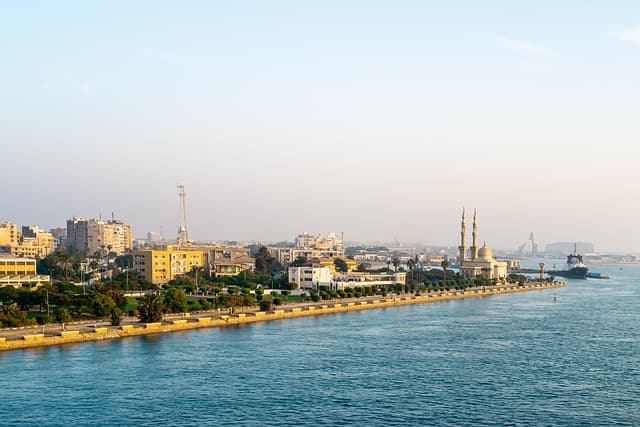
Treating the canal as a photo opportunity and nothing more. Watching a ship transit is genuinely compelling: a vessel the length of four football fields moving at 14 kilometers per hour through what looks like a ditch in the desert. But if you drive to Port Said or Ismailia purely to photograph a ship and leave, you have missed the entire point. Budget at minimum four hours per city.
Skipping Ismailia in favor of Port Said. Port Said is larger and more frequently visited. Ismailia is where the canal story actually lives: the De Lesseps house (now a museum, open irregular hours, worth calling ahead to EGP 50 approximate entry), the original canal company buildings, and the Khedival-era quarter that still functions as a living neighborhood. Port Said's colonial architecture is more damaged and more commercialized.
The De Lesseps statue viewing in Port Said is not worth your time. There is no longer a statue: the original was toppled after 1956 and never replaced. The plinth is there. Tour guides still take groups to see an empty plinth and narrate what the statue looked like. Skip it.
Underestimating the heat and the distances. The canal zone is 163 kilometers long, and the interesting sites are spread across three cities: Port Said, Ismailia, and Suez. Renting a car from Cairo (approximately EGP 600 to 900 per day from a reliable agency) is more efficient than busing between them. There are essentially no tuk-tuks or reliable ride-hailing apps in smaller canal zone towns.
Visiting in July or August. The humidity coming off the Bitter Lakes combined with summer temperatures makes outdoor exploration genuinely unpleasant rather than just warm. October through February is the correct window.
Paying for a canal zone "cruise." Various operators offer short Nile-to-Red-Sea packages that motor through part of the canal. The price is high, the access to shore is limited, and you see less of the human and historical context than you would walking the corniche in Ismailia for free. The ship-spotting from shore is actually better.
Missing the Suez city side entirely. The city of Suez at the canal's southern end is the least-visited third of the story and the most honest. It was bombed heavily in the 1967 and 1973 wars, evacuated entirely between 1967 and 1973, and rebuilt rapidly and without elegance. It looks like a city that was destroyed and rebuilt in a hurry because that is exactly what it is. The War Museum near the canal authority building in Suez is small, specific, and genuinely moving in a way that polished national museums rarely are.
Practical Tips
Across the canal zone, Friday mornings mean closures. Plan museum visits for Tuesday through Thursday or Saturday.
The canal authority area in Ismailia has a viewing point on the east bank that requires a short drive or taxi ride across the El Ferdan Bridge (the world's longest swing bridge at 641 meters, opened in 2001). The east bank view of northbound convoys is cleaner than the west bank corniche view because you are looking across the narrowest section of the canal. Ask your driver to take you to the El Ferdan viewpoint specifically.
For food, Ismailia's corniche has several fish restaurants serving the freshwater perch and tilapia farmed in the Sweet Water Canal that runs parallel to the main channel. This is where canal company employees and canal authority officials actually eat. Prices are approximately EGP 150 to 300 per person including bread and salads.
Accommodation in Ismailia is functional rather than atmospheric. The Mercure Forsan Island, built on a small island in Lake Timsah and connected by a short causeway, is the most pleasant option and costs approximately EGP 2,500 to 4,000 per night. Budget travelers can find clean hotels near the bus station for EGP 400 to 700.
If your itinerary allows only one city, choose Ismailia. It holds the canal's origin story, the most intact colonial architecture, and the human scale that Port Said has largely lost to commercialization. Come on a weekday, bring water, and give yourself enough time to sit at the lake's edge in the late afternoon when the light turns the water the color of old copper and the ships, enormous and silent, glide past like moving buildings.
Frequently Asked Questions
The Weekly Dispatch
More on Egypt, every Friday.
Cultural depth and places most guides never mention.
No spam. Unsubscribe anytime.