Suez Canal History, British Egypt, and the Zone Today
Britain occupied Egypt in 1882 to protect a waterway it didn't build and didn't own. The Canal Zone war of 1952 helped end that empire. Here's what remains.

Quick Facts
- Best time to visit
- October to March. Summer temperatures regularly exceed 38°C with significant humidity near the water. Winter light on the canal is also markedly better for photography.
- Entrance fee
- Ismailia Museum EGP 100 (approx $2 USD), students EGP 50. Port Said National Museum EGP 150 (approx $3 USD). Canal bank viewing is free.
- Opening hours
- Ismailia Museum: Saturday to Thursday, 9am to 4pm, closed Fridays. Port Said National Museum: daily 9am to 4pm, closed Tuesdays.
- How to get there
- Cairo to Ismailia by East Delta bus from Turgoman Station: EGP 60 to 80, approx 2 hours. Cairo to Port Said by direct bus: EGP 80 to 100, approx 2.5 to 3 hours. Ismailia to Port Said shared microbus: EGP 25.
- Time needed
- Full day for Ismailia including museum, French Quarter, and canal viewing. Separate full day for Port Said. Suez city warrants 3 to 4 hours if transiting to Sinai.
- Cost range
- Budget EGP 600 to 900 per day in Ismailia. Mid-range EGP 1,500 to 2,500 including a canal-bank hotel.
Quick Facts
Best time to visit: October to March. The Canal Zone sits in the Eastern Desert corridor and summer heat is serious, regularly exceeding 38°C with no shade infrastructure on the waterway banks.
Entrance fees: The Ismailia Museum costs EGP 100 (approx $2 USD), students EGP 50. The Canal Authority building in Ismailia is viewable externally for free. Port Said's National Museum is EGP 150 (approx $3 USD). Boat crossings at Ismailia for pedestrians run EGP 5 each way.
Opening hours: Ismailia Museum opens Saturday to Thursday, 9am to 4pm, closed Fridays. Port Said National Museum opens daily 9am to 4pm except Tuesdays.
How to get there: From Cairo, take the East Delta Bus Company service from Turgoman Station to Ismailia, roughly EGP 60 to 80 (approx $1.50 to $2). Journey time is around 2 hours. Trains also run Cairo to Ismailia, EGP 25 to 45 depending on class. To Port Said, direct buses from Cairo's Turgoman Station cost EGP 80 to 100 and take 2.5 to 3 hours. Shared microbuses between Ismailia and Port Said run EGP 25.
Time needed: Ismailia alone warrants a full day if you include the museum, the Ferdinand de Lesseps house, the old French Quarter, and a canal-side walk. Port Said requires a separate day. Suez city is worth a few hours if you are already at the southern end.
Cost range: Budget EGP 600 to 900 per day in Ismailia. Mid-range EGP 1,500 to 2,500, including a decent hotel on the canal bank.
---
Why This Place Matters
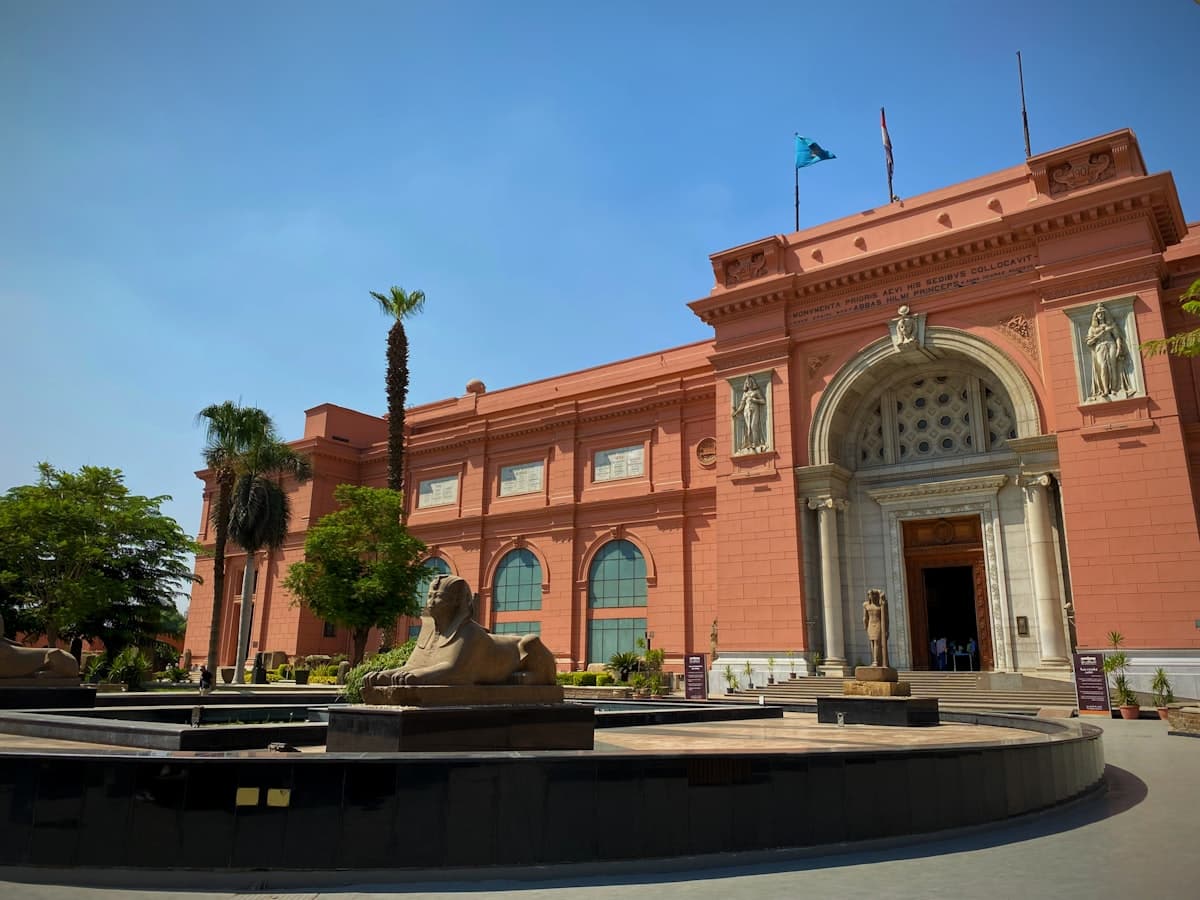
The Suez Canal did not shorten the journey from London to Bombay by a few hours. It cut it by 7,000 kilometers, eliminating the entire Cape of Good Hope route. When it opened in 1869, it immediately became the most strategically important waterway on earth, and it has never stopped being that. In 1956, when Gamal Abdel Nasser nationalized it, Britain, France, and Israel launched a military invasion to take it back. President Eisenhower threatened to crash the British pound unless they withdrew. They withdrew. That sequence of events effectively ended the British Empire as a functional geopolitical force.
The canal you are looking at today carries roughly 12 percent of global trade. Every time you buy electronics, fuel, or clothing imported through European or American supply chains, there is a reasonable statistical probability that the container crossed this water. This is not ancient history dressed up for tourists. It is an active artery.
But the Suez Canal history most visitors engage with is inseparable from British Egypt, which is itself inseparable from a longer pattern. Egypt has been controlled by outside powers for most of the last 2,500 years: Persians, Greeks, Romans, Arabs, Mamelukes, Ottomans, French, British. The canal did not create that pattern. It was the latest expression of it, and Nasser's nationalization of it in 1956 was the first time in a very long time that Egypt controlled something the world desperately needed.
---
What the British Were Actually Protecting
Britain occupied Egypt in 1882. The stated justification was financial instability, specifically the risk that Egypt would default on bonds held by European creditors. The real calculus was simpler: the canal had opened thirteen years earlier, British shipping immediately dominated it, and the route to India was now through Egyptian territory. Letting that territory become unpredictable was not acceptable.
What often goes unmentioned is that Britain held only 44 percent of the original Suez Canal Company shares. France held much of the rest. The company itself was registered in Paris, run by French engineers, and the canal was built under the direction of Ferdinand de Lesseps, a French diplomat who had previously served as consul in Alexandria. Egypt's Khedive Ismail held the remaining Egyptian shares, which he sold to the British government in 1875 for £4 million because he was broke. Prime Minister Disraeli borrowed the money from the Rothschild banking house in a weekend transaction without consulting Parliament.
So Britain controlled a canal it had purchased shares in from a bankrupt ruler, built by French engineers, dug largely by forced Egyptian labor. The legal ownership remained with an international company headquartered in Paris. And yet British Egypt treated the Canal Zone as sovereign British territory for seventy years.
In Ismailia, you can still walk through the physical residue of that arrangement. The Ferdinand de Lesseps house, now a museum annexe, sits on the canal bank in a state of partial restoration. The old French Quarter around Mohammed Ali Square has boulevards and villa architecture that would not look out of place in provincial Provence, except that they are flanked by date palms and the canal glitters at the end of every northward street.
---
The Canal Zone War Nobody Taught You About
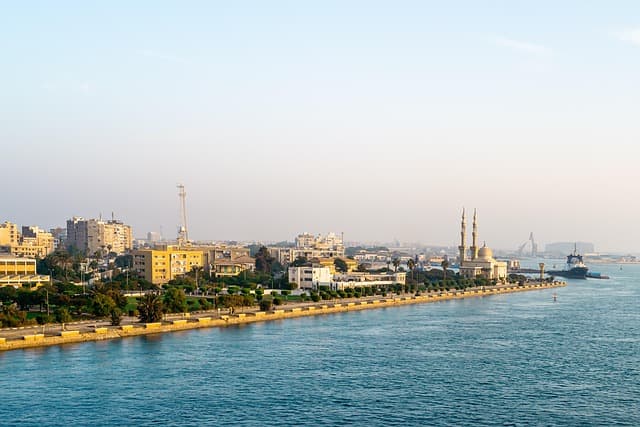
Between 1951 and 1952, Egyptian police, auxiliary forces, and civilian guerrillas fought a low-intensity war against British troops in the Canal Zone. It is not well known outside Egypt. It should be.
In January 1952, British forces surrounded the Ismailia police station and demanded that Egyptian auxiliary police disarm and evacuate. The police refused. British tanks and infantry attacked. Forty-one Egyptian policemen were killed. The following day, January 26, 1952, Cairo erupted. Mobs burned Shepheard's Hotel, the Turf Club, the Cinema Metro, the Rivoli, and hundreds of other businesses associated with European presence. Black Saturday, as it became known, destroyed much of colonial Cairo's commercial heart in a single afternoon.
Six months later, on July 23, 1952, the Free Officers Movement staged the coup that removed King Farouk and eventually brought Nasser to power. The sequence is not coincidental. The Canal Zone war and Black Saturday delegitimized both the monarchy and the British presence in a matter of months.
The Ismailia Museum holds artifacts from the pharaonic and Greco-Roman periods found during canal construction, but it also documents the 1952 battle at the police station. The battle display is not the museum's main draw, and the signage is partly in Arabic only, but it is one of the few places where you can stand in front of physical evidence of the events that directly triggered the end of British Egypt.
---
Port Said, the City That Watched Everything Happen
Port Said sits at the northern entrance to the canal, where Mediterranean water meets the artificial channel. The city was built specifically for the canal, founded in 1859 during the construction years, and it has no historical reason to exist except this waterway. That gives it an unusual character: it is a city that is entirely defined by global trade and has always known it.
The architecture of downtown Port Said is colonial Mediterranean, wooden latticework balconies stacked four stories high over wide seafront boulevards, buildings that look like they belong in a slightly faded Italian port city. Much of it is genuinely deteriorating, and the city has never quite recovered economically from the 1967 and 1973 wars, when the canal closed and Port Said became a frontline city.
During the 1973 October War, Port Said's civilian population was almost entirely evacuated. The city sat empty for years. When residents returned, they found a place that had been used as a military staging ground and was in serious disrepair. The free-trade zone status granted to Port Said in 1976 partly compensated, making the city a duty-free shopping destination that still draws Egyptians from across the country for electronics and imported goods.
At the canal entrance, you can watch vessels transit in convoy. The canal operates on a convoy system: northbound ships travel together in the morning, southbound in the afternoon. Container ships, tankers, and bulk carriers pass close enough that you can read the names on their hulls without binoculars. The Lesseps statue that once stood at the canal entrance was torn down in 1956 after nationalization. Its plinth is still there.
---
The Connections
The canal's construction used a labor system that drew on very old Egyptian precedents. The corvée, forced labor on state projects, had been a feature of Egyptian governance since pharaonic times. Hundreds of thousands of Egyptian laborers were conscripted to dig the canal between 1859 and 1869, working with hand tools in desert conditions. Estimates of mortality among the workforce range widely, but the labor conditions were documented as brutal by contemporaries.
The pharaonic connection goes further. The idea of linking the Nile to the Red Sea predates the Suez Canal by three thousand years. Pharaoh Senusret III may have built an early canal as far back as 1850 BC. Necho II attempted a similar project around 600 BC and reportedly abandoned it after an oracle warned that he was building something for foreign enemies. Darius I of Persia completed a navigable channel around 500 BC, and inscriptions from that project have been found at multiple sites along the route. The Romans and later Arab rulers maintained versions of this waterway. The Suez Canal is not an invention. It is the latest iteration of an idea Egypt and its occupiers have returned to repeatedly for three millennia.
In Cairo, the connection is physical. The Khalig al-Masri, the ancient canal that once ran through the city toward the Nile, followed routes that are now major streets. The city's Islamic-era water infrastructure was built partly on the logic of these older channels. When you walk Khan el-Khalili or the old Fatimid city, you are walking over the hydrological memory of the same impulse that built the Suez Canal.
---
Common Mistakes
Treating this as a day trip from Cairo. You can do it. You will see almost nothing. Ismailia and Port Said are separate destinations requiring separate nights. Trying to combine them in a single Cairo day trip means spending most of your time on buses.
Skipping Ismailia for Port Said. Port Said has better name recognition, but Ismailia is the more interesting city for Suez Canal history and British Egypt. The French Quarter, the de Lesseps house, and the canal museum are all there. Port Said is worth seeing, but if you have one day, Ismailia is the choice.
The sound and light show at Port Said. It runs intermittently depending on season and demand, costs EGP 300 to 400, and delivers a theatrical summary of canal history that you will have already absorbed by reading any serious account of the subject. Skip it and spend the evening watching the convoy lights on the water from the Corniche, which costs nothing.
Ignoring the 1952 police station site. Most visitors to Ismailia focus on the colonial-era architecture and the canal view. The site of the 1952 battle and the broader Canal Zone War is the actual pivot point of modern Egyptian history, and it is accessible and undervisited.
Visiting in July or August. The Canal Zone in summer is genuinely difficult. The heat is compounded by humidity near the water, and most of the interesting things to see involve walking outdoors.
Expecting clear canal views from Port Said's main waterfront. Much of the northern end is port infrastructure, not public promenade. The cleaner viewing points require walking south along the canal bank or taking a local boat.
Going only as far as the museum. The real experience of the canal is spatial and temporal: standing on the bank, watching a 400-meter container ship slide past in near silence, registering that 12 percent of global trade moves through a channel that is, at its narrowest point, only 205 meters wide. No museum exhibit replicates that.
---
Practical Tips
Ismailia hotels on the canal bank range from basic pensions around EGP 600 per night to the Mercure Forsan Island, which sits on a small island in the canal itself and costs EGP 2,500 to 3,500 per night. The Mercure's canal-side position is genuinely useful: you can watch convoy traffic from the hotel grounds at any hour.
Bring cash. ATMs exist in both cities but international cards are not always accepted at smaller restaurants and transport points.
The best canal viewing in Ismailia is from the Corniche along Lake Timsah, the freshwater lake that the canal passes through at its midpoint. Morning convoys move through in good light. Arrive before 8am.
For the French Quarter in Ismailia, a local guide is worth the investment, around EGP 200 to 300 for two hours, because many of the most interesting buildings are behind walls or in private hands, and knowing which streets to walk makes a significant difference.
Port Said's duty-free zone requires a passport. If you plan to buy electronics or other imported goods, bring it. The duty-free status applies to specific zones and does not cover the whole city.
Suez city, at the southern end of the canal, is the least touristically developed of the three Canal Zone cities and is primarily worth visiting if you are continuing into Sinai or the Eastern Desert. The Ahmed Hamdi Tunnel under the canal connects Suez to Sinai and is itself a product of post-1973 reconstruction.
Frequently Asked Questions
The Weekly Dispatch
More on Egypt, every Friday.
Cultural depth and places most guides never mention.
No spam. Unsubscribe anytime.