Suez Canal History, British Egypt, and What Ismailia Remembers
Britain occupied Egypt in 1882 to protect a canal it didn't own, built by labor it didn't provide, on land it didn't govern. The canal still runs. The resentment shaped a nation.

Quick Facts
- Best time to visit
- October through March. The isthmus is flat and exposed; summer heat between May and September is serious and the museums keep reduced hours.
- Entrance fee
- Ismailia Museum: EGP 60 (approx $1.25 USD). De Lesseps House Port Said: EGP 50 (approx $1 USD). Canal embankment viewing: free. Ferry crossing: EGP 2.
- Opening hours
- Ismailia Museum: Saturday to Thursday 9am to 4pm, closed Fridays. De Lesseps House: nominally 9am to 3pm, verify locally before visiting.
- How to get there
- East Delta Bus Company from Turgoman station Cairo to Ismailia: EGP 60 to 80, roughly 2 hours. Servees (shared taxi) Ismailia to Port Said: EGP 30 to 40 per person. Driving Cairo to Ismailia via Desert Road: 90 minutes. Ahmed Hamdi Tunnel to Sinai: EGP 5 toll.
- Time needed
- Ismailia alone: full day. Adding Port Said: second half day or full second day. Serious Suez Canal history British Egypt itinerary: 2 days minimum with overnight in Ismailia.
- Cost range
- Budget EGP 400 to 700 per day including basic accommodation. Mid-range EGP 1,200 to 2,000 per day. Canal-facing Mercure Hotel Ismailia: EGP 1,800 to 2,400 per night.
Suez Canal History, British Egypt, and What Ismailia Remembers
Britain occupied Egypt in 1882 to protect a canal it didn't own, built by labor it didn't provide, on land it didn't govern. The canal had been open for thirteen years. Not a single British engineer helped dig it. The French designed it. Egyptian fellaheen, many conscripted under conditions that killed tens of thousands, moved 74 million cubic meters of earth by hand. When Nasser nationalized the canal in 1956, the speech he gave lasted two hours and forty minutes. Embedded in it, as a codeword for his military to begin seizing canal installations, was the name Ferdinand de Lesseps, the French diplomat who built the thing. Every time Nasser said "de Lesseps," another building fell under Egyptian control. The British didn't see it coming, which tells you everything about how well they understood the country they spent seventy years running.
Quick Facts
Best time to visit: October through March. Canal cities sit on flat, exposed ground with no shade and temperatures that punish summer visitors. The light in November is extraordinary.
Entrance fees: The Suez Canal Authority Museum in Ismailia: EGP 60 (approx $1.25 USD). The De Lesseps House Museum in Port Said: EGP 50 (approx $1 USD), though opening hours are erratic. The Canal itself requires no ticket. You watch from public embankments or from ferries that cross it for EGP 2.
Opening hours: Ismailia Museum: Saturday through Thursday, 9am to 4pm. Closed Fridays. De Lesseps House: nominally 9am to 3pm, but verify locally before going.
How to get there: From Cairo, take the East Delta Bus Company from Turgoman station to Ismailia. Journey time is approximately two hours. Tickets cost EGP 60 to 80. From Ismailia, shared service taxis (servees) to Port Said run EGP 30 to 40 per person. Driving from Cairo via the Desert Road takes ninety minutes. The EGP 5 toll on the Ahmed Hamdi Tunnel beneath the Canal connects Sinai to the mainland.
Time needed: Ismailia alone warrants a full day. Port Said adds another half day minimum. If you are serious about the Suez Canal history British Egypt axis, budget two days and sleep in Ismailia.
Cost range: Budget EGP 400 to 700 per day including accommodation. Mid-range EGP 1,200 to 2,000.
Why This Place Matters
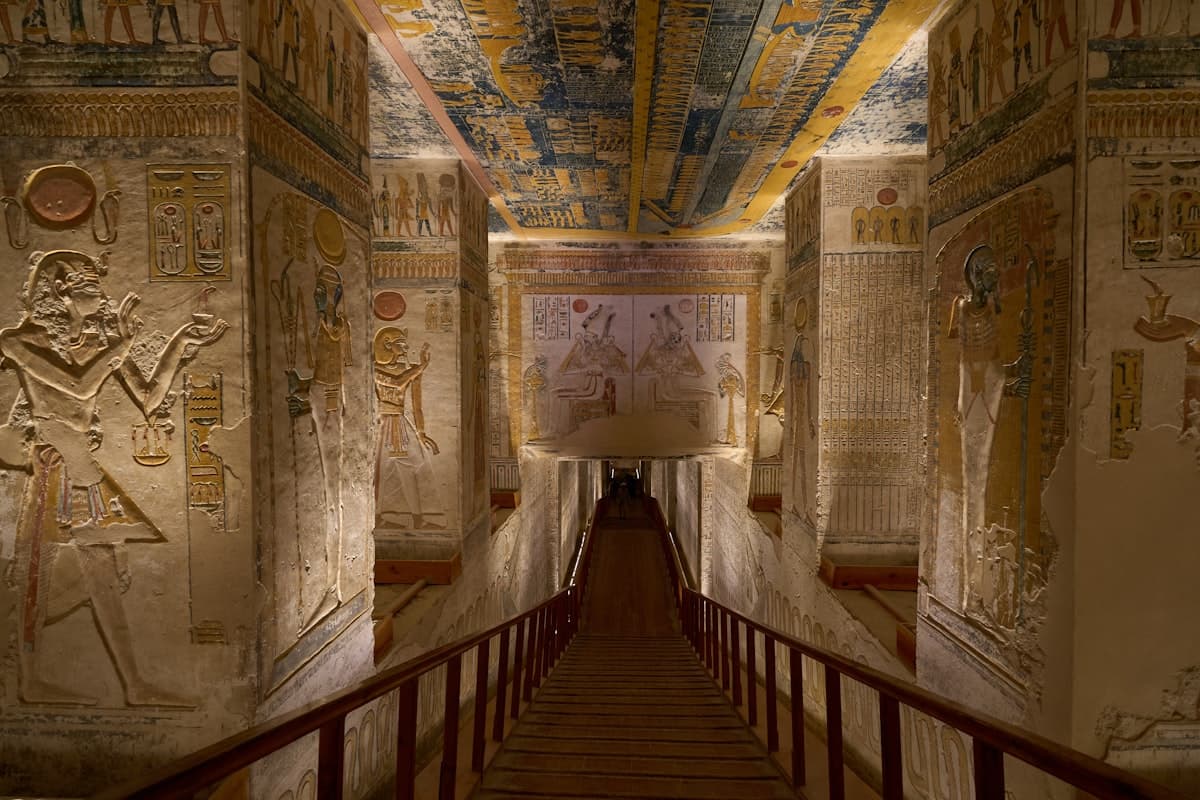
The canal is 193 kilometers long and connects the Mediterranean to the Red Sea, eliminating the need to sail around Africa. That geometry saved approximately 7,000 kilometers per journey between Europe and Asia. Before 1869, the fastest route from London to Bombay required rounding the Cape of Good Hope. After 1869, the same journey shortened by weeks. The canal restructured global trade so completely that within a decade of its opening, it was already the most strategically important waterway on earth, which is precisely why Britain could not tolerate anyone else controlling it.
What most visitors don't know is that a canal connecting the two seas had been attempted at least three times before de Lesseps. The Pharaoh Senusret III may have dug the first version around 1850 BCE, connecting the Nile to the Red Sea rather than cutting directly across the isthmus. Ramesses II probably maintained it. Darius I of Persia extended it. The Roman Emperor Trajan reopened a silted version. By the medieval period it was gone. Napoleon's engineers surveyed the isthmus in 1799 and concluded, incorrectly, that the Red Sea was nine meters higher than the Mediterranean, making a direct canal impossible. That error delayed the modern canal by fifty years.
The British purchase of the Egyptian government's shares in 1875 is a story of debt and speed. Khedive Ismail, drowning in debt from extravagant development projects, needed to sell his 177,000 shares quickly. Disraeli wanted them before the French could organize a consortium. He borrowed four million pounds overnight from Lionel de Rothschild, bypassing Parliament entirely because Parliament was in recess. It was the largest private loan in British history to that point. Britain acquired a 44 percent stake in the canal company without building a single kilometer of it.
What the Canal Cities Actually Hold
Ismailia: The Company Town That Time Preserved
Ismailia was built from nothing to house the canal's European administrators, and it shows. The grid of wide streets lined with bougainvillea, the villas with French ironwork balconies, the Lycée still operating, the train station that still has its original Belle Époque bones: this is not a heritage district. It is simply a town that did not get demolished. Walk the neighborhood around Mohammed Ali Quay in the early morning, before the heat arrives, and you are in something that feels less like Egypt and more like a Mediterranean colonial city that forgot to update its paperwork.
The Ismailia Museum contains artifacts that have no business being this undervisited. A royal chariot from the reign of Thutmose III, which ruled the world around 1450 BCE, sits in a room with perhaps four labels and no crowds. Sphinxes from the Hyksos period, the foreign rulers who occupied the Delta from around 1650 to 1550 BCE and whose expulsion Ahmose I turned into the founding myth of the New Kingdom, stand in the garden partially exposed to weather. The museum's collection documents the full archaeological sweep of the isthmus, from Pharaonic to Greek to Roman to Islamic, because the isthmus has always been a crossing point and crossing points accumulate objects left by people in transit.
The Sweet Water Canal, which runs alongside the road into town, was built during canal construction specifically to bring Nile water to workers and settlers on the otherwise waterless isthmus. It is a nineteenth-century engineering project that follows roughly the same route as an ancient canal used in Pharaonic times. The palimpsest here is literal: new infrastructure laid over ancient infrastructure laid over desert.
Port Said: Where the Canal Meets the Sea
Port Said was founded in 1859 specifically for canal construction and has no older history than that, which makes it unusual in a country where most cities sit on something ancient. It is a city that was invented by the canal and has spent 165 years negotiating its identity. It became a free port in 1976, which gave it the slightly raffish commercial energy it still carries: duty-free shops, container ships visible from residential streets, a population accustomed to the constant presence of the world's shipping.
The de Lesseps statue that once dominated the canal entrance was torn down after the 1956 nationalization. The plinth is still there. Egyptians know what happened in 1956; they don't need a plinth to remember. The De Lesseps House, where the canal's chief promoter lived during construction, is now a small museum that most visitors skip because it's hard to find and irregularly open. Go anyway. The furniture, the correspondence, the engineering drawings: they make the abstract concrete. A man sat in these rooms and decided how to move an isthmus.
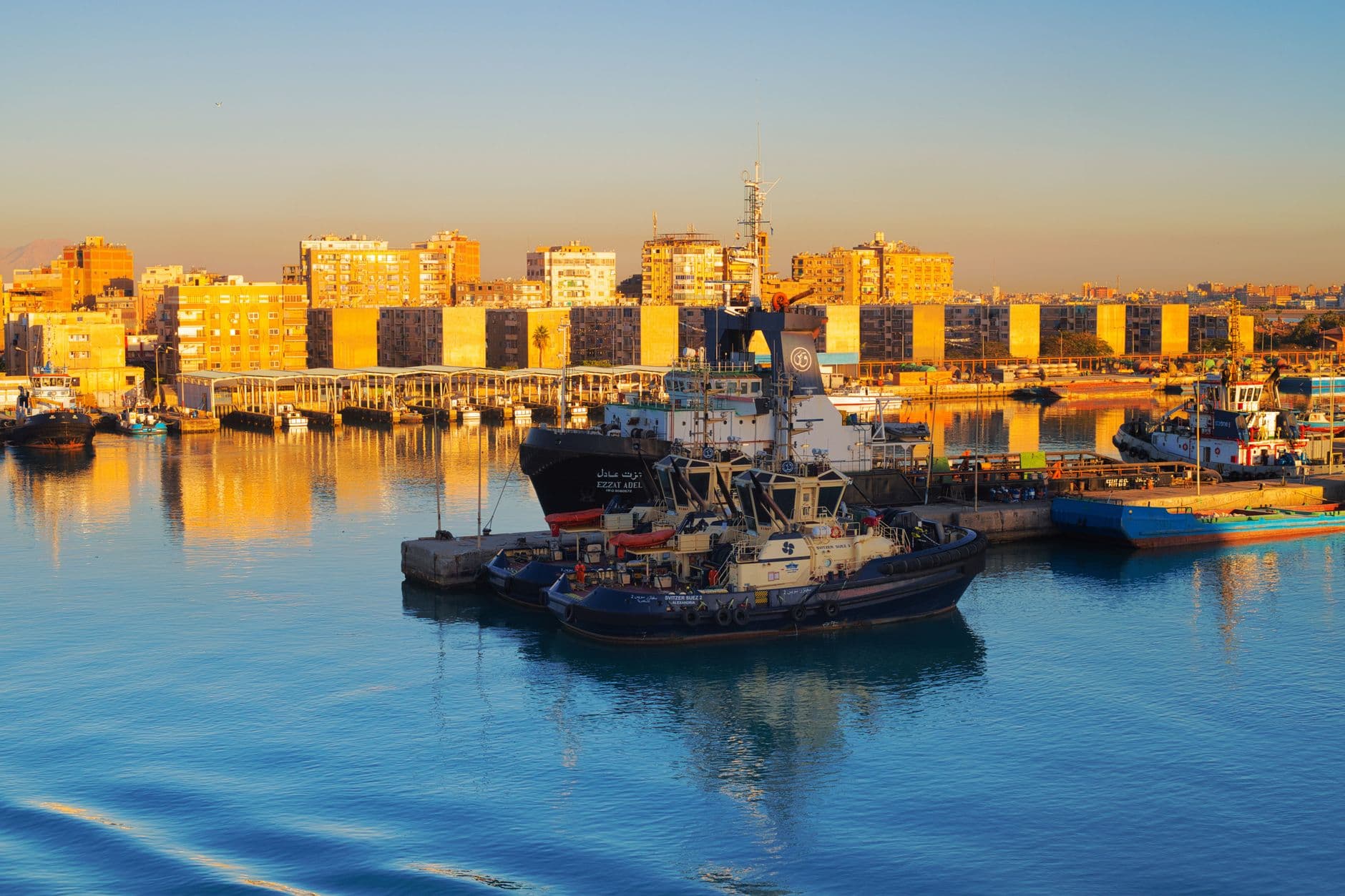
The Suez Canal Authority building, completed in 1869 for the canal's inauguration, is still the administrative headquarters of the canal. It is not a ruin. It is an active office where real bureaucrats manage the passage of real ships. When you stand on the embankment at Port Said and watch a container ship the length of four city blocks slide past at eye level, appearing to float through the desert because there is no water visible from that angle, you understand why every power that ever controlled Egypt also wanted to control this specific strip of water.
The Connections
The British occupation that followed the 1882 bombardment of Alexandria was formally based on protecting the canal, but it operated by entrenching itself in every institution from the army to the cotton market. The occupation lasted, depending on how you count, until 1956, when Nasser's nationalization and the subsequent military humiliation of Britain and France in the Suez Crisis ended it decisively. The crisis is the hinge of modern Egyptian identity in the same way 1973 is: a moment when Egypt asserted itself against the powers that had treated it as a geography rather than a nation.
That history of the Suez Canal and British Egypt loops back to Cairo constantly. The Abdeen Palace, where Khedive Ismail hosted European dignitaries during the 1869 canal opening celebrations, still stands. The Cairo Opera House was built for those same celebrations (the claim that Verdi wrote Aida for the opening is a myth: the opera premiered two years later). The Anglo-Egyptian debt crisis of the 1870s that preceded the occupation was caused partly by the same modernization drive that funded the canal's construction. Nothing about the canal is only about the canal.
The 1956 Suez Crisis also drew in Israel, France, and Britain in a coordinated military operation that the United States ultimately opposed, forcing a British withdrawal and demonstrating that the old colonial order had genuinely collapsed. It is one of the few moments in the Cold War when Washington sided, functionally, with an Arab nationalist leader against its European allies.
Common Mistakes
Going only to Port Said and skipping Ismailia. Port Said has more name recognition but Ismailia has more actual content: the museum, the preserved colonial neighborhoods, the Sweet Water Canal, the quieter embankment where you can watch ship traffic without a crowd.
Taking the Cairo day trip package offered by hotels. These packages spend three hours in transit for ninety minutes by the water. They show you the canal but not the canal cities. You learn nothing you couldn't learn from a documentary. Take the bus, stay overnight, do it properly.
Expecting the canal crossing to be an experience. The Ahmed Hamdi Tunnel under the canal is a tunnel. It smells like a tunnel. You are underwater for about four minutes. The free ferry crossing at Ismailia costs EGP 2 and is an actual experience: you cross one of the most consequential waterways in modern history on a small boat with motorcycles and schoolchildren for almost nothing.
Visiting the De Lesseps House without calling ahead. It follows no schedule that has ever been reliably documented. Ask at your hotel the morning before, or ask locally on the embankment. Someone will know if it is open.
The sound and light show at Port Said. It costs EGP 300 and tells you the outline of the canal story in about forty minutes using lights pointed at a building. Skip it. The embankment at dusk, watching the lit superstructures of container ships move silently through the dark, is free and tells you more.
Ignoring the Egyptian experience of the canal in favor of the European story. Most English-language material on the canal foregrounds de Lesseps, Disraeli, Eden, and Nasser's opponents. The experience of the fellaheen who built it, the Egyptian soldiers who died defending it in 1956, 1967, and 1973, and the canal workers' city of Suez itself deserve equal time. The Suez War Museum in Suez city is worth the additional journey.
Underestimating the heat between May and September. The isthmus has no topography to create shade or breeze. A summer afternoon here is not uncomfortable: it is genuinely dangerous. The museums close early. The embankments are empty. There is a reason the British ran Egypt's summer administration from the cooler Delta towns.
Practical Tips
Dress conservatively outside the European-grid neighborhoods of Ismailia. Port Said is a working port city and the areas around the docks are male-dominated and conservative. This is not a warning, it is a practical note: you will be more comfortable and more welcomed with covered shoulders and long trousers.
The best place to watch ship traffic in Ismailia is from the embankment near the El Salam ferry crossing on the east side of the city. Arrive by 7am. The early morning light is low and the ships appear to move through gold. Bring coffee from any of the small cafes nearby: EGP 15 to 25 for a cup.
For accommodation, Ismailia's Mercure Hotel is on the canal embankment and has canal-facing rooms. Mid-range at approximately EGP 1,800 to 2,400 per night. Budget travellers can find clean pensions in the town center for EGP 400 to 600. Port Said has similar options but the canal views are harder to arrange from budget accommodation.
The canal itself operates twenty-four hours a day. Ships transit in convoys: one northbound, one southbound, daily. The northbound convoy typically passes Ismailia in the morning hours. Ask locals or check with the Canal Authority's public information line for the day's schedule. Convoy timing shifts seasonally.
If you read Arabic, the Ismailia public library holds a collection of documents related to canal construction and the British period that is rarely consulted by foreign visitors. The librarians are helpful and the access is straightforward.
Frequently Asked Questions
The Weekly Dispatch
More on Egypt, every Friday.
Cultural depth and places most guides never mention.
No spam. Unsubscribe anytime.