Suez Canal History, British Egypt, and What the Water Reveals
Britain occupied Egypt in 1882 to protect a canal it didn't build, couldn't own, and eventually lost. The water still tells that story.

Quick Facts
- Best time to visit
- October to March. Temperatures are manageable and canal light is best in morning hours. July and August are oppressively hot with humidity from the water.
- Entrance fee
- Ismailia Museum EGP 100 to 150 (approx $3 to $5 USD). Port Said National Museum EGP 120 (approx $4 USD). Canal corniche viewpoints are free.
- Opening hours
- Ismailia Museum daily 9am to 4pm, closed Fridays. Port Said National Museum Saturday to Thursday 9am to 4pm.
- How to get there
- Bus from Cairo Turgoman terminal to Ismailia: EGP 50 to 80, approximately 2 hours. Private car return from Cairo: EGP 600 to 900. Ismailia to Port Said by bus: EGP 30 to 50, 90 minutes.
- Time needed
- One full day minimum for Ismailia. Two days to cover Ismailia and Port Said properly. Half a day if adding as a transit stop between Cairo and Sinai.
- Cost range
- Budget EGP 400 to 700 per day including bus, meals, and entry fees. Mid-range EGP 1,200 to 2,000 with private car and hotel in Ismailia.
Ferdinand de Lesseps bankrupted two countries, killed an estimated 120,000 workers during construction, and never spent a single night in the desert digging alongside them. The Suez Canal opened in November 1869 to a party so extravagant that the Khedive Ismail commissioned Verdi to write an opera for it. Verdi declined. The canal opened anyway, with a different opera, and Egypt was financially ruined within seven years.
This is the story most canal guides skip. They give you the engineering. They skip the empire.
Quick Facts
Best time to visit: October to March, when the heat in Ismailia and Port Said drops below 28°C and the light on the water is clean rather than bleached. Avoid July and August entirely.
Entrance fees: The Canal Monuments and Museum complex in Ismailia runs approximately EGP 100 to 150 for foreign visitors (roughly $3 to $5 USD). The Suez Canal Authority headquarters in Ismailia is viewable from the exterior for free. Port Said's National Museum charges EGP 120 (approximately $4 USD).
Opening hours: Ismailia Museum daily 9am to 4pm, closed Fridays. Port Said National Museum Saturday to Thursday 9am to 4pm.
How to get there: Ismailia by bus from Cairo's Turgoman station costs EGP 50 to 80 (roughly $1.50 to $2.50) and takes about two hours. A private taxi from Cairo runs EGP 600 to 900 for the return trip. Port Said is accessible by bus from Ismailia in about 90 minutes for EGP 30 to 50.
Time needed: Ismailia alone warrants a full day. A two-day itinerary covering Ismailia and Port Said is the minimum if you want the full Suez Canal history British Egypt picture.
Cost range: Budget EGP 400 to 700 per day including transport and food. Mid-range EGP 1,200 to 2,000 with a private car and decent hotel in Ismailia.
Why This Place Matters
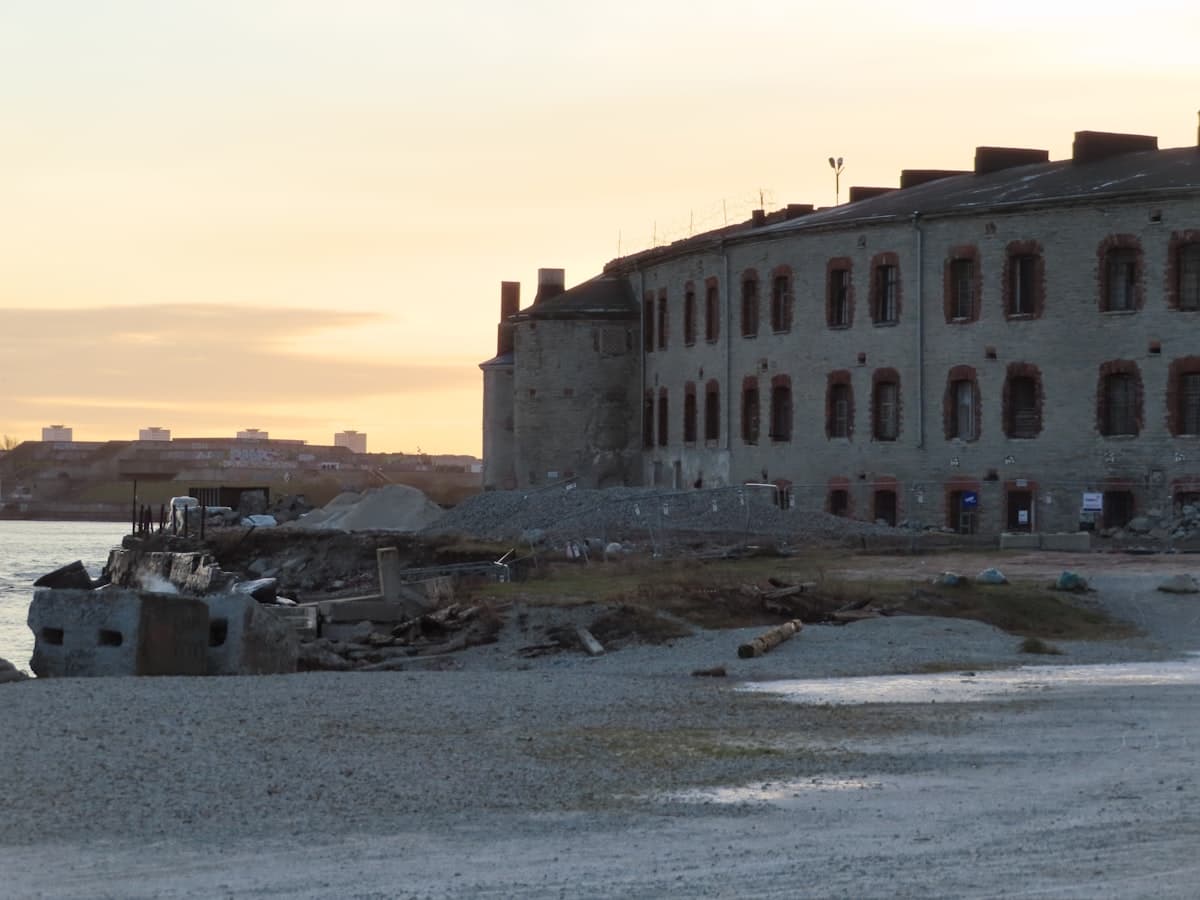
The canal that exists today is not the one de Lesseps built. The original 1869 channel was 164 kilometers long and barely deep enough for the ships of its era. It has been widened and deepened continuously since, most dramatically in 2015 when Egypt spent $8.5 billion in eight months to excavate a parallel channel, funding it through public investment certificates sold to ordinary Egyptians who bought them out of something close to nationalist fervor.
But before any of that, there was the question of who owned it.
De Lesseps negotiated a concession through the Khedive Said in 1854, a deal that gave the Suez Canal Company, incorporated in France, the right to operate the waterway for 99 years. Egypt received 15 percent of annual profits and held 44 percent of shares. Britain, notably, opposed the canal's construction entirely, fearing it would benefit France and destabilize British overland routes to India through Egypt. Then the canal opened. Within five years, 80 percent of canal traffic was British shipping.
In 1875, Khedive Ismail, drowning in debt partly accumulated by the canal's construction costs, sold Egypt's entire 44 percent share block to the British government for 4 million pounds sterling, a sum personally arranged overnight by Prime Minister Disraeli using a loan from the Rothschild banking family because Parliament was not in session to approve the funds. Egypt sold its largest strategic asset in a single transaction conducted without public knowledge or parliamentary oversight.
Seven years later, Britain invaded.
The Colonial City They Built to Run the Canal
Ismailia does not look like other Egyptian cities. That is the first thing that tells you something is wrong, or at least historically layered. The streets on the European side of town are broad and lined with jacaranda and bougainvillea. The villas are colonial French, with deep verandas and enclosed gardens. The Canal Authority headquarters, still operational, sits behind wrought-iron gates that look borrowed from a Lyon suburb.
This was deliberate. The Suez Canal Company built Ismailia as a European administrative enclave in the Egyptian desert. The city was physically divided: a European quarter with running water, electricity, and paved roads, and an Arab quarter without. This division was legal and enforced. Egyptian employees of the Canal Company earned systematically lower wages than their European counterparts for identical work, a disparity that Egyptian labor organizers documented and protested as early as the 1910s.
The Ismailia Museum, small but undervisited, holds objects that complicate the standard canal narrative: artifacts from the ancient Egyptian waterway that preceded de Lesseps by more than 3,000 years. Pharaoh Senusret III is believed to have built a canal connecting the Nile to the Red Sea around 1850 BCE. Darius I of Persia restored it in the 5th century BCE and left a commemorative stele, fragments of which sit in this museum, recording that ships traveled from Egypt to Persia through the canal he completed. De Lesseps did not invent the idea. He simply had better financing and worse labor conditions.
The 1956 Moment and the Decade That Built It
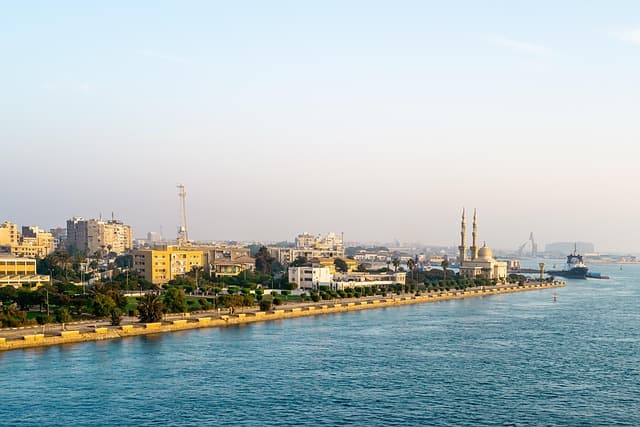
On July 26, 1956, Gamal Abdel Nasser gave a speech in Alexandria that lasted three hours and contained the name "de Lesseps" as a coded signal to Egyptian agents waiting in position along the canal. When they heard the name spoken, they occupied the Canal Authority offices simultaneously in Ismailia, Port Said, and Suez. By the time Nasser finished speaking, Egypt had nationalized the Suez Canal.
Britain, France, and Israel launched a military operation to retake it three months later. The operation succeeded militarily and failed completely in every other respect. The United States refused to support it. The Soviet Union threatened missile strikes. Eisenhower pressured Britain through currency markets, threatening to refuse IMF support for sterling, and the British pound began collapsing within days. Britain withdrew. The canal stayed Egyptian.
What made nationalization possible was the decade of organizing that preceded it. Egyptian workers inside the Canal Company had been building parallel administrative capacity since the late 1940s, documenting operations, learning the technical systems, and preparing for the moment when they would have to run it alone. When the British and French technical staff walked out after nationalization, expecting the canal to collapse within weeks, Egyptian engineers and operators kept it running. The expected closure never came.
Port Said carries visible scars from the 1956 war. The city was bombed by British and French aircraft. Buildings still standing in the old port district show the particular patchwork of destruction and repair that accumulates when a place is shelled and then rebuilt on a limited budget. The Port Said National Museum documents this period without the triumphalism you might expect, allowing the photographs to carry the weight.
The Connections
The Suez Canal history British Egypt relationship does not begin in 1869 or end in 1956. It is braided through centuries of Egyptian history in ways that reward attention.
The ancient canal connecting the Nile to the Red Sea ran a different route than the modern canal, cutting east from the Nile Delta near modern Zagazig rather than through the Sinai isthmus. Napoleon's engineers surveyed the isthmus in 1799 and concluded incorrectly that the Red Sea was 10 meters higher than the Mediterranean, which would have made a sea-level canal technically impossible. This error, made by a French engineer named Le Père, delayed serious canal planning by 50 years. When later surveys corrected the mistake, de Lesseps used it as a commercial opening.
The British occupation that followed canal-related financial chaos in 1882 restructured Egypt's entire administrative class. The generation of Egyptian professionals who came of age under British administration were educated in British-modeled institutions, governed by British advisors, and increasingly radicalized by the gap between what they were taught about civilization and law and what they experienced under colonial administration. Nasser's generation was the direct product of that radicalization. The canal that Britain bought shares in to protect its India trade route eventually produced the political movement that expelled Britain from Egypt.
Ismailia also sits near Tell el-Maskhuta, an archaeological site associated with the biblical city of Succoth and with the ancient canal's eastern terminus. The connections between pharaonic infrastructure, biblical narrative, colonial engineering, and Cold War geopolitics all converge within roughly 100 kilometers of water.
Common Mistakes
Visiting only Port Said. Port Said is the more accessible entry point and has tourist infrastructure, but Ismailia is where the canal's administrative history lives. The Canal Authority buildings, the divided colonial urbanism, and the Ismailia Museum together give you a context that Port Said cannot provide alone.
Booking a "canal cruise" tour from Cairo. Several operators sell day tours marketed around watching ships pass through the canal. You spend four hours in a bus and twenty minutes by the water. The ships are large and slow and, after about ninety seconds, you have seen all there is to see of a ship being large and slow. This is not worth EGP 800 to 1,200.
Skipping the Ismailia Museum because it looks small. It is small. Go anyway. The Darius stele fragments and the pharaonic canal artifacts reframe the entire colonial narrative in fifteen minutes. The museum receives almost no foreign visitors and the staff will sometimes take you into storage areas if you show genuine interest.
Treating the 1956 narrative as simple. The standard telling is Britain bad, Nasser triumphant. The actual history involves Nasser accepting Soviet arms deals that increased Cold War tension in the region, Israeli military action in Sinai that preceded the British-French assault, and Egyptian civilian casualties in Port Said that Egyptian official history has sometimes underemphasized. Read more than one account before you arrive.
Going in summer. The canal zone in July sits at 38°C with humidity from the water. The towns have no shade infrastructure designed for tourists. October is the correct answer.
Expecting the canal itself to be visually dramatic. It is flat water between two flat banks. The drama is entirely historical and political. Visitors who come for scenery leave disappointed. Visitors who come having read about the 1956 crisis, the construction deaths, the Rothschild loan, and the Darius stele leave with something they will think about for years.
Practical Tips
Stay in Ismailia rather than day-tripping from Cairo. The city has a quiet evening quality near the lake that you lose entirely if you are watching the clock for your return bus. The Mercure Forsan Island hotel sits on an island in Lake Timsah connected to the city by bridge and charges mid-range prices with canal-area views.
Hire a local guide specifically in Ismailia, not through a Cairo agency. The canal authority district, the old European villas, and the divisions of the colonial city read very differently with someone who grew up there. Expect to pay EGP 300 to 500 for a half-day. Ask your hotel to connect you with someone rather than accepting a street approach.
The crossing between the Sinai and mainland Egypt through the canal runs via tunnel (the Ahmed Hamdi Tunnel near Suez) or ferry. If you are combining a Sinai trip with a canal visit, the Suez ferry crossing is cheap (roughly EGP 5 to 10) and puts you on the water in a way that no canal cruise tour does.
Bring a physical map or offline GPS. The colonial grid of Ismailia's European quarter is legible, but the transition zones between neighborhoods are not well signed and Google Maps coverage becomes inconsistent in the older districts.
The canal's eastern bank in Ismailia has a corniche road where you can watch northbound traffic from close range for free. Cargo ships, container vessels, and occasional naval ships move through at about 13 kilometers per hour. The scale registers in a way that photographs do not prepare you for: a vessel the height of a twelve-story building, moving silently past date palms, is genuinely strange to witness.
Frequently Asked Questions
The Weekly Dispatch
More on Egypt, every Friday.
Cultural depth and places most guides never mention.
No spam. Unsubscribe anytime.