Suez Canal History, British Egypt, and What the Water Still Carries
Britain occupied Egypt in 1882 over a canal it didn't build, didn't own, and lost in a week in 1956. The water hasn't stopped moving since.

Audio Guide: Suez Canal History, British Egypt, and What the Water Still Carries
Quick Facts
- Best time to visit
- October to March. Canal cities sit on the desert edge with significant humidity; summer temperatures exceed 40°C. Winter light is cleaner, crowds are manageable, and the embankment is comfortable for extended watching.
- Entrance fee
- Ismailia Museum: EGP 60 (under $2 USD). De Lesseps House: EGP 40 (approx $1.30 USD) when open. Canal embankment viewing points in Ismailia and Port Said: free.
- Opening hours
- Ismailia Museum: Saturday to Thursday 9am to 4pm, closed Friday. De Lesseps House: irregular hours, confirm locally. The canal itself operates 24 hours; northbound convoys reach Ismailia by mid-morning.
- How to get there
- Cairo to Ismailia: East Delta Bus from Turgoman Station, EGP 45 to 70, 2 to 2.5 hours. Cairo to Port Said: same operator, EGP 60 to 90, approx 3 hours. Private taxi Cairo to Ismailia: EGP 600 to 800 negotiated.
- Time needed
- Ismailia alone: one full day minimum. Port Said: a separate full day. Combining both with transit-watching: plan an overnight stay in Ismailia between the two.
- Cost range
- Budget EGP 400 to 700 per day including hostel, local food, and bus transport. Mid-range EGP 1,200 to 2,000 per day with a decent hotel, restaurant meals, and private transport between sites.
The Suez Canal was inaugurated in November 1869 with one of the most expensive parties in human history. Khedive Ismail spent roughly 28 million francs on the celebrations, invited Empress Eugénie of France, commissioned Verdi to write an opera (Verdi refused; Aida came later and was not written for the opening), and then watched Egypt slide into insolvency within seven years. By 1875, the British government purchased Egypt's 44% stake in the canal for 4 million pounds, a sum Prime Minister Disraeli borrowed overnight from the Rothschild banking house because Parliament was not in session. Egypt did not receive a pound of it. The canal Egypt built, on land Egypt owned, with Egyptian labor, had just become a British financial instrument. What followed was seventy years of occupation that shaped everything you see in the canal cities of Ismailia, Port Said, and Suez: the architecture, the street grids, the cafes, the lingering resentment.
To travel the Suez Canal corridor today is to read a very specific argument in stone, water, and urban planning about who controls infrastructure and who pays for it.
Quick Facts
Best time to visit: October to March. Canal cities are on the desert edge; summer temperatures in Suez city regularly exceed 40°C with humidity from the water. Winter light is cleaner and the Delta air less hazy.
Entrance fees: The Suez Canal Authority Museum in Ismailia costs approximately EGP 60 (under $2 USD). The De Lesseps House in Ismailia, when open, is EGP 40. Viewing points along the canal in Port Said are free. The Suez Canal Bridge (also called the Mubarak Peace Bridge) observation area is accessible at no charge.
Opening hours: Ismailia Museum: Saturday to Thursday, 9am to 4pm, closed Friday. De Lesseps House: irregular hours; confirm locally before visiting. The canal itself is a 24-hour working waterway; tankers transit at all hours.
How to get there: From Cairo, buses to Ismailia depart from Turgoman Bus Station roughly every 30 minutes, operated by East Delta Bus Company. Journey time is 2 to 2.5 hours. Cost: approximately EGP 45 to 70. To Port Said, the same operator runs services in about 3 hours for EGP 60 to 90. Taxis from Cairo to Ismailia run EGP 600 to 800 depending on negotiation. The Ahmed Hamdi Tunnel connects Sinai to the western bank under the canal and costs nothing for private vehicles.
Time needed: Ismailia alone merits a full day. Port Said requires a separate day. Combining both with a transit-watching session at the Kabrit viewing point means an overnight stay in Ismailia.
Cost range: Budget EGP 400 to 700 per day (hostel, local food, bus transport). Mid-range EGP 1,200 to 2,000 per day (a decent hotel in Ismailia, restaurant meals, private transport between sites).
Why This Place Matters
The canal that Ferdinand de Lesseps convinced Khedive Said to approve in 1854 was not a new idea. The Pharaohs dug an earlier version. Senusret III may have cut the first canal connecting the Nile to the Red Sea around 1850 BC, and Darius I of Persia restored it in the 5th century BC. Trajan rebuilt it again. The Arab general Amr ibn al-As reopened a version of it after the Islamic conquest of Egypt in 641 AD, calling it the Canal of the Commander of the Faithful, and it carried grain from Egypt to the Hijaz for over a century before the Abbasid caliph Al-Mansur ordered it closed in 767 AD, reportedly to starve a rebellion in Medina. The route Europeans called "impossible" had been dug and abandoned and dug again across three thousand years.
What de Lesseps built was different in scale and alignment: a sea-level canal from the Mediterranean to the Red Sea with no locks, 193 kilometers long, cutting through the Sinai isthmus rather than following the Nile valley. It took ten years and the labor of roughly 1.5 million Egyptians, many of them conscripted under a corvée system that France and Britain publicly condemned and privately relied upon. Approximately 125,000 workers died during construction, most from cholera outbreaks. There is no major memorial to them along the canal's length.
This is the context for understanding British involvement. The canal was not primarily a route to Egypt. It was a route to India. The distance from London to Bombay via the Cape of Good Hope was 19,800 kilometers. Via Suez it became 11,600 kilometers. The British empire did not occupy Egypt because it loved the Nile. It occupied Egypt because 40% of all traffic through the canal was British, and in 1882, when an Egyptian military officer named Ahmed Urabi led a nationalist uprising against Khedive Tewfik's government and its European creditors, Britain sent a naval fleet, bombarded Alexandria, and within three months had effective control of the country. They called it a "temporary occupation." It lasted until 1956.
The Canal Cities: What You Will Actually See
Ismailia
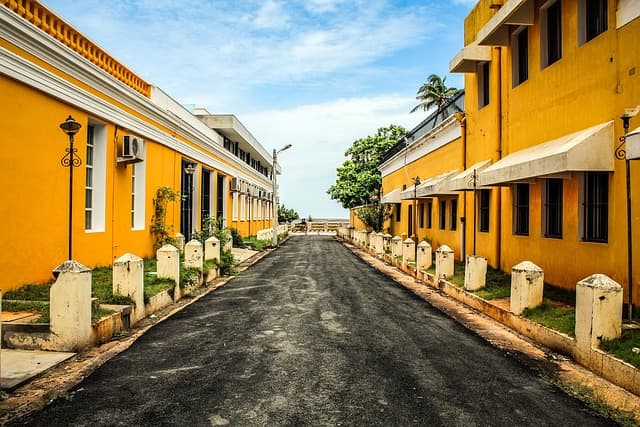
Ismailia is the canal's most legible city, because it was purpose-built by de Lesseps to house the Suez Canal Company's European administrators, and the colonial geometry is still intact. The northern half of the city, from the Sweetwater Canal down to the lakefront, is a grid of French and British villas behind garden walls, with jacaranda trees planted along wide avenues that were not designed for the traffic they now carry. The Ismailia Museum on Mohammed Ali Quay contains papyri, statuary, and a mosaic floor from the Roman period that was discovered locally, reminding you that this region was already two thousand years deep in human history before de Lesseps arrived.
The De Lesseps House, where Ferdinand de Lesseps lived during construction, is worth the irregular effort required to gain entry. His personal railway carriage sits in the garden, slowly oxidizing. The carriage is historically significant not for what it is but for what it represents: a private railway for a private citizen managing what was legally a private company, operating on land that belonged to a sovereign state. The entire arrangement was the template for what economists now call infrastructure colonialism.
One detail most visitors miss: the Sweetwater Canal, which runs through Ismailia, was dug specifically to bring fresh Nile water to the workers and later residents of the canal zone. Before it was completed, construction teams and their families had no reliable fresh water. The logistics of digging a 160-kilometer canal in the desert, in the 1860s, without the water to sustain the laborers digging it, was resolved by digging a second canal first.
Port Said
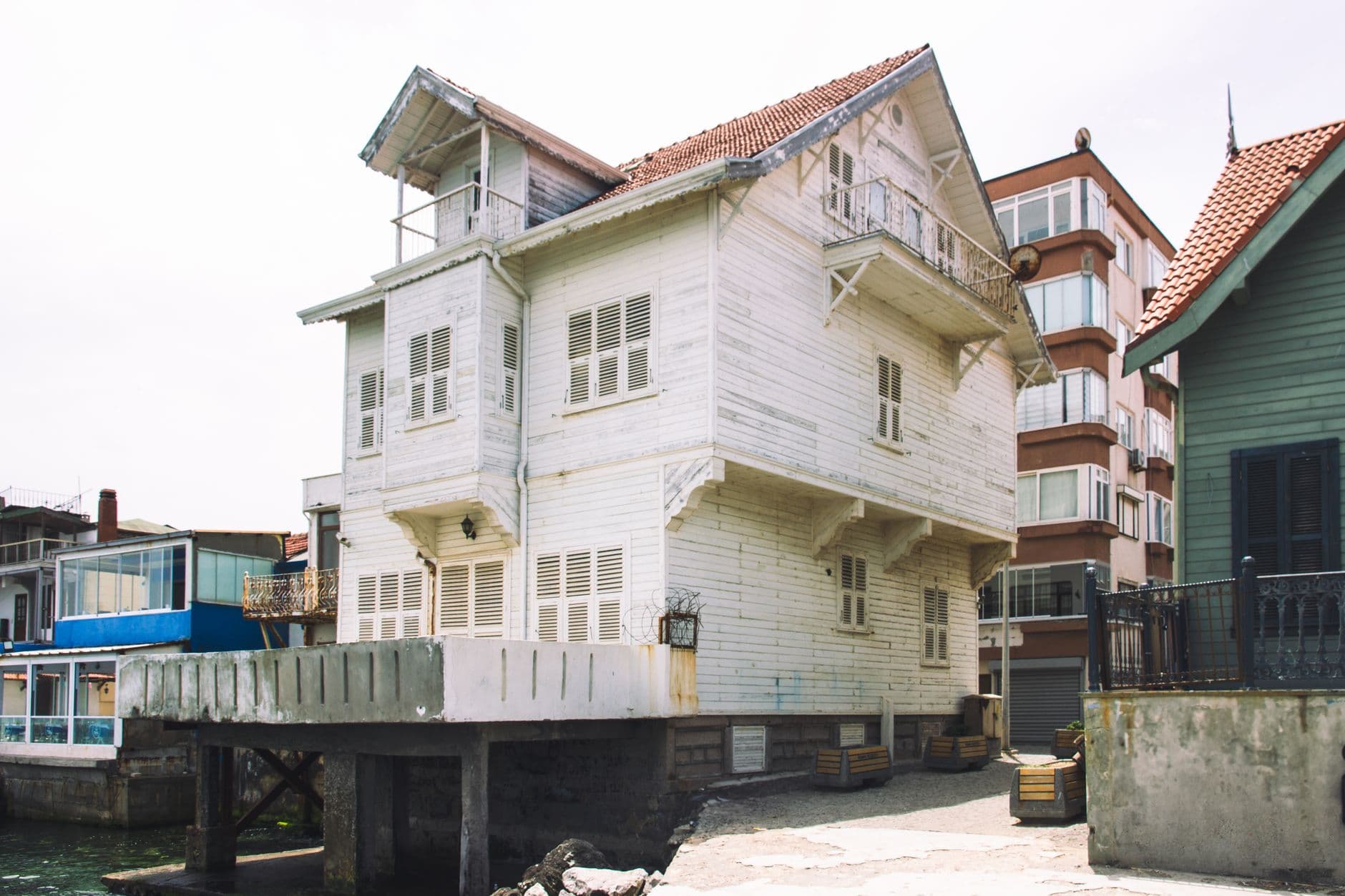
Port Said sits at the Mediterranean entrance to the canal and was itself built from nothing in 1859. The city stands on land reclaimed from Lake Manzala, which means its entire foundation is dredge spoil from the canal excavation. The historic downtown around Al-Shohada Street retains a significant number of wooden-balconied buildings in a style that mixes Ottoman, French, and what locals call "canal architecture," the functional tropical vernacular that British and French engineers adapted for a city that was neither Europe nor quite Egypt.
The statue of de Lesseps that once stood at the harbor entrance was pulled down during the Suez Crisis in 1956, which is itself a fact worth dwelling on. Gamal Abdel Nasser nationalized the canal on July 26, 1956, the fourth anniversary of King Farouk's abdication, in a speech in Alexandria. The word he used as a coded signal to Egyptian engineers to seize control of canal operations was "de Lesseps." Within the hour, Egyptian technicians had taken over every station along the 193-kilometer waterway. Britain, France, and Israel invaded anyway. The United States and Soviet Union, in a rare alignment, pressured them to withdraw. The canal stayed Egyptian.
Port Fouad, directly across the canal from Port Said and accessible by the free public ferry that runs every few minutes, is where British canal company employees lived after the formal occupation. The ferry crossing takes four minutes and crosses what is technically an international shipping lane. Tankers the length of four football pitches pass close enough to read the rust patterns on their hulls.
The Connections
The canal corridor sits inside a much longer argument about Egyptian sovereignty that runs from Pharaonic taxation systems through Ottoman tribute arrangements to European debt financing and into the present. The canal zone was designated British military territory under the 1936 Anglo-Egyptian Treaty, a provision that Egyptian nationalists resented from the day it was signed. The 80,000 British troops stationed in the canal zone in the early 1950s were not there as guests. The tension produced what Egyptians call the January 25, 1952 massacre of Egyptian police in Ismailia, when British forces killed 50 auxiliary policemen who refused to surrender their weapons. The riots that followed in Cairo, known as Black Saturday, destroyed 750 buildings in a single day, including Shepheard's Hotel, which had been a symbol of British presence in Egypt for over a century. Four years later, the canal was Egyptian.
The Pharaonic canal that preceded the modern one passed through the Wadi Tumilat, which appears in some interpretations as the land of Goshen mentioned in the Hebrew Bible. The region was agriculturally important in the New Kingdom period, and Ramesses II built a series of storage cities along it, which some scholars associate with the biblical narrative of Israelite labor. This connection is contested and unproven, but it means the canal zone sits at the intersection of Egyptian, Jewish, Christian, and Islamic historical memory simultaneously, which is true of most things in Egypt if you look closely enough.
Common Mistakes
Treating Port Said as a day trip from Cairo. The bus journey is three hours each way. If you rush it, you see the harbor, take a photo, and leave. The city's real texture, the market behind the corniche, the Port Fouad ferry, the conversation in a canal-view café about what Nasser meant to an older Egyptian, requires an overnight stay.
Paying for a guided "Suez Canal tour" from Cairo operators. Most of these cost EGP 800 to 1,500, involve a bus, a brief stop at a canal overlook, a tourist restaurant, and a return journey. You learn nothing you could not learn from reading for two hours. Book a public bus to Ismailia, walk to the lake, watch the ships, and talk to people.
Skipping Ismailia in favor of Port Said. Port Said has more name recognition, but Ismailia has the museum, the colonial architecture, the De Lesseps house, and the Sweetwater Canal. It is the more intellectually complete stop on the Suez Canal history and British Egypt circuit.
The Suez Canal Authority's official viewing platform near Ismailia. This is sometimes recommended in general guides. It requires advance permission, involves bureaucratic coordination, and delivers a view you can get from numerous public spots along the embankment for free. Save the effort.
Visiting in July or August. The combination of desert heat and canal humidity at that time of year is not dangerous if you are careful, but it makes sustained walking genuinely unpleasant and reduces your actual engagement with the places you came to see.
Expecting museum labels in English. The Ismailia Museum has limited English signage. Bring a translation app or arrange a local guide specifically for the museum, not the canal tour.
Ignoring Suez city itself. The city of Suez at the southern end of the canal was almost entirely destroyed during the 1967 and 1973 wars with Israel and then rebuilt. It is not architecturally beautiful. But the war history embedded in it, the memory of a city evacuated and shelled and rebuilt from concrete, is a different kind of canal story, the one that explains why Egyptians feel about this waterway the way they do.
Practical Tips
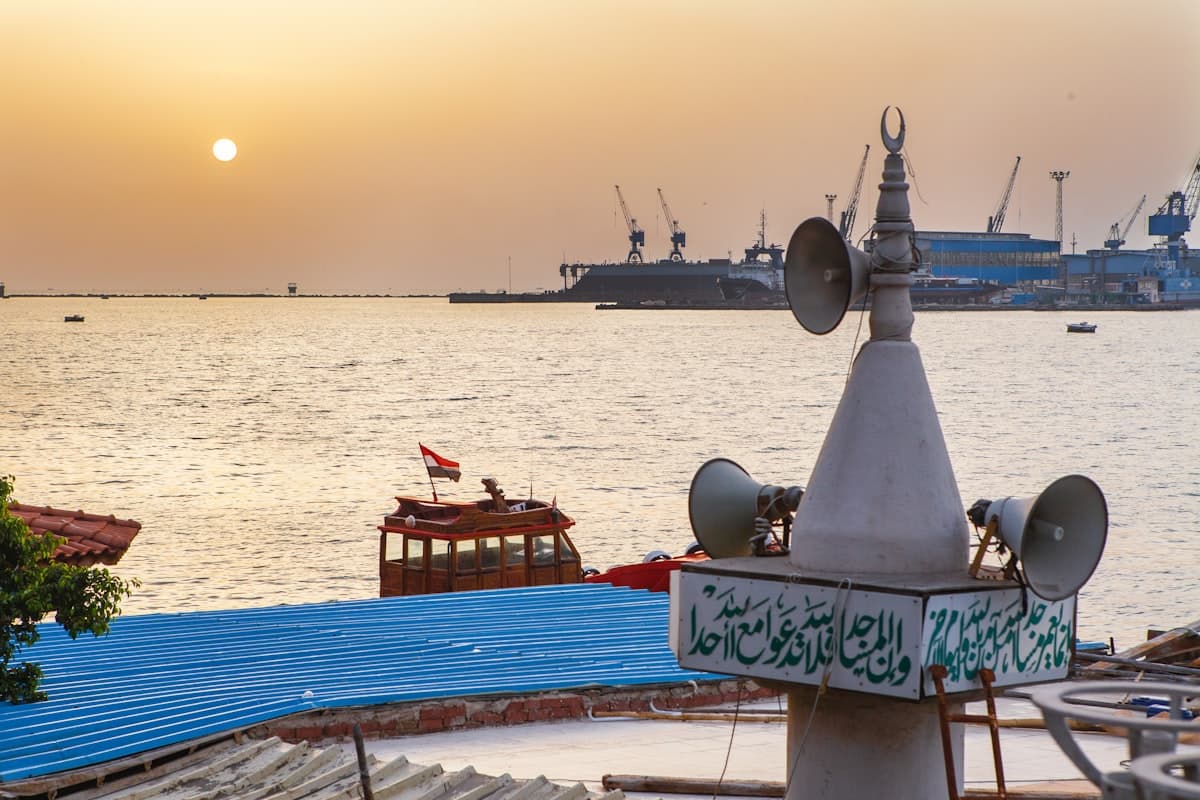
The canal is a working waterway with 24-hour transit, and the best free experience it offers is simply watching a supertanker pass at close range. In Ismailia, the embankment near the Heliopolis Sporting Club provides good unobstructed views. Ships travel in convoys: a northbound convoy departs Suez in the early morning and a southbound convoy departs Port Said. The northbound convoy typically reaches the Ismailia stretch by mid-morning. Arriving at the embankment by 9am gives you the best chance of seeing active transit.
For accommodation, Ismailia has several mid-range hotels near the lake. The Mercure Forsan Island, on a small island connected to the city by causeway, is overpriced for what it offers. Smaller hotels on Saad Zaghloul Street are a better value and more central.
The canal zone has a significant security presence, including military installations that are not always marked. Do not photograph military infrastructure, vessels that appear to be naval rather than commercial, or security checkpoints. Photograph the ships, the architecture, and the water freely.
Local food in Ismailia skews toward fresh fish from Lake Timsah and the surrounding region. The lake restaurants serve tilapia and mullet that transit visitors consistently overlook in favor of hotel dining. This is a mistake. A grilled tilapia lunch at a lakeside spot costs EGP 120 to 180 and is better than anything served in a hotel restaurant at three times the price.
Frequently Asked Questions
The Weekly Dispatch
More on Egypt, every Friday.
Cultural depth and places most guides never mention.
No spam. Unsubscribe anytime.