Suez Canal History, British Egypt & the Fight for the Waterway
Britain occupied Egypt in 1882 to protect a canal it didn't build, didn't own, and lost anyway in 1956. The full story is stranger than the headline.

Quick Facts
- Best time to visit
- October to March. Coastal humidity in summer makes both Ismailia and Port Said uncomfortable. Winter light on the canal and lakes is also far better for photography.
- Entrance fee
- Suez Canal Authority Museum (Ismailia): EGP 50 (approx $1.60 USD). Ismailia Regional Museum: EGP 80 (approx $2.60 USD), students EGP 40. Canal viewing from public areas is free.
- Opening hours
- Regional and Canal Authority museums: Saturday to Thursday, 9am to 4pm, closed Friday. Public canal viewing areas accessible at all hours.
- How to get there
- From Cairo: bus from Turgoman station EGP 45 to 70, private taxi EGP 400 to 600 one-way. Ismailia to Port Said by microbus EGP 20 to 30. No passenger rail to Canal Zone terminals.
- Time needed
- Ismailia alone: full day. Ismailia plus Port Said: two days with overnight stay. Canal Zone history combined with Sinai crossing: three to four days.
- Cost range
- Budget EGP 600 to 900 per day including transport from Cairo, meals, and museum entry. Mid-range EGP 1,800 to 2,800 per day with private driver and hotel in Ismailia.
Quick Facts
Best time to visit: October through March. The Canal Zone sits at sea level and turns punishing between May and September. Port Said specifically gets a coastal breeze that makes it marginally more bearable in summer, but Ismailia becomes an oven.
Entrance fees: The Suez Canal Authority Museum in Ismailia charges EGP 50 (approx $1.60 USD). The Canal Zone itself is a functioning industrial waterway, not a ticketed attraction. You observe ships from public viewing areas along the banks. The Ismailia Regional Museum, which holds artifacts from the Bitter Lakes excavations, charges EGP 80 (approx $2.60 USD), students EGP 40.
Opening hours: Canal viewing is public and continuous. Museums in Ismailia are typically open Saturday through Thursday, 9am to 4pm, and closed Friday. Confirm hours locally as they shift seasonally.
Getting there: From Cairo, the road to Ismailia via the Ismailia Desert Road takes roughly ninety minutes by private car or taxi (expect EGP 400 to 600 one-way for a negotiated taxi). Buses from Cairo's Turgoman station run regularly and cost EGP 45 to 70 depending on company. Port Said is two and a half hours from Cairo by road. There is no passenger rail service directly serving the modern Canal Zone terminals.
Time needed: Ismailia alone warrants a full day if you are combining the museum, the French colonial quarter, and the lakeside. Port Said deserves a separate trip of at least half a day for the Canal Authority Building and the harbor viewing point.
Cost range: Budget EGP 600 to 900 per day including transport from Cairo, meals, and museum entry. Mid-range EGP 1,800 to 2,800 per day with a private driver and hotel in Ismailia.
---
Why This Place Matters
Britain did not build the Suez Canal. This is the fact that unravels every clean narrative about empire, Egyptian sovereignty, and the conflict that eventually became the defining crisis of postcolonial history. The canal was financed by French and Egyptian capital, engineered by Ferdinand de Lesseps, and dug at enormous human cost by Egyptian corvée labor, a form of forced conscription that the Khedive Said Pasha had promised de Lesseps would be available in unlimited supply. Approximately 1.5 million Egyptians worked on the canal between 1859 and 1869. Estimates of those who died during construction range from 120,000 to over 200,000, mostly from cholera and exhaustion.
Britain, which had actively opposed construction for decades because it threatened to reduce its overland Indian route through Egypt, changed its position entirely once the canal opened in 1869. By 1875, the heavily indebted Khedive Ismail sold his 44 percent stake in the Suez Canal Company to the British government for 4 million pounds sterling, a transaction arranged in four days by Prime Minister Disraeli using a personal loan from the Rothschild banking house because Parliament was not in session to approve funds. Britain then used Egyptian financial instability as the justification for increasing control over Egyptian governance, which produced the 1882 Anglo-Egyptian War, which produced seventy-four years of British occupation, which ended in 1956 when Gamal Abdel Nasser nationalized the canal and humiliated three colonial powers in a single press conference.
The Canal Zone is where all of that played out. It is not a ruin. It is an active, contested, layered place.
---
Ismailia: The City Britain Built to Run the Canal
Ismailia was founded in 1863 as the administrative center of canal construction and named after Khedive Ismail. De Lesseps lived here. The Suez Canal Company's European employees lived here in a grid of wide streets and colonial villas that still exist, many of them occupied by Egyptian families who have lived in the same buildings for three or four generations since the 1956 nationalization transferred company property to Egyptian hands.
The villa where de Lesseps himself stayed is still standing on the banks of Lake Timsah. The garden contains a small structure housing a granite stele that dates to the reign of Ramesses II, discovered during canal excavations and placed here as a kind of colonial trophy. The stele had already been moved once, nearly three thousand years earlier, when a later pharaoh relocated it to commemorate a different boundary. It has been moved at least three times in recorded history. This is an ordinary fact about Egyptian artifacts and an extraordinary one about continuity.
The Ismailia Museum holds objects recovered from the Wadi Tumilat, the ancient dried waterway that connected the Nile Delta to the Bitter Lakes region. The Pharaoh Necho II attempted to build a Nile-to-Red-Sea canal around 600 BC. Darius I of Persia actually completed it around 500 BC and left a series of granite steles along its route, one of which is in this museum. The Ottoman admiral Suleiman Pasha surveyed the isthmus in the sixteenth century and concluded a canal was technically feasible but strategically undesirable. Napoleon's engineers surveyed it again in 1799 and concluded, incorrectly due to a calculation error, that the Red Sea was thirty feet higher than the Mediterranean and a canal would flood the Delta. That error delayed construction by fifty years.
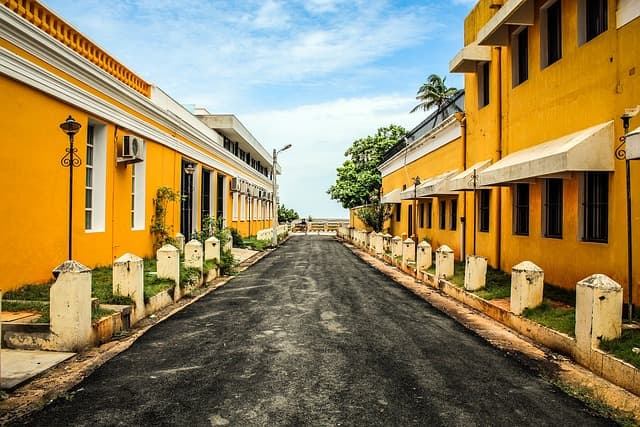
The French colonial quarter of Ismailia, known locally as the European Quarter, contains approximately six hundred villas built in a hybrid Mediterranean-colonial style between 1860 and 1920. It remains one of the most intact examples of this architectural period anywhere in Egypt. Walking it in the morning, before the heat arrives, with bougainvillea still clinging to gates that haven't been repainted since the 1970s, is one of the quietly particular pleasures of the Canal Zone.
---
Port Said and the 1956 War Nobody Explains Correctly
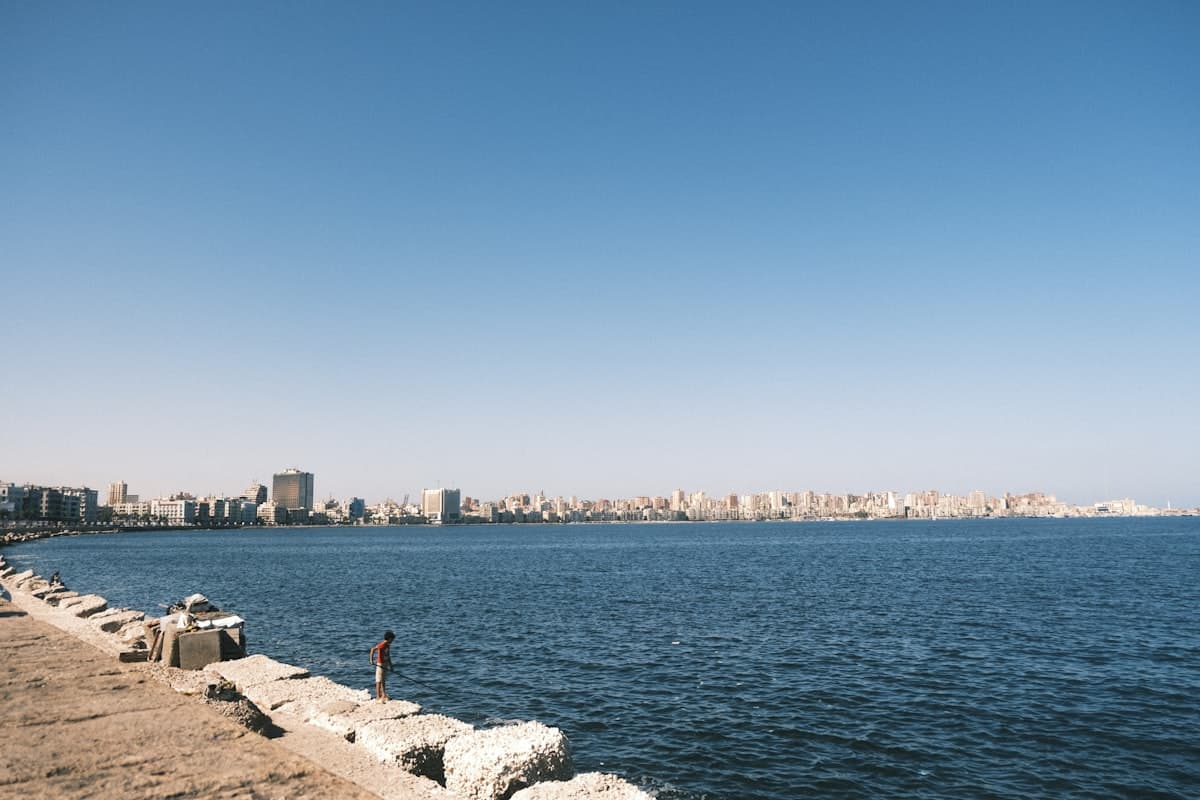
Port Said sits at the northern entrance of the canal where it meets the Mediterranean. On November 5, 1956, British and French paratroopers landed here in what was supposed to be the military portion of a coordinated operation with Israel to retake the canal that Nasser had nationalized four months earlier. The operation was called Musketeer. It lasted less than a week before American economic pressure, specifically Eisenhower's threat to sell US reserves of sterling and collapse the pound, forced a ceasefire and British withdrawal.
The significance of what happened at Port Said in 1956 is not simply that Egypt kept its canal. It is that the United States chose Egyptian sovereignty over its two closest European allies, establishing that postwar American power did not run through the old imperial frameworks. Eisenhower was furious that Britain and France had acted without consulting Washington. He was also facing a presidential election in four days. The Suez Crisis, as it is called in Western histories, is called the Tripartite Aggression in Egypt, and the distinction in naming tells you everything about who considers it a crisis and who considers it an invasion.
The Canal Authority Building in Port Said, a handsome colonial structure overlooking the harbor, is where you can watch container ships passing close enough to read their names. The ships move at roughly fourteen kilometers per hour through the canal, a speed limit that prevents wave erosion on the banks. Watching a container vessel the length of four football fields slide past a city of apartment buildings and fishing boats is one of those Egyptian experiences that does not compress into photographs.
Port Said's fish market, open from early morning, is where the canal's commercial reality becomes tactile. The city has been a duty-free port since 1976 and has a distinct identity that is neither Cairo nor Alexandria. Residents will tell you Port Said belongs to itself.
---
The Connections: From Pharaonic Canals to Cold War Politics
The Suez Canal did not create the idea of connecting the Mediterranean to the Red Sea. It completed it, after roughly 2,500 years of interrupted attempts. The Canal of the Pharaohs, which Necho II started and Darius finished, ran not across the isthmus directly but south from the Nile near modern Zagazig, through the Wadi Tumilat to the Bitter Lakes, and then to the Red Sea. It was navigable, used by Ptolemaic rulers for trade, fell into disuse, was restored by the Roman emperor Trajan, and was restored again by the Arab general Amr ibn al-As after the conquest of Egypt in 640 AD, at which point it was renamed the Canal of the Commander of the Faithful and used to ship Egyptian grain to Arabia. It silted up definitively around 770 AD when the Abbasid Caliph al-Mansur ordered it closed to starve a rebellion in the Hejaz.
The Bitter Lakes, through which the modern canal passes, were a dry salt depression before canal construction flooded them in 1869. They were full of water in Ptolemaic times and show up in ancient maps as navigable. Between 1869 and the present, they have become home to a range of marine species that migrated from the Red Sea, altering the eastern Mediterranean's ecosystem in ways still being studied. This is called the Lessepsian migration, named after de Lesseps, who could not have predicted it.
The British military presence in the Canal Zone at its peak, between 1936 and 1956, involved eighty thousand troops stationed along an eighty-mile strip. The 1936 Anglo-Egyptian Treaty formalized this presence and gave Britain the right to reoccupy the zone in wartime, which it did during the Second World War when the canal became critical to supplying North African campaigns. Rommel's stated strategic objective was to capture the canal and cut Allied supply lines. That is how close the Western Desert fighting came to changing the canal's ownership again, and that proximity is never quite explained in the roadside signage.
---
Common Mistakes
Treating this as a day trip afterthought. The Canal Zone is routinely appended to Cairo itineraries as a three-hour excursion. This produces the experience of driving a long way to see water moving slowly. Staying overnight in Ismailia, eating at a lakeside restaurant, walking the French quarter at dusk: this is a different and far more complete experience.
Going only to Port Said. Port Said gets most of the tourist attention because it is famous and has a harbor. Ismailia has more history, better museums, and a more coherent architectural identity. If you can only do one, do Ismailia.
Skipping the Ismailia Regional Museum because it looks unassuming. The exterior does not prepare you for what is inside. The Darius stele alone is worth the EGP 80.
The canal boat tour offered in Port Said. Most operators run forty-minute trips that take you nowhere particular for EGP 200 to 350. The view from the Canal Authority Building's public harbor area is better and free. Skip the boat tour.
Visiting without knowing even the outline of the 1956 crisis. The Canal Zone makes partial sense without this history and full sense with it. Spend twenty minutes reading before you go. The physical landscape becomes annotated.
Expecting this to be a traditional Egyptian antiquities experience. If you come looking for temples and carved stone, you will be confused. This is nineteenth and twentieth century history on top of ancient history, and the modern layer is the one that is most visible. Adjust expectations accordingly.
Going in July or August without a plan for the heat. Ismailia in August is humid and close. If summer travel is unavoidable, begin everything by 7am and be indoors by noon.
---
Practical Tips
Ismailia works best as a base. There are several mid-range hotels near Lake Timsah, clean and functional, priced between EGP 900 and 1,800 per night. The mercato area near the lake has good grilled fish restaurants where a full meal runs EGP 150 to 300 per person.
For the Canal Authority Museum, carry your student ID if applicable. The discounts are real and the ticket sellers will ask.
Port Said is about ninety kilometers north of Ismailia via the road that runs along the canal's western bank. This is a pleasant drive with the canal visible to your right and a continuous parade of ships that no photography fully captures. A private microbus from Ismailia to Port Said costs EGP 20 to 30 and leaves from the main microbus station when full.
Photography of the canal itself is generally tolerated from public areas. Photography of military installations, which are present throughout the Canal Zone, is not. When in doubt, ask. The question is always better than the alternative.
The Canal Zone has a specific Egyptian identity that is different from Cairo's and worth paying attention to. Canal families, the people whose grandparents worked for the Canal Authority or served in the 1956 and 1973 wars along this corridor, have a particular relationship to this history that is personal in a way that visitors rarely encounter in more tourist-facing parts of the country. If someone starts talking to you about the canal, let them. The oral history here has not been fully written down.
Frequently Asked Questions
The Weekly Dispatch
More on Egypt, every Friday.
Cultural depth and places most guides never mention.
No spam. Unsubscribe anytime.