Suez Canal History, British Egypt & the Politics of Water
Britain occupied Egypt in 1882 over a waterway it didn't build and didn't own. The Canal still runs. The occupation lasted 74 years. Here is what the water actually cost.

Quick Facts
- Best time to visit
- October to March. Summer in the Canal zone combines desert heat with humidity from the water, regularly exceeding 38°C. Spring and autumn offer pleasant temperatures for walking the colonial districts.
- Entrance fee
- Ismailia Museum: EGP 60 (approx $1.25 USD). Canal viewing platforms: free. Port Said Suez Canal Museum: EGP 40 (approx $0.80 USD). Students receive 50 percent reduction at both museums with valid ID.
- Opening hours
- Ismailia Museum: Tuesday to Sunday, 9am to 4pm, closed Monday. Canal viewing areas: accessible at all hours. Port Said museum: Tuesday to Sunday, 9am to 4pm.
- How to get there
- East Delta Bus from Cairo Turgoman terminal to Ismailia: EGP 60 to 80, 1.5 to 2 hours. Service taxi Ismailia to Port Said: EGP 25 to 35. Service taxi Ismailia to Suez: EGP 30 to 45. Private taxi from Cairo return: EGP 600 to 900.
- Time needed
- Ismailia alone: half day minimum. Ismailia plus Port Said: full day. Full Canal zone including war cemeteries and 1956 sites: two days with overnight in Ismailia.
- Cost range
- Budget EGP 400 to 700 per day including bus transport, meals, and entry fees. Mid-range EGP 1,200 to 2,000 with private transport and a decent hotel. The Mercure Forsan Island in Ismailia runs EGP 1,800 to 2,800 per night.
Suez Canal History, British Egypt & the Politics of Water
Britain occupied Egypt in 1882 over a waterway it didn't build, couldn't afford, and didn't legally own. The French engineer Ferdinand de Lesseps dug it. The Egyptian peasants, conscripted by the hundreds of thousands under a system the Egyptians called la corvée, died building it. And when Khedive Ismail ran out of money in 1875, Britain bought Egypt's 44 percent share in the Canal Company for £4 million sterling, a figure described by Prime Minister Disraeli as "the greatest bargain ever made." The Egyptians called it something different. They still do.
This is a guide to visiting the Suez Canal zone: the city of Ismailia, the Canal Authority headquarters, the war memorials, and the places where the Suez Canal history and British Egypt's 74-year shadow are still physically legible in stone, water, and architecture. It is also an argument for why this corridor matters to anyone trying to understand Egypt as a living political civilization, not just a pharaonic backdrop.
Quick Facts
Best time to visit: October through March. The Canal zone sits between desert and humid Mediterranean air; summer temperatures in Ismailia and Port Said regularly exceed 38°C and the humidity is punishing.
Entrance fees: The Ismailia Museum: EGP 60 (approx $1.25 USD). The De Lesseps statue area and Canal viewing platforms in Ismailia: free. The Suez Canal Authority Headquarters in Ismailia: not open to independent visitors, but the exterior and the colonial-era district around it are freely walkable.
Opening hours: Ismailia Museum, Tuesday to Sunday, 9am to 4pm. Closed Monday. The Al-Mahatta viewing area along the Canal is accessible at all hours.
How to get there: From Cairo's Turgoman bus station, East Delta buses run to Ismailia roughly every 45 minutes from 6am. Journey time: 1.5 to 2 hours. Cost: approximately EGP 60 to 80 (under $2 USD). Taxis from Cairo will negotiate; expect EGP 600 to 900 for the return trip. From Ismailia, service taxis run to Port Said (EGP 25 to 35) and to Suez city (EGP 30 to 45).
Time needed: Ismailia alone: half a day. Add Port Said's Suez Canal Museum and the de Lesseps monument: full day. Adding the Canal zone war cemeteries and the 1956 Nationalization murals: plan for two days with an overnight in Ismailia.
Cost range: Budget EGP 400 to 700 per day including transport, meals, and entry fees. Mid-range EGP 1,200 to 2,000 with a decent hotel and private transport between sites.
Why This Place Matters
The Suez Canal is 193 kilometers long. It took ten years to dig, beginning in 1859, and consumed an estimated 1.5 million Egyptian laborers under the corvée system, a form of forced labor that the Egyptian government had technically abolished but reinstated under French pressure specifically for this project. At least 120,000 of those workers died during construction, a figure that rarely appears in Canal Company commemorations but is well documented in Egyptian and French administrative records.
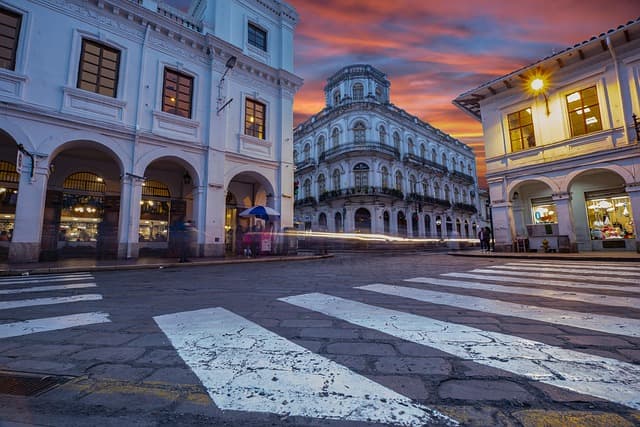
What makes this corridor essential to understanding Suez Canal history and British Egypt's relationship is that almost nothing built here was built for Egyptians. Ismailia was designed by de Lesseps as a French colonial city: wide boulevards, colonial villas, a yacht club, a fresh water canal running parallel to the salt one. The workers who dug both canals lived in camps that no longer exist, on the wrong side of every plan.
When Egypt's Khedive Ismail sold his shares in 1875, Britain became a major shareholder but not the operator. It used the purchase as a legal pretext for military intervention seven years later. The 1882 bombardment of Alexandria and the subsequent Battle of Tel el-Kebir installed British forces in Egypt for what was supposed to be a temporary occupation. It lasted until 1956. The word "temporary" did real damage.
Gamal Abdel Nasser nationalized the Canal on July 26, 1956, citing the financing of the Aswan High Dam as his immediate reason after the United States and Britain withdrew their funding offer. The Canal's annual revenues at that moment were approximately $100 million. Nasser's speech that day contained the hidden signal: every time he said the name "de Lesseps," Egyptian military units moved to seize Canal installations simultaneously across the zone. It was one of the more elegant pieces of operational security in postcolonial history.
What You Will Actually See
Ismailia: The Colonial City That Stayed
Ismailia is one of the most intact nineteenth-century colonial cities in Egypt, which means it is either compelling or uncomfortable depending on your relationship to that history, and probably both at once. The Garden City district around the Canal Authority headquarters contains European-style villas with wraparound verandas, flame trees lining the streets, and the old Casino building that once served the French and British expatriate community. The de Lesseps house still stands; it was converted into the Ismailia Museum.
The Museum itself is genuinely worth the EGP 60. It contains the original Canal Company land grants, survey maps, and construction photographs that make the scale of the engineering and the labor explicit. There is also a Pharaonic gallery that places the Canal in a longer context: the ancient Egyptians under Senusret III built a connecting waterway between the Nile and the Red Sea around 1850 BC, and the Persian king Darius I reopened it in 510 BC after it had silted up. De Lesseps was not the first person to look at this geography and see an opportunity. He was the first to find investors.
The Canal viewing platform near the Al-Mahatta area lets you watch container ships pass at close range. The ships look wrong from the bank, too large for the channel, sitting too high in the water, and moving with a dreamlike slowness that makes the 193-kilometer passage feel impossible. The average transit time is 12 to 16 hours.
Port Said: Where the Canal Meets the Mediterranean
Port Said was built from nothing in 1859 as the Canal's northern terminus, on a sandbar at the edge of the Mediterranean. By 1900 it was one of the most cosmopolitan cities in the world, with Greek, Italian, French, British, and Maltese communities running the provisioning, banking, and postal services for a transit route that connected Europe to India in roughly three weeks instead of three months around the Cape.
The Suez Canal Museum in Port Said houses the bronze statue of de Lesseps that once stood at the Canal entrance, toppled by Egyptian crowds in 1956 after nationalization and brought inside rather than destroyed, which says something interesting about how Egypt handles the physical evidence of its complicated centuries. The building itself is Ottoman-revival in style, built in 1910, with a decorative scheme that tries to reconcile French canal administration with Islamic geometric ornament and ends up as something entirely particular to this waterway.
Port Said's commercial district still has covered arcades built for the colonial period, wooden-latticed balconies called mashrabiyya in a distinctly Mediterranean variant, and a harbor where fishing boats and naval vessels share the same anchorage. The city was almost entirely destroyed during the 1956 Tripartite Aggression, when British, French, and Israeli forces bombed and briefly occupied it following nationalization. Entire neighborhoods were rebuilt identically in the early 1960s; the seams are visible if you know where to look.
The Connections
The Suez Canal does not exist in isolation from the rest of Egyptian history. It is the Nile's commercial successor.
The ancient Egyptians moved grain north on the Nile and traded Red Sea goods through the Wadi Hammamat routes. When the Romans controlled Egypt, they depended on Nile grain to feed a third of the Empire's population, roughly 7.5 million tons annually during the first century AD. When Arab geographers in the ninth century described Egypt as a gift of the Nile, they meant it economically: whoever controlled the water controlled the surplus.
The Canal mechanized that logic. Instead of grain moving north to Rome, it was Indian cotton, Australian wool, and East Asian manufactured goods moving west to European markets. Britain's insistence on controlling Egypt after 1882 was inseparable from its dependence on the Canal route to India, which by then was carrying more than 80 percent of British Indian trade by volume.
The war cemeteries in the Canal zone connect this corridor to the First and Second World Wars. The CWGC Ismailia War Memorial cemetery contains graves of soldiers from Britain, Australia, New Zealand, and India who died defending the Canal. The Imperial logic is written in those names: men from four continents died to protect a route that primarily served European commercial and military interests, while the Egyptians who lived along that route remained subjects rather than citizens of the country the canal ran through.
Nasser's nationalization in 1956 ended a chapter that began with de Lesseps's first shovel in 1859. The New Suez Canal, a parallel channel that Egypt completed in 2015 and paid for through a domestic bond issue to which ordinary Egyptians subscribed, carries the same symbolism in reverse. This time, Egyptians financed it themselves. The Canal Authority headquarters that de Lesseps built is still the Canal Authority headquarters. The flag on top is different.
Common Mistakes
Treating Ismailia as a day trip afterthought. Most Cairo-based tours that mention the Canal do so while passing through on the way to Sinai or the Red Sea. This guarantees you see nothing. The colonial district, the museum, the Canal viewing area, and Port Said together require at least a full day, preferably with an overnight in Ismailia.
Skipping the Ismailia Museum for the viewing platform. The ships are impressive. The museum is where the history is. The construction photographs, the land grant documents, and the corvée labor records are what make the Canal legible as a political act rather than an engineering one. Spend an hour inside before you watch anything move.
Going to Suez city expecting historical resonance. Suez city at the southern end of the Canal is an industrial port, not a heritage destination. It was also heavily damaged in the 1967 and 1973 wars and rebuilt without architectural ambition. Unless you are specifically researching the 1973 October War crossing points, the city itself will not reward the detour.
The Canal cruise packages sold by Cairo hotels. These cost upward of $80 USD per person, last four hours, and consist of sitting on a boat watching the banks pass. You can watch ships from the free Ismailia viewing platform with considerably more proximity and considerably less narration. Skip the cruise.
Missing the 1956 war context in Port Said. Most visitors come for the Canal and miss the city's status as the site of the most significant postcolonial military confrontation of the twentieth century's second half. The neighborhoods rebuilt after 1956 and the cultural memory of what the Egyptians call al-Udwan al-Thulathi (the Tripartite Aggression) are woven into everything in Port Said. Ask about it. People will tell you.
Arriving on Monday. The Ismailia Museum is closed Mondays. There is no signage warning you until you are at the gate.
Assuming the Canal is visible everywhere along its length. The Canal passes through desert terrain with elevated embankments. Outside of Ismailia's designated viewing areas and Port Said's harbor, you can drive alongside the Canal for long stretches and see nothing but sand walls. Go to the specific viewpoints, not just in the general direction of water.
Practical Tips
The best hotel base for covering the full Canal zone is Ismailia, not Port Said and not Suez. The city is centrally located, has good service taxi connections in both directions, and the colonial-era Mercure Forsan Island hotel occupies a genuinely interesting building on the lake adjacent to the Canal. Rates run EGP 1,800 to 2,800 per night. Budget accommodation exists in the town center from EGP 400 to 700.
Bring cash. The Canal zone has fewer tourist infrastructure points than Cairo or Luxor, and ATMs in smaller Canal towns can run dry over weekends.
If you want to see a container ship transiting at close range, the Al-Mahatta area in Ismailia is your best option. Ships pass continuously; you will not wait long. The new parallel channel opened in 2015 is to the east and not generally accessible for close viewing, but the original channel through Ismailia handles both northbound and southbound traffic in different sections.
For anyone specifically researching Suez Canal history and British Egypt's occupation period in depth, the National Archives in Cairo hold British consular records from 1882 onward that are partially accessible to researchers with institutional affiliation. The Ismailia Museum's curator can connect serious researchers to the Canal Authority's own archive, which contains operational records going back to 1869.
Bring sunscreen and water regardless of season. The Canal zone sits between desert on one side and water on the other; the reflected light and heat are more intense than they appear, and shade is sparse outside of Ismailia's garden district.
Frequently Asked Questions
The Weekly Dispatch
More on Egypt, every Friday.
Cultural depth and places most guides never mention.
No spam. Unsubscribe anytime.