Suez Canal History, British Egypt & the Road to Ismailia
Britain occupied Egypt in 1882 to protect a canal it didn't build, in a country it didn't own. The Suez Crisis of 1956 ended that arrangement. You can stand at the exact point where it all unraveled.

Quick Facts
- Best time to visit
- October to March. Delta humidity makes summer visits genuinely unpleasant. November and February offer the best combination of mild temperatures and low tourist numbers.
- Entrance fee
- Suez Canal Authority Museum: EGP 100 (approx $2 USD). De Lesseps House Museum: EGP 80 (approx $1.50 USD). Ismailia Museum of Antiquities: EGP 200 (approx $4 USD). Port Said National Museum: EGP 150 (approx $3 USD).
- Opening hours
- Canal Authority Museum and De Lesseps House: Saturday to Thursday 9am to 2pm. Ismailia Museum of Antiquities: Daily 9am to 5pm. Avoid Friday visits to government museums.
- How to get there
- Bus from Cairo Turgoman station: EGP 70 to 90, every 30 minutes, 2 hours. Train from Cairo Ramses: EGP 50 to 90, 2.5 hours. Private taxi from Cairo: EGP 800 to 1,200 one way. Microbus from Port Said: EGP 30, 45 minutes.
- Time needed
- Half a day for Ismailia alone. Full two days for the complete canal circuit including Port Said and Suez City with an overnight in Ismailia.
- Cost range
- Budget EGP 400 to 700 per day including transport and museum entry. Mid-range with hotel: EGP 1,500 to 2,500 per day.
Quick Facts
Best time to visit: October to March, when the Delta heat is tolerable and the light on the canal is low and flat in the mornings. Summer temperatures in Ismailia regularly exceed 38°C and the humidity off the water is punishing.
Entrance fees: The Suez Canal Authority Museum in Ismailia: EGP 100 (approx $2 USD). The De Lesseps House Museum: EGP 80 (approx $1.50 USD). The Ismailia Museum of Antiquities: EGP 200 (approx $4 USD). None of these will break your budget, which makes their emptiness even harder to explain.
Opening hours: Canal Authority Museum: Saturday to Thursday, 9am to 2pm. De Lesseps House: Saturday to Thursday, 9am to 3pm. Ismailia Museum: Daily 9am to 5pm. Friday hours at government sites are unreliable; go Saturday.
How to get there: Buses from Cairo's Turgoman station to Ismailia run every 30 minutes and cost EGP 70 to 90 (approx $1.50 USD), journey time roughly 2 hours. Private taxis from Cairo will run EGP 800 to 1,200 one way depending on your negotiating ability. From Port Said, microbuses to Ismailia cost EGP 30 and take 45 minutes. If you are doing the canal as part of a broader Delta circuit, rent a car in Cairo for the day. The road from Cairo to Ismailia via the Ahmed Hamdi Tunnel under the canal is itself part of the story.
Time needed: Ismailia alone requires half a day minimum. The full Suez Canal history circuit, Port Said to Suez City with stops, demands two full days with an overnight in Ismailia.
Cost range: Budget EGP 400 to 700 per day including transport. Mid-range with a decent hotel in Ismailia: EGP 1,200 to 2,000 per day.
---
Why This Place Matters
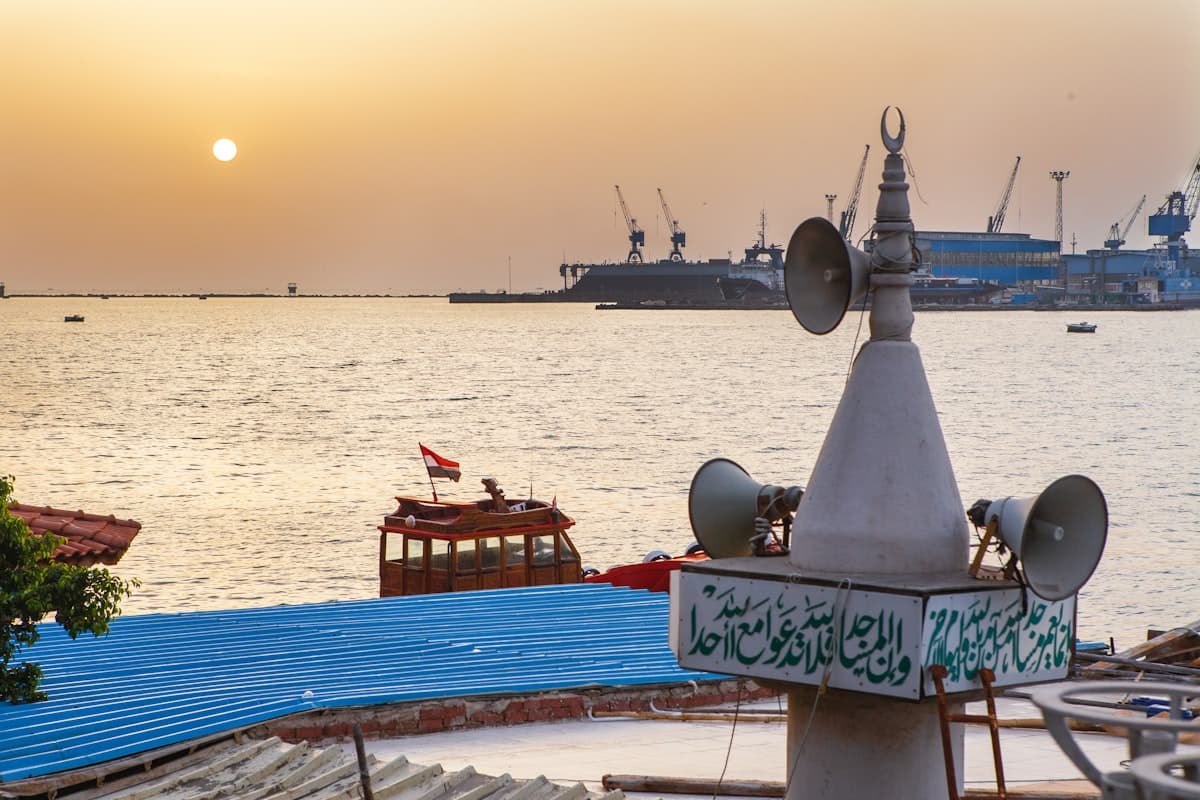
The Suez Canal took ten years to build, cost the lives of an estimated 120,000 Egyptian workers, and was inaugurated in 1869 with a party so expensive it nearly bankrupted the Khedive Ismail. He commissioned Giuseppe Verdi to write an opera for the occasion. Verdi declined. The opera, Aida, was eventually performed two years later at the Cairo Opera House, not at the canal. The party itself cost roughly 28 million francs. Within six years, Ismail had sold Egypt's 44 percent stake in the canal to Britain for £4 million, because he needed the cash.
This is the essential Suez Canal history in miniature: Egypt built it, paid for it in labor and debt, then lost it to European creditors before it had been open a decade. Britain bought the shares not because it wanted a canal but because it wanted to protect the route to India, and it justified its 1882 military occupation of Egypt using that same logic. The occupation was supposed to last a few months. It lasted 72 years.
Understanding the canal means understanding that it was not primarily a feat of engineering. It was a financial instrument, a diplomatic weapon, and the site of three wars. The engineering is the least interesting part.
The canal also reshuffled the ancient geography of Egypt in ways that are easy to miss. The route de Lesseps chose largely followed a chain of ancient waterways. Pharaoh Necho II began digging a canal connecting the Nile to the Red Sea around 600 BC. Darius the Great of Persia completed it. It fell into disuse. The Romans reopened it. It silted up again under the Arabs. Napoleon's engineers surveyed the isthmus in 1799 and incorrectly calculated that the Red Sea was 10 meters higher than the Mediterranean, a mistake that delayed any French attempt at a canal by a generation.
---
Ismailia: The Colonial City That Forgot to Leave
Ismailia is named after Khedive Ismail, which is ironic given how thoroughly the city was shaped by the people who eventually bought the canal out from under him. Ferdinand de Lesseps, the French diplomat who organized the canal construction, built his administrative headquarters here. The Suez Canal Company, which was Franco-Egyptian in name and Franco-British in practice, designed Ismailia's European quarter with tree-lined boulevards, villas with gardens, and a social club that excluded Egyptians until well into the twentieth century.
You can still walk that European quarter today. The streets around the Canal Authority buildings retain their colonial proportions: wide, shaded, slightly too quiet for a city of 750,000 people. The villas where British and French engineers lived are mostly still standing, some converted to government offices, some simply decaying. The jacaranda trees the company planted are enormous now, their roots buckling the pavements.
The De Lesseps House Museum sits in what was the man's private garden, a few hundred meters from the canal itself. De Lesseps was not an engineer. He had never built anything. He was a salesman of extraordinary conviction who managed to persuade both Egyptian and French investors to fund a project that most engineers of the time thought was impossible or unprofitable. His house reflects his self-image: grand but not ostentatious, the residence of a man who considered himself a servant of civilization. The museum inside is small and somewhat under-labelled, but it contains his personal correspondence, engineering drawings, and the original concession agreement that gave the Suez Canal Company a 99-year lease on the canal. That document, when Nasser nationalized the canal in 1956, was what Britain and France went to war to recover.
The Suez Canal Authority Museum a short walk away is better organized and more honest about what the canal cost Egypt. It covers the corvée labor system, under which Egyptian peasants were conscripted to dig the canal for minimal wages or none at all, and the cholera outbreak of 1865 that killed thousands of workers. It also covers the 1956 nationalization with the particular pride of an institution that has been Egyptian-run for longer than it was ever foreign-run.
---
Port Said and the War the World Watched
Port Said sits at the northern mouth of the canal, and it has one of the stranger distinctions in Egyptian urban history: it was the first city in Africa or Asia to have electric street lighting, installed in 1885 by the Suez Canal Company to impress European shipping traffic.
It also has the distinction of being the place where Britain and France ended their era as global powers, although they did not understand this at the time.
On October 29, 1956, Israel invaded Sinai. On November 5, British and French paratroopers landed at Port Said under the pretext of separating the combatants and protecting the canal, which Nasser had nationalized in July of that year. The military operation was successful. The political consequences were catastrophic for the Europeans. The United States, furious at being excluded from the plan and alarmed at the Soviet Union's threat to intervene, forced Britain and France to withdraw within days. It was the moment American power formally replaced British power in the Middle East, and it happened here, on this particular stretch of water in northeastern Egypt.
In Port Said, the 1956 war is not ancient history. The Port Said National Museum covers it directly, including photographs of the British bombardment of the city and testimony from residents. The building where British officers established their brief headquarters still stands near the harbor. Local guides will tell you which families lost relatives in the fighting, because in a city this size, everyone knows.
The Port Fouad ferry crossing, from Port Said across the canal to its twin city on the eastern bank, costs EGP 5 and takes four minutes. It is one of the cheapest and strangest journeys in Egypt: you cross a body of water that legally separates Africa from Asia, watched by container ships the size of apartment blocks moving silently in the opposite direction.
---
The Connections: Pharaohs, Ottomans, and the Route to India
The canal did not create the importance of the Suez isthmus. It concentrated it. The isthmus had been a critical land crossing for armies, traders, and pilgrims for at least four thousand years before de Lesseps arrived.
The ancient Egyptian city of Pelusium, near modern Port Said, was where the Persian king Cambyses defeated the Egyptians in 525 BC, using the probably-apocryphal tactic of holding cats at the front of his army, knowing the Egyptians would not risk killing them. It was a major Byzantine fortress. The Arab general Amr ibn al-As crossed the isthmus in 640 AD to conquer Egypt from the Byzantines, marching an army along roughly the same route the canal now follows in water.
The Ottomans, who controlled Egypt from 1517 to 1798, understood the isthmus as a military corridor and built a series of fortifications along it, some of which are visible as earthworks near the canal banks if you know to look. Napoleon crossed here in 1799 during his disastrous attempt to reach India overland after the British destroyed his fleet at Aboukir Bay. He got as far as Acre before turning back.
The British obsession with the canal route to India connected directly to everything they did in Egypt, including the construction of Egyptian institutions, railways, and irrigation systems that were genuinely beneficial but were funded and designed to serve imperial logistics, not Egyptian development. The Aswan Low Dam, completed in 1902, was a British project. The irrigation systems it fed increased Egypt's agricultural output substantially, but the profits flowed through a debt-repayment structure that enriched British bondholders for decades.
When Nasser nationalized the canal in 1956, he used the revenue to fund the High Dam at Aswan, which the World Bank had refused to finance under British and American pressure. The connection between the canal in Ismailia and the dam at Aswan, 900 kilometers south, is not metaphorical. It is financial and political and completely literal.
---
Common Mistakes
Treating Port Said as a day trip from Cairo and skipping Ismailia. Port Said is the famous name, but Ismailia is where the story lives. The colonial architecture, the De Lesseps house, the Canal Authority Museum, and the actual experience of sitting beside the canal and watching ships pass: all of this is in Ismailia. Port Said is worth a few hours. Ismailia deserves a night.
Going on a Friday. Egyptian government museums operate on a Friday-as-weekend logic that will strand you in front of locked doors. Check hours specifically for Saturdays and plan your circuit accordingly.
Booking a Suez Canal cruise thinking you will see the canal. The large cruise ships that transit the canal from the Mediterranean to the Red Sea carry passengers through in a single day, most of which passes through featureless desert banks. You will see container ships. You will not see Ismailia, Port Said, or any of the history. The correct way to experience the canal is from land, at canal-side in Ismailia at dawn, when the ships begin their morning convoy and you can watch a 400-meter vessel slide past the end of a residential street.
The sound and light show at Port Said, if one is being offered. Skip it. It is logistically awkward to reach, technically mediocre, and tells you nothing that reading this article and the Port Said National Museum together will not tell you more accurately.
Assuming the Canal Zone is safe to drive through casually. The area between the canal and the Sinai border has a different security profile than the canal cities themselves. Do not drive east of the canal without checking current conditions. The cities of Ismailia, Port Said, and Suez are calm and tourist-accessible. The road to Arish is not the same conversation.
Skipping the ferry crossing at Port Fouad. For EGP 5, you cross from Africa into Asia and back again on a boat that has been making the same journey since the 1930s. It takes eight minutes. The view of the canal mouth from the middle of the water, with ships in both directions and the city on both banks, is the best free thing in this part of Egypt.
Expecting English-language interpretation in the museums. Signage in the Ismailia museums ranges from bilingual to Arabic-only. Download a translation app before you go and photograph the labels. The staff at the Canal Authority Museum are knowledgeable and some speak good English, but do not rely on it.
---
Practical Tips
Ismailia's hotel stock is thin at the top and reasonable at the middle. The Mercure Forsan Island sits on an island in Lake Timsah and is the most comfortable option in the city, running EGP 2,500 to 3,500 per night. Budget travelers should look at the small hotels around the train station, where EGP 500 to 800 will get you a clean room.
The canal-side corniche in Ismailia is best at 6am and 6pm. The morning convoy of northbound ships begins moving at dawn, and watching a loaded tanker materialize out of the desert light and slide silently past the date palms at the water's edge is something you will not be able to adequately photograph or describe. Go twice.
The Ismailia Museum of Antiquities is seriously undervisited and contains objects from Pharaonic canal-side settlements that put the entire isthmus history into perspective. The Hyksos artifacts are particularly good. Budget 90 minutes here.
Bring cash. Card readers exist in the larger hotels but nowhere else. ATMs are available in central Ismailia and Port Said, not between them.
The train from Cairo to Ismailia takes 2.5 hours and costs EGP 50 to 90 depending on class. It is slower than the bus but deposits you in the center of the city, which the bus does not. If you are traveling without a car, the train is the better choice.
Frequently Asked Questions
The Weekly Dispatch
More on Egypt, every Friday.
Cultural depth and places most guides never mention.
No spam. Unsubscribe anytime.