Syrian Community Egypt: Cairo's Living Levantine History
Cairo has absorbed Syrian migrants in three distinct waves since the 13th century. The neighborhood they built is still there, still theirs, and almost nobody visits it.

Quick Facts
- Best time to visit
- October to April. The limestone lanes of Islamic Cairo retain heat in summer and walking for four hours in July is genuinely unpleasant. The Syrian commercial districts are open year-round but are more enjoyable in cooler months.
- Entrance fee
- The streets are free. Wikala of Al-Ghouri: EGP 50 (approx $1 USD). Egyptian Museum (for the Levantine trade artifact room): EGP 450 (approx $14 USD), students EGP 225. Coptic Museum: EGP 200 (approx $6.50 USD).
- Opening hours
- Al-Muizz Street and surrounding lanes: effectively all day, with commercial activity from 9am to 10pm. The Wikala of Al-Ghouri: daily 9am to 5pm. Mosques close to non-worshippers during the five daily prayer times for 20 to 30 minutes each.
- How to get there
- Metro Line 1 to Al-Sayeda Zeinab (EGP 10), then walk north 10 minutes. Or ride-share from Downtown Cairo for EGP 30 to 50. For Ain Shams: ride-share from Downtown runs EGP 40 to 60, roughly 30 minutes depending on traffic.
- Time needed
- Half a day for Islamic Cairo and the Mamluk-era Syrian heritage sites. A separate half-day for Ain Shams and the contemporary Syrian community. Do not combine them in a single day unless you want to spend most of it in traffic.
- Cost range
- Budget EGP 400 to 700 per day including transport, entry fees, and a proper Syrian lunch. A mid-range meal at a Syrian restaurant in Ain Shams costs EGP 150 to 300 per person. Add EGP 100 to 200 if you are buying food items from bakeries to take back.
Quick Facts
Best time to visit: October to April, when the narrow lanes of Islamic Cairo are walkable without the summer heat pressing down on the stone.
Entrance fees: The streets and markets cost nothing. The Mosque of Qijmas al-Ishaqi (a Mamluk structure with direct Syrian architectural DNA) charges EGP 50 (approx $1 USD) for non-Egyptians. The Coptic Museum in Old Cairo, relevant to the Syrian Christian thread of this story, charges EGP 200 (approx $6.50 USD).
Opening hours: The commercial streets of Al-Azhar and the surrounding Syrian-heritage district operate roughly 9am to 10pm daily. Mosques close to non-worshippers during prayer times.
How to get there: Metro Line 1 to Al-Sayeda Zeinab station (EGP 10, approx $0.33 USD), then a 10-minute walk north. Alternatively, a ride-share from Downtown Cairo runs EGP 30 to 50. Do not take a taxi from outside your hotel without agreeing on the price first.
Time needed: Half a day for the Syrian quarter alone. A full day if you combine it with Al-Azhar Mosque, the Wikala of Al-Ghouri, and a meal at one of the Syrian-run restaurants on Mohamed Ali Street.
Cost range: Budget EGP 400 to 700 per day including food, transport, and entry fees. A proper Syrian lunch with mezze and grilled meats at a mid-range restaurant in the area runs EGP 200 to 400 per person.
---
The Egyptian Arabic word for a Syrian person is "Shami," from "al-Sham," the old Arabic name for Greater Syria. When Cairenes use it today, they are reaching back through seven centuries of shared urban history without knowing it. The Syrian community in Egypt did not arrive with the 2011 crisis. It arrived with the Mamluks.
Why This Place Matters
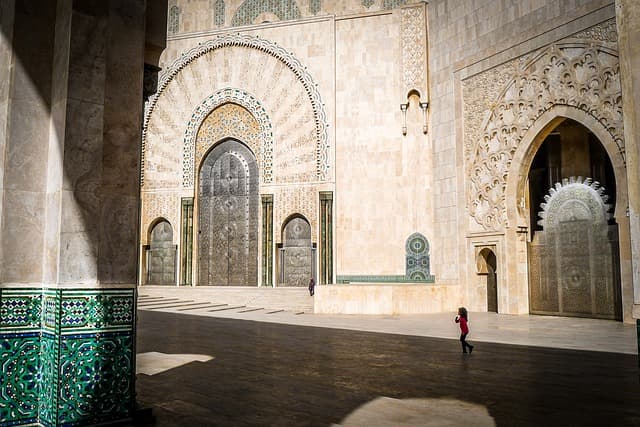
In 1250, the Mamluk sultanate seized Egypt from the Ayyubids and established Cairo as the capital of an empire that stretched from Egypt into the Levant. The Mamluks were themselves predominantly Circassian and Turkic slaves-turned-soldiers, but the bureaucratic and commercial class that administered their empire was heavily Syrian. Merchants from Damascus and Aleppo followed the money to Cairo, settled in the lanes around Khan el-Khalili, and built trading houses, mosques, and hammams that survive in fragmentary form today.
Khan el-Khalili itself, the market every tourist photographs, was founded in 1382 by Jarkas al-Khalili, the Master of Horse under Sultan Barquq. Al-Khalili was an Aleppan. The caravanserai he built became the commercial hub of a Syrian merchant network that linked Cairo to Damascus to Baghdad. The spice trade, the textile trade, the metalwork that Egyptian artisans became famous for across Europe: all of it ran through this Syrian-managed commercial corridor for two centuries.
This is not ancient history with a clean ending. It has a present tense.
Three Waves, One Neighborhood
The Syrian presence in Cairo arrived in identifiable phases, each triggered by violence in the Levant.
The first wave was Mamluk-era: merchants and craftsmen who came voluntarily, drawn by Cairo's wealth. They clustered around what is now the Al-Gamaliya district, north of Khan el-Khalili. The Wikala of Al-Ghouri, built in 1505 by the last great Mamluk sultan, was partly financed by Syrian merchant taxes. You can still stand in its central courtyard, look up at the tiered merchant lodgings around you, and understand exactly what a 16th-century Syrian trading house looked like. It is one of the most undervisited buildings in Cairo.
The second wave came after the Ottoman conquest of 1517 and, more acutely, after the brutal Ibrahim Pasha campaign in Syria in the 1830s, when the Egyptian ruler Muhammad Ali's son occupied Greater Syria and disrupted Damascene and Aleppan commerce so thoroughly that thousands of Syrian Christian merchants relocated to Egypt. These were largely Melkite and Maronite Christians, and they settled not in Islamic Cairo but in the new neighborhoods being built around what is now Downtown Cairo: Azbakiya and later Shubra. They brought printing presses, newspapers, and what historians of Arab culture call the Nahda, the Arab intellectual renaissance of the 19th century. The Syrians who relocated to Cairo in the 1840s and 1850s effectively founded Arabic-language journalism in Egypt. The newspaper Al-Ahram, still published today, was established in 1875 by two Lebanese-Syrian brothers, Bishara and Salim Taqla, who brought their press from Beirut to Alexandria.
The third wave, the one you see in Cairo today, began after 2011. Egypt hosts between 400,000 and 1.5 million Syrians depending on which estimate you use, making it one of the largest Syrian diaspora populations outside Turkey and Lebanon. They are concentrated in three Cairo districts: Ain Shams, Arba wa Nus (the 6th of October suburbs), and in the older Syrian commercial corridors around Ramses Street and Mohamed Ali Street. The restaurants are the most visible sign. Syrian shawarma, fattoush made with pomegranate molasses, kibbeh served in ways Egyptians had not encountered before: all of this has entered Cairo's food landscape in the last decade.
What You Will Actually Find
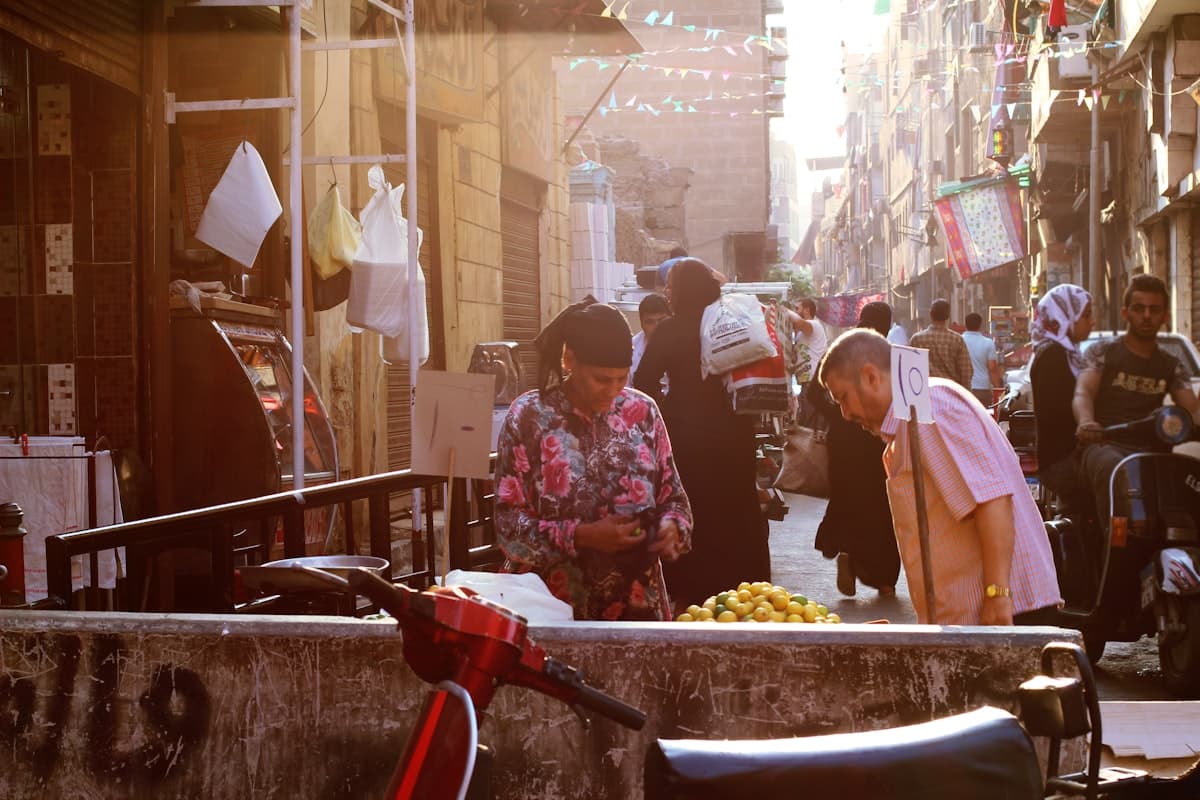
Start at the Wikala of Al-Ghouri on Al-Muizz Street. It opens at 9am and you should be there close to that time, before the school groups arrive. The wikala is a caravanserai, a merchant inn with storage rooms at ground level and accommodation above. In the Mamluk and early Ottoman periods, Syrian merchants kept their goods here while negotiating in the bazaars outside. The architecture is Syrian-inflected Mamluk: the joggled voussoirs above the doorways, the alternating courses of red and white stone, the geometric window grilles. These design elements came from Aleppo and Damascus. Cairene builders absorbed them and made something new.
From the wikala, walk north along Al-Muizz Street for about 400 meters. The street itself is the most concentrated corridor of medieval Islamic architecture surviving anywhere in the world, a designation it earned not from tourism boards but from UNESCO in 1979. What the plaques do not tell you is that a significant portion of the commercial buildings along this street were built by or for Syrian merchants.
Turn east into the Al-Gamaliya district before you reach the northern walls of the Fatimid city. This is where the residential Syrian presence was concentrated in the Mamluk period. The lanes here are narrow, the buildings are multi-story and overhanging, and very few tourists penetrate more than half a block. The current residents are mostly Egyptian, and have been for generations, but the urban structure, the layout of the lanes, the placement of the communal water points, the orientation of the building entrances, reflects Levantine city planning.
For the modern Syrian Cairo, you need to go to Ain Shams in the northeast of the city. This is not on any tourist itinerary and it is not particularly scenic, but it is where you will find Syrian cultural life in its current, unpackaged form. Syrian bakeries producing ka'ak bi-ajwa and mamoul. Syrian barbers. Syrian tailors. Restaurants serving Aleppan cuisine, which is distinct from Damascene cuisine in ways that matter to people from either city: Aleppo uses more sour flavors, more pomegranate, more Aleppo pepper.
The Connections
The Syrian thread runs through Egyptian history in ways that are easy to miss because they are not labeled.
Saladin, the most celebrated figure in Egyptian medieval history, was Kurdish and spent formative years in Damascus before ruling Egypt. His Ayyubid dynasty, which built the Citadel of Cairo that still dominates the skyline, was culturally Levantine. The Citadel's architectural style owes more to Syrian military construction than to anything previously built in Egypt.
The Al-Azhar University, the most important institution of Sunni Islamic learning in the world, has had Syrian scholars on its faculty for most of its thousand-year history. In the 18th century, the Syrian scholar Abd al-Rahman al-Jabarti, born in Cairo to a family of East African origin but educated in a tradition that included Syrian Islamic scholarship, wrote the most important eyewitness account of Napoleon's invasion of Egypt. His chronicle is still the primary source historians use.
The Coptic thread is less known. Syrian Christians, particularly Melkites (Eastern Catholics in communion with Rome), established churches and schools in Cairo's Shubra district during the 19th century. The Melkite community in Cairo today is small, a few thousand people, but its churches in Shubra and Heliopolis represent a direct architectural and liturgical connection to Syrian Christianity that predates Islam.
Common Mistakes
Treating Khan el-Khalili as the destination rather than the starting point. The market is where the Syrian commercial presence began, but it is also the most tourist-saturated part of Islamic Cairo. Spend 30 minutes there and then walk. Everything interesting is in the lanes behind and beyond it.
Visiting the Wikala of Al-Ghouri without knowing what it is. Most visitors walk through the courtyard, take a photograph, and leave in 10 minutes. The wikala runs free cultural performances on certain evenings (check with the Egyptian Ministry of Tourism for current schedules, as these change). More importantly, take 20 minutes to examine the carved stone work at the entrance portal. It is some of the finest Mamluk-era stone carving in Cairo.
Eating at the tourist-facing Syrian restaurants near the Khan. Several restaurants near Al-Azhar have recently branded themselves as "authentic Syrian" and charge EGP 300 to 500 for a meal that a Syrian person would not recognize. If you want the real thing, take a ride-share to Ain Shams. It costs EGP 40 and the food costs a third as much.
Taking a guided tour of this topic. I say this directly: there is no reputable guided tour of the Syrian heritage of Cairo currently operating. What you will get, if you book a "Islamic Cairo" tour, is a guide who will tell you when things were built and who commissioned them, but will not connect the Levantine thread across periods. Do the reading before you go and walk independently.
Skipping the Egyptian Museum's Levantine collection. Room 43 of the Egyptian Museum contains artifacts from Canaanite and Syrian trade contacts during the New Kingdom period, including Syrian-style vessels found at Tell el-Amarna. Almost nobody goes there. The connection between pharaonic Egypt and the Levantine world is 3,500 years old, which makes everything that came after feel less surprising.
Confusing the Lebanese and Syrian communities in Cairo. They have overlapping but distinct histories, distinct neighborhoods, and distinct cuisines. The Lebanese community, historically concentrated in Zamalek and Garden City, is generally wealthier and arrived earlier. Conflating them irritates members of both communities.
Photographing people without permission in Ain Shams. The area is a working-class residential neighborhood, not an exhibit. Syrian refugees in particular have complicated feelings about being documented. Ask first. Always.
Practical Tips
The most direct route into this history begins with reading before you arrive. Nelly Hanna's "Making Big Money in 1600" is a social history of a Cairo merchant that gives you an exact picture of how Syrian and Egyptian commercial life interlocked in the Ottoman period. It is academic but readable and short.
For the medieval district, wear shoes you can walk in for four hours on uneven stone. Bring water. The lanes have no cafes until you get back to the main thoroughfares.
For Ain Shams, go on a Friday morning when the weekly market near the main square is operating. The commercial activity is concentrated and the atmosphere is easier to navigate than on weekdays when the streets are crowded with commuters.
The Syrian community in Egypt has faced economic and legal pressures since 2013 that have made some families cautious about visibility. Do not treat the community as a cultural tourism resource. Eat at their restaurants, buy from their bakeries, and if someone wants to talk, listen. But the Syrian history guide you are reading is a history guide, not a safari itinerary.
Frequently Asked Questions
The Weekly Dispatch
More on Egypt, every Friday.
Cultural depth and places most guides never mention.
No spam. Unsubscribe anytime.