Syrian Community Egypt History Guide: Cairo's Hidden Levantine World
Syrians have lived in Cairo for over 1,000 years. The neighborhood they shaped still carries their name. Most Cairenes walk through it daily without knowing why.

Quick Facts
- Best time to visit
- October through April. Cairo's medieval street fabric is best walked when temperatures are below 25C. The Ramadan period (moveable, check lunar calendar) adds a visible Syrian-Egyptian cultural layer to evening street life that is worth planning around if your dates allow.
- Entrance fee
- Harat al-Sham streets: free. Museum of Islamic Art: EGP 150 (approx $3 USD), students EGP 75. Coptic Museum nearby: EGP 200 (approx $4 USD), students EGP 100. Most mosques in the area: free, small donation appreciated.
- Opening hours
- Streets and market: accessible all hours, most active 10am to 7pm Saturday through Thursday. Museum of Islamic Art: 9am to 5pm daily, closed Friday morning prayer. Souq al-Attarin: Saturday through Thursday 9am to 7pm, largely closed Friday.
- How to get there
- Metro Line 1 to Sadat Station, then walk northeast 20 minutes into Islamic Cairo, or microbus toward Bab Zuweila for EGP 5. Taxi from Zamalek: EGP 60 to 80. Taxi from Maadi: EGP 100 to 130. From Ramses Station: microbus toward Khan el-Khalili for EGP 5 to 7.
- Time needed
- Half day for the core walk through Harat al-Sham, Souq al-Attarin, and Al-Muizz Street. Full day if adding the Museum of Islamic Art, a Syrian lunch in Mohandessin, and an evening coffee at Al-Fishawy.
- Cost range
- Budget EGP 200 to 400 per person including transport, museum entry, tea, and a simple meal. Mid-range EGP 600 to 1,000 if adding a sit-down Syrian lunch and a museum visit.
Quick Facts
Best time to visit: October through April, when Cairo's heat is manageable and the streets of the older quarters are fully alive with daily commerce.
Entrance fees: The streets, markets, and most Coptic and Islamic monuments in the surrounding area are free to walk. The Coptic Museum charges EGP 200 (approx $4 USD), students EGP 100. The Museum of Islamic Art charges EGP 150 (approx $3 USD).
Opening hours: The Harat al-Sham area and its surrounding streets are accessible at all hours. Mosques welcome visitors outside prayer times, generally 9am to 5pm. Souq al-Attarin typically runs Saturday through Thursday, 9am to 7pm.
How to get there: The Cairo Metro Line 1 stops at Sadat (Tahrir), from which you can walk northeast into Islamic Cairo in about 20 minutes, or take a microbus toward Bab Zuweila for EGP 5. A taxi from Zamalek costs roughly EGP 60 to 80. From Ramses Station, a microbus toward Khan el-Khalili runs EGP 5 to 7.
Time needed: Half a day to walk the core circuit. A full day if you intend to sit in a coffeehouse, eat, browse Souq al-Attarin, and visit either museum.
Cost range: Budget EGP 200 to 400 per person including transport, food, and tea. Mid-range EGP 600 to 1,000 if you add a proper lunch at a Levantine restaurant in the area.
---
The Arabic word for a Syrian, historically, was not a slur or a category. It was a street address. In the medieval city of Cairo, Harat al-Sham, the Syrian Quarter, was a physical place you could walk to, a warren of lanes off the main spine of Fatimid Cairo where merchants, scholars, and refugees from Greater Syria had settled so densely that the neighborhood took their origin as its name. That quarter still exists, though most people passing through it today could not tell you what Sham means, let alone why it mattered.
Syrians have shaped Cairo in waves across more than a millennium. The first came with the Fatimid conquest of Egypt in 969 CE, as administrators and clerics following Caliph al-Muizz into his new capital. Later waves arrived fleeing Crusader campaigns, Mongol destruction, and Ottoman consolidation. In the 19th century, Syrian Christian intellectuals arrived during the Nahda, the Arab cultural renaissance, and ran the newspapers and publishing houses that gave modern Egyptian Arabic its literary voice. After 2011, a new generation arrived, and Cairo's Syrian restaurant scene became, briefly, the best argument in the city for eating anything other than Egyptian food. Each wave left something. Most of it is still here, if you know where to look.
---
Why This Place Matters
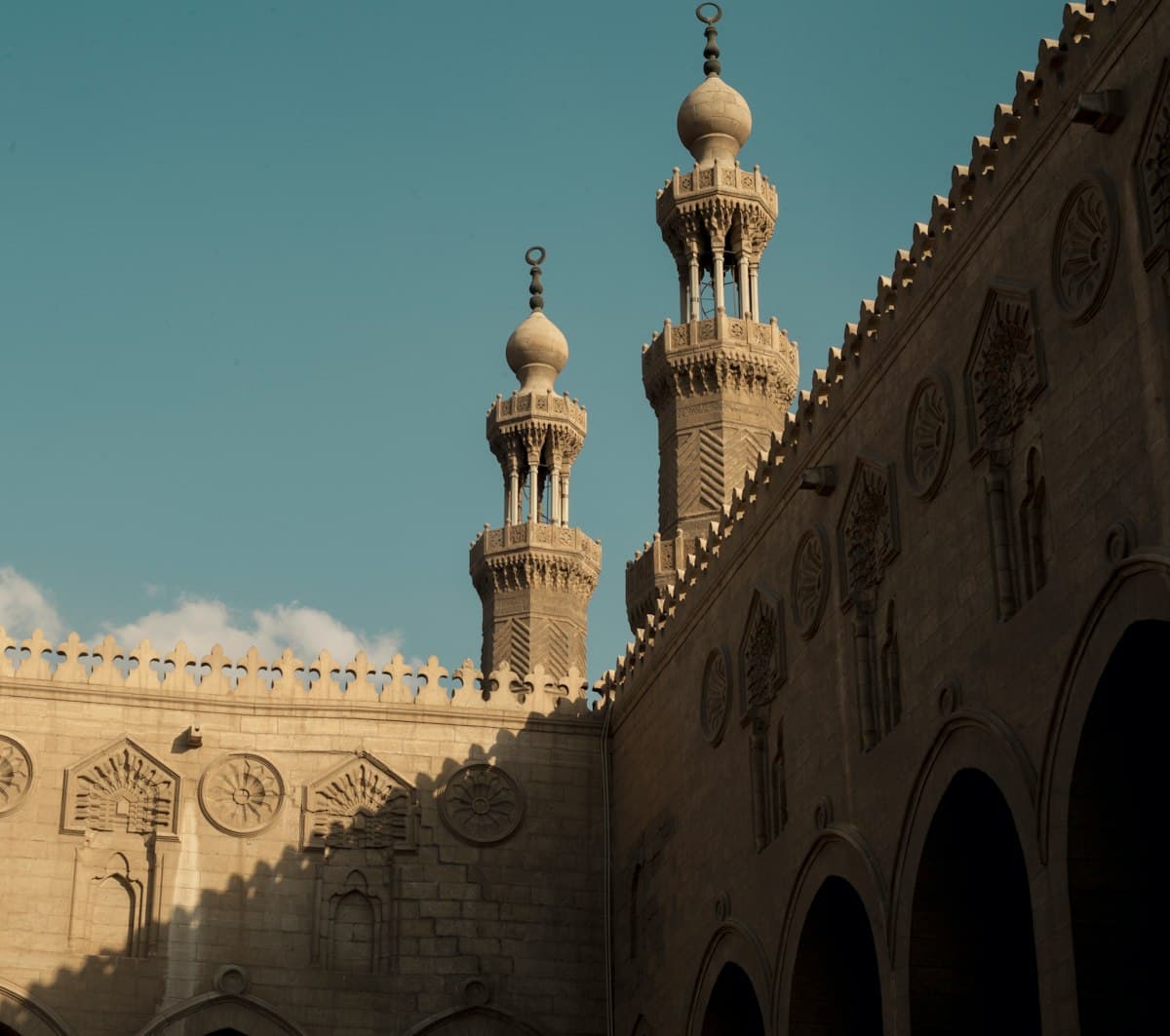
The relationship between Syria and Egypt is not a modern political convenience. It is one of the oldest continuous cultural exchanges in the Arab world, and Cairo is where much of its physical evidence survives.
When the Fatimids founded Cairo in 969 CE, they did not build it alone. The architect of Al-Azhar, the mosque that became the most influential Islamic university on earth, was Jawhar al-Siqilli, a freed slave of Sicilian origin serving a dynasty whose theological and administrative apparatus drew heavily from Syrian Ismaili networks. The scholars who filled Al-Azhar's early ranks came substantially from the Levant, as did the merchants who funded the surrounding markets.
The Mamluk period, 1250 to 1517 CE, deepened the Syrian connection in a different way. The Mamluks were slave soldiers, mostly Turkic and Circassian, purchased and trained in a military system that originated partly in Syria. When they established their sultanate in Cairo, they brought Syrian craftsmen to build their mosques and madrasas. The geometric stonework, the alternating light and dark ablaq masonry, and the carved muqarnas ceilings you see in Khan el-Khalili's oldest structures are Syrian techniques transplanted into Egyptian limestone. Cairo's Islamic architectural identity is partly a Syrian aesthetic.
The Nahda connection is less well known and more consequential for modern culture. Between roughly 1860 and 1920, Syrian Christian intellectuals, mostly Greek Orthodox and Maronite families fleeing Ottoman pressure, migrated to Cairo and Alexandria in large numbers. They founded Al-Ahram in 1875. The newspaper that still defines Egyptian public opinion was started by two brothers from Beirut: Salim and Bishara Taqla. Jurji Zaydan, a Greek Orthodox Syrian from Beirut, founded Dar al-Hilal publishing house in Cairo in 1892. Dar al-Hilal still operates. These men did not merely report on Arab culture. They invented the infrastructure through which it was transmitted.
---
Walking the Syrian Quarter and Its Echoes
The area that was historically called Harat al-Sham sits north of Al-Azhar Street, folded into the older fabric of Fatimid Cairo between the mosques of Al-Hakim and Al-Azhar. It is not marked on tourist maps. There is no sign, no ticket booth, no audio guide. What you will find is a neighborhood that still smells, sounds, and moves the way medieval Islamic cities were supposed to: spice shops selling Syrian-origin za'atar blends that entered Egyptian cuisine centuries ago, coffeehouses where backgammon is played with the same pieces and the same aggression as in Damascus, and workshop doors open onto artisans producing inlaid wooden boxes using a technique called khatam that came to Cairo via Syrian craftsmen during the Mamluk period.
Souq al-Attarin, the spice market adjacent to Khan el-Khalili, is the most direct sensory link to the old Syrian trading presence. The smell alone will tell you something has been happening here for a very long time: cumin and fenugreek, dried rose petals from Upper Egypt, Syrian sumac ground to a burgundy powder, anise seeds that smell like a very old decision. The market has operated continuously since the 14th century, originally as a quarter where Levantine perfume and spice traders held fixed stalls under Mamluk licensing agreements.
The coffeehouse culture of this district deserves its own paragraph. The qahwa, the Arabic coffeehouse, entered Egyptian social life in the 16th century, partly through Ottoman channels and partly through Syrian merchants who had already developed the practice in Aleppo and Damascus. Al-Fishawy in Khan el-Khalili claims to have been open continuously since 1773. Whether or not that specific date survives scrutiny, the practice it represents, the ritual of tea and argument and backgammon in a narrow mirrored room, arrived in Cairo with Levantine merchants and has not left.
---
The Modern Syrian Cairo
After 2011, an estimated 500,000 Syrians entered Egypt, with the largest concentrations in Cairo's New Cairo suburb, 6th of October City, and in working-class neighborhoods like Ain Shams and Shubra. The number peaked around 2013 to 2015. Many have since moved on to Europe or North America, but a substantial Syrian community remains, and its most visible contribution to Cairo's daily life is its food.
The Syrian restaurant corridor that developed along Syria Street in Mohandessin (the naming is coincidental, the street predates the modern Syrian community) and in pockets of Heliopolis and Maadi represents something genuinely new in Cairo's culinary landscape. Syrian food uses different spice combinations than Egyptian food, relies more heavily on pomegranate molasses and dried lemon, and treats bread not as a side utensil but as architecture. The best fatteh in Cairo is currently Syrian-made. So is the best shawarma, distinguished from the Egyptian version by its use of garlic paste rather than tahini and by the quality of the meat's marinade.
For the traveler interested in the Syrian community Egypt history connection, the modern layer matters because it is not a rupture from the historical pattern. It is the same pattern, compressed. Skilled people fleeing political catastrophe, arriving in Cairo, and within a generation beginning to contribute to the city's cultural and commercial life. The Nahda journalists of 1875 were refugees too.
---
The Connections
The ablaq stonework you see in the Sultan Hassan Mosque complex, built between 1356 and 1363 CE and widely regarded as the finest Mamluk structure in Cairo, uses alternating bands of red and white stone in a technique that originated in Ayyubid Syria. Sultan Hassan never saw it completed. He was assassinated in 1361, and the mosque's two planned minarets were never built because the Mamluk amirs who killed him feared the height would give snipers a line of fire into the adjacent Citadel. The building is a Syrian technique, an Egyptian stone, and a political assassination all in the same facade.
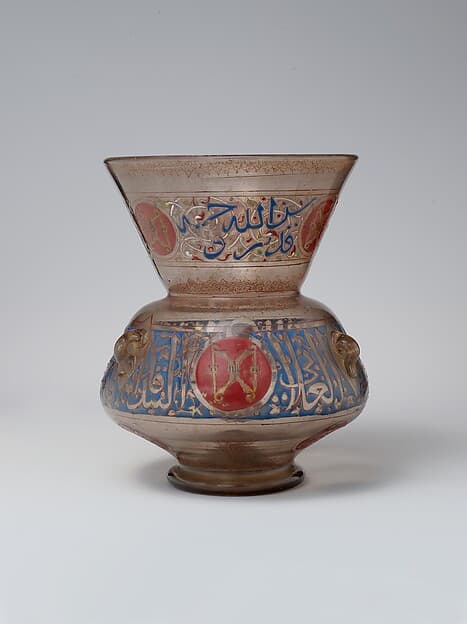
The Museum of Islamic Art on Bab al-Khalq Square, one of the genuinely undervisited institutions in Cairo, contains an entire room of Syrian objects: Mamluk metalwork, Damascene inlaid furniture, and 13th-century Ayyubid ceramics that look almost indistinguishable from contemporaneous Egyptian work because the same craftsmen were moving between the two countries continuously. The museum was damaged by a car bomb in 2014 and reopened after restoration. Its collection of 102,000 objects makes it one of the largest collections of Islamic art in the world, a fact that somehow fails to reach most tourists before they spend three hours at the Egyptian Museum and call it done.
Al-Azhar University, founded 972 CE and still operating, admitted students from Syria and the broader Levant throughout its medieval history. It functioned as an exchange mechanism: Syrian scholars brought Ismaili and later Sunni jurisprudence south, Egyptian scholars sent Quranic commentary and agricultural knowledge north. The intellectual cross-pollination between Cairo and Damascus produced much of what we call classical Islamic scholarship.
---
Common Mistakes
Confusing the modern Syrian community with a tourist attraction. The Syrian restaurants and community spaces in Mohandessin and Maadi are real neighborhoods where real people live and work. Visit them as a curious guest, not as a cultural exhibit. Ask before photographing. Eat the food because it is excellent, not because it is exotic.
Skipping the Museum of Islamic Art for the Egyptian Museum. The Egyptian Museum is genuinely worth your time, but its Islamic and medieval collections are poorly labeled and awkwardly displayed. The Museum of Islamic Art at Bab al-Khalq has cleaner exhibitions, far fewer crowds, and objects that directly illustrate the Syrian-Egyptian exchange described in this guide. EGP 150 gets you in. Most tour itineraries never mention it.
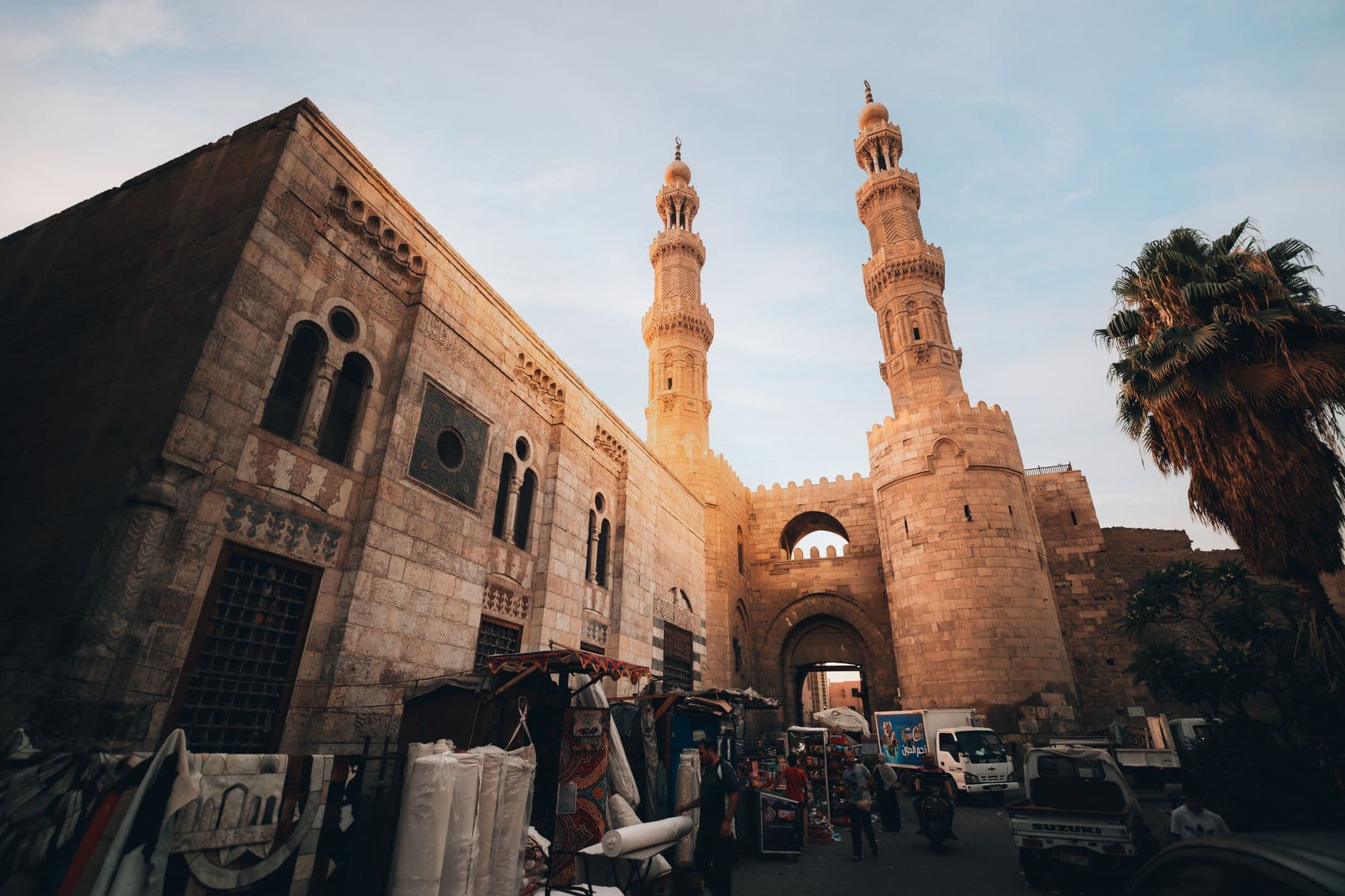
Taking a guided tour of Khan el-Khalili without walking north of Al-Azhar Street. The tourist circuit of Khan el-Khalili is exactly that: a circuit designed for tourists, concentrated around the jewelry and papyrus stalls that earn commissions. The interesting part of this neighborhood is north and west of the main tourist spine, in the working market streets where actual Cairenes buy actual things.
The sound and light show at the Citadel costs EGP 400 and narrates nothing about the Mamluk and Syrian connections that make the Citadel's history genuinely interesting. It is a son et lumiere about Saladin, delivered in a register better suited to children. Read this article instead and walk the Citadel in the early morning when it opens at 8am and the light on the Muhammad Ali Mosque dome is worth standing still for.
Assuming the Syrian community is concentrated only in upscale areas. The visible, restaurant-heavy Syrian presence in Mohandessin is the surface layer. The larger community, including Syrian artisans, workers, and families who arrived between 2012 and 2016, lives primarily in Ain Shams, Shubra, and parts of Heliopolis. These neighborhoods show a different, more complete picture of how migration actually works.
Visiting Souq al-Attarin on a Friday morning. It is largely closed. Thursday afternoon and Saturday morning are the best times for the spice market, when stock is fresh and traders are in a negotiating mood.
---
Practical Tips
Wear shoes you can walk in for four to six hours on uneven stone. The medieval streets of Islamic Cairo are not paved for comfort.
If you want to have actual conversations with members of the Syrian community, the coffeehouses around Shubra's main market street are more welcoming to genuine curiosity than the restaurant strip in Mohandessin, where the staff are accustomed to treating foreigners as customers rather than guests.
Bring small denomination bills: EGP 20 and EGP 50 notes. Most shops and stalls in Harat al-Sham and Souq al-Attarin do not have card machines, and vendors will not have change for EGP 500.
For the Museum of Islamic Art, arrive when it opens at 9am. By 11am, school groups arrive and the reading room becomes loud. The Syrian and Levantine rooms are on the ground floor, signposted in Arabic and English.
For Levantine food, the most reliable Syrian restaurants in Cairo as of recent reporting are concentrated in Mohandessin along and around Syria Street, and in a cluster near Triumph Square in Heliopolis. Look for places where the menu is handwritten in Arabic rather than photographed in English. The food is better and the prices are roughly half.
If you are traveling during Ramadan, the Syrian community Egypt presence in Cairo becomes most visible in the evening. Syrian families set up iftar stalls selling kishk soup and Syrian sweets near several mosques in Shubra, and the Levantine food culture that has layered itself into Cairo's own Ramadan traditions becomes almost impossible to disentangle from the Egyptian original. Which is, in the end, the point.
Frequently Asked Questions
The Weekly Dispatch
More on Egypt, every Friday.
Cultural depth and places most guides never mention.
No spam. Unsubscribe anytime.