Syrian Community Egypt History Guide: Cairo's Living Diaspora
Cairo absorbed over 1.5 million Syrians after 2011. They didn't just arrive. They rebuilt a 1,000-year-old mercantile relationship. Here's what that looks like on the ground.

Quick Facts
- Best time to visit
- October through April for comfortable walking temperatures. Ramadan evenings in Nasr City are particularly worth experiencing: street food peaks, Syrian patisseries run at full capacity, and the social life of the community is most visible after iftar, around 7 to 10pm.
- Entrance fee
- Neighborhoods are free to explore. Nearby historical sites: Ibn Tulun Mosque EGP 80 (approx $1.60 USD). Khan el-Khalili market area: free access, no entry fee.
- Opening hours
- Syrian commercial strips in Nasr City: roughly 10am to midnight daily, with bakeries opening at 6am. Khan el-Khalili: merchants set up from 8am, busiest 10am to 6pm. Attaba market: Saturday through Thursday, 9am to 6pm.
- How to get there
- Metro Line 2 to El Nozha for Nasr City (EGP 7), then tuk-tuk or minibus to Abbas El Akkad corridor (EGP 5 to 10). Metro Line 1 or 2 to Attaba for the historical commercial district (EGP 7). Uber from downtown Cairo to Nasr City: EGP 40 to 80 depending on traffic.
- Time needed
- Half a day for Nasr City Syrian commercial strip. Full day to connect the historical thread from Khan el-Khalili through Attaba to the modern neighborhoods. Add two hours for a Shubra church visit if including the Christian Syrian community.
- Cost range
- Budget EGP 300 to 600 per day for food and transport in these neighborhoods. Mid-range Syrian restaurant meal for two: EGP 400 to 700. Box of Syrian sweets: EGP 200 to 400 depending on size. Metro and local transport: EGP 50 to 100 for a full day.
[Syrian Community Egypt History Guide](https://feluccas.com/your-egypt/syrian-community-egypt-cairos-living-levantine-history): Cairo's Living Diaspora
Quick Facts
Best time to visit: October through April, when Cairo is cool enough to walk the neighborhoods properly. Ramadan evenings are extraordinary in the Syrian-dense blocks of Ain Shams and Nasr City: the street food doubles, the conversation runs past midnight, and the Syrian patisseries sell out of maamoul by 9pm.
Entrance fees: The neighborhoods themselves cost nothing. Specific cultural sites mentioned below (mosques, the Citadel district) carry standard entry fees: the Mosque of Ibn Tulun is EGP 80 (approx $1.60 USD), free for Egyptians.
Opening hours: Neighborhoods are accessible at all hours. Syrian-owned restaurants typically open at noon and run until 2am. Bakeries open at 6am. The Attaba market area, where Syrian textile traders have clustered, is busiest Saturday through Thursday, 9am to 6pm.
How to get there: For Nasr City (the densest Syrian residential cluster), take the metro to El Nozha station on Line 2, then a tuk-tuk or minibus toward the Abbas El Akkad corridor: EGP 5-10. For the older Syrian commercial presence in Attaba and Khan el-Khalili, take the metro to Attaba station on Line 1 or 2: EGP 7 per ride. Uber from downtown runs EGP 40-80 depending on traffic.
Time needed: Half a day for a focused walk through Nasr City's Syrian commercial strip. A full day if you want to connect the historical thread from the Fatimid city through Attaba to the modern diaspora neighborhoods. Two days if you are serious about this.
Cost range: Budget EGP 300-600 per day eating and moving through these areas. A proper Syrian meal for two with mezze, grilled meats, and dessert runs EGP 400-700 at a mid-level restaurant. Street food (falafel, ka'ak, shawarma wrapped Cairo-style) runs EGP 30-80 per item.
---
Why This Matters: A Relationship That Predates the Nation
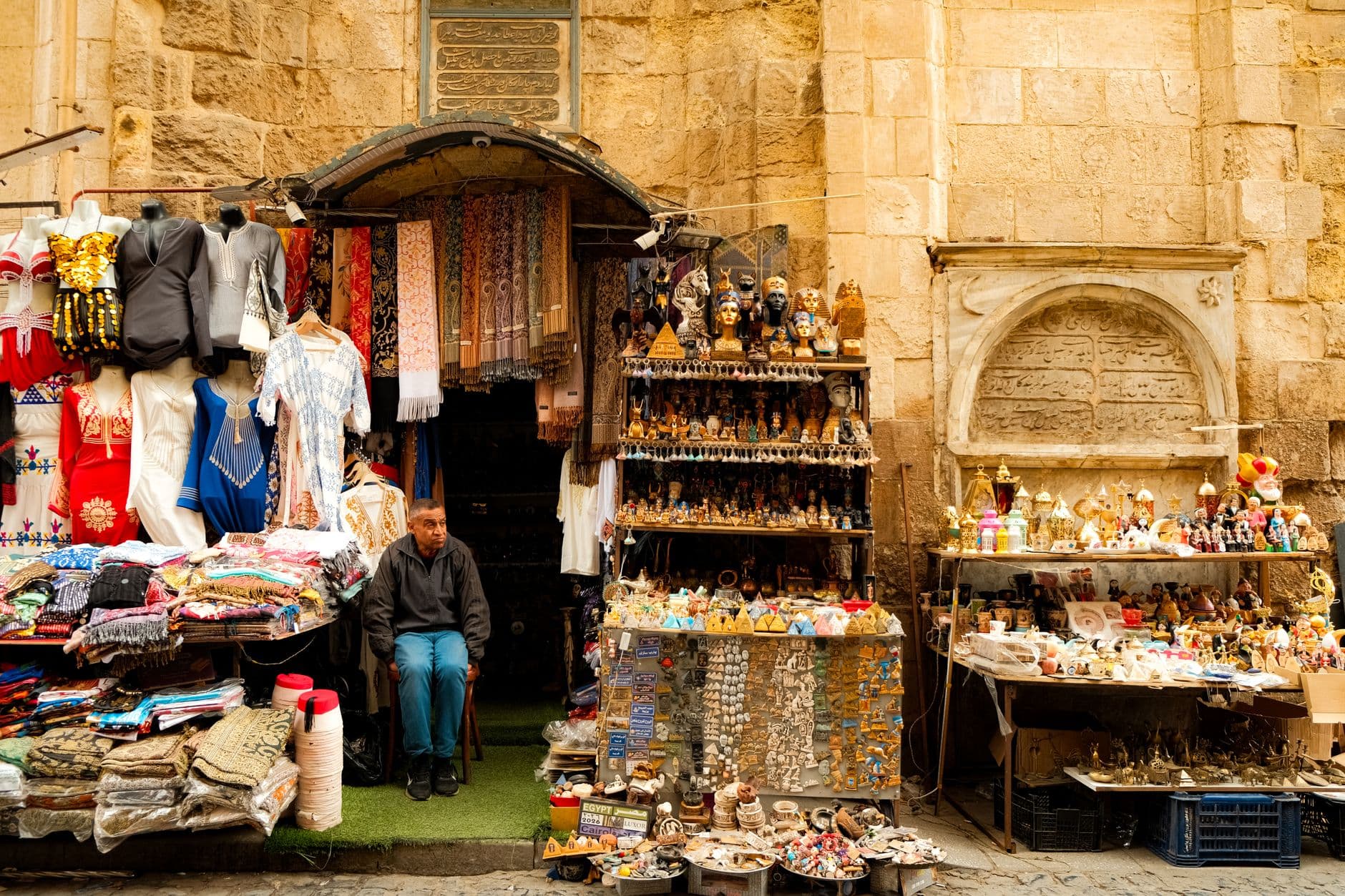
Most people frame the Syrian presence in Egypt as a refugee story beginning in 2011. It is that, yes, and it is also something a thousand years older. When the Fatimid caliph Al-Muizz li-Din Allah rode into the newly founded Cairo in 969 CE, his administrative and merchant class included a substantial Syrian cohort from the Levantine cities of Damascus and Aleppo. Cairo was built, in part, to be the westernmost node of a trading arc that ran through the Syrian interior. The city's commercial logic was Levantine from its first decade.
The Mamluk period deepened this. Between 1250 and 1517, Egypt was ruled by a sultanate whose soldiers were imported as enslaved boys from across Central Asia and the Caucasus, but whose merchant networks and cultural exchanges ran heavily through Syria. When the Ottomans defeated the Mamluks at the Battle of Marj Dabiq in northern Syria in 1516, they didn't sever the Cairo-Damascus relationship. They reorganized it, making both cities provinces of the same empire. Syrian scholars, Sufi orders, and traders moved to Cairo with the same relative ease that people move between cities within a single country.
By the nineteenth century, the Syrian-Lebanese Christians known as Shawam had become the backbone of Cairo's Arabic-language press. Newspapers like Al-Ahram, founded in 1875 by the Taqla brothers from Kfarsghab in modern Lebanon, and the journalism culture it seeded, were substantially Levantine enterprises operating on Egyptian soil. The category of "Syrian" in historical Egyptian documents often blurred with Lebanese, Palestinian, and sometimes Iraqi, because the Ottoman administrative region of Bilad al-Sham was the referent, not modern national borders.
The post-2011 wave brought an estimated 1.5 to 2 million Syrians into Egypt, the largest single-decade movement between the two countries since the Ottoman period. Unlike the Syrian communities of the nineteenth and early twentieth centuries, this one arrived with almost nothing and built something substantial. Nasr City's Abbas El Akkad Street now has a Syrian commercial density comparable to a mid-sized Syrian town: confectioneries, fabric wholesalers, restaurants, Quranic schools, and, tucked between them, the particular Syrian coffee shop culture of backgammon and very strong tea.
---
Walking the Historical Thread: Attaba, Khan el-Khalili, and the Older Presence
Start where the old relationship is most legible: the area around Khan el-Khalili and the Muski market. The Khan itself was built in 1382 by the Mamluk emir Djaharks el-Khalili on the site of a Fatimid royal cemetery, and it was designed explicitly to house Levantine and Persian merchants. The caravanserai model it followed, wikala in Arabic, was a Syrian urban invention refined in Aleppo and Damascus before being transplanted to Cairo. When you walk through the Khan today and see the gold merchants and the spice sellers, you are walking through an institution whose architecture, commercial logic, and supply chains were originally Syrian.
Three minutes' walk west of the Khan, the Muski market still has fabric wholesalers whose families trace continuous commercial presence in this district across multiple generations. Some families with Syrian origins have been in this part of Cairo since the 1920s, long enough that they identify entirely as Cairene, speak Egyptian Arabic with no Levantine trace, and are mildly annoyed when journalists rediscover their origins.
The Attaba district, just beyond the Muski, was where the Shawam press families concentrated in the late nineteenth century. The buildings that housed Egypt's first modern Arabic newspapers are still standing on and around Clot Bey Street, though they are now occupied by electronics shops and insurance offices. Almost nobody marks them. The transformation of Levantine intellectual culture into Egyptian national culture happened in these buildings, and Cairo treats them with the same casual indifference it extends to most of its own history.
What Most Visitors Walk Past
In the wikala alleys behind the main drag of Khan el-Khalili, look for the small zawiya (Sufi lodge) chapels tucked into the commercial buildings. Several were endowed by Syrian Sufi orders in the sixteenth and seventeenth centuries, particularly orders with origins in Damascus. The Khalwatiyya and Qadiriyya brotherhoods both maintained Cairo lodges funded by Syrian merchant endowments. A few of these spaces still function as small mosques. The carpets are worn to threads, the paint is peeling, and they are magnificent precisely because nobody has restored them into placidity.
---
The Modern Diaspora: Nasr City and Ain Shams
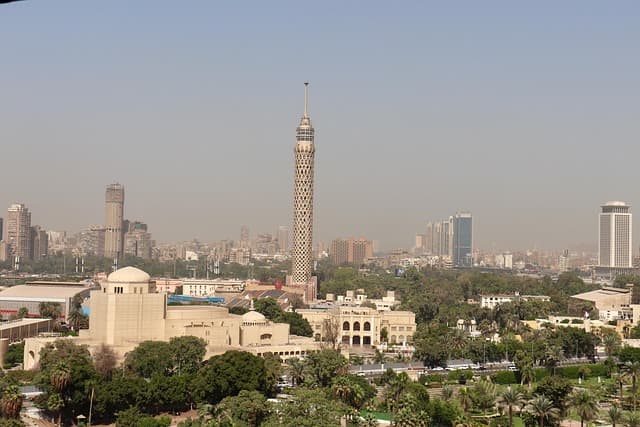
Nasr City was built in the 1960s as a socialist planning experiment, a grid of wide boulevards and functionalist apartment blocks intended to house the expanding Egyptian middle class. It was never beautiful. It is now one of the most practically interesting neighborhoods in Cairo, partly because the Syrian commercial insertion of the last decade has created something that urban planners would call a "parallel commercial layer" and that everyone else just calls going to get decent halawiyat.
Abbas El Akkad Street and its side streets form the commercial core. There are Syrian patisserie chains here, including Cairo branches of Damascene names that were famous before 2011, now operating out of shopfronts with the same branded packaging and recipes, reconstructed from memory and supplier relationships rebuilt across three countries. Baklawa, namoura, maamoul stuffed with pistachio paste: the quality is, without exaggeration, better than anything you will find in the tourist-facing confectioneries near the Nile. The prices are lower. A box of mixed Syrian sweets that would cost EGP 800 near the Four Seasons costs EGP 300 here.
The restaurants are the more interesting story. Syrian cuisine in Cairo has split into two registers. There is the aspirational register, restaurants in Zamalek and Maadi with interior design budgets and a clientele of Egyptian upper-middle-class families treating kibbeh nayyeh as an exotic experience. And there is the working register in Nasr City and Ain Shams, restaurants where the menu is written on a whiteboard, the fattoush comes in portions sized for people who have been working since dawn, and the owner is usually also the chef and will tell you exactly which province his family is from if you ask. The second register is where you eat.
Ain Shams, north of Nasr City, has the higher concentration of Syrian families at the lower end of the income spectrum. It is less comfortable for a casual tourist walk, not because of safety but because it is a working-class neighborhood not oriented toward visitors in any way. If you have a specific reason to go, go. If you are looking for the Syrian food experience, Nasr City gives you that with less navigational difficulty.
---
The Connections: What This Community Reveals About Cairo
The Syrian presence in Cairo at every historical moment has served as a diagnostic for what Cairo itself was doing. When Cairo was the center of the medieval Islamic world, it attracted Syrian scholars and merchants because that was where the money and the patronage were. When Egypt industrialized its press and its civil society in the late nineteenth century, Levantine Christians came because Egypt's relative openness to non-Muslim professionals was greater than that of the Ottoman Syrian provinces. When Syria collapsed in 2011, Egyptians took in millions of Syrians not because Egyptian government policy was particularly welcoming (it was inconsistent and sometimes obstructive) but because Egyptian society has a genuine cultural tolerance for Levantine presence that runs deeper than policy.
The Coptic dimension of this story is worth naming. The Syrian Orthodox and Syrian Catholic communities in Cairo, small but historically significant, have maintained churches in the older parts of the city since at least the eighteenth century. The Syrian Orthodox Church of Saint Mark in Shubra is rarely visited by non-members. It uses a liturgy in Syriac, a language directly descended from the Aramaic that Jesus spoke, in a neighborhood of Cairo that most tourists never reach. That liturgical continuity, preserved in a Cairene side street, is one of the more quietly remarkable facts about this city.
---
Common Mistakes
Treating this as a refugee story only. The Syrian community Egypt history is a thousand years old. Arriving with a framework of crisis erases most of what is interesting and condescends to communities that have been shaping this city since before most European nations existed.
Eating in the wrong places. The Syrian restaurants in Zamalek and Maadi are not bad. They are just performing Syrianness for an audience that doesn't know the original. Spend EGP 400 in Nasr City instead of EGP 900 in Zamalek and you will eat better.
Skipping Attaba because it looks chaotic. It is chaotic. It is also where the historical commercial relationship between Cairo and Syria is most physically legible. The chaos is the point. Give it two hours on a weekday morning.
Taking a tour. No organized tour of the Syrian community in Cairo exists that is worth booking. The ones that do exist are either political (advocacy-framed) or superficial (a restaurant and a market in 90 minutes). Navigate this yourself with a map and this article.
The cultural center circuit. Several organizations run events billed as "Syrian cultural evenings" in Cairo, charging EGP 200-350 for a program of folk music and food that is assembled for an international NGO audience. Skip them. Walk to an actual Syrian coffee shop in Nasr City, sit down, order tea, and let the conversation find you. It will.
Not learning three words of Syrian Arabic. Egyptian and Syrian Arabic are mutually intelligible but distinctly different. Knowing that shukran is universal but that Syrians say yislamo as a warm thank-you, and saying it back, opens more doors than any amount of tourist-Arabic class preparation.
Expecting homogeneity. Syrians in Cairo are from Aleppo, Damascus, Homs, Deir ez-Zor, Idlib, the coast, the desert, the mountains. They are Sunni, Alawi, Christian, Druze, secular. The community is not a community in the singular sense. It is a set of overlapping presences with different histories, different relationships to Egypt, and different plans for the future.
---
Practical Tips
Friday morning is the best single time to walk the Nasr City Syrian commercial strip. The shops open late (around 10am), the streets are less vehicle-dominated than weekdays, and families are out in a way that gives the neighborhood a particular legibility. You can see the social texture of the community rather than just its commercial surface.
If you want to visit the Syrian Orthodox Church in Shubra, go on a Sunday morning and be respectful about entry during services. Services begin at 8am and run approximately two hours. Dress conservatively. Photography during the liturgy is not appropriate and will not be received well.
For the Khan el-Khalili historical walk, go at 8am before the tourist infrastructure activates. The merchants are setting up, the light is good, and the Sufi zawiya chapels are accessible without crowds. By 10am the main alleys are difficult to move through.
Uber works well across all these areas. Shared minibuses are cheaper (EGP 3-5 per ride) but require knowing the routes. A metro card loaded with EGP 50 covers most of your transit needs between downtown and Nasr City for a full day.
If you have a genuine interest in the modern diaspora and want to understand it beyond the surface, the organization Terre des Hommes and the UNHCR Egypt office both publish public reports on Syrian community conditions in Cairo that are more honest than most journalism on the subject. Read them before you arrive, not after.
Frequently Asked Questions
The Weekly Dispatch
More on Egypt, every Friday.
Cultural depth and places most guides never mention.
No spam. Unsubscribe anytime.