Syrian Community Egypt History Guide: Cairo's Living Syrian Quarter
Cairo has hosted Syrian refugees since the 13th century. The Mamluk sultans who built Egypt's most iconic mosques were largely Syrian-born. That history is still walking around Sayeda Zeinab.

Quick Facts
- Best time to visit
- October to April. Summer temperatures above 35C make street-level neighborhood exploration uncomfortable, and market activity slows in July and August.
- Entrance fee
- Neighborhoods: free. Mosque of Sultan Hassan (Mamluk, architecturally connected): EGP 100 (approx $2 USD), students EGP 50. Coptic Museum (for pre-Islamic Syria-Egypt connections): EGP 200 (approx $4 USD).
- Opening hours
- Markets most active 10am to 2pm and 5pm to 9pm, Saturday through Thursday. Mosques open for visitors roughly 9am to 5pm, closed to visitors during Friday midday prayer (12pm to 2pm).
- How to get there
- Metro Line 1 to Sayeda Zeinab station (EGP 10 flat fare). Taxi from Downtown Cairo: EGP 30 to 50. Uber or Careem from Tahrir Square: EGP 40 to 60. For Mohandessin, take Metro Line 2 to Cairo University station then walk or take a short taxi.
- Time needed
- Half day for Sayeda Zeinab market and surrounding streets. Full day to connect Syrian neighborhood Cairo with Mamluk monuments in Islamic Cairo and a dinner in Mohandessin.
- Cost range
- Budget EGP 300 to 600 per day (street food, market purchases, metro transport). Mid-range EGP 1,000 to 1,800 (Syrian restaurant dinner, taxi transport, mosque entrance fees).
Quick Facts
Best time to visit: October to April, when Cairo's heat is manageable and the streets of Sayeda Zeinab and Abbasiya are fully alive without the summer torpor.
Entrance fees: Most Syrian community sites are street-level neighborhoods, markets, and mosques with no admission charge. The Mosque of Sultan Hassan, architecturally connected to Syria's Mamluk legacy, charges EGP 100 (approx $2 USD), students EGP 50. The Coptic Museum, relevant for understanding pre-Islamic Syrian Christian migration to Egypt, charges EGP 200 (approx $4 USD).
Opening hours: Neighborhoods are accessible at all hours. Mosques open for prayer times and general visiting roughly 9am to 5pm, with closures during Friday midday prayer (12pm to 2pm). Market activity peaks 10am to 2pm and again 5pm to 9pm.
How to get there: Metro Line 1 to Sayeda Zeinab station (EGP 10 flat fare anywhere on the metro). Taxis from Downtown Cairo run EGP 30 to 50. Uber and Careem average EGP 40 to 60 from Tahrir Square. For Abbasiya, take Metro Line 1 to Mubarak then change to Line 2.
Time needed: A focused half-day covers Sayeda Zeinab market and the surrounding streets. A full day allows you to connect the Syrian commercial quarter to the Mamluk monuments of Islamic Cairo, which is the only way to understand why both exist.
Cost range: Budget EGP 300 to 600 per day if you eat in Syrian-run kusheri and falafel shops. Mid-range EGP 1,000 to 1,800 if you add a Syrian restaurant dinner in Mohandessin or Dokki.
---
The word "refugee" implies something temporary. Cairo's Syrian community is now nearly eight hundred years old in its oldest form, and its newest wave, the families who arrived after 2011, have already opened restaurants, run schools, and embedded themselves into the city's commercial fabric so thoroughly that Egyptian Arabic has started borrowing words back from Syrian dialect. This is not a story about displacement. It is a story about one of the world's most durable urban migrations.
Why This Place Matters
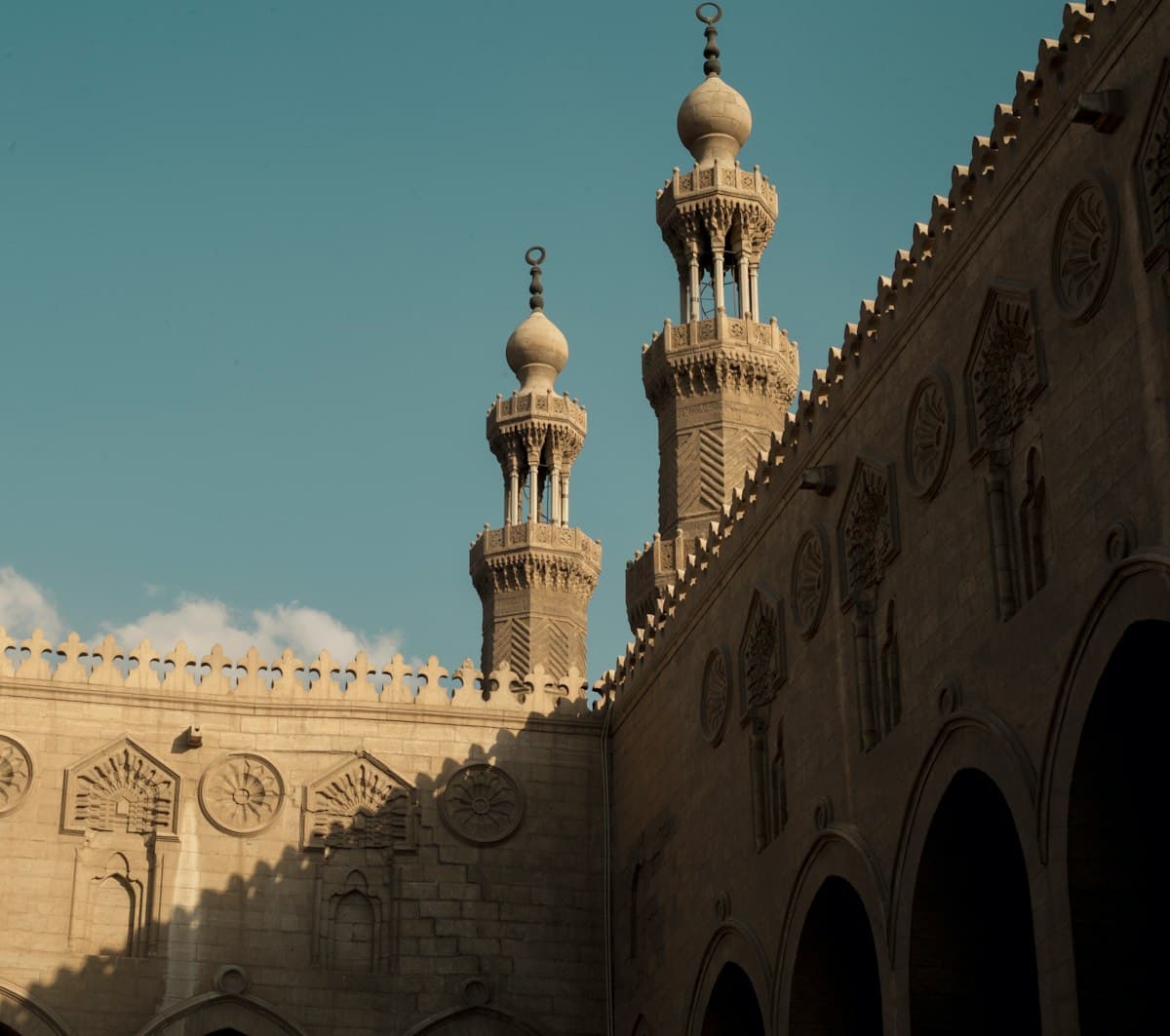
Most visitors understand Cairo as the capital of ancient Egypt and the seat of Islamic civilization in North Africa. Few understand that the Islamic Cairo they photograph, the Mamluk minarets, the carved stone facades, the vast congregational mosques, was built largely by rulers of Syrian origin or training.
The Mamluk Sultanate, which governed Egypt from 1250 to 1517, drew its ruling class from enslaved soldiers purchased in Central Asia and the Caucasus but trained and militarized in Damascus and Aleppo. The Sultan who built the Mosque of Sultan Hassan, finished in 1363, was raised within a Syrian-inflected Mamluk court. The geometric stone inlay work on that mosque's facade, called "ablaq," alternating bands of red and white stone, was a technique imported directly from Syrian Ayyubid architecture. You are looking at Syrian craft every time you look at Cairo's most photographed Islamic monuments.
The more recent Syrian community history guide to Cairo begins in earnest in the late 19th century, when Syrian and Lebanese Christian merchants arrived during the Ottoman period, establishing trading houses in the commercial districts around Khan el-Khalili and later in what became Abbasiya. They were followed by waves of migration tied to political upheaval: post-World War One, post-1948, post-1967, and then the enormous displacement after 2011, which brought an estimated 300,000 to 500,000 Syrians to Egypt, the majority of them to Greater Cairo.
Sayeda Zeinab: The Neighborhood That Has Always Absorbed Everyone
Sayeda Zeinab is named for the granddaughter of the Prophet Muhammad, whose shrine sits at the district's heart and draws pilgrims from across the Sunni and Shia worlds. The neighborhood around it has functioned as Cairo's primary absorption zone for arriving communities for centuries. Syrians, Yemenis, Sudanese, Iraqi Kurds, and now a second and third generation of post-2011 Syrian families have all found their first Cairo foothold within walking distance of that shrine.
The Syrian presence in Sayeda Zeinab today is audible before it is visible. In the food market that runs along Sharia Port Said, vendors sell Aleppo pepper (coarser and fruitier than the Egyptian equivalent), Syrian flatbread baked in portable clay ovens called "tannour," and a dried yogurt cheese called "shanklish" that you will not find in an Egyptian supermarket. A Syrian-run sweet shop selling "halawet el-jibn," a cheese-based dessert rolled around clotted cream, has been operating in this district since the 1990s and has expanded three times.
What most visitors walk past without knowing: the small mosque on Sharia Sayed al-Ashraf, unremarkable from the outside, was substantially renovated by Syrian craftsmen in the 1970s who brought with them the tradition of painted wooden ceilings using a technique called "ajami," lacquered gesso relief painted in gold and deep colors. The same technique appears in the great Damascene houses now preserved in the National Museum of Damascus. A version of it survived the trip to Cairo and is on a ceiling in a neighborhood mosque that receives no visitors who aren't praying.
Mohandessin and Dokki: The New Syrian Commercial Geography
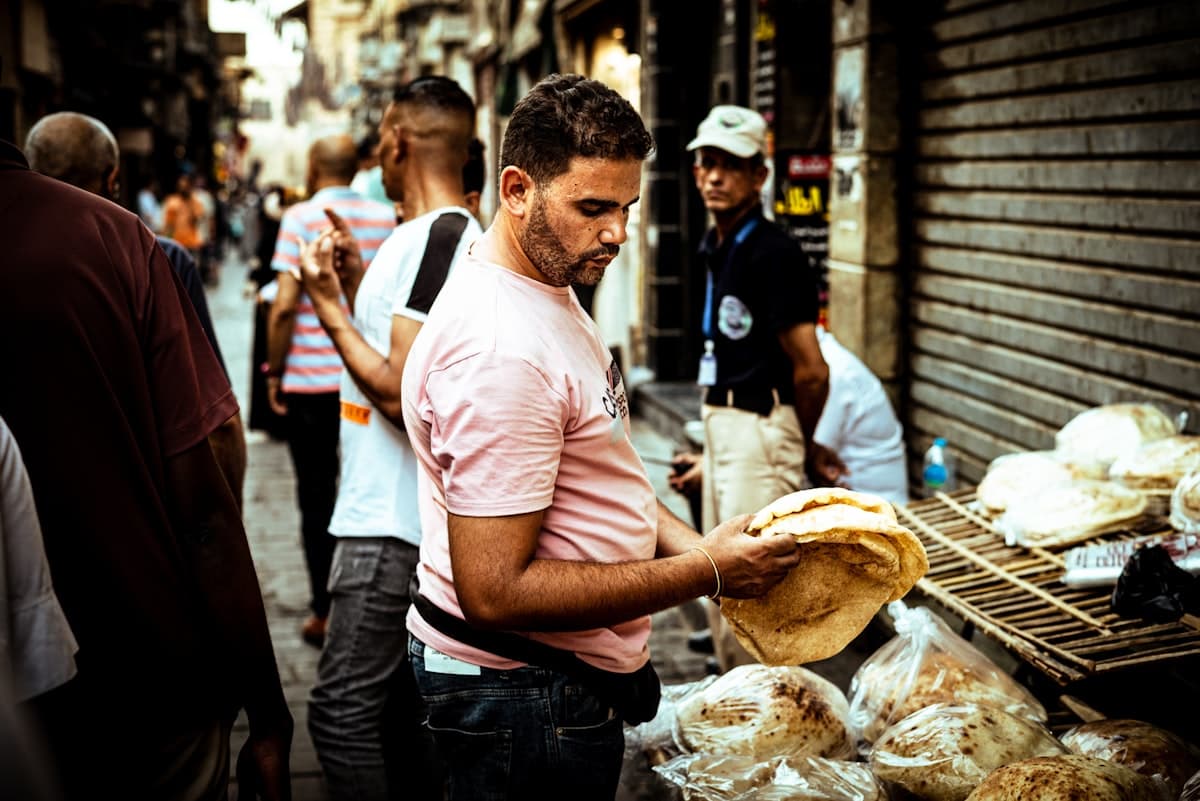
After 2011, the Syrian community in Egypt did not cluster in a single district. It spread according to rent and connection. But the commercial heart of the post-2011 Syrian presence is in Mohandessin and Dokki, on the west bank of the Nile, in neighborhoods that Egyptians sometimes jokingly call "Little Syria."
Syrian restaurants on Sharia Gameat el-Dowal el-Arabia in Mohandessin serve "fattet hummus" (a layered chickpea and bread dish with hot yogurt poured over it) that Cairene food critics have written about seriously. Syrian pastry shops selling "maamoul" (shortbread stuffed with date or pistachio paste) and "barazek" (sesame and pistachio cookies) have become regular stops for Egyptian families on Eid. The Syrian kitchen has inserted itself into Egyptian food culture so quickly that some Egyptian bakeries have started making Syrian-style bread without labeling it as such.
The economic footprint is substantial. A 2017 study by the International Labour Organization estimated that Syrian entrepreneurs in Egypt had established over 7,000 small and medium businesses, with particular concentration in food production, textiles, and beauty services. The textile connection is historically resonant: Syrian weavers have been supplying the Egyptian market since the medieval period, when Damascene brocades were listed in Cairo merchant inventories. The supply chain is different now. The cultural memory of Syrian craftsmanship in fabric is not.
One specific and largely unvisited example: the small cluster of Syrian-owned fabric workshops in the Attaba district, just west of Khan el-Khalili, where Syrian weavers produce embroidered fabrics using patterns from Homs and Damascus. The workshops are not tourist sites. You find them by walking and looking for the Arabic signage indicating Syrian ownership, or by asking in the adjacent textile market. The craftsmen will generally let you watch if you express genuine interest.
The Connections: Mamluk Stone, Syrian Hands, Ottoman Interruption
The Mamluk monuments that tourists come to Cairo to photograph are inseparable from Syrian craft traditions. The Mosque of Ibn Tulun, the oldest intact mosque in Cairo, was built in 876 by a governor of Abbasid Iraq but its spiral minaret is modeled on the Great Mosque of Samarra, itself built by craftsmen who moved between Iraq and Greater Syria. Islamic Cairo is a record of the Levant's influence on Egypt, not a separate story from it.
The Ottoman conquest of 1517 did not erase Syrian influence. It redirected it. Ottoman governors brought their own Syrian-trained craftsmen, and the result is visible in the Mosque of Suleiman Pasha al-Khadim in the Citadel, where Ottoman tiling from Iznik sits alongside decorative vocabulary imported from Aleppo. The Citadel itself, begun by Saladin (a Kurd who commanded a Syrian army and was educated in Damascus), is a physical record of the Syria-Egypt administrative axis that ran for nearly three centuries.
The Syrian Christian merchants who arrived in the late 19th century added another layer. Many settled in Shubra, where they built churches and schools. The Coptic Orthodox Church, which predates Islam in Egypt by six centuries, had maintained connections with the Syrian Orthodox Church since late antiquity. Some Syrian Christian families who arrived in the 1890s attended both communities' services, creating a small but real overlap between Egypt's indigenous Christian tradition and the arriving Syrian one.
Common Mistakes
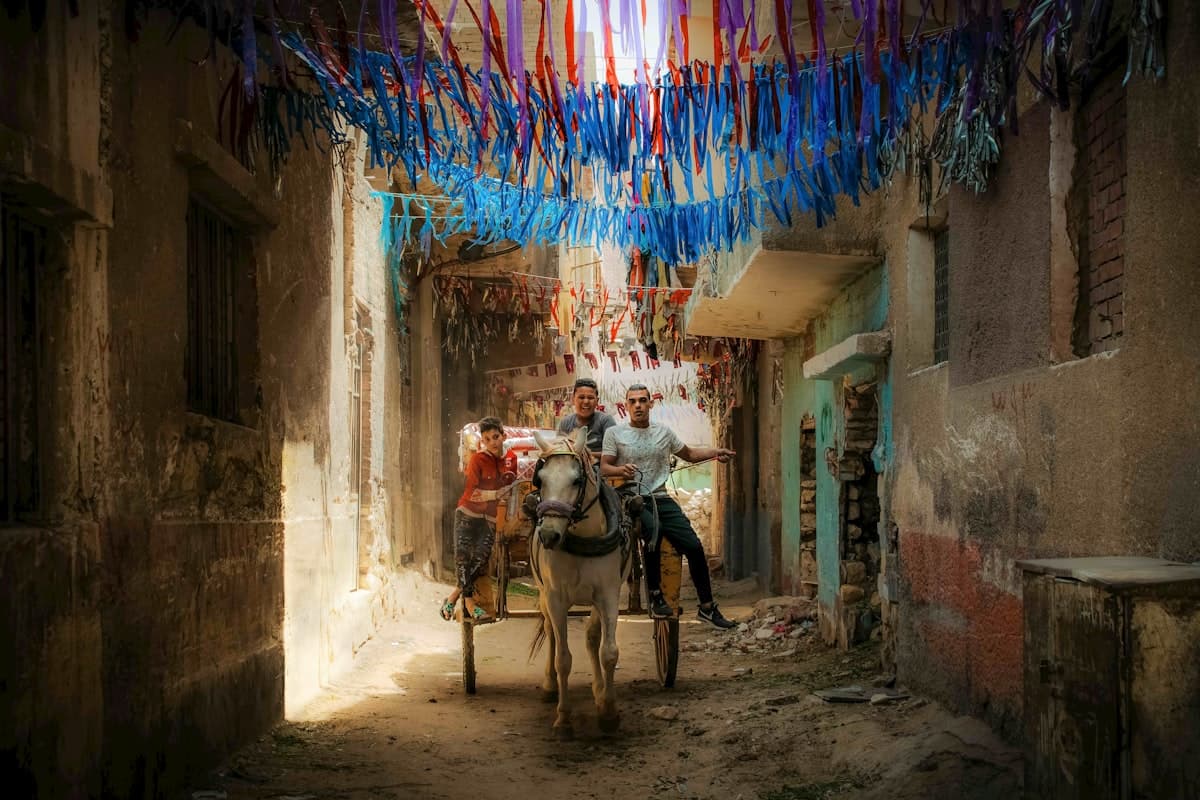
Treating this as a single neighborhood visit. The Syrian community in Egypt history is not contained in one district. Sayeda Zeinab, Mohandessin, Dokki, Attaba, and Shubra each hold different chapters. If you only go to one area, you are seeing a fragment.
Going only to the famous Syrian restaurants. The celebrated restaurants in Mohandessin are good, but the more interesting food is in the smaller shops in Sayeda Zeinab and Ain Shams where Syrian families are cooking for other Syrians, not for Egyptian food tourists. Prices are a third lower and the food is less performed.
Skipping the mosques because you've already seen the Citadel. The neighborhood mosques around Sayeda Zeinab contain craft details, wooden ceilings, and stone carvings that predate the Citadel's current form and are never crowded. A mosque with no admission charge and no tour groups is often a better experience than one with both.
Visiting the Syrian community sites without any Arabic. This is not a tourist circuit. There are no English signs, no guides, no information panels. A basic phrase in Arabic ("min Suriyya?" meaning "are you from Syria?") opens more conversations than a camera. The community is not unwelcoming, but it is not oriented toward visitors.
Taking a tour that calls this a "refugee experience." Several Cairo tour operators have begun offering "humanitarian tourism" packages that frame the Syrian community entirely through the lens of displacement and tragedy. This flattens an eight-hundred-year relationship into a recent crisis and treats people as exhibits. Skip these entirely. Walk the neighborhood yourself.
Expecting visible monuments. This is a living community history guide, not an archaeological one. There is no Syrian Museum of Cairo, no marked heritage trail. The evidence is in fabric patterns, pastry recipes, mosque ceilings, and business signs. You have to look for it.
Going on a Friday morning. The markets in Sayeda Zeinab are largely closed or reduced during Friday morning prayer. Saturday morning is the most active market day.
Practical Tips
Dress conservatively throughout. Sayeda Zeinab is a religiously observant neighborhood and women will be more comfortable and more welcomed with shoulders and knees covered. This is not a suggestion about safety. It is a suggestion about how you will be received.
Bring cash in Egyptian pounds. ATMs are available in Mohandessin and near the Sayeda Zeinab metro station, but smaller Syrian-run shops and market stalls do not take cards.
The best single food stop for understanding Syrian Cairo is not a restaurant. It is the Syrian grocery shop on Sharia Emad el-Din in Downtown Cairo that stocks Aleppo pepper, Syrian olive oil soap, pomegranate molasses, and preserved lemons in proportions that tell you exactly what the community is cooking at home.
If you want to make a human connection rather than just observe, the Al-Salam school in Ain Shams (established to serve Syrian children in Cairo's northern suburbs) occasionally hosts open cultural events. Following Egyptian NGOs that work with Syrian communities on social media will give you advance notice of these.
Do not photograph people in markets without asking. Do not photograph children at all without explicit parental permission. The Syrian community in Cairo has reasons to be cautious about documentation that you should respect without requiring explanation.
Frequently Asked Questions
The Weekly Dispatch
More on Egypt, every Friday.
Cultural depth and places most guides never mention.
No spam. Unsubscribe anytime.