The Italian Community of Alexandria: A Lost Europe on the Mediterranean
At its peak, Alexandria had 100,000 Italians. They built the stock exchange, ran the trams, and made the city's best ice cream. Almost all of them are gone. The evidence is everywhere.

Audio Guide: The Italian Community of Alexandria: A Lost Europe on the Mediterranean
Quick Facts
- Best time to visit
- October through April. Mediterranean humidity drops, facades are clear in the low winter light, and the city is not at summer vacation capacity.
- Entrance fee
- Most sites are free: public streets, the Cathedral of St. Catherine (free, donations welcome), and the Latin Cemetery at Chatby (free, gate request required). The Cavafy Museum charges EGP 40 (approx $1 USD).
- Opening hours
- Cathedral of St. Catherine: daily 8am to noon and 3pm to 6pm. Latin Cemetery Chatby: Saturday to Thursday 8am to 2pm, closed Friday. Street architecture is accessible at all times.
- How to get there
- Air-conditioned train from Cairo Ramses Station: EGP 85 to 150, approximately 2 hours. From Alexandria Misr Station, tram line 1 to Raml Station costs EGP 3. Taxi from the station to Mansheya costs EGP 50 to 80.
- Time needed
- Full day minimum. Morning for Raml and Mansheya streets plus the cathedral, afternoon for Chatby cemetery and the Attarine book market.
- Cost range
- Budget EGP 400 to 700 per day including food and local transport. Mid-range EGP 1,200 to 2,000 per day with a decent hotel in the Raml district.
Quick Facts
Best time to visit: October through April, when Alexandria's Mediterranean humidity drops and the light on the limestone facades is clean and direct.
Entrance fees: Most sites connected to the Italian community are public streets, churches, or cemeteries. The Greek Orthodox Patriarchate and some churches are free to enter with respect for dress codes. The Latin Cemetery charges no entry but requires a request at the gate.
Opening hours: The Catholic Cathedral of St. Catherine opens daily from 8am to noon and 3pm to 6pm. The Latin Cemetery in Chatby opens Saturday through Thursday, 8am to 2pm. Most Italian-era cafes and buildings are accessible as street architecture any time.
How to get there: From Cairo, the air-conditioned Spanish train from Ramses Station takes approximately 2 hours and costs EGP 85 to 150 depending on class, one way. From central Alexandria, the Italian-era districts of Raml, Attarine, and Chatby are all within walking distance of each other or a short tram ride on line 1, which itself runs along tracks laid by an Italian concessionaire in 1863. A tuk-tuk across the corniche costs EGP 20 to 40.
Time needed: A serious walking tour of the Italian-era city takes a full day. Split it: morning for the streets of Raml and the cathedral, afternoon for Chatby cemetery and the seafront Corniche buildings.
Cost range: Budget EGP 400 to 700 per day including food and local transport. The neighborhood is Alexandria's center. You are not going out of your way.
---
At its height in the 1920s and 1930s, Alexandria held approximately 100,000 Italians. They were not colonial administrators or soldiers. They were bakers, pharmacists, jewelers, architects, and tram engineers. They ran the city's ice cream parlors, designed its stock exchange building, and organized its carnival. The city's first modern newspaper, published in 1833, was written in Italian. And then, between the 1952 revolution and the nationalization campaigns of the early 1960s, nearly all of them left. What they left behind is still here if you know how to look.
Why This Place Matters
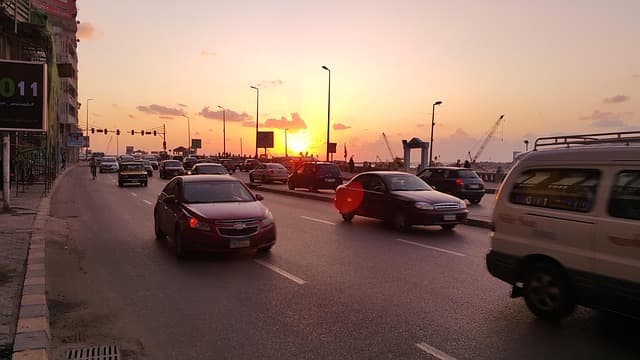
The Italian presence in Alexandria was not an imperial project in the way British or French influence was. Italy had no formal protectorate over Egypt. Instead, the Italians arrived through a more complicated door: the Capitulations, a system of extraterritorial privileges that the Ottoman Empire extended to European nationals living in its territories. Under the Capitulations, which Egypt inherited and which were not abolished until 1937, Italians living in Alexandria were largely exempt from Egyptian law and taxes. They lived, in effect, in a parallel legal jurisdiction.
This created a community that was both deeply embedded in the city and structurally separate from it. By the 1920s, the Italian community had its own schools, hospitals, mutual aid societies, a newspaper called La Borsa Egiziana, a theater, and a chamber of commerce. The community was not a colony. It was a city inside a city.
The deeper historical context is this: Alexandria had always functioned this way. The ancient city that Alexander the Great founded in 331 BCE was designed from the start as a Mediterranean capital rather than an Egyptian one, its grid plan oriented toward the sea rather than the Nile. The Jewish community thrived there for centuries before the common era. The Greeks never truly left: the Greek community of Alexandria, one of the oldest continuous Greek diaspora communities in the world, numbered 100,000 people as late as 1950. The Italians were the latest iteration of something Alexandria had been doing for two and a half millennia: absorbing Europeans and giving them a slightly different version of themselves in return.
The Streets: What the Architecture Is Actually Telling You
Walk down Saad Zaghloul Street, Alexandria's main artery running inland from the sea, and you are inside a argument between European modernism and Egyptian heat. The buildings along this corridor were constructed mostly between 1890 and 1940. Many were designed by Italian architects, particularly from the schools of Turin and Milan, adapting Beaux-Arts and Liberty Style facades to a climate that demanded deep loggias, shaded arcades, and roof terraces instead of attic gables.
The most important single building is the Bourse, the old stock exchange, completed in 1898 and designed by Italian engineers under the direction of the mixed Egyptian-European authority that ran Alexandria's finances. Cotton made Alexandria wealthy enough to need a stock exchange. By 1914, the Alexandria cotton market was one of the most consequential commodity markets in the world, and Italian brokers were disproportionately represented on its floor.
Look up when you walk these streets. The ironwork on the balconies is almost entirely Italian in manufacture or design: the curling plant motifs, the corner volutes, the oxidized green of unpolished wrought iron. The ground floors have mostly been converted to mobile phone shops and fast food restaurants. The upper floors, where the families lived, remain largely unchanged. Laundry hangs where Italian linen once dried.
The tram line running along the corniche is itself an Italian story. The Alexandria tram network was established in 1863 under a Belgian concession but substantially rebuilt and expanded by Italian engineers in the early twentieth century. It is one of the oldest continuously operating tram systems in Africa.
The Cathedral of St. Catherine
The Latin Cathedral of St. Catherine in Mansheya Square is the geographical center of Italian Alexandria. Built in 1831 and expanded substantially in 1884, it served the Catholic communities of Alexandria for over a century, with Mass conducted primarily in Italian until the 1960s. The building's exterior is restrained, almost severe, a product of its early nineteenth century construction before the Liberty Style excess arrived. Inside, the side chapels contain memorials to Italian families: the Salvago, the Aghion, the Zizinia.
The Zizinia name appears here and elsewhere in the city. Stefano Zizinia was a Greek-Italian merchant who funded the construction of the Theatre Zizinia in 1863, which became Alexandria's primary European theater. Verdi's Aida, which was commissioned for the opening of the Suez Canal in 1869 and premiered in Cairo in 1871, was performed at the Zizinia within a year of its premiere. The theater was demolished in 1964. The cathedral is the surviving monument to that world.
Dress modestly for the cathedral. It remains an active parish.
The Latin Cemetery at Chatby: The Most Honest Archive in Alexandria
If you want to understand the Italian community of Alexandria in any serious way, you go to the Latin Cemetery in the Chatby neighborhood, not to a museum. There is no museum. The cemetery is the archive.
The Latin Cemetery, also called the Chatby Necropolis in some contexts though that name properly belongs to the adjacent ancient Greek cemetery, contains the graves of Italians, Greeks, and other European communities from roughly 1840 onward. The grave inscriptions read like a demographic survey of a vanished world. The dead are from Naples, from Genoa, from Livorno, from Sicily. Their professions are listed: merchant, pharmacist, shipbuilder, nurse. Many died young, of cholera during the epidemics of 1865 and 1883 that tore through Alexandria's crowded European quarters.
The 1883 cholera epidemic is one of the underdiscussed catastrophes of Mediterranean history. It killed approximately 58,000 people in Egypt in a single year, a figure representing perhaps 1 in 10 of Alexandria's entire population. The European communities were not spared. The rapid burials that followed are recorded in the cemetery's compressed grave dates, clusters of deaths in July and August of that year visible if you read the inscriptions systematically.
Later graves reflect a different kind of departure. From the 1950s onward, many inscriptions include a date of death abroad, in Rome or Milan or Sydney or Buenos Aires, with a note that the remains were repatriated. These are the people who left but wanted to come back, even after death. The community did not abandon Alexandria. It was made to leave.
Bring water. The cemetery is largely unshaded. The groundskeeper will show you notable graves if you ask with some Arabic or patience.
The Connections: What Alexandria Did With What It Was Given
The Italian-built city exists on top of older cities in ways that are neither metaphorical nor coincidental. The Corniche road, lined with Italian-era apartment buildings, was cut through the ancient royal quarter of the Ptolemaic city. When contractors dug foundations for buildings in the Raml district in the 1890s, they regularly hit Ptolemaic-era cisterns, still structurally sound after two thousand years, and simply built around them. Some of those cisterns remain beneath occupied buildings today.
The relationship between the Italian community and the Coptic Alexandrian church is more complicated than most accounts allow. The two communities coexisted commercially and sometimes architecturally: several Italian-designed buildings from the early twentieth century in the Attarine district were built on land sold by Coptic families who had owned it since the medieval period. The Coptic church of Abu Mena, one of the oldest continuously active Christian sites in Alexandria, is a short walk from streets where Italian was the working language of commerce within living memory.
The Islamic city overlaps the Italian city at every point. The district of Attarine, named for the herb and spice sellers who have worked there since the Fatimid period, contains a mosque that was converted from a medieval church and sits forty meters from a building with a faded Italian name still legible in relief on its facade. A Mamluk-era hammam operates in a building whose upper floors were renovated in the Liberty Style. This is not a paradox. It is Alexandria working normally.
Common Mistakes
Treating this as a nostalgia tour rather than a history. The Italian community's departure was not a natural ending. Between 1956 and 1964, Nasser's nationalization policies and the political fallout from the Suez Crisis created conditions in which European communities faced asset seizure, professional exclusion, and in some cases expulsion. Understanding the Italian presence in Alexandria requires understanding why it ended, not just celebrating what it built.
Relying on the Cavafy Museum without context. Constantine Cavafy, Alexandria's most celebrated poet, was Greek, not Italian, but his world and the Italian world of Alexandria were the same world. The Cavafy Museum on Sharm el-Sheikh Street is genuinely worth visiting and entry costs EGP 40. But visitors who go there without having walked the streets first tend to treat it as a literary shrine rather than a geographical document. Walk the streets first.
Skipping the cemetery for the cathedral. Most visitors who engage with Italian Alexandria at all spend time in St. Catherine's Cathedral and stop there. The cathedral is beautiful but scrubbed clean of specific human evidence. The Latin Cemetery at Chatby is where the actual names, professions, and dates are. It is the harder and more rewarding place.
Booking a guided tour that covers everything in three hours. The standard Alexandria day trip from Cairo, which most operators sell, allocates perhaps forty minutes to the downtown area. This is enough time to take photographs of facades and nothing more. If the Italian community history guide you are using is rushing you through in an afternoon, you are on the wrong tour.
Eating at the tourist restaurants on the Corniche. The seafood is better and cheaper at the small restaurants on the streets behind the fish market in Anfushi, where a meal costs EGP 150 to 250 per person. The corniche restaurants charge twice that and are built on the view, not the food.
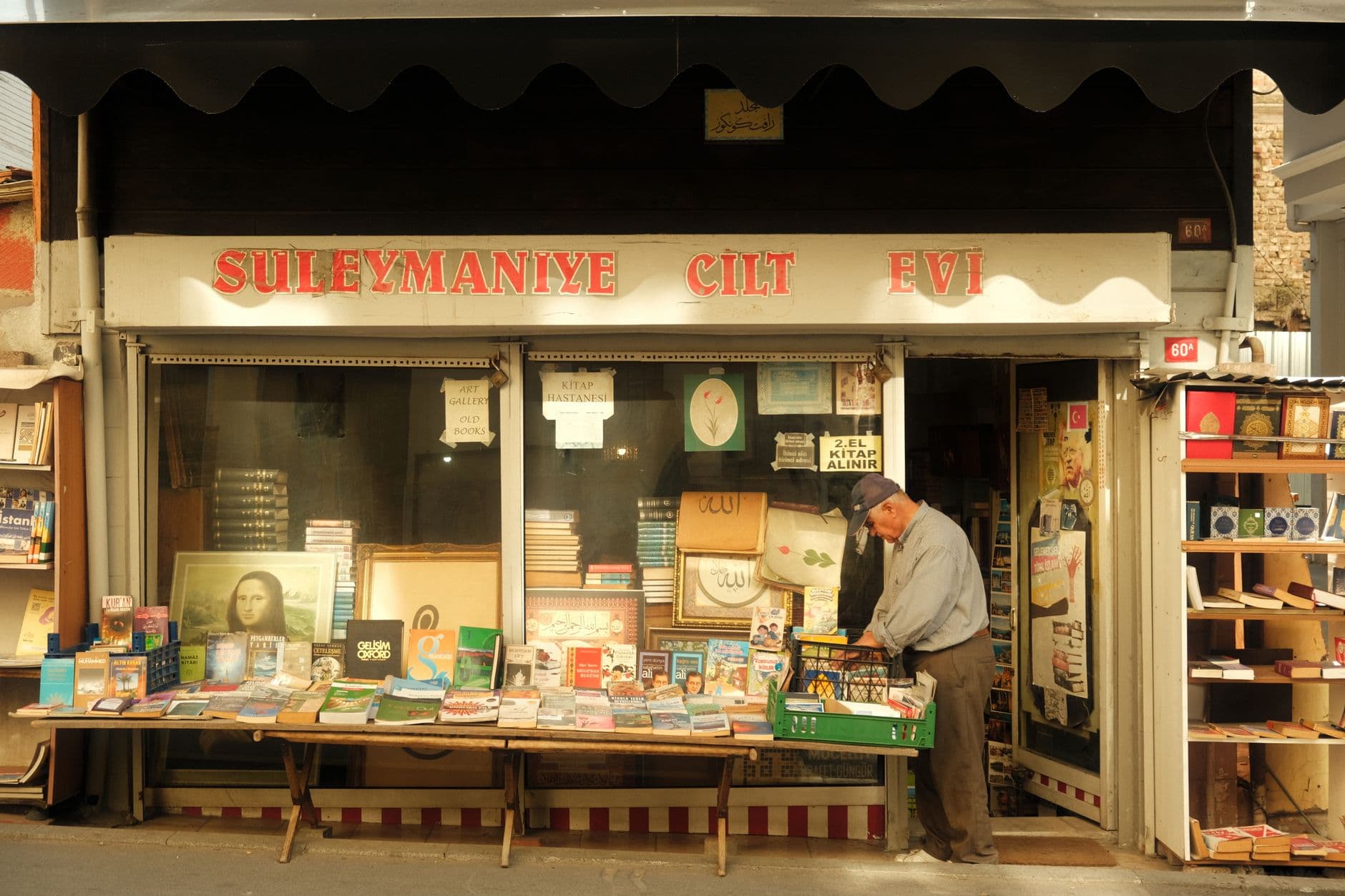
Ignoring the bookshops in Attarine. The secondhand book market in Attarine regularly surfaces Italian-language books, documents, and occasionally photographs from Alexandrian Italian families. A copy of La Borsa Egiziana from the 1930s appears occasionally. Prices are negotiable and the sellers generally have no idea what they have.
Visiting in July or August. The humidity off the Mediterranean in midsummer is serious. The city is also full of Egyptian vacationers from Cairo. October through April is the operating window for anyone who wants to walk and pay attention.
Practical Tips
Base yourself in the Raml district. It is the center of Italian-era Alexandria and puts everything within walking distance. A clean mid-range hotel here costs EGP 800 to 1,500 per night.
The most useful single book you can read before arriving is Michael Haag's Alexandria: City of Memory, which covers the cosmopolitan era with specific street-level detail. It is out of print but findable used.
Alexandria's tram system, the one with Italian engineering in its bones, is still the most logical way to move along the corniche. A single tram journey costs EGP 3. It is slow, occasionally crowded, and the correct way to travel between Raml Station and Chatby.
Some of the Italian-era buildings in the center are in active use as government offices or apartments. Do not attempt to enter without permission. Photograph from the street. Alleyways and internal courtyards that are visible from public doors often contain the best surviving ironwork and tilework.
If you read Italian, the Archivio Storico Diplomatico in Rome holds consular records from the Alexandria Italian community going back to the 1840s. Researchers have used these to reconstruct family histories for descendants now living in Italy, Australia, and South America.
Finally: ask. Alexandria is a city where the older residents remember. The man running the hardware shop in Attarine may have been born in the 1950s and have parents who knew Italian neighbors. The Coptic family whose grandmother sold land in the 1900s may still be in the same neighborhood. The living memory of cosmopolitan Alexandria is older than it looks, and it is not finished.
Frequently Asked Questions
The Weekly Dispatch
More on Egypt, every Friday.
Cultural depth and places most guides never mention.
No spam. Unsubscribe anytime.