The Italian Community of Alexandria: A Vanished World's Guide
At its peak, Alexandria had 100,000 Italians. Today, fewer than 200 remain. Their city is still there if you know how to read it.

Quick Facts
- Best time to visit
- October to April. The Mediterranean climate keeps temperatures between 15 and 22 degrees Celsius, the light on limestone facades is excellent for photography, and the city is not at summer capacity.
- Entrance fee
- Most street-level heritage sites free. Royal Jewelry Museum EGP 200 (approx $4 USD) foreigners. Bibliotheca Alexandrina EGP 140 (approx $3 USD) foreigners. Churches: donation of EGP 20 to 50 appropriate.
- Opening hours
- Shatby Cemetery Saturday to Thursday 9am to 4pm. Royal Jewelry Museum daily except Tuesday 9am to 5pm. Santa Caterina Church Sunday Mass 10am, visiting hours typically 9am to noon weekdays.
- How to get there
- Spanish Express train from Cairo Ramses Station to Alexandria Masr Station: EGP 95 to 180, two hours. From Masr Station to Raml Station by tram: EGP 3 to 5. Taxi from Masr Station to Raml area: EGP 40 to 70. Within the heritage district, walking is the correct mode of transport.
- Time needed
- Two full days minimum. Day one: Raml Station district buildings, Fouad Street facades, Santa Caterina Church. Day two: Shatby Cemetery, Royal Jewelry Museum, Cavafy Museum, eastern harbor lunch.
- Cost range
- Budget EGP 400 to 700 per day including transport, entries, and food. Mid-range EGP 1,200 to 2,000 including a proper seafood lunch at an established harbor restaurant.
Quick Facts
Best time to visit: October to April, when the Mediterranean coast is cool and the light on the city's belle époque facades is clean and sharp.
Key site entrance fees: Bibliotheca Alexandrina EGP 70 (approx $1.50 USD), regular; foreigners EGP 140. The Greek Orthodox Patriarchate and most churches request a small donation (EGP 20 to 50 is appropriate). The Royal Jewelry Museum EGP 200 (approx $4 USD) for foreigners. Many Italian-era buildings are viewable from the street for free.
Opening hours: Bibliotheca Alexandrina opens Sunday to Thursday 10am to 7pm, Friday and Saturday 3pm to 7pm. Most Corniche-area churches open for services and limited visiting hours, typically 9am to noon and 4pm to 6pm.
How to get there: Alexandria is 220km from Cairo. The Spanish Express train from Ramses Station takes two hours and costs EGP 95 to 180 second class. Within Alexandria, trams (EGP 3 to 5) run along the Corniche and into Raml Station, which is the historic center. Taxis from the station to the Italian Quarter area cost EGP 40 to 70.
Time needed: Two full days to understand the Italian presence properly. One day covering the Corniche, Raml Station, and the historic downtown buildings. A second day for cemeteries, the Greek and Italian churches, and the western neighborhoods.
Cost range: Budget EGP 400 to 700 per day including transport and entry fees. Mid-range EGP 1,200 to 2,000 including a good seafood lunch at one of the old-establishment restaurants.
---
At its 1927 census peak, Alexandria counted approximately 100,000 Italian residents. They operated their own newspapers, their own schools, their own hospitals, their own social clubs, and their own consul. They built apartment blocks in the Liberty and neo-Renaissance styles that still line the streets around Raml Station. They baked their bread in ovens that ran day and night along what is now Fouad Street. Today, the Italian community of Alexandria numbers fewer than 200 people, most of them elderly. The buildings survive. The world that filled them has been gone for sixty years.
This is the guide to that world: what it was, what it built, what expelled it, and how to find what remains.
Why This Place Matters
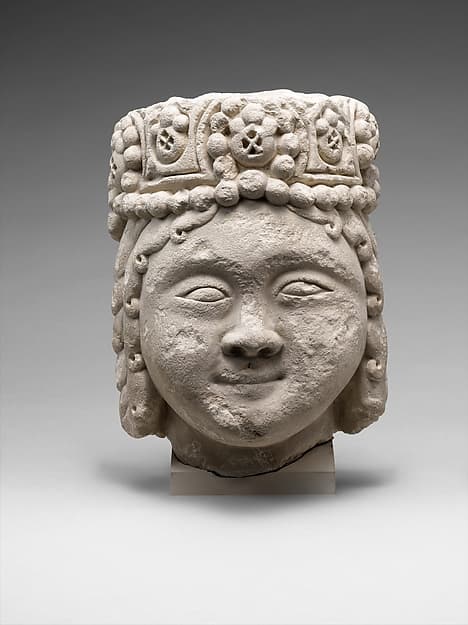
Alexandria was never really Egyptian in the ordinary sense. From the moment Alexander founded it in 331 BC, it was designed as a meeting point of civilizations rather than an expression of any single one. The Ptolemies ran it as a Greek city for three centuries. The Romans made it the second city of their empire. Arab conquest in 641 AD brought Islam, but the port never stopped being cosmopolitan. By the nineteenth century, Muhammad Ali's modernization drive turned Alexandria into a magnet for every Mediterranean nation looking for opportunity.
The Italians arrived in waves. The first substantial community settled in the early 1800s, many of them merchants from Livorno, Genoa, and Trieste following the cotton trade that Muhammad Ali had made suddenly lucrative. A second wave came after Italian unification in 1861, when economic disruption pushed tens of thousands toward the eastern Mediterranean. A third arrived fleeing poverty in Sicily and Calabria. Unlike colonists, these were not people sent by a state. They came because Alexandria was, quite simply, one of the best cities in the world to make a living in the nineteenth century.
They built a city within the city. The Italian Hospital, founded in 1873 on what is now El-Horreya Road, treated patients until the 1970s. The Dante Alighieri Society, established in 1876, offered Italian-language education that rivaled the French lycées for social prestige. The Italian community newspaper, La Tribuna, published continuously from 1892 to 1952. Italian architects, many of them trained in Rome and Milan, designed a significant portion of the Corniche buildings that Alexandrians now call simply "the old city."
The critical fact that most visitors to Italian community Alexandria Egypt sites miss: the Italians were not a colonial population. Egypt was technically under British occupation from 1882, but Italy had no formal imperial claim on Alexandria. The Italians were there on sufferance and on merit, which made their eventual expulsion both more unjust and more complicated.
The Buildings: How to Read a Vanished City
Start at Raml Station, the old tram terminus at the heart of the Corniche. Look up. The building directly north of the station's main entrance, with its curved iron balconies and the faded inscription above the third floor, was built by the Zervudachi family, who were Italian-Greek, in 1907. This is typical of Alexandria: the categories were porous. A man could be Italian-born, Greek Orthodox, with an Egyptian mother and a French business partner. The census categories flattened a reality that was profoundly mixed.
Walk south on Fouad Street (formerly the Rue Fouad, which the Italians called Corso Fouad). Between Raml Station and the old Bourse, there are at least twelve buildings constructed between 1890 and 1935 by Italian architects or Italian-owned firms. The most important is the Cicurel department store building at number 44, designed by the Italian engineer Antonio Lasciac, who also designed several buildings for the Cairo Khedivial district. Lasciac worked for the Egyptian royal court for three decades. His buildings are the connective tissue between the Khedivial ambition and the European expertise that executed it.
At the intersection of Fouad and Nabi Daniel streets, pause. The ground beneath you has been continuously inhabited for more than two thousand years. Roman Alexandria's main east-west artery, the Canopic Way, ran within meters of this spot. Hadrian walked it. Cleopatra's processions moved along it. Medieval Arab chroniclers described its ghost. When Italian building contractors dug foundations here in the 1890s and early 1900s, they regularly hit Roman mosaic floors and Ptolemaic column bases. Some were documented. Most were quietly buried again. The Italian community of Alexandria was, without always knowing it, building on three thousand years of previous cosmopolitan ambition.
The Churches: What the Liturgy Remembers
The Church of Santa Caterina on Midan el-Manshiya (now Midan Tahrir, not to be confused with Cairo's) was consecrated in 1847. It is the oldest Italian Catholic church in Alexandria and one of the oldest Catholic churches in Egypt still in regular use. The interior is unexpectedly restrained: pale cream walls, marble floors, a wooden ceiling that absorbs rather than reflects sound. Mass is still celebrated in Italian and Arabic on Sundays, attended by a congregation that has shrunk from hundreds to dozens.
What most visitors do not know: the church's small archive contains baptismal records going back to 1851. These records document the Italian community with extraordinary granularity. Fathers listed as "muratore" (bricklayer), "calzolaio" (cobbler), "farmacista" (pharmacist). The records stop not because the community stopped, but because after 1956 the remaining community became afraid to draw attention to itself. The Suez Crisis and the subsequent nationalization orders created an atmosphere of official suspicion toward all foreign communities. Families that had been in Alexandria for four generations suddenly found themselves categorized as enemy aliens.
The Franciscan Church of Saint Catherine, a separate institution from Santa Caterina and sometimes confused with it, sits off El-Ghorfa El-Tgareyya Street. Built in 1892, it contains a small side chapel whose marble work was donated by Alexandrian Italian families as a collective act of civic piety in 1908. The names on the donor plaques read like a roll call of the city's commercial middle class: Morpurgo, Finzi, Olivieri, Rossi. Half of these names belonged to Italian Jews, who were, until 1938, indistinguishable socially from Catholic Italians in Alexandria.
The Cemeteries: The Only Full Record That Remains
If you want to understand the Italian community of Alexandria without reading Arabic or Italian, go to the Latin Cemetery in the Shatby district. Open Saturday to Thursday 9am to 4pm, free entry with a small donation expected. Allow two hours.
Shatby contains separate sections for Catholics, Greek Orthodox, Jews, Armenians, and Anglicans, all within the same walled compound. This adjacency is itself a historical argument: in life, these communities kept careful social distinctions. In death, the Egyptian state put them together because they were all simply "foreigners," which tells you something about how the 1952 revolution and its aftermath recategorized a century of Alexandrian complexity.
The Italian section is the largest Catholic portion. Walk slowly. The oldest stones date to the 1840s. The inscriptions shift from purely Italian to Italian-French bilingual around 1880, reflecting the social pressure to assimilate upward into French-language culture, which was the prestige language of the Levantine Mediterranean. After 1920, some stones are in three languages: Italian, French, and Arabic. Some families were burying members who had converted to Islam through marriage. Some had simply decided, after forty years in Egypt, that Arabic was also their language.
The most significant grave in the Italian section belongs to Ugo Daddi, an engineer who designed the Alexandria water filtration system in 1902, a system that reduced the city's chronic cholera mortality rate by an estimated 70 percent within five years. Daddi spent thirty-one years in Alexandria, raised four children here, and is buried here. His name appears in no tourist guide and on no official heritage list. The Italian consul general visited his grave on the centenary of the filtration system's completion. Almost nobody else has visited since.
The Connections: What Alexandria Always Was
The Italian presence does not begin in the nineteenth century. Genoese and Venetian merchants maintained warehouses in medieval Alexandria, trading in spices and textiles through the port that the Fatimid and Mamluk dynasties controlled but never closed to European commerce. The Mamluk sultans needed European silver and European cloth. The Venetians needed Egyptian pepper and Egyptian cotton. Commerce overrode ideology, as it usually does.
When Napoleon's army briefly occupied Alexandria from 1798 to 1801, Italian engineers were among the expedition's technical staff. They mapped Roman ruins. They catalogued Mamluk fortifications. They produced drawings of Pompey's Pillar (actually a column erected in honor of Diocletian in 297 AD, not Pompey, a misidentification that has survived two centuries of correction attempts) that are still used by archaeologists today.
Muhammad Ali, the Ottoman-Albanian founder of modern Egypt, hired Italian advisors for his early industrial projects in the 1820s. His cotton-processing factories in the Delta used Italian mechanical expertise. His initial naval reforms drew on Genoese shipbuilding traditions. The nineteenth-century Italian influx was, in this sense, the continuation of a relationship that Egypt and the Italian peninsula had been conducting commercially for five hundred years.
The Alexandria that Italians built was itself built on a Greek city that sat on a Pharaonic fishing village that sat on a coastline that had been trading with Crete since 2000 BC. Every layer is still there, under your feet, if you know where to press.
Common Mistakes
Spending your Italian Alexandria time in the Corniche hotels. The Italians did not live in the grand hotels. They lived in the apartment buildings inland, on streets like Safar Pasha, Gamal el-Din Yassin, and the blocks around the old Italian consulate. The Corniche is beautiful and worth walking, but it is not where the community's history is legible.
Visiting only Catholic sites and calling it done. Italian Jews were a significant portion of the community and were as Italian, culturally, as any Catholic family. The Eliyahu Hanavi Synagogue on Nabi Daniel Street, built in 1354 and rebuilt in 1850, was attended by Italian-Jewish families whose names are now in New York, São Paulo, and Rome. The synagogue is difficult to access (contact the Jewish Community of Alexandria in advance, phone 03-487-1591), but the effort is worth it.
Skipping the Royal Jewelry Museum. This is not an Italian site, but the museum, housed in a 1919 palace designed in the Italian Liberty style by the architect Ernesto Verrucci Bey, is one of the best-preserved examples of the Italianate interior in Egypt. Verrucci was an Italian national who served as court architect to King Fuad and King Farouk. The palace's ceilings, its staircase ironwork, and its tiled floors are the physical argument for why the community mattered.
The Cavafy Museum on Sharm el-Sheikh Street. Go, but know what you are seeing. Constantine Cavafy was Greek, not Italian, though his life and the Italian community of Alexandria were intertwined through the same Alexandrian cosmopolitan world he described in his poetry. The museum is small and slightly musty but genuinely moving. His desk is still there. His view of the street is unchanged.
Taking a tour that sells you the "Lawrence Durrell Alexandria." Durrell wrote his Alexandria Quartet between 1957 and 1960. By the time it was published, the world he described was already gone or going. His Alexandria is elegiac precisely because the expulsion was already happening. Tours built around Durrell often romanticize what was actually a traumatic dispossession. You can love the books without pretending the expulsion was picturesque.
The sound and light show at Qaitbay Citadel. It costs EGP 220 and tells you nothing about the Citadel's actual history, which includes the fact that it was built in 1477 on the exact site and using stones from the Pharos lighthouse, one of the Seven Wonders of the Ancient World. That single fact, learned in thirty seconds, is worth more than the entire show.
Assuming all the buildings are accessible. Many of the key Italian-era buildings are now private apartments or government offices. Knock politely; sometimes residents will let you see a staircase or a lobby. Often they will not, and that is their right. Do not push. The building at 23 Fouad Street, one of the finest Liberty-style facades in Alexandria, has a concierge who is legendarily hostile to cameras. Photograph the facade from the street and move on.
Practical Tips
The Italian Cultural Institute (Istituto Italiano di Cultura) on El-Pharana Street sometimes organizes walking tours of the Italian heritage sites, usually in October during European Heritage Days and in March around Dante Alighieri Society events. These tours are the best single way to access buildings that are otherwise closed. Check their website or call ahead: they are genuinely helpful and undervisited.
For reading before you go, Robert Ilbert's "Alexandrie 1830-1930" is the essential scholarly history, available in French and partially in English academic editions. Michael Haag's "Alexandria: City of Memory" covers the cosmopolitan era accessibly in English. Neither is a travel guide, but both will transform what you see.
The Italian community archives, such as they are, have been partially digitized by the Italian Foreign Ministry's Archivio Storico Diplomatico. If you have family connections to the Alexandrian Italian community, this is where records survive.
If you eat one meal in Alexandria, eat it at one of the old-establishment seafood restaurants on the eastern harbor: Kadoura (open since 1967) or Mohamed Ahmed (open since 1983 for the foul and ta'meya, not the fish). Neither is Italian. Both represent the Alexandrian popular culture that existed alongside and beneath the cosmopolitan elite, and understanding both is understanding the city whole.
Frequently Asked Questions
The Weekly Dispatch
More on Egypt, every Friday.
Cultural depth and places most guides never mention.
No spam. Unsubscribe anytime.