The Italian Community of Alexandria Egypt: A Complete History Guide
At its peak, Alexandria had 100,000 Italians. Today, fewer than 200 remain. The buildings they left behind are still standing. Most Egyptians walk past them daily without knowing who built them.

Quick Facts
- Best time to visit
- October to April. Mediterranean humidity drops significantly, making the long neighborhood walks comfortable. March and April offer particularly good light for photography of building facades.
- Entrance fee
- Latin Cemetery: free, donation EGP 30-50 appropriate. Cavafy Museum: EGP 30 (approx $0.60 USD). Greek Orthodox Patriarchate Museum: EGP 50 (approx $1 USD). Most Italian-era churches: free.
- Opening hours
- Cavafy Museum: Tuesday to Sunday 10am-3pm, closed Monday. Latin Cemetery: weekdays by arrangement, knock at gate Tuesday to Thursday mornings. Catholic churches: generally open 9am-noon and during evening mass around 6pm.
- How to get there
- High-speed train Cairo Ramses to Alexandria Misr Station: EGP 175-450 depending on class, approx 2.5 hours. Taxi from Misr Station to Raml downtown: EGP 40-60. Within Alexandria, taxis EGP 20-50 per journey; most heritage sites are walkable from Raml.
- Time needed
- Two full days minimum for the complete Italian heritage circuit. One focused day for Latin Cemetery, Raml architecture walk, and Cavafy Museum only.
- Cost range
- Budget EGP 600-900 per day including basic downtown accommodation. Mid-range EGP 1,500-2,500 per day including a hotel in the Corniche area and restaurant meals.
Quick Facts
Best time to visit: October to April, when Mediterranean humidity drops and walking the city is genuinely pleasant. Summer is not impossible but the coastal heat by July makes long walks through neighborhoods exhausting.
Entrance fees: The Greek Orthodox Patriarchate museum charges EGP 50 (approx $1 USD). The Cavafy Museum charges EGP 30 (approx $0.60 USD). Most churches and cemeteries are free, though a small donation of EGP 20-50 is appropriate. The Latin Cemetery on Mahmoud Fahmy el-Bastawisi Street has no formal entrance fee; knock at the gate.
Opening hours: The Cavafy Museum is open Tuesday through Sunday, 10am to 3pm. Most Catholic churches are open for morning mass at 8am and again late afternoon; the doors are generally unlocked 9am to noon. The Latin Cemetery can be visited by arrangement through the local Franciscan order; arriving on a weekday morning usually works.
How to get there: Alexandria is three hours from Cairo by the Spanish-built high-speed train (EGP 175-230 second class, EGP 320-450 first class from Ramses or Giza station). Within Alexandria, a metered taxi from Misr Station to downtown Raml should cost EGP 40-60. The neighborhoods covered here, Raml, Ibrahimiya, Moharrem Bey, are walkable between each other.
Time needed: Two full days minimum to walk the Italian-layered city properly. One day if you focus only on central Raml and the cemeteries.
Cost range: Budget EGP 600-900 per day including accommodation in a mid-tier downtown hotel. Mid-range EGP 1,500-2,500 per day.
---
At its absolute peak in the 1920s, Alexandria held somewhere between 80,000 and 100,000 Italian citizens. They were the largest European community in a city that was, at the time, perhaps the most genuinely cosmopolitan port on the Mediterranean. They ran the city's printing presses, built its courthouses, owned its pharmacies, composed operas performed at the Zizinia Theatre, and buried their dead in a cemetery so elaborate that the Egyptian government now considers it a heritage site. Today, the Italian community in Alexandria numbers fewer than 200 souls. The buildings remain. The stories have mostly left with the people.
This is not a guide to a museum or a single monument. The Italian community Alexandria Egypt history represents is embedded in the city's texture: a palazzo now used as a government office, a church that still holds mass in Italian for a congregation that can fit into a single minivan, a cemetery where the headstones read like a directory of nineteenth-century Mediterranean trade. You walk it, or you miss it entirely.
Why This Place Matters
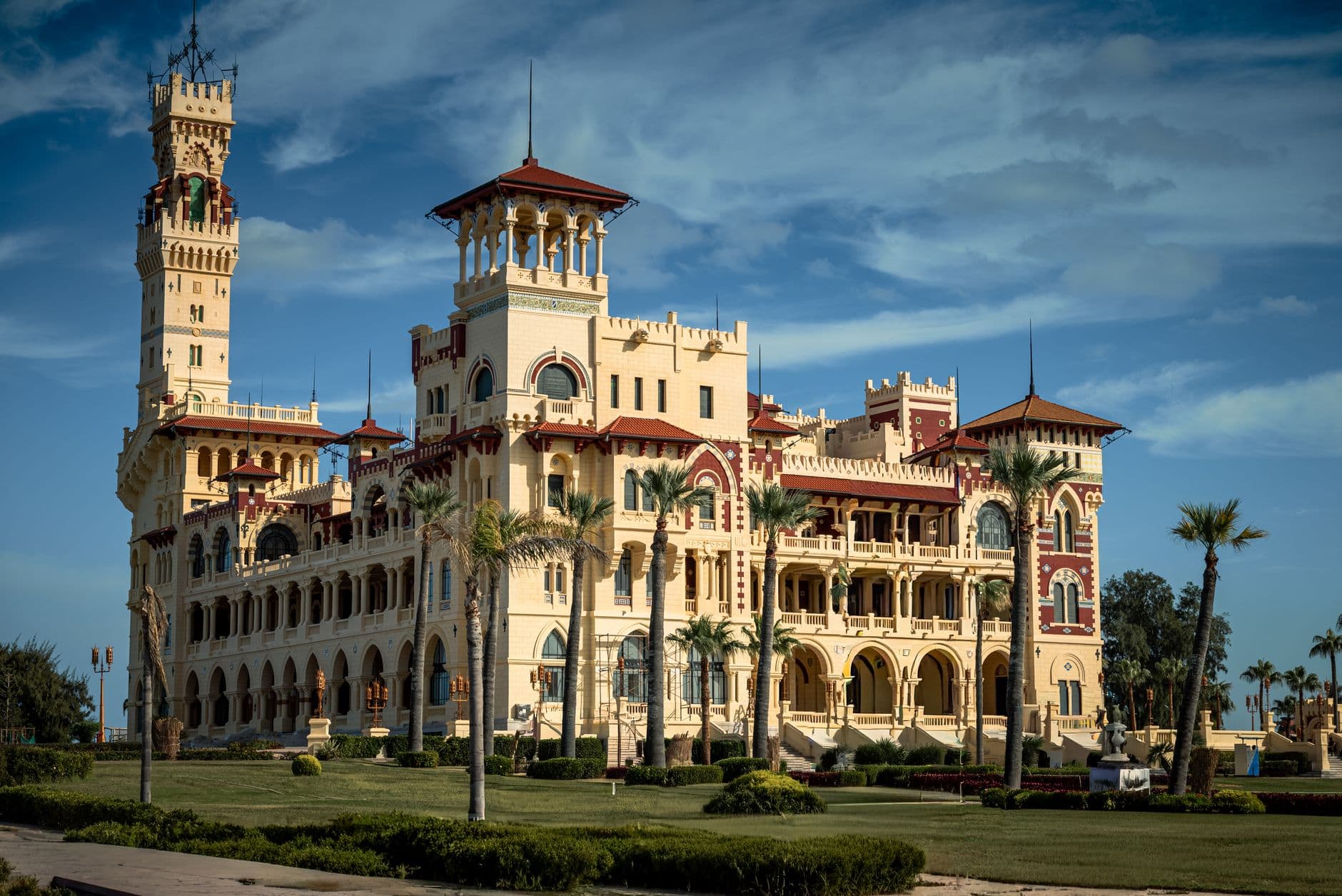
Alexandria was refounded as a modern city in the early nineteenth century, largely through the deliberate policies of Muhammad Ali Pasha, who ruled Egypt from 1805 until 1848. Muhammad Ali wanted engineers, merchants, doctors, and military advisors from Europe, and he actively recruited them. Italians arrived in large numbers partly because of geographic proximity, partly because the Risorgimento had created instability at home, and partly because Alexandria offered something rare: a city in genuine construction, where an ambitious person from Naples or Livorno could find real work.
By the 1850s, Italians had established the first Italian-language newspaper in Africa, L'Imparziale, printed in Alexandria. The Zizinia Theatre, which opened in 1863 and seated 1,500 people, was funded by Count Zizinia, a Greek merchant, but programmed almost entirely with Italian opera. Verdi's works were performed there within years of their premieres in Milan. Alexandria was, for a specific period, closer to the Italian operatic world than many Italian provincial cities.
The community built its own schools (the Italian School of Alexandria still operates, teaching Egyptian students in Italian), its own hospital (now the Italian Hospital, still functioning on Mohammed Ahmed el-Maakoul Street), and its own religious infrastructure. The Latin Cathedral of Saint Catherine on Nabi Daniel Street was consecrated in 1833. It is one of the oldest Catholic cathedrals on the African continent south of the Mediterranean coast.
When Egypt nationalized foreign assets after the 1952 revolution and particularly after the Suez Crisis of 1956, most Italian families left within a decade. They were not expelled in the way the Jewish community was during certain periods, but the economic logic of staying collapsed almost overnight. What they left behind was absorbed, repurposed, or slowly forgotten.
What You Will Actually See
The Downtown Layers: Raml and the Old European Quarter
Start at Raml Station, the old tram terminus at the eastern end of the Corniche, and walk south into the grid of streets that was, until the 1960s, an almost entirely European-administered urban zone. The street names have changed. The buildings have not, mostly.
The palazzo at the corner of Salah Salem Street and Saad Zaghloul Square, now housing a branch of a government ministry, was built in 1898 by an Italian architect named Antonio Lasciac. Lasciac was born in Gorizia (then part of the Austro-Hungarian Empire), trained in Vienna, and spent most of his working life in Alexandria and Cairo, where he eventually became the Chief Architect of the Egyptian royal court. He designed or influenced over 200 buildings in Egypt, and almost none of his work is formally attributed inside the buildings themselves. You are standing in front of his legacy and there is no plaque.
The Attarine district, a few blocks inland, takes its name from the Arabic word for spice sellers, and this was indeed a spice market long before Italian merchants arrived. But by the late nineteenth century, the neighborhood around the Attarine Mosque had become a zone of antique dealers, many of them Italian or Greek, selling objects of debatable provenance from Alexandria's inexhaustible supply of buried history. The trade continues today, though the Italians are gone and the objects available are considerably less interesting.
The Latin Cemetery: A City of the Dead That Tells the Living Story
If you visit one place to understand the Italian community Alexandria Egypt history contains, make it the Latin Cemetery on the western edge of the city. Allow two hours, wear flat shoes, bring water.
The cemetery was established in 1798, following Napoleon's campaign in Egypt, when the need for a Catholic burial ground in Alexandria became acute. The French military used it first. Within decades, it was the Italian community that maintained it, expanded it, and filled it with monuments of extraordinary ambition.
What you find inside is less a cemetery than an open-air compendium of nineteenth-century funerary architecture. There are obelisks referencing ancient Egypt that are entirely Italian in construction, built by stonemasons from Carrara marble. There are family mausoleums with stained-glass windows, now cracked, depicting scenes from the New Testament in the style of Venice rather than Cairo. The Zizinia family, who funded that opera house, are buried here. So are members of the Salvago family, Genoese merchants who arrived in Alexandria in the early 1800s and within two generations were so embedded in Egyptian commercial life that one family member served as a representative to the Egyptian legislative council.
Many of the graves are now untended, with weeds growing through marble, and some inscriptions have weathered to illegibility. This is not neglect by the Egyptian government so much as the simple arithmetic of a community that no longer exists to tend its own dead. A small Franciscan order maintains the grounds. They are doing what they can.
The Italian Hospital and the Schools: Infrastructure That Stayed
The Italian Hospital on Mohammed Ahmed el-Maakoul Street is still a functioning medical institution, which makes it unusual among the Italian community's legacy buildings. It was founded in 1891 by the Italian Benevolent Society of Alexandria, an organization established in 1861 to support Italian immigrants who arrived without resources. The hospital originally served the Italian working class, not the merchant elite. Dockworkers, carpenters, and domestic servants who could not afford the private European clinics used it.
The building has been extended and modified many times, but the original 1891 wing still stands and its facade retains the institutional seriousness of late-Victorian Italian civic architecture. Walk past it rather than arranging a visit; it is a hospital, and the exterior tells you what you need to know.
The Italian School, founded in 1861 as the Scuola Italiana di Alessandria, is a more interesting stop if you time it correctly. The school now teaches Egyptian students, primarily from upper-middle-class families pursuing Italian language education. It has no Italians enrolled. The building on Gamal el-Din Yassin Street still bears the original institutional signage, and the school occasionally allows visitors to see the library, which holds Italian-language books donated by departing community members over five decades of emigration.
The Connections: Alexandria as a Palimpsest
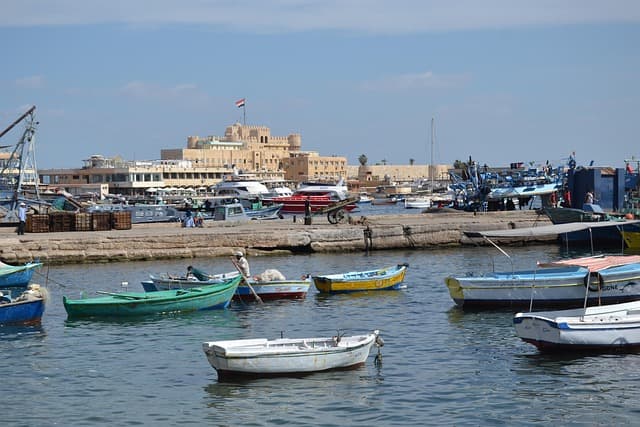
The Italian presence in Alexandria exists in a city that has been absorbing and then losing foreign communities for 2,300 years. This is not a coincidence or a cliché. It is the specific mechanism of Alexandria's history.
The Greeks came with Alexander in 331 BC and stayed for nearly a thousand years. The Jewish community of Alexandria, which at its height in the first century AD may have constituted forty percent of the city's population, produced the Septuagint, the Greek translation of the Hebrew Bible, in a city where most Jews no longer spoke Hebrew. The Coptic community, which traces its founding to Saint Mark arriving in Alexandria around 48 AD, is the oldest continuously present community in the city and the only one that never left, though it has contracted.
The French came with Napoleon in 1798, stayed three years, and left behind the Latin Cemetery and a tradition of European settlement that would define the city for another 150 years. The British arrived after the 1882 bombardment of Alexandria and administered the city with the particular combination of efficiency and cultural indifference that characterized colonial infrastructure. They built the tramway system. They also dismantled much of Muhammad Ali's original city planning to accommodate it.
The Italians existed between these colonial forces and the Egyptian majority in a complicated position. They were European, but Italy was not a colonial power in Egypt. They had commercial privileges under the Capitulations (the treaty framework that exempted European nationals from Egyptian courts until 1949), but they were not the occupying force. This gave Italian merchants, architects, and professionals a kind of operational freedom that the British, who were the actual administrators, did not always have. An Italian architect like Lasciac could be hired by the Egyptian royal family precisely because he was European enough to be trusted with European design standards and neutral enough not to represent political threat.
This layering is visible in the stones of the city if you know where to look. The area around the Kom el-Dikka excavation site in central Alexandria sits above Roman baths and a Roman odeon. The odeon's seats were carved from granite quarried in Aswan, moved north on the Nile, and shaped by craftsmen whose names are entirely lost. Two thousand years later, an Italian contractor built an apartment building forty meters away, using techniques not entirely different from what Roman engineers used. The materials have changed. The relationship between the Mediterranean, the Nile valley, and human ambition has not.
Common Mistakes
Treating this as a monument visit rather than a neighborhood walk. There is no single site that contains the Italian story of Alexandria. Anyone who arrives expecting a museum or a defined attraction will leave disappointed. The experience is cumulative, architectural, and requires walking.
Relying on licensed tour guides for this specific subject. Most Egyptian licensed guides have standard scripts covering Pharaonic and Islamic heritage. The Italian community is outside their training. You will get vague gestures toward buildings described as "old European architecture" without names, dates, or context. If you want a guided experience, contact the Italian Cultural Institute in Alexandria (Instituto Italiano di Cultura) directly; they occasionally arrange heritage walks.
Visiting the cemetery on a Friday. Egyptian government offices and many institutions operate on reduced Friday schedules, and accessing the Latin Cemetery, which requires coordinating with the Franciscan caretakers, is genuinely difficult on Fridays. Go Tuesday through Thursday.
Spending time and money at the Alexandria National Museum's Italian section. The museum's coverage of the European cosmopolitan period is thin and poorly labeled. The EGP 150 entrance fee (approx $3 USD) is justified by the Pharaonic and Greco-Roman collections, but if you are specifically chasing Italian community history, the museum will frustrate you. Go to the streets instead.
Assuming the Italian Hospital or Italian School will give you access without advance arrangement. Both are functioning institutions. Showing up at the door as a tourist will get you politely turned away. Email the Italian Cultural Institute at least two weeks before your visit; they have relationships with both institutions and can facilitate access.
Missing the Cavafy Museum because you think Cavafy was Greek. Constantine Cavafy was Greek, yes, but his apartment at 4 Sharia Sharm el-Sheikh is arguably the best-preserved interior from the cosmopolitan era of any nationality. The Italian and Greek communities of Alexandria were deeply entangled, socially and commercially. Walking through Cavafy's preserved rooms gives you a physical sense of how European community members actually lived that no Italian-specific site currently offers. The entrance fee of EGP 30 is perhaps the best-value cultural experience in the city.
Booking a day trip from Cairo. You cannot do this properly in a day. The train journey takes three hours each way. A day trip gives you roughly four hours in the city. Take the overnight train or book two nights in Alexandria.
Practical Tips
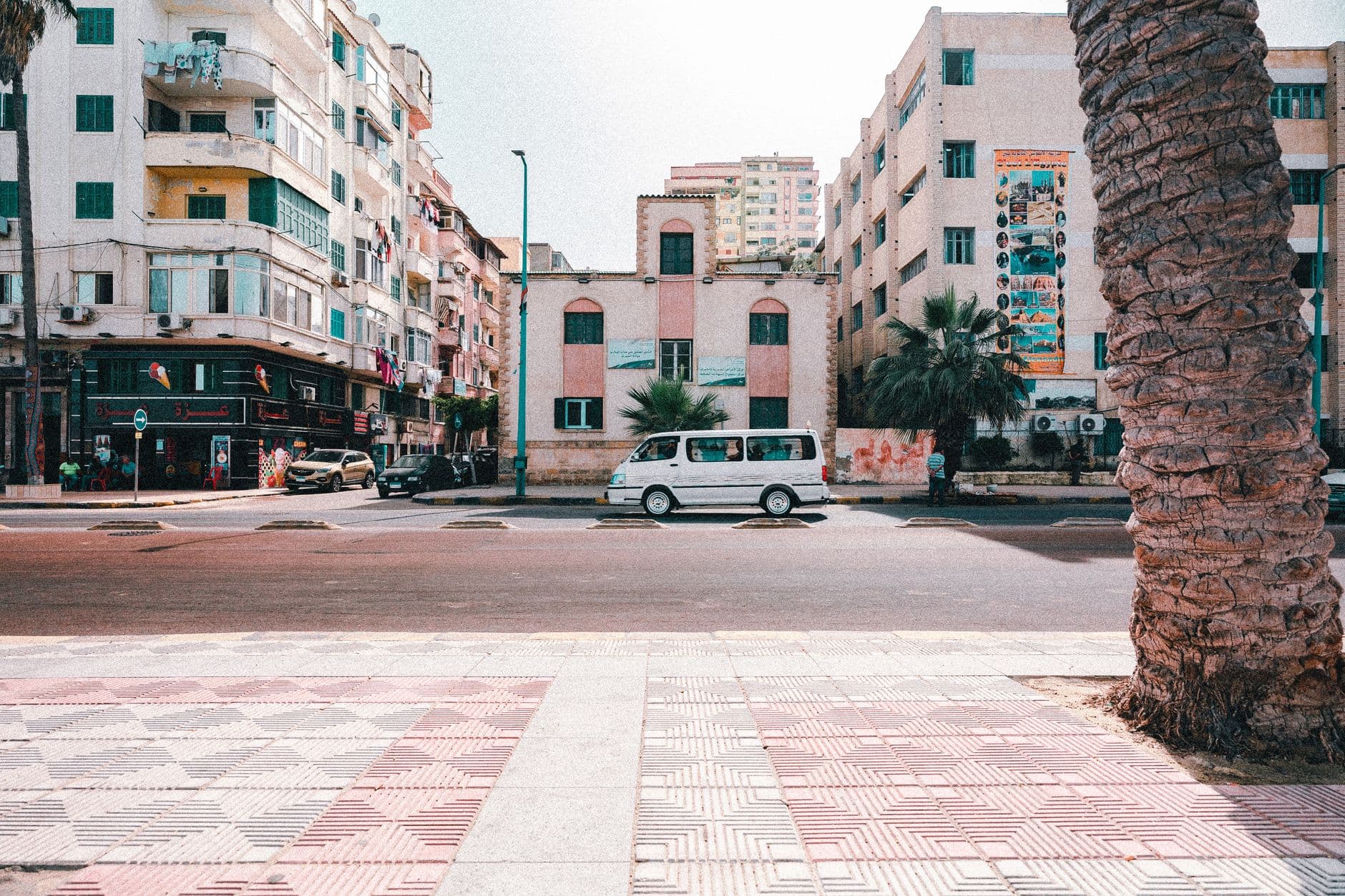
The best base for this itinerary is the downtown Raml area, within walking distance of most sites. The Hotel Union on Azarita Street has been operating since the 1950s and charges EGP 800-1,200 per night for a double room; it is basic but clean and its age means it occupies a building from exactly the cosmopolitan period you are studying.
The Italian Cultural Institute (Instituto Italiano di Cultura) at 6 Battra Street is worth contacting before your visit. They maintain the most current information about accessible sites, occasionally host lectures on Alexandrian Italian heritage, and can advise on which churches are currently holding Italian-language services. Their website is in Italian and Arabic; the staff speak both plus English.
For food, avoid the Corniche tourist restaurants. The covered market area around Attarine has small Egyptian restaurants where a full meal costs EGP 80-150. The district's physical geography, tight covered streets, multiple levels, constant commerce, would be recognizable to the Italian merchants who worked here 150 years ago, even if nothing else would.
Safety is not a concern in any of the neighborhoods covered here. Alexandria has a different texture from Cairo: slower, more Mediterranean, more willing to let you wander without being approached. The streets around the Latin Cemetery are quiet residential areas where occasional foreign visitors are noted but not harassed.
Bring a notebook. The inscriptions on cemetery monuments, the names on building facades, the shop signs that still carry Italian surnames transliterated into Arabic: these details accumulate into something that no photograph quite captures. The Italian community Alexandria Egypt history contains is a story written in stone and then left for whoever cares enough to read it.
Frequently Asked Questions
The Weekly Dispatch
More on Egypt, every Friday.
Cultural depth and places most guides never mention.
No spam. Unsubscribe anytime.