The Italian Community of Alexandria Egypt: A Cultural Guide
At its peak, Alexandria had 100,000 Italians. Most left by 1960. What they built, buried, and left behind tells you everything about Egypt's lost cosmopolitan century.

Audio Guide: The Italian Community of Alexandria Egypt: A Cultural Guide
Quick Facts
- Best time to visit
- October to April. The Mediterranean light is clearer, temperatures are comfortable for walking, and the city is less crowded than in summer when Cairene families fill the corniche hotels.
- Entrance fee
- Chatby Necropolis EGP 60 (approx $1.50 USD). Cathedral of St. Catherine free. Greco-Roman Museum EGP 100 (approx $2 USD) where open. Italian Cultural Institute events free to low-cost.
- Opening hours
- Chatby Necropolis daily 9am to 4pm. Cathedral of St. Catherine daily 7am to 7pm. Greco-Roman Museum hours vary by wing; confirm before visiting. Italian Cultural Institute weekdays 9am to 3pm, event hours vary.
- How to get there
- From Cairo, high-speed train from Ramses Station EGP 150 to 300 (approx $3 to $6 USD), around two hours. Within Alexandria, microbus along the corniche EGP 5. Taxi from Misr Station to downtown Italian quarter sites EGP 50 to 80. Most sites are walkable from each other once downtown.
- Time needed
- Half day for focused Italian community sites. Full day to add Greco-Roman Museum, a walk through the Rushdi villa neighborhood, and a slow meal.
- Cost range
- Budget EGP 400 to 700 per day including transport, sites, and a local restaurant meal. Mid-range EGP 1,200 to 2,000 per day adding accommodation in Rushdi or San Stefano area.
Quick Facts
Best time to visit: October to April, when Mediterranean humidity drops and the light over the corniche turns silver-grey rather than glaring white.
Entrance fees: The Greco-Roman Museum, currently undergoing phased reopening, charges EGP 100 (approx $2 USD) where accessible. The Catholic Cathedral of St. Catherine: free entry. Chatby Necropolis: EGP 60 (approx $1.50 USD). Antoniades Garden: free. The Italian Consulate Cultural Institute occasionally runs free tours; check their schedule in advance.
Opening hours: Chatby Necropolis daily 9am to 4pm. Cathedral of St. Catherine daily 7am to 7pm. Greco-Roman Museum hours vary by wing; confirm before visiting.
How to get there: From Cairo, the high-speed Talgo or Turbini train costs EGP 150 to 300 (approx $3 to $6 USD) and takes around two hours. Within Alexandria, a microbus along the corniche costs EGP 5. Taxis from Misr Station to the downtown Italian quarter sites cost EGP 50 to 80. Walk between most sites; the distances are short and the neighborhood reveals itself on foot.
Time needed: A focused half-day covers the cathedral, the nearby Italian school facade, and the main cemeteries. A full day allows you to add the Greco-Roman Museum, the Villa Ambron area, and a slow lunch in what remains of the old European quarter.
Cost range: Budget EGP 400 to 700 per day including transport, sites, and a meal at a local restaurant. Mid-range EGP 1,200 to 2,000 per day if adding a guided Italian-heritage walk and a meal at one of the old patisseries descended from Italian originals.
---
At its peak in the 1920s, Alexandria held somewhere between 60,000 and 100,000 Italian citizens depending on how you counted the subjects, the naturalized, and the stateless. They were the single largest European community in a city that was, at that moment, more Mediterranean than African, more cosmopolitan than any city in Europe, and more complicated than any single nationality could claim. By 1970, nearly all of them were gone. Nasser's nationalizations, the 1956 Suez Crisis, the expulsions, the quiet departures. What they left behind is not a museum. It is a city, still standing, still partly inhabited, slowly being read by people who didn't know it needed reading.
This is a guide to that community and what remains of it, addressed to the traveler who finds the Italian community of Alexandria Egypt history more interesting than the Pyramids, and who wants to move through the city knowing what to look for.
---
Why This Place Matters
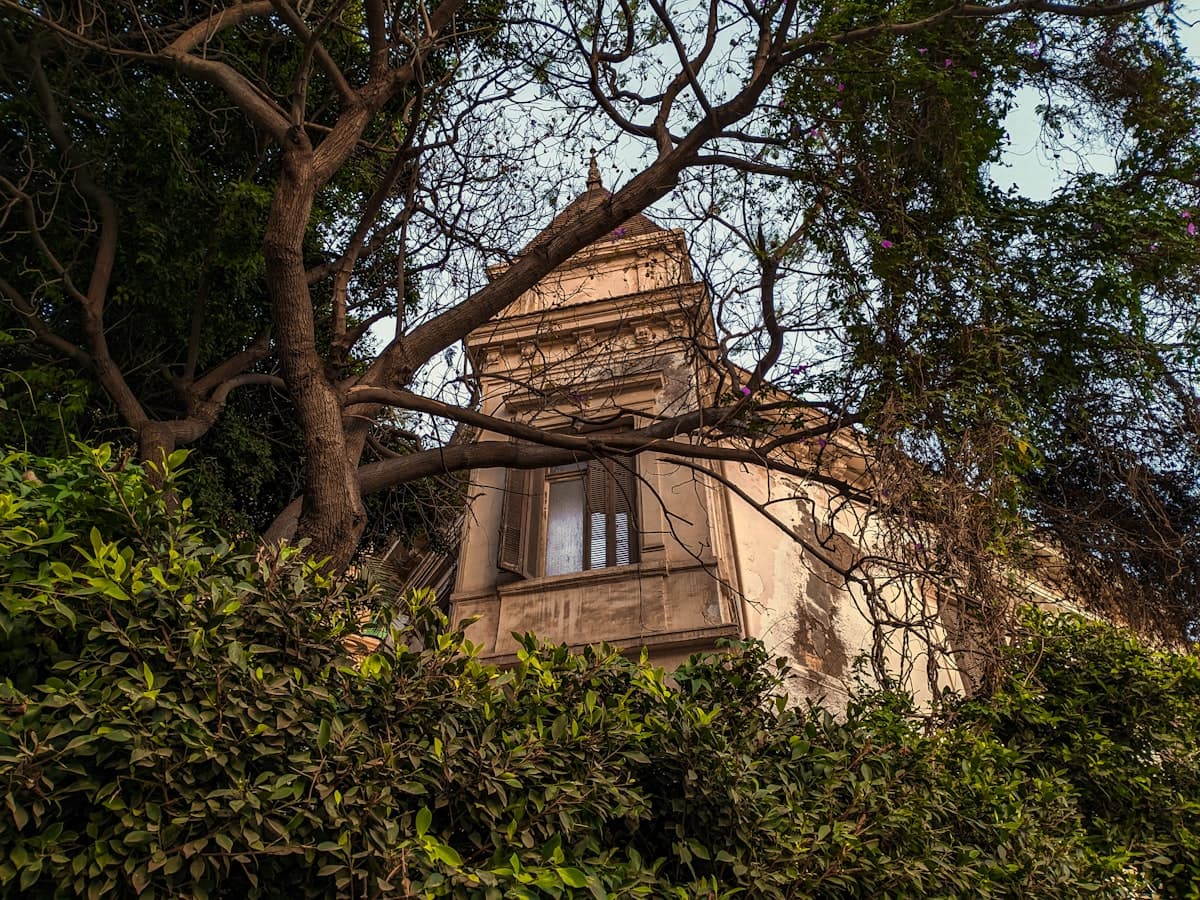
Alexandria's Italian presence predates the European colonial period by centuries. Italian merchants from Genoa and Venice had trading privileges in Alexandria as early as the 12th century, long before Napoleon arrived to reorder everything. But the community that shaped the built environment most visibly arrived in two waves: the first during Muhammad Ali's modernization project in the 1820s and 1830s, when the Pasha actively recruited Italian engineers, physicians, and architects to rebuild his new capital city; the second during the mass emigrations from southern Italy and Sicily between 1880 and 1910, when working-class Italians found that Alexandria offered better wages and warmer winters than Calabria.
Muhammad Ali hired the Italian architect Pietro Avoscani to design several of Alexandria's earliest European-style buildings. Later, Antonio Lasciac, an Austro-Italian architect who served as Chief Architect of Egypt from 1907 to 1919, left a mark on Cairo that most tourists walk past without ever knowing his name. In Alexandria, his influence shaped the downtown streetscape that locals still call al-Mansheya, now Tahrir Square.
The community was never monolithic. Wealthy Italians from established merchant families lived in villas along the Ramleh electric tramway, spoke multiple languages, and sent their children to Italian schools that also taught Arabic, French, and English. Working-class Italians from Sicily and Campania lived in the Anfushi quarter, married Greek and Maltese neighbors, spoke a dialect creole that linguists later called Lingua Franca Mediterranea, and attended the same churches as Maltese dock workers and Levantine Catholics. This was not Europe transplanted to Africa. It was a third thing that no longer exists anywhere.
---
What Survives: The Built Record
The Cathedral of St. Catherine and the Latin Quarter
The Cathedral of St. Catherine on Nabi Daniel Street was consecrated in 1833, making it one of the oldest standing Catholic structures in Egypt after the expulsion of the Crusaders. It was designed in a neoclassical style and funded largely by donations from the Italian merchant community, who at the time of its construction made up the majority of Alexandria's Catholic population. The interior has the particular smell of old Catholic churches everywhere: beeswax, cold stone, and the faint residue of incense that decades of ventilation have never entirely cleared.
What most visitors don't notice is the language of the memorial plaques on the interior walls. They shift between Italian, French, Greek, and Arabic, sometimes within a single memorial, reflecting the fact that the families who paid for them were often simultaneously citizens of several nations and speakers of none cleanly. One plaque commemorates an Italian merchant who died in 1887 and whose name appears in both its Italian and Arabized forms side by side.
The area immediately surrounding the cathedral was called the Latin Quarter by the European community. Several buildings from the late Ottoman and early British period survive, though many have been subdivided, re-fronted, or stripped of their original ironwork balconies. Walk slowly. Look up. The bones of the 1890s are still there above the ground-floor shops.
The Italian Cemeteries at Chatby
The Chatby Necropolis is the most concentrated record of Alexandria's European communities and the single site most worth visiting if you have limited time. The Italian section of the cemetery contains graves spanning nearly two centuries, and the funerary sculpture alone constitutes an open-air record of Italian artistic production and grief that has received almost no scholarly attention in English.
One detail that matters: Italy did not exist as a unified nation until 1861. Graves from before that date identify the deceased by their city-state of origin. You will find Genovese merchants buried next to Neapolitan fishermen, their headstones indicating not Italy but Genova, Napoli, Sicilia. The political unification that was happening in Europe had not yet consolidated the identities of the diaspora. In death, they remained where they came from.
The Greek Orthodox, Jewish, and Protestant sections of the Chatby complex are equally worth walking through. Together they make a point no history book states as directly: this was a city where the question of who belonged was answered differently every decade, and where the dead accumulated in layers that exactly mirror the living city above them.
---
The Human Story: Three Families, Three Departures
The departure of the Italian community happened in stages that don't fit neatly into a single political event. Some Italians left after Mussolini entered the war in 1940 and Egypt interned or expelled Italian nationals. Some left after 1948, when the establishment of Israel made the broader non-Muslim European presence in Egypt politically precarious. The largest single wave left after 1956, when Nasser nationalized the Suez Canal and sequestered foreign-owned property, businesses, and bank accounts.
What this meant practically: families who had been in Alexandria for three or four generations, who spoke Arabic as a first language, who had Egyptian employees and Egyptian neighbors and in many cases Egyptian relatives by marriage, packed what they could carry onto ships at the Alexandria port and arrived in Genoa or Naples speaking Italian with an Egyptian accent, to countries they had never lived in and that did not particularly want them.
The writer Fausta Cialente, who lived in Alexandria from 1921 to 1947 and whose novel Le quattro ragazze Wieselberger was awarded the Premio Strega in 1976, wrote about this community from the inside. Her Alexandria is recognizable to anyone who knows the city: the particular light of the western harbor at dusk, the class distinctions that ran along invisible but absolute lines, the sensation of living in a city that was always negotiating its own identity. She is almost entirely unknown outside of Italy and is not mentioned on a single tourist site in Alexandria. This is a significant failure of cultural memory.
The Italian Cultural Institute, operating from a villa in the Rushdi neighborhood, maintains a library and runs occasional events that treat this history as active rather than archival. If you contact them before visiting, they sometimes arrange access to materials and spaces not otherwise open.
---
The Connections
The Italian presence in Alexandria does not exist in isolation from any other layer of the city. The land on which the 19th-century European quarter was built had previously been part of the Arab city that grew up after the Arab conquest of 641 CE, which was itself built over the Hellenistic city founded by Alexander in 331 BCE. The Greco-Roman Museum, which holds the most direct physical evidence of that layering, contains artifacts recovered from building sites across downtown Alexandria throughout the 20th century: Ptolemaic statuary found under the foundations of Italian-built apartment blocks, Roman mosaic floors uncovered when French banks expanded their vaults.
The Italian architects who worked under Muhammad Ali were not working in a vacuum. They were adapting European neoclassicism to a city that already had its own strong Mamluk and Ottoman architectural vocabulary. The result is a streetscape that is neither European nor Egyptian but specifically Alexandrian, a style that urban historians have recently begun to call Mediterranean Eclectic, and that no other city in the world replicates exactly.
Further, the story of the Italian community connects directly to the story of Alexandria's Jewish community, its Greek community, and its Syrian-Lebanese Levantine community. These groups lived in overlapping geographies, attended each other's events, did business together, and departed in the same waves. To understand the Italians is to understand the whole cosmopolitan project, and its end.
---
Common Mistakes
Treating this as a purely historical subject. The Italian Cultural Institute is still open and active. The Cathedral of St. Catherine still holds services. There are Alexandrians in their 70s and 80s who grew up in this community and who will talk to you if you ask carefully and respectfully. This is not dead history.
Going directly to the cemeteries without context. The Chatby Necropolis rewards visitors who arrive knowing what they are looking at. Spend an hour reading about the community before you go. The graves will mean something different.
Taking the harbor cruise instead. Every mid-range Alexandria tour package includes a harbor cruise past the Qaitbay Citadel. It costs EGP 200 to 350, takes ninety minutes, tells you nothing about the city, and deposits you back where you started. Skip it. Use that time and money to walk the old European quarter and eat at a restaurant that has been there since the 1940s.
Assuming the Greco-Roman Museum is fully open. The museum has been undergoing renovations and partial closures for years. Always confirm which wings are accessible before building your day around it.
Looking for plaques and markers. Alexandria does not over-label its history. There are almost no heritage plaques, no walking-tour signs, no QR codes on significant buildings. If you are expecting the infrastructure of a European heritage trail, you will be frustrated. Bring a good map, a list of specific addresses, and the habit of looking up.
Visiting only in summer. The July and August heat turns the Mediterranean into a glare and the streets into an endurance test. The Italian community sites are all outdoors or only partially air-conditioned. October through April is when the city shows its actual quality of light, which is the same light that made every European who arrived here feel that they had found something they had been looking for.
Over-scheduling. The experience of this history is atmospheric as much as it is informational. If your itinerary has you at seven sites before 1pm, you will miss the actual point, which is the sensation of walking through a city that was once something else and still contains that other thing inside it like a photograph inside a book.
---
Practical Tips
The Italian Cultural Institute in Alexandria (Instituto Italiano di Cultura) is located in the Rushdi neighborhood and maintains a schedule of cultural events, film screenings, and occasional lectures in both Italian and Arabic. Entry to most events is free. Their library holds materials on the community that are not available in English online.
For the cemeteries, arrive before noon. The afternoon light in the Chatby section becomes flat and harsh, and the older Italian inscriptions, already worn, become harder to read. Bring water. There is no café or shop inside the necropolis.
If you want to eat where the Italian community ate, the closest thing that survives is the pastry tradition rather than restaurant tradition. Délices patisserie on Horreya Road descends from a lineage of European-influenced Alexandria confectioners. The baklava there has a different ratio of butter to honey than the Cairo version, a Mediterranean rather than Ottoman influence.
For accommodation, staying in the Rushdi or San Stefano neighborhood puts you in the area of the old Ramleh tramway villas, where the wealthier Italian families lived. The architecture of the streets is part of the experience. Mid-range hotels in this area run EGP 1,500 to 3,000 per night.
Speak to people. The Egyptian families who now inhabit the buildings the Italian community left behind are often aware of the history and willing to describe what they know. In the neighborhood around the cathedral, a shopkeeper who has been there thirty years is a better guide to the block's history than any tour operator currently operating in Alexandria.
Frequently Asked Questions
The Weekly Dispatch
More on Egypt, every Friday.
Cultural depth and places most guides never mention.
No spam. Unsubscribe anytime.