The Italian Community of Alexandria: Egypt's Lost Mediterranean City
At its peak, Alexandria had 100,000 Italian residents. Most Egyptians today have never heard of them. The buildings they left behind are hiding in plain sight.

Quick Facts
- Best time to visit
- October through April. The Mediterranean heat is manageable, humidity drops, and the limestone facades photograph well in the lower winter light. Summer is humid and the streets are crowded with Egyptian domestic tourists at the waterfront.
- Entrance fee
- Latin Cemetery: free. Santa Caterina di Siena: free (donations welcome). Bibliotheca Alexandrina: EGP 200 for foreign visitors (approx $4 USD), EGP 70 for Egyptians. Alexandria National Museum: EGP 180 (approx $3.50 USD).
- Opening hours
- Latin Cemetery: daily approx 8am to 5pm. Santa Caterina church: Sunday Mass 10am, generally open 9am to noon weekdays. Bibliotheca Alexandrina: daily 10am to 7pm, closed Friday morning.
- How to get there
- From Cairo: Spanish Talgo train from Ramses Station, EGP 90 to EGP 220 depending on class, approximately 2.5 hours. Within Alexandria: tram Line 2 from Misr Station to Raml Station, EGP 2 per journey. The entire Italian Alexandria walking route is within 3km of Raml Station.
- Time needed
- One full day for the complete walking route. Two days if you want to include the Bibliotheca Alexandrina exhibitions at depth and the Catacombs of Kom el-Shoqafa.
- Cost range
- Budget EGP 400 to 700 per day covering tram fares, street food, coffee at Trianon, and free or low-cost sites. Mid-range EGP 1,500 to 2,500 if adding a private guide from the Bibliotheca, lunch at the Cecil Hotel, and museum entries.
Quick Facts
Best time to visit: October through April, when the Mediterranean humidity drops and the light on limestone facades turns the color of old photographs.
Entrance fees: Most sites covered here are streets, cemeteries, and churches rather than ticketed attractions. The Greek Orthodox Patriarchate Museum charges EGP 50 (approx $1 USD). The Latin Cemetery on Horreya Avenue has free public access during daylight hours. The Bibliotheca Alexandrina, the best starting point for context, charges EGP 70 for Egyptians and EGP 200 (approx $4 USD) for foreign visitors.
Opening hours: Latin Cemetery open daily, roughly 8am to 5pm. Churches vary: Santa Caterina di Siena (Attarin district) holds Mass on Sundays at 10am and is generally open 9am to noon. Bibliotheca Alexandrina daily 10am to 7pm, closed Friday morning.
How to get there: Alexandria is 2.5 hours from Cairo by Spanish Talgo train from Ramses Station; tickets cost EGP 90 to EGP 220 depending on class. From Alexandria's Misr Station, take a tram (Line 2, EGP 2) west toward Raml Station. The entire Italian Alexandria route is walkable from Raml within a 3km radius.
Time needed: One full day for the walking route. Two days if you want to sit with the material rather than rush past it.
Cost range: Budget EGP 400 to 700 per day (tram, street food, cemetery entry). Mid-range EGP 1,500 to 2,500 if you include the Cecil Hotel for lunch and a guide from the Alexandrina.
---
At its absolute peak in the 1920s, the city of Alexandria held more Italians than any city in Egypt, more than 100,000 people who had sailed across the Mediterranean and decided to stay. They ran banks, built apartment blocks, operated pharmacies, published newspapers in Italian, and buried their dead in a cemetery that still exists on a main road most Alexandria residents walk past without knowing what it contains.
This is not a story about tourism. It is a story about a city that was genuinely, structurally cosmopolitan for roughly 150 years, and then, between 1952 and 1961, stopped being that almost entirely. Understanding the Italian community in Alexandria is understanding the mechanism of that loss: how a city that was 40 percent foreign-born in 1900 became, by 1970, almost exclusively Egyptian. And understanding that loss is the only way to read the city you are walking through now, because its bones are still Mediterranean even when its face is not.
Why This Place Matters
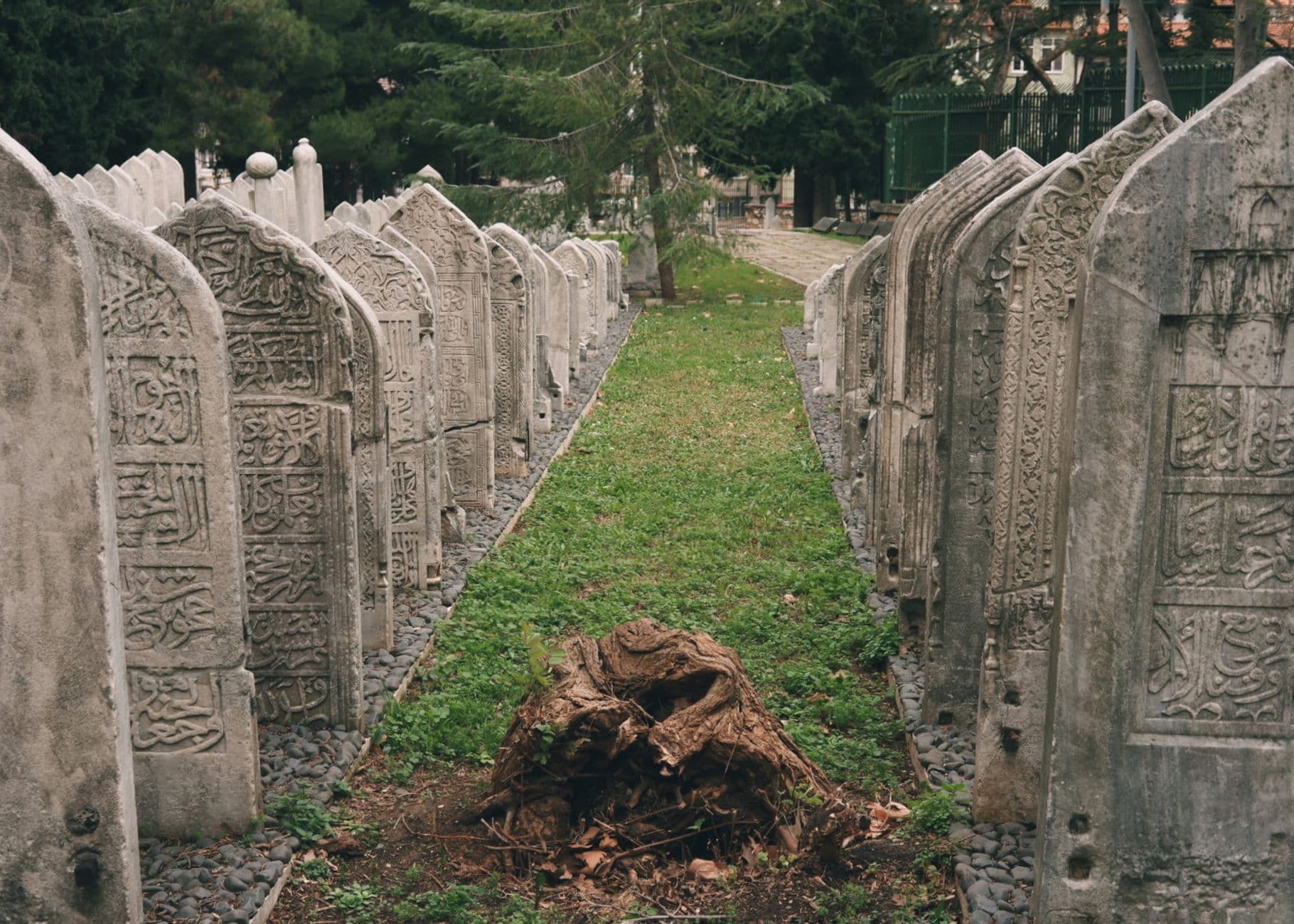
Alexandria was founded in 331 BC by Alexander the Great, but calling it an Egyptian city for most of its history would be inaccurate. For the first three centuries of its existence it was a Greek city on Egyptian soil, the capital of the Ptolemaic dynasty, home to the Library and the Lighthouse and a Jewish community large enough to require a Greek translation of the Hebrew scriptures (the Septuagint, produced here, around 250 BC). It then became a Roman city, then a Byzantine city, then an Arab city. The Italians arrived not as colonizers in the European imperial sense but as migrants, drawn by Muhammad Ali's modernization project after 1805.
Muhammad Ali, an Albanian-born Ottoman commander who seized Egypt and ran it as a personal project, needed European expertise. He invited engineers, doctors, architects, and merchants. Italians came in numbers. By 1840 there were Italian-run cotton trading houses along the waterfront. By 1880 there were Italian schools, Italian clubs, and Italian neighborhoods concentrated around what is now Attarin and the streets behind the Cecil Hotel.
The legal framework that enabled all of this was the Capitulations system, a set of Ottoman-era treaties that exempted foreign nationals from Egyptian courts and Egyptian taxes. Under Capitulations, an Italian merchant in Alexandria answered to Italian law, paid Italian consular fees, and was tried in Italian consular courts. This was simultaneously the mechanism of cosmopolitan Alexandria's prosperity and the mechanism of its profound unfairness to Egyptians, who had no equivalent protections. When Nasser abolished the Capitulations in 1956 and nationalized foreign businesses and assets, the legal scaffolding that had held the community together for a century collapsed overnight.
The Neighborhoods: Reading the City's Italian Skeleton
You can still walk the Italian city if you know what you are looking for. Start at Midan Saad Zaghloul, the main square by the sea, and look at the buildings around you. The proportions are wrong for a purely Arab city: the facades are too tall, the wrought iron balconies too ornate, the doorways arched in ways that echo Milan and Naples rather than Cairo. Most of these buildings were designed by Italian architects during the period of the Mixed Courts (1875 to 1949), a legal system that specifically required European-trained judges and created enormous demand for European professional expertise.
Walk south on Nabi Daniel Street. At the intersection with Horreya Avenue (the ancient Canopic Way, the main east-west artery of Ptolemaic Alexandria, still in use 2,300 years later), you are standing at what was once the heart of Italian commercial Alexandria. The pharmacy on the corner was, in various iterations, Italian-owned for decades. The building facades still carry the particular limestone detailing of the Italian Liberty style, Egypt's version of Art Nouveau, built roughly between 1900 and 1930.
The Attarin district, named for the spice merchants who have traded here since the medieval period, contains the Church of Santa Caterina di Siena, built in 1863 by the Italian Franciscan community. It is small and almost entirely unvisited by tourists. On a Sunday morning, with the smell of incense thick in the air and a congregation of maybe thirty people, most of them elderly Egyptian Christians and the occasional Italian priest from the consulate, you understand the precise texture of what remains. The church still holds its services. The community it was built for is largely gone.
The Latin Cemetery: What Marble Reveals
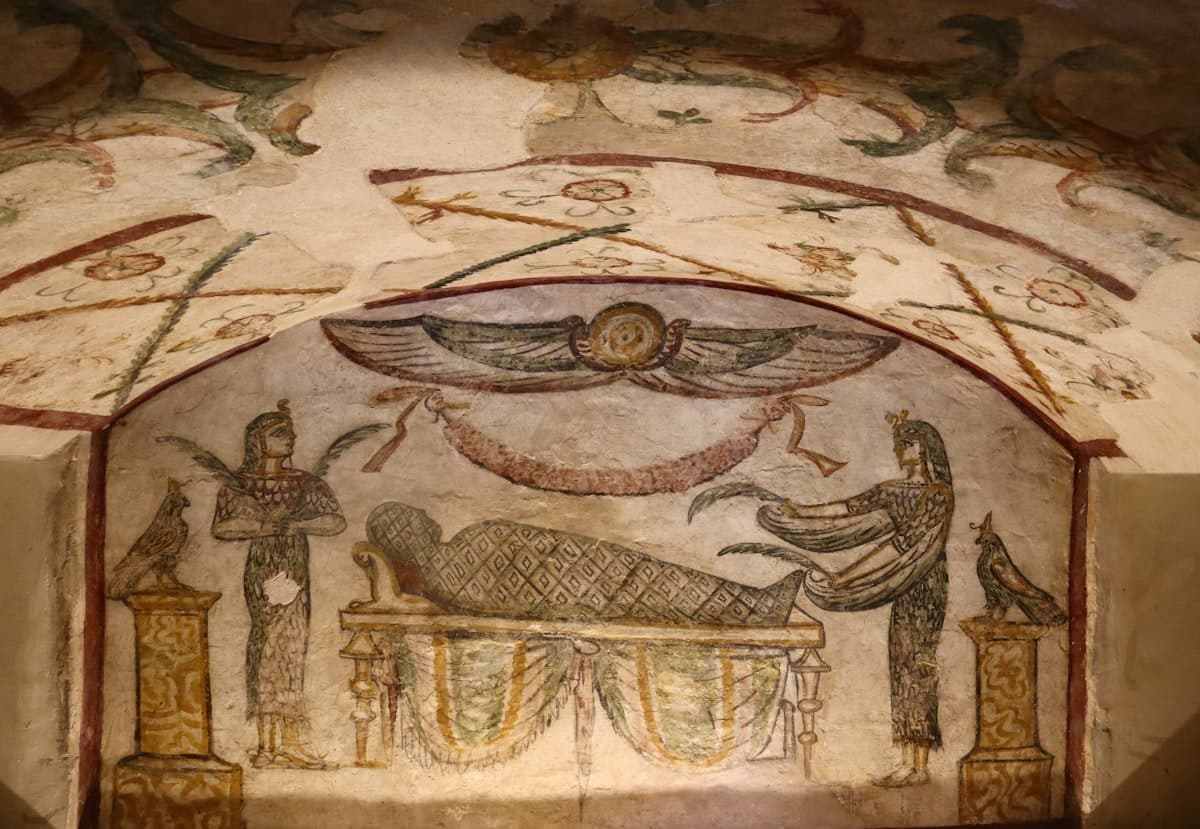
The most concentrated archive of Italian Alexandria sits behind an unremarkable wall on Horreya Avenue: the Latin Cemetery, established in the early 19th century for Alexandria's Catholic foreign residents, predominantly Italian. It is not maintained to any particular standard. The grass grows over some plots. Marble faces have worn smooth. But walk slowly and read the inscriptions.
The surnames here are a map of Italian regional migration: Garibaldi, Moretti, Bonfiglio, Rizzi, Schiavon. The dates on the headstones cluster in two periods: the 1880s to 1910s, the height of Italian arrival, and the 1960s, the decade of mass departure. A headstone that reads "Nata a Napoli, morta ad Alessandria" (born in Naples, died in Alexandria) and covers a woman who lived in the city for 60 years is not a minor biographical detail. It is evidence of a complete life lived here, a life that produced children and grandchildren, most of whom are now in Italy or Australia or Canada and have never returned.
One specific grave is worth finding: that of Ugo Ferruccio Marucchi, an engineer who worked on the construction of the Alexandria tram system between 1901 and 1907. The Italian-built tram he helped design still runs. You can ride Line 2 from Raml to Victoria for EGP 2, on tracks laid by a man buried in a cemetery a five-minute walk from the stop where you board. Egypt specializes in this kind of connection.
The Connections: Islam, Cotton, and the Mediterranean Economy
The Italian presence in Alexandria cannot be understood without Muhammad Ali's cotton economy, which in turn cannot be understood without the American Civil War. When the Union blockade of Confederate ports cut off the global cotton supply in 1861, Egyptian cotton prices tripled almost overnight. European merchants, including large numbers of Italians, flooded into Alexandria to participate in the boom. The city's population doubled between 1860 and 1880 largely because of cotton money.
The Italians who came during the cotton boom built on Roman Alexandria (traces of which appear in the Kom el-Shoqafa catacombs, literally carved beneath your feet as you walk Attarin), which was built over Ptolemaic Alexandria, which was built over an older Egyptian settlement called Rhakotis. The current Cecil Hotel, built in 1929 and patronized by Italian merchants, Egyptian pashas, and British intelligence officers simultaneously, sits two blocks from where Napoleon's forces camped in 1798. The layer cake of Alexandria's history is never more than a meter below the pavement.
The Italian consulate on Midan Orabi, still operating today, is one of the few continuous institutional links between the two communities. During the Italian community's period of mass departure in the late 1950s, the consulate processed exit visas for people who had lived in Alexandria for three or four generations and were now, under Egyptian law, classified as foreign nationals whose assets could be nationalized. The paperwork from that period fills entire archives in Rome.
Common Mistakes
Treating this as a nostalgia tour for non-Egyptians. The story of Italian Alexandria is also an Egyptian story about who built the city Egyptians now live in, and under what conditions. Approach it as Egyptian history, not as expatriate memory tourism. Egyptians who grew up in these neighborhoods have their own relationship to these buildings.
Skipping the Bibliotheca Alexandrina's permanent exhibitions. Most visitors use the Bibliotheca as a photo opportunity and miss the archaeology museum in its basement, which has genuine Ptolemaic and Roman material excavated from the city itself. The EGP 200 entry fee for foreigners is reasonable for what it contains.
Going to the Alexandria National Museum instead of the streets. The National Museum is a well-presented but ultimately conventional collection housed in a renovated Italian-style palazzo. It will tell you facts. The streets will show you the city. Spend two hours on the streets for every one hour in the museum.
Taking a guided tour that starts and ends at the Catacombs of Kom el-Shoqafa. The catacombs are genuinely significant (they are the only known example of Egyptian, Greek, and Roman artistic traditions fused in a single monument, built between the 1st and 4th centuries AD), but tours that use them as the centerpiece of an "Alexandria day" skip everything this guide covers. The Italian Alexandria story requires walking, not being driven between monuments.
Expecting the Latin Cemetery to be curated. It is not a museum. It has no signage, no audio guide, and no visitor facilities. Bring water, wear shoes that can handle uneven ground, and give yourself an hour. The lack of curation is, in a specific way, the point.
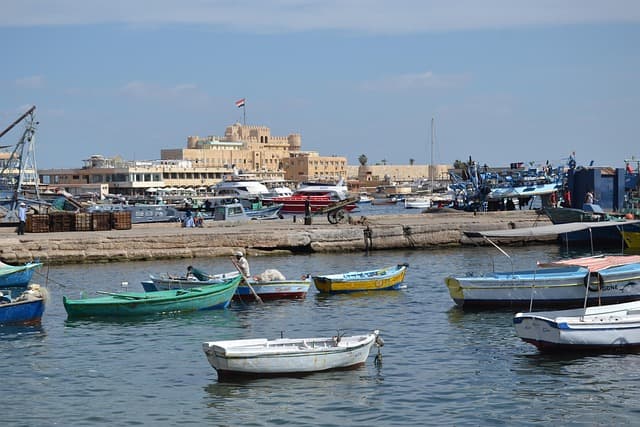
The sound and light show at the Citadel of Qaitbay. It costs EGP 300 and tells you nothing specific about the fort that replaced the ancient Lighthouse of Alexandria on the same foundation stones. Read about the Lighthouse beforehand and visit the Citadel in the late afternoon when the light on the Mediterranean is doing something worth seeing. Skip the show entirely.
Assuming the Italian community left nothing living behind. Several Alexandria families of Italian origin remain, some Catholic, some having converted, some intermarried over four generations. The Franciscan presence at Santa Caterina is real and ongoing. The community is small and private, not a tourist attraction, but it exists.
Practical Tips
The walking route from Midan Saad Zaghloul through Attarin to the Latin Cemetery and back via Horreya Avenue is approximately 4 kilometers. Do it in the morning, starting around 9am, before the heat builds and before the streets become impractical for slow walking.
For orientation and the best single piece of context, spend your first hour in Alexandria at the Bibliotheca Alexandrina's Social Sciences reading room, which has a collection of historical photographs of the city from the 1880s onward. You can view these with a day pass.
The Trianon café on Midan Saad Zaghloul, opened in 1905 and still operating under the same name, was a social center of Italian Alexandria. The pastry case still carries recipes that predate the community's departure. The coffee is competent. The building's interior, with its original marble counter and tile floor, is worth the price of a coffee to sit in for thirty minutes.
Bring a notebook or download a translation app. Many of the Latin Cemetery inscriptions are in Italian. The church at Santa Caterina holds Mass primarily in Arabic now, occasionally in Italian. Attend respectfully or do not enter during services.
Alexandria's tram system is the practical tool for this route. A single journey costs EGP 2 regardless of distance. The tram is slow, crowded at peak hours, and historically accurate: these are among the oldest continuously operating urban tram lines in Africa, dating to 1902.
Frequently Asked Questions
The Weekly Dispatch
More on Egypt, every Friday.
Cultural depth and places most guides never mention.
No spam. Unsubscribe anytime.