The Syrian Community in Egypt: A Cairo History Guide
Syrians have been shaping Cairo since the Fatimids. The neighborhood they built in the 10th century is still there. Most visitors walk through it without knowing.

Quick Facts
- Best time to visit
- October to April. Temperatures are manageable for walking the old city. Ramadan evenings (date varies annually) add atmosphere to the Al-Hussein area specifically.
- Entrance fee
- Most relevant mosques and public spaces: free. Museum of Islamic Art: EGP 100 (approx $2 USD), students EGP 50. Citadel complex: EGP 450 (approx $9 USD).
- Opening hours
- Mosques daily sunrise to 10pm, closed to non-worshippers during Friday midday prayer. Museum of Islamic Art Tuesday to Sunday 9am to 5pm. Coptic Museum Tuesday to Sunday 9am to 5pm.
- How to get there
- Metro Line 1 to Ataba or Al-Azhar, then walk east (10 to 15 minutes). Taxi from Downtown Cairo EGP 40 to 70. Microbus lines 72 and 404 from Abdel Moneim Riad terminal serve Al-Azhar Street directly.
- Time needed
- Half day for Al-Muizz Street walking circuit and Museum of Islamic Art. Full day if adding Ain Shams, Sayyida Zeinab, and a proper Syrian meal.
- Cost range
- Budget EGP 300 to 500 per day covering transport, admissions, and street food. Mid-range EGP 1,200 to 2,000 with sit-down meals and a private context guide.
Quick Facts
Best time to visit: October to April, when temperatures drop below 25°C and outdoor walking is comfortable. Ramadan evenings add a particular texture to the older neighborhoods.
Entrance fees: Most of the historic sites relevant to Syrian Cairo are mosques and public spaces with no entrance fee. The Museum of Islamic Art, which holds objects directly connected to Syrian-Egyptian exchange, charges EGP 100 (approx $2 USD), students EGP 50. The Citadel complex charges EGP 450 (approx $9 USD).
Opening hours: Mosques are generally open daily from sunrise to 10pm, closing during Friday prayer (roughly 11:30am to 1:30pm) to non-worshippers. The Museum of Islamic Art is open Tuesday to Sunday, 9am to 5pm.
How to get there: The historic core of what was Syrian Cairo sits in the Fatimid city, accessible from Cairo Metro Line 1 (Al-Azhar station or Ataba), then a short walk east. Taxis from Downtown Cairo cost roughly EGP 40 to 70. The 72 and 404 microbus lines from Abdel Moneim Riad terminal pass directly through Al-Azhar Street.
Time needed: A half day for the walking circuit. A full day if you include the Museum of Islamic Art and a sit-down meal in one of the Syrian restaurants near Al-Hussein.
Cost range: Budget EGP 300 to 500 per day covering transport, admission, and food from local spots. Mid-range EGP 1,200 to 2,000 if you add a sit-down lunch and a guided context tour.
---
Why This Place Matters
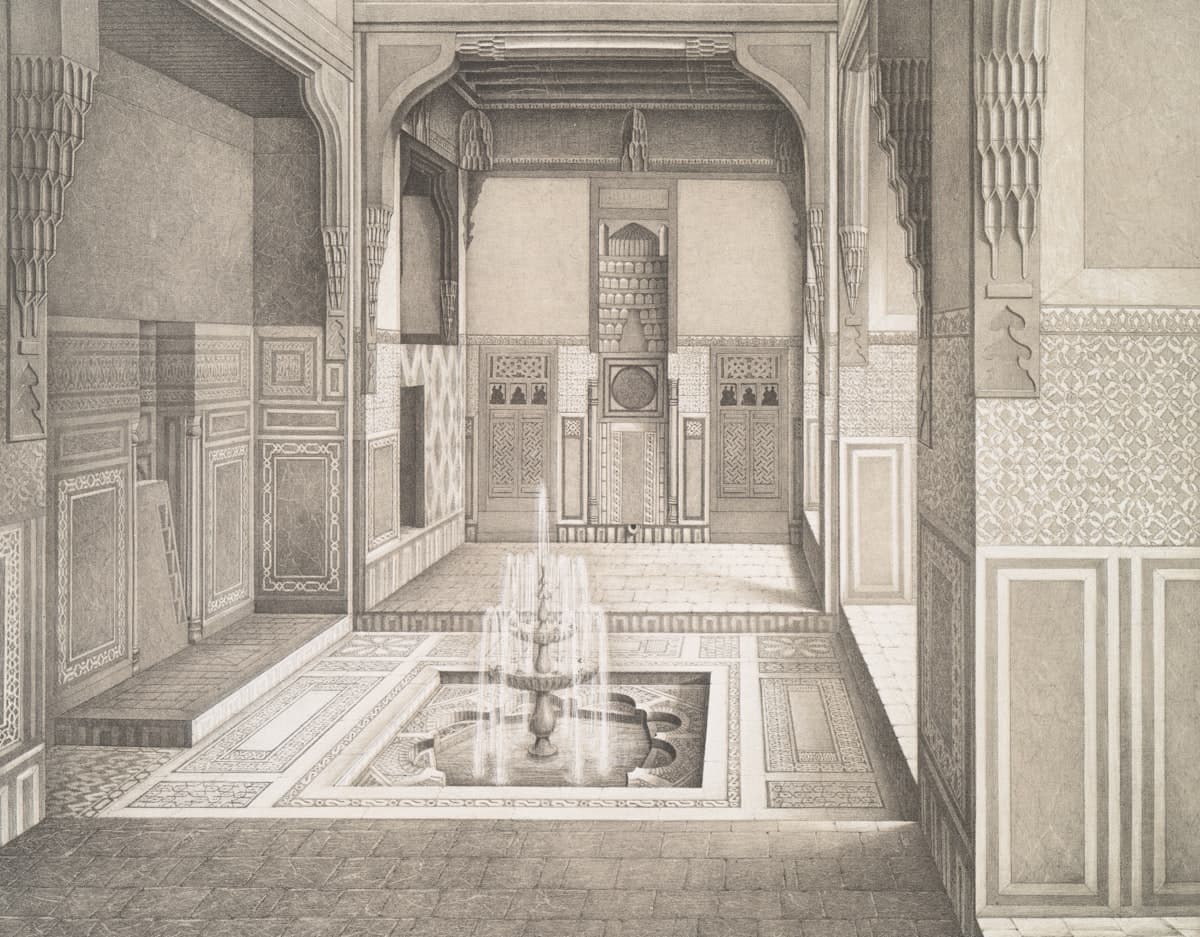
The first large Syrian community in Cairo did not arrive as refugees. They arrived as rulers.
In 969 CE, the Fatimid general Jawhar al-Siqilli conquered Egypt and founded Al-Qahira, the city that would become Cairo. The Fatimid caliphate was headquartered in Ifriqiya (modern Tunisia) but its cultural and theological roots ran deep into the Levant. Within a generation, scholars, merchants, and craftsmen from Aleppo, Damascus, and Homs were moving into the new capital. They brought with them a tradition of inlaid woodwork, geometric muqarnas stonecutting, and a school of Quran recitation that would permanently alter Egyptian religious practice.
This is the first thing to understand about the Syrian community Egypt history guide: the relationship between the two cultures is not a modern phenomenon created by crisis. It is a 1,000-year-old conversation between two of the Arab world's most complex urban civilizations.
The second wave came under the Ayyubids. Salah al-Din, who expelled the Crusaders and ended Fatimid rule in 1171, was himself Kurdish but governed an empire whose administrative class was overwhelmingly Syrian. He staffed Cairo's new madrasa system with scholars from Damascus and Aleppo. The great Madrasa and Mausoleum of Sultan Salih Najm al-Din Ayyub, built in 1243 on Al-Muizz Street, was essentially a Syrian institutional transplant onto Egyptian soil.
By the Mamluk period (1250 to 1517), Syrian-Egyptian cultural exchange had become so entangled that historians sometimes struggle to assign specific art forms to one country or the other. The Mamluk sultans regularly raided Damascus for craftsmen. After Timur sacked Damascus in 1401, he reportedly took the city's entire guild of glassblowers to Samarkand. The ones who escaped often came to Cairo.
---
Al-Muizz Street and the Syrian Craft Tradition
Walk north from Bab Zuweila along Al-Muizz li-Din Allah Street on any weekday morning and the workshops tell the story before any sign does. The mashrabiyya screen carvers near the Sabil-Kuttab of Abd al-Rahman Katkhuda are doing what Syrian immigrants taught Cairo craftsmen in the 11th century: turning geometric repetition into something that feels like breathing. The technique of fitting wooden rods without glue or nails, called khara or turned woodwork, came to Egypt via the Levantine trade routes.
The Fatimid-era Khan al-Khalili bazaar complex, which occupies land originally used as a Fatimid royal mausoleum before the Mamluk emir Jarkas al-Khalili demolished it in 1382, was deliberately designed to attract Syrian merchants. The specific commodities that gave individual lanes their names, spices, tentmakers, coppersmiths, gold, reflected the import economy that Syrian traders had established. Today the tourist trap gold shops occupy the same physical lanes where 14th-century Damascene merchants sold the same materials.
The copperwork is worth pausing over. Egyptian coppersmithing before the Mamluk period was technically competent but ornamentally restrained. The elaborate inlay tradition, setting silver and gold wire into copper or bronze in arabesques and inscriptions, was a Syrian specialty. The finest examples are in the Museum of Islamic Art's Room 11, including a basin made for a Mamluk sultan that bears both Arabic inscriptions and motifs that are essentially identical to contemporary Aleppo work.
One specific workshop deserves your time: the atelier of Mohamed Sayed on Sharia al-Sakkain, roughly 200 meters north of the Mosque of Al-Aqmar. He is the fourth generation of his family to make mashrabiyya screens and can tell you, without prompting, that his great-grandfather learned the locking joint technique from a craftsman whose family came from Hama.
---
The Modern Syrian Presence: From Heliopolis to Ain Shams
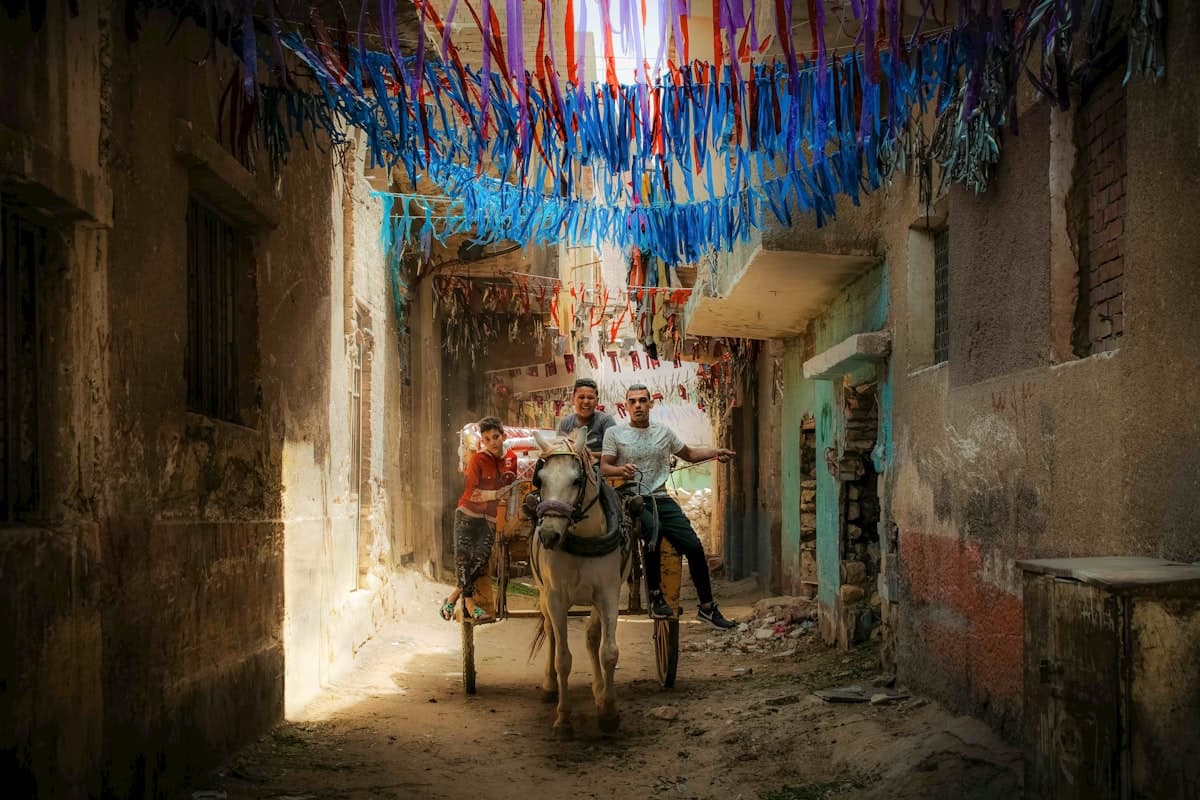
The modern Syrian community Egypt history sits differently from the medieval one. The largest migrations came in three periods: the early 20th century, when Levantine Christian merchants established themselves in Alexandria and Cairo's commercial districts; the 1960s, when professional families left due to Baathist nationalization policies; and the period after 2011, when the civil war produced the largest Syrian diaspora in modern history.
By 2023, UNHCR estimated approximately 153,000 registered Syrian refugees in Egypt, though community organizations placed the actual number significantly higher, possibly 500,000 or more when accounting for unregistered residents and those on tourist visas. The largest concentrations are in eastern Cairo, specifically Ain Shams, Nasr City, and the newer neighborhoods of the eastern desert fringe.
The geography of this settlement is not random. Syrian families tend to cluster near existing Levantine networks, near communities from Jordan, Palestine, and Lebanon that had established themselves in the same neighborhoods in earlier decades. Ain Shams, a working-class district founded in the 1950s as Cairo expanded east, now has streets where Syrian Arabic is more common than Egyptian dialect in the morning markets.
The restaurant culture is the most accessible entry point for visitors. The Syrian restaurant cluster near Al-Hussein Square and along the streets behind the Sayyida Zeinab mosque represents a culinary geography that did not exist before 2012. The Damascus-style breakfast, full-fat labneh with za'atar and good olive oil, alongside cheese fatayer baked in a wood-fired oven, is now a regular part of Cairo's morning food landscape. The Egyptians have adopted it enthusiastically, which is itself a historical echo: Egyptian cuisine absorbed Levantine ingredients at every major migration point for ten centuries.
---
The Connections
The most overlooked link in the Syrian-Egyptian story runs through the Umayyad period. When the Umayyad Caliphate, headquartered in Damascus, controlled Egypt from 661 to 750 CE, it introduced the administrative use of Arabic to replace Greek in official documents. The Coptic papyri from this period, preserved in the Egyptian Museum and the Coptic Museum in Old Cairo, show a bilingual bureaucracy in transition. The scribes learning to write Arabic in those documents were being taught by administrators sent from Damascus.
This means that the Arabization of Egypt, which is so foundational to modern Egyptian identity that most Egyptians never think of it as a historical event at all, was a Syrian export. The dialect that Egyptians now speak, the one that became the prestige dialect of the Arab world through cinema and television, carries Umayyad administrative vocabulary in its bones.
The Coptic Church connection is less expected. The Syrian Orthodox Church and the Coptic Orthodox Church share a theological history rooted in the Council of Chalcedon (451 CE), when both rejected the dominant imperial Christology and were labeled Miaphysites. This shared heresy, from the perspective of Constantinople, created a bond between Egyptian and Syrian Christian communities that persisted through centuries of Islamic rule. The Coptic Museum in Old Cairo has textiles and manuscript illuminations that are essentially indistinguishable from Syrian Orthodox material of the same period.
And then there is the coffee. Coffeehouses as social institutions entered Cairo from the Levant, specifically from Aleppo and Damascus, in the early 16th century, shortly after the Ottomans took control of both Syria and Egypt. The first Cairo coffeehouse is recorded in documents from around 1530. The Ottoman authorities briefly tried to ban them, worried about the seditious conversations they enabled. They failed. The ahwa is now the central social institution of Egyptian male public life, and it arrived in Egypt from Syria.
---
Common Mistakes
Treating the Syrian presence as purely contemporary. Every Egyptian news cycle about Syrian refugees tends to frame the community as new. Knowing the medieval and Ottoman history changes every conversation you have in these neighborhoods.
Visiting Khan al-Khalili for shopping. The prices in the tourist-facing stalls of Khan al-Khalili are two to four times what you would pay in the working craft lanes north of Al-Azhar mosque. Go to Khan al-Khalili to see the architecture and have tea. Do not buy copper there.
Skipping the Museum of Islamic Art. This is consistently one of the most undervisited serious museums in Cairo. It was badly damaged in a car bombing in 2014 and spent years in restoration, which may be why visitor numbers never fully recovered. Its collection of Mamluk-era objects directly connected to Syrian craft workshops is better labeled and more thoughtfully curated than comparable displays in the Citadel.
Eating at the Syrian restaurants immediately adjacent to Al-Hussein Square. The ones on the square itself have adjusted their pricing and portions for tourist traffic. Walk two streets east or south and the food is significantly better and cheaper, roughly EGP 80 to 150 for a full meal versus EGP 250 to 400 at the tourist-facing spots.
Booking a general Islamic Cairo tour and expecting Syrian history to feature. Standard tour operator scripts focus on Mamluk architecture as Egyptian achievement, which it is, but they almost never mention the Syrian craftsmen and scholars who contributed to it. A private guide briefed on this angle, or simply reading before you go, changes the experience completely.
The sound and light show at the Citadel costs EGP 300 and contains no information about the Syrian-Egyptian history that produced the building in front of you. Skip it entirely and spend the money on dinner instead.
Arriving at Al-Muizz Street after 10am on weekends. The street is a pedestrian zone on weekends and fills to impassable by mid-morning. The craftsmen open at 8am. The light at that hour, low and direct from the east, is also better for understanding the geometry of the facades.
---
Practical Tips
Dress conservatively for the mosque visits: shoulders and knees covered for everyone, a scarf available for women. This is not negotiable and is not about being a tourist. It is about being a guest in a working religious space.
The neighborhood around Ain Shams is not on any standard tourist circuit. It is a dense urban residential district and perfectly safe, but navigation is easier with Google Maps than with a printed guide. If you want to understand the contemporary Syrian community in Egypt, spend an hour walking these streets rather than reading statistics.
For context before you visit, the American University in Cairo Press has published several serious works on medieval Syrian-Egyptian exchange. Nasser Rabbat's work on Mamluk architecture specifically addresses the Syrian craftsmen question. It is available at the AUC bookshop on Mohamed Mahmoud Street.
Coptic Museum hours: Tuesday to Sunday 9am to 5pm, EGP 100 admission. The Umayyad-period textiles are in the upper gallery and are rarely crowded even when the ground floor is busy.
For food: Sawsan Restaurant on a side street off Sharia Port Said in Ain Shams serves the best kibbeh nayyeh in Cairo according to several Syrian families I have eaten with over the past three years. There is no English sign. Ask locally for the Syrian restaurant near the secondary school.
Frequently Asked Questions
The Weekly Dispatch
More on Egypt, every Friday.
Cultural depth and places most guides never mention.
No spam. Unsubscribe anytime.