The Syrian Community in Egypt: Cairo's Living History Guide
Syrians have been reshaping Cairo for over 1,000 years. The neighborhood most visitors walk through without recognizing it as Syrian built it stone by stone.

Quick Facts
- Best time to visit
- October to April. Cairo's heat from May through September makes long walking days in Islamic Cairo genuinely difficult, and the Syrian neighborhoods in Ain Shams have no shade infrastructure.
- Entrance fee
- Neighborhood exploration is free. Museum of Islamic Art: EGP 100 (approx $2 USD), students EGP 50. Specialist guided walks through Islamic Cairo: EGP 400 to 600 for half a day.
- Opening hours
- Museum of Islamic Art daily 9am to 5pm, closed Fridays 11:30am to 1pm. Al-Muizz Street is accessible any time; interior monuments vary but most open 9am to 5pm.
- How to get there
- Metro Line 1 to Sayeda Zeinab (EGP 7) for southern Islamic Cairo. Metro to Mar Girgis (EGP 7) for Old Cairo and the northern walk up al-Muizz. For Ain Shams Syrian neighborhoods, metro to Ain Shams East station (EGP 7). Uber from central Cairo EGP 35 to 60.
- Time needed
- One full day for al-Muizz Street, the Museum of Islamic Art, and a meal in a Syrian restaurant. Add a second half-day for Ain Shams and the modern Syrian community spaces.
- Cost range
- Budget EGP 300 to 500/day covering metro, entry fees, and street food. Mid-range EGP 900 to 1,500/day including a specialist guided walk and a sit-down meal.
Quick Facts
Best time to visit: October to April, when the heat does not punish long walks through narrow medieval streets.
Entrance fees: Most community spaces, churches, and street-level cultural sites are free. The Museum of Islamic Art (which holds significant Syrian-influenced artifacts) charges EGP 100 (approx $2 USD), students EGP 50. Specific private cultural centers may charge EGP 50 to 80 for programming events.
Opening hours: Neighborhood exploration is possible any time. The Museum of Islamic Art opens daily 9am to 5pm, closed Fridays 11:30am to 1pm. The Sayeda Zeinab market area is most alive from 8am to sunset.
How to get there: Metro Line 1 to Sayeda Zeinab station (EGP 7), then walk north. For the Fatimid core of Old Cairo where Syrian architectural influence is densest, take the metro to Mar Girgis (EGP 7) and walk 10 minutes into Islamic Cairo. Uber from central Cairo typically runs EGP 35 to 60.
Time needed: One full day minimum to walk the key streets and visit two or three anchor sites. Two days if you intend to eat seriously and talk to people.
Cost range: Budget EGP 300 to 500/day covering transport, food, and entry fees. Mid-range EGP 900 to 1,500/day if you add a guided walk and a sit-down meal at one of the Syrian restaurants in Mohandessin or Heliopolis.
---
When the Syrian civil war intensified after 2011, Egypt received somewhere between 300,000 and 500,000 Syrian refugees, making it one of the largest Syrian displacement populations outside Turkey and Lebanon. Most Cairenes will tell you the Syrians arrived and changed the city's food landscape. This is true, and it is also the smallest part of the story. Syrians have been arriving in Egypt, building in Egypt, ruling in Egypt, and being buried in Egypt for more than a thousand years. The Cairo you are walking through right now, with its Mamluk minarets and its Fatimid street grid and its particular tradition of inlaid woodwork and damascened metalwork, is partly a Syrian city. It just does not have a sign saying so.
Why This Place Matters
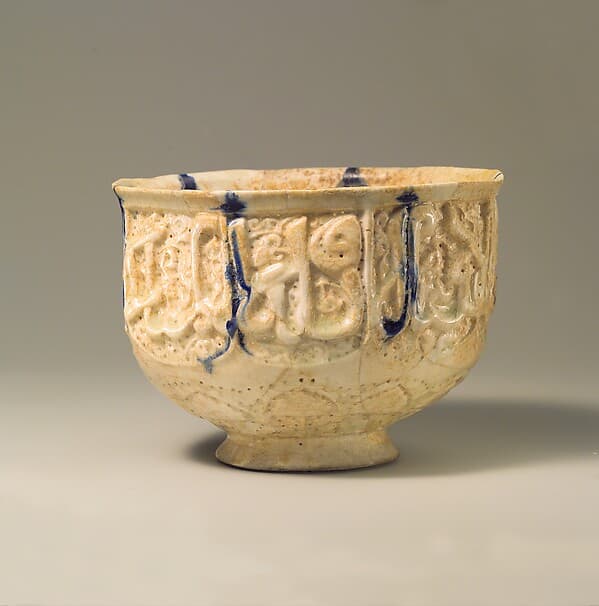
The historical relationship between Syria and Egypt is not a footnote. It is load-bearing.
When the Fatimid caliph Al-Mu'izz li-Din Allah conquered Egypt in 969 CE and founded Cairo, his army and his artisans arrived from North Africa but his architectural vocabulary came from the broader Islamic world that included Syria. The Fatimid city of al-Qahira, whose skeleton you are still walking when you navigate between Bab al-Futuh and Bab Zuweila, was designed to house a court, not a public. The streets between those two gates were reserved for the caliph's processions. The market life happened outside them, in areas that Syrian merchants would come to dominate.
The connection sharpens under the Mamluks. The Mamluk Sultanate, which ruled Egypt from 1250 to 1517 and built most of what tourists photograph in Islamic Cairo, drew heavily on Syrian cities: Damascus for its ablaq stonework (alternating courses of dark and light stone, visible on the facades of dozens of Cairene mosques), Aleppo for its woodworking traditions, and Syrian scholars for its religious institutions. Sultan Qalawun, whose complex on al-Muizz Street houses a hospital that was the largest medical institution in the medieval world and served up to 4,000 patients a day regardless of their ability to pay, brought Syrian craftsmen to Cairo specifically to execute the mosaics and stucco work inside. The building was completed in 1285. The Syrian influence is not decorative. It is structural.
The most overlooked piece of this Syrian community Egypt history is what happened between the Ottoman conquest in 1517 and the modern era. Syrian Christian merchants, particularly from Aleppo, formed significant trading communities in Cairo throughout the 17th and 18th centuries. They dealt in silk, soap, coffee, and textiles, and they built churches, schools, and social networks that persisted. The Greek Catholic and Greek Orthodox communities of Cairo have Syrian roots that most Egyptian Christians themselves do not always foreground.
What You Are Actually Walking Through
The Syrian Quarter That Has No Name
There is no official "Syrian quarter" in Cairo, which is itself the point. Syrian communities integrated into existing urban fabric rather than establishing sealed enclaves. The densest concentration of post-2011 Syrian residents is in Ain Shams, Hadayek al-Quba, and parts of Nasr City, neighborhoods that most tourists never visit and that have no ancient monuments to justify a guidebook stop. This is a mistake.
The Syrian migration after 2011 brought to Cairo something it did not expect: Aleppan pastry makers, Homsi textile merchants, and Damascene restaurateurs who carried with them craft traditions that are now extinct in their cities of origin. A pastry shop in Ain Shams run by a family from Aleppo is not merely serving food. It is preserving a confectionery tradition that the destruction of Aleppo's Old City interrupted. The karabij, a pistachio-stuffed semolina cookie served with a white cream called natef made from soapwort root, is almost impossible to find in Aleppo today. You can find it in Cairo.
Al-Muizz Street and the Ablaq Truth
Walk the full length of al-Muizz Street from Bab al-Futuh to Bab Zuweila, a distance of roughly one kilometer, and count the facades that use alternating light and dark stone. This technique, ablaq, came from Ayyubid and Mamluk Syria. Saladin, who founded the Ayyubid dynasty and whose citadel still defines Cairo's skyline, was Kurdish but born in Tikrit and based in Damascus before he took Egypt. He brought Syrian administrative practices and Syrian aesthetic conventions with him. The Citadel of Saladin in Cairo and the Citadel of Saladin in Damascus were conceived by the same military mind operating on the same strategic logic.
The complex of Sultan Barquq on al-Muizz, built in 1386, is the first Mamluk monument in Cairo to contain a tomb within a madrasa, a design borrowed directly from Syrian funerary architecture. The Mamluks had been experimenting with Damascus's building vocabulary and then importing it to Cairo. Barquq was Circassian, enslaved as a child and sold in the Crimean slave trade before arriving in Egypt, but the language he built in was Syrian.
The Churches Nobody Connects to Syria
In the Coptic neighborhood around Mari Girgis in Old Cairo, the Greek Orthodox Patriarchate has maintained a presence for centuries. What fewer visitors know is that the Melkite Greek Catholic Church in Cairo, with a congregation tracing roots to Syrian Christians who converted from Eastern Orthodoxy in the 17th and 18th centuries, holds services in a church near Ramses that contains woodwork in the Damascene tradition: geometric intarsia panels in walnut, boxwood, and mother-of-pearl. The same craft that appears in the Umayyad Mosque in Damascus appears here, in a Cairo church, carried by Syrian hands.
The Coptic and Syrian Orthodox traditions also share a liturgical language. Syriac, the dialect of Aramaic used in Syrian Christian liturgy, influenced the Coptic liturgy during the early Christian centuries when Egypt and Syria were under the same Byzantine ecclesiastical authority. This is not a historical coincidence. It is evidence of a continuous conversation between these two civilizations across two thousand years.
The Connections
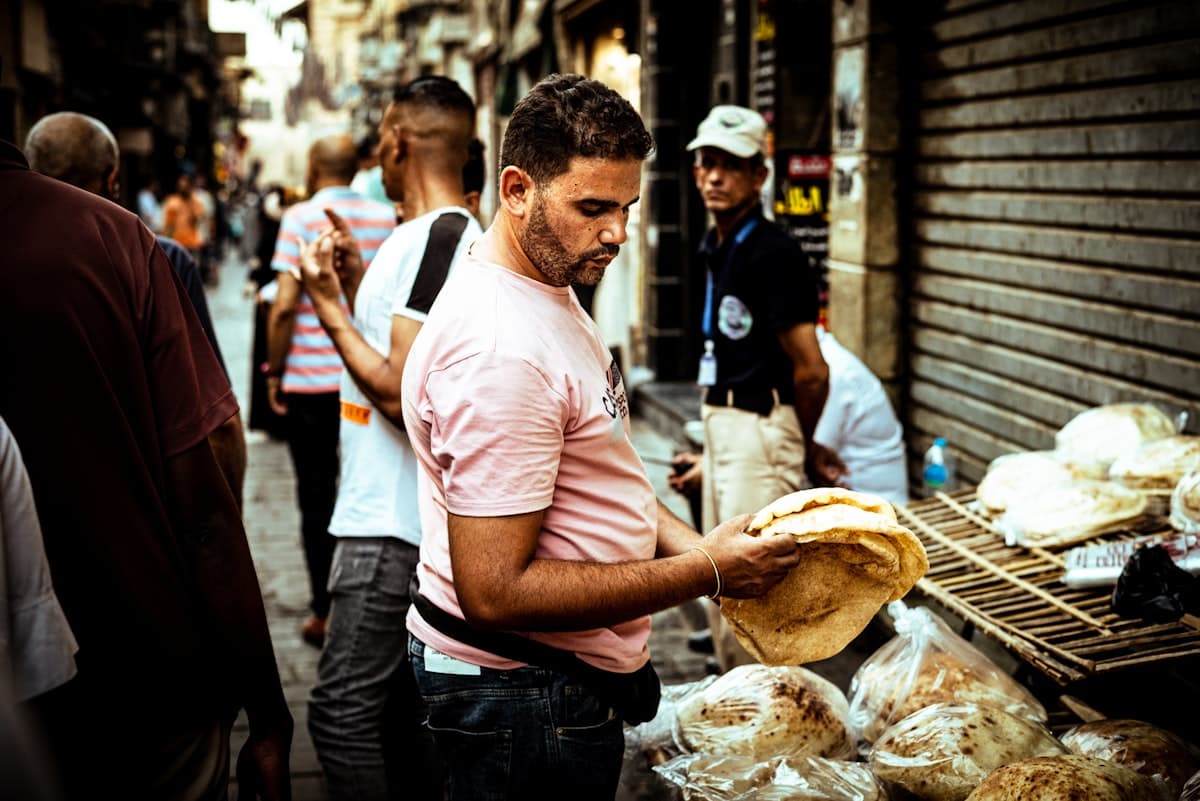
The Syrian community Egypt history does not run in one direction. Egypt also shaped Syria.
When Napoleon invaded Egypt in 1798 and was eventually repelled, the aftermath destabilized Ottoman power across the region. Muhammad Ali, who emerged from that chaos to rule Egypt from 1805, then invaded Syria in 1831. His son Ibrahim Pasha governed greater Syria for nearly a decade, introducing Egyptian administrative reforms, land registration systems, and a conscript army. Syrian intellectuals who came to Cairo during and after this period contributed to the Nahda, the Arab cultural renaissance of the 19th century, which was largely a Cairo project. The printing press Muhammad Ali established at Bulaq in 1822 published works by Syrian Christian scholars who had come south specifically because Cairo had the infrastructure for ideas.
The single most direct urban connection is the Khan al-Khalili market, built in 1382 by the Mamluk emir Jarkas al-Khalili on the site of the Fatimid caliphs' tombs. Al-Khalili designed it as a caravanserai to house Syrian and other Levantine merchants. The market you are browsing for papyrus and silver was built as a Syrian commercial hub. The merchants selling you things today are mostly Egyptian. The building they are selling from was made for Syrians.
Common Mistakes
1. Going only to the obvious monuments without understanding why they look the way they do. Al-Muizz Street without knowing the Syrian craft vocabulary that shaped it is just a street with old buildings. Learn to recognize ablaq stonework and muqarnas vaulting before you go, and you will see completely differently.
2. Skipping the modern Syrian neighborhoods. Ain Shams and Hadayek al-Quba are not convenient, they are not pretty, and they are not in any guidebook. Go anyway. The Syrian restaurants and pastry shops there are not tourist-facing, which means the food is made for Syrians, priced for Syrians, and reflects a continuity of tradition that no Damascus-themed restaurant in Zamalek can replicate.
3. Eating at the Syrian restaurants in Mohandessin instead of the ones in Ain Shams. The Mohandessin restaurants are perfectly competent. They are also performative, priced for expats and upper-middle-class Cairenes, and serve a polished version of Syrian food that has been calibrated for Egyptian tastes. The Ain Shams places will make you feel like you wandered into someone's extended family lunch. This is the correct feeling.
4. Assuming the Syrian community arrived in 2011. This misconception flattens over a thousand years of continuous cultural exchange into a refugee story, which does injustice to both the history and the current community. When you talk to a Syrian Cairene, ask how long their family has been in Egypt. The answers will surprise you.
5. Taking the Old Cairo audio guide at face value. The standard audio guides for Islamic Cairo do not explain the Syrian craft traditions embedded in the monuments. They give you names, dates, and dynasty information. This is necessary and insufficient. Hire a specialist guide through the Egyptian Society of Tour Guides who has a background in Islamic art history rather than just Egyptology. Expect to pay EGP 400 to 600 for a half-day walk. It is worth it precisely because the story is invisible without someone to point at it.
6. The Khan al-Khalili souvenir circuit is not worth your afternoon. I will say this plainly: the tourist-facing section of Khan al-Khalili, the part everyone photographs and every tour bus deposits groups at, sells mass-produced goods at prices inflated specifically for people who do not know what things cost. The back alleys of the Khan, where Cairenes actually buy gold and spices and textiles, are worth an hour. The front is a photo opportunity and nothing more.
7. Underestimating the scale of post-2011 Syrian cultural contribution to Cairo. Syrians brought to Cairo not just food but an entire craft economy: upholstery workshops, textile printing, calligraphy studios, and music. The Aleppan musical tradition, one of the most sophisticated in the Arab world, has found a fragile continuation in Cairo's concert circuit. If the Cairo Opera House or one of the cultural centers in Zamalek or Downtown is hosting a Syrian musician during your visit, go. This is not a promotional suggestion. It is a historical moment that will not last indefinitely.
Practical Tips
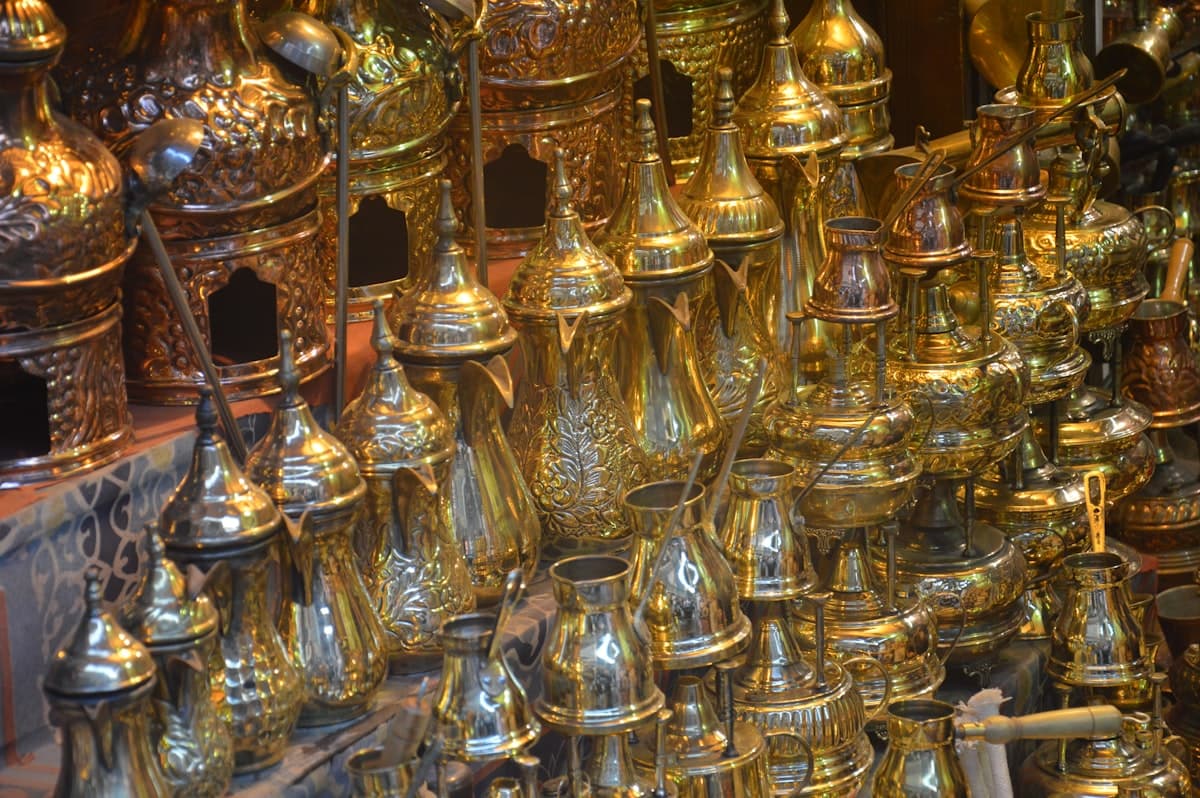
Wear shoes you can walk in for four to six hours on uneven stone. Islamic Cairo streets are beautiful and treacherous in equal measure.
Friday mornings before noon are the quietest time on al-Muizz Street. Friday afternoons after prayers are among the most crowded. Plan accordingly.
If you want to visit Syrian community spaces in Ain Shams or Nasr City, go with a local contact if possible. These are ordinary residential neighborhoods and perfectly safe, but navigating them without Arabic and without any point of entry requires patience. A local fixer or a socially connected guide makes the difference between observing from the outside and actually meeting people.
The Museum of Islamic Art near Bab al-Khalq holds one of the world's finest collections of Mamluk metalwork, much of it with direct Syrian stylistic connections. It was partially damaged in a car bombing in 2014 and has been restored. It receives almost no foreign tourists relative to its quality. Go on a weekday morning. You will likely have entire galleries to yourself.
For food: ask for kibbeh nayyeh (raw lamb kibbeh) only in places where you can see fresh preparation. Ask for the Syrian flatbread over the Egyptian aish baladi. Order knafeh only in a Syrian-run establishment. The Egyptian version is made with white cheese that is too mild and too salty simultaneously. The Nabulsi cheese version made by Syrian bakers in Ain Shams is a different food entirely.
Frequently Asked Questions
The Weekly Dispatch
More on Egypt, every Friday.
Cultural depth and places most guides never mention.
No spam. Unsubscribe anytime.