Sidi Ibrahim Dessuqi Shrine: Egypt's Living Saint and His City
Four million pilgrims visit Dessouk each year. Most Egyptians consider Ibrahim Dessuqi one of the four poles of the Islamic world. Most foreign travelers have never heard his name.

Audio Guide: Sidi Ibrahim Dessuqi Shrine: Egypt's Living Saint and His City
Quick Facts
- Best time to visit
- October to March for comfortable Delta weather; Sha'ban (Islamic calendar) for the moulid. Weekday mornings year-round for quiet contemplative visits.
- Entrance fee
- Free. Optional donation to shrine attendants of EGP 10 to 20 is customary.
- Opening hours
- Daily approximately 5am to 11pm. Some areas accessible around the clock during moulid. Hours shift informally around the five daily prayers.
- How to get there
- Bus from Cairo Turgoman station to Kafr el-Sheikh (EGP 60 to 80, 2 to 2.5 hours), then microbus to Dessouk (EGP 10 to 15, 30 minutes). Service taxi from Alexandria direct (EGP 50 to 70 per seat, about 2 hours).
- Time needed
- 2 to 3 hours for the shrine and surrounding market streets. Full day if attending a Thursday dhikr evening or visiting during moulid season.
- Cost range
- Budget EGP 300 to 600 per day including transport from Kafr el-Sheikh, food, and donations. Accommodation in Kafr el-Sheikh EGP 400 to 700 per night.
Quick Facts
Best time to visit: The moulid (festival) of Ibrahim Dessuqi falls in the Islamic month of Sha'ban, drawing the largest crowds. Outside festival season, weekday mornings are quiet and deeply atmospheric. Avoid Friday afternoons, when the square is packed to capacity.
Entrance fee: Free. The shrine itself charges nothing. Some ziyara (visitation) etiquette requires a small donation to the attendants who hand out rose water or incense; EGP 10 to 20 is standard.
Opening hours: The mosque and shrine are open daily from approximately 5am to 11pm, with some areas accessible around the clock during major festival periods. Hours shift informally around prayer times.
How to get there: Dessouk is a small city in the Nile Delta, in Kafr el-Sheikh Governorate, roughly 150km northwest of Cairo. From Cairo's Turgoman bus station, buses run to Kafr el-Sheikh city for around EGP 60 to 80; from there, a microbus or taxi to Dessouk costs another EGP 10 to 15. The entire journey takes three to four hours. Direct service taxis from Alexandria are faster, around two hours, for EGP 50 to 70 per seat.
Time needed: Two to three hours for the shrine complex, the surrounding market streets, and the Nile embankment. A full day if you arrive during the moulid season or want to follow a Sufi dhikr ceremony from beginning to end.
Cost range: Budget EGP 300 to 600 per day including transport, food, and incidentals. Dessouk has no luxury accommodation options; most serious visitors stay in Kafr el-Sheikh city and commute.
---
Why This Place Matters
Egyptian Sufism produced four figures so revered they are called the aqtab al-arba'a, the four poles of the world. The belief holds that these saints serve as intermediaries between the divine and the human, spiritual axes around whom cosmic order turns. One is buried in Baghdad. One is buried in Morocco. One is buried in Tanta, a city most Egyptians know by instinct. The fourth is Ibrahim Dessuqi, and he is buried here, in a mid-sized Delta city that most Westerners could not find on a map.
Ibrahim Dessuqi was born in Dessouk in 1235 CE, during the late Ayyubid period, a time when Egypt was still processing the intellectual and theological inheritance of Saladin's dynasty. He died in 1288 CE, which places his entire life inside one of the most turbulent centuries Egypt has known: the transition from Ayyubid to Mamluk rule, the Mongol destruction of Baghdad in 1258, and the Mamluk victory over the Mongols at Ain Jalut in 1260, fought on a battlefield in what is now northern Israel. Dessuqi would have heard the news of Ain Jalut within weeks.
He founded his own Sufi order, the Dessuqiyya (also transliterated as Burhaniyya), which today has active branches across Egypt, Sudan, Libya, and Syria. A Sufi order founded by a thirteenth-century Delta mystic still initiates new members in Khartoum and Damascus. That is a measure of reach most medieval institutions would envy.
The shrine complex was expanded substantially during the Ottoman period and again under the Egyptian state in the twentieth century. The current mosque structure reflects multiple renovation campaigns, which means it is not a medieval monument in the architectural sense. What it is, emphatically, is a living religious center of enormous weight, the kind of place where the distinction between medieval Egypt and contemporary Egypt dissolves entirely.
---
What You Will Actually See and Experience
The mosque sits close to the Nile, and the approach from the river gives you the best first view: a pale minaret against flat Delta sky, surrounded by market stalls selling prayer beads, bottles of rose water, and printed images of the saint framed in gold plastic. The smell you encounter before the sight is incense and frying fish in equal measure, because the food stalls near the entrance have been feeding pilgrims for generations and have no intention of stopping.
Inside the mosque, the shrine chamber is separated from the main prayer hall by a brass screen. The tomb of Ibrahim Dessuqi sits beneath a green silk covering, surrounded by votive candles and small offerings left by visitors. Attendants in white gallabiyyas circulate with rose water, which they sprinkle on hands and faces. The sound in the chamber is layered: Quranic recitation from a corner speaker, quiet individual prayers murmured by the faithful pressing against the screen, and occasionally the first notes of a dhikr gathering beginning somewhere in the adjacent courtyard.
The dhikr ceremonies are what most foreign visitors do not know to look for. Sufi dhikr, the rhythmic repetition of divine names and phrases, is practiced here regularly, especially on Thursday evenings. The ceremony can last two to three hours and moves through distinct phases: slow, meditative repetition that becomes progressively faster and more physical, sometimes involving synchronized movement and controlled breathing. You are welcome to observe. You are not welcome to photograph without asking, and you should read the room carefully before asking.
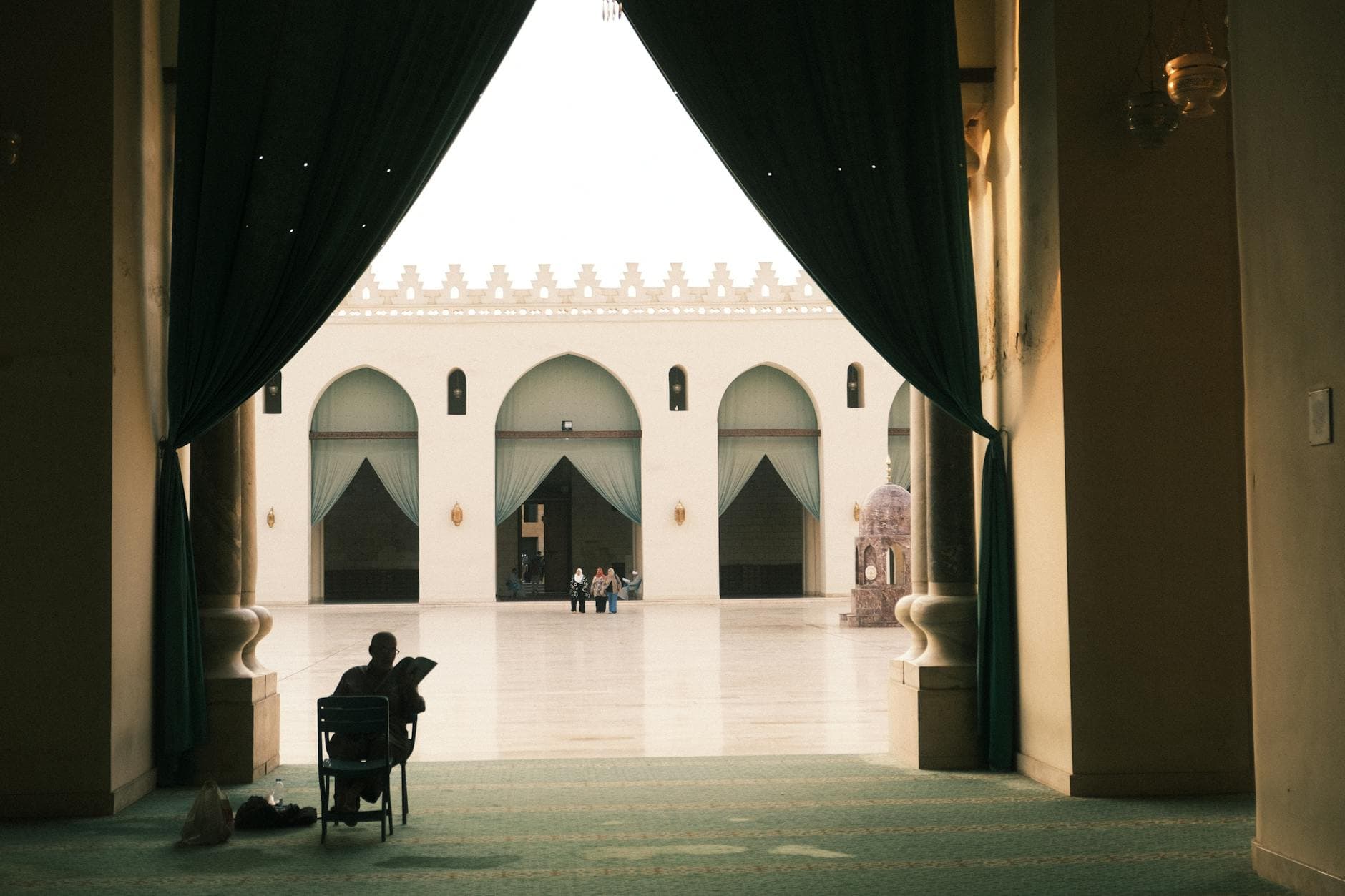
The courtyard outside the shrine contains smaller commemorative markers and a loggia where older men sit reading quietly in the afternoons. The tiles on the lower walls of the mosque interior are a mix of Ottoman geometric work and later Egyptian reproductions, and if you look at the column bases near the entrance, you will find stonework that does not match the rest of the building, older material incorporated into the Ottoman-era structure, a common practice in Delta cities where Pharaonic and Roman-era stone was treated as a convenient quarry.
---
The Moulid: Four Million People and What That Actually Means
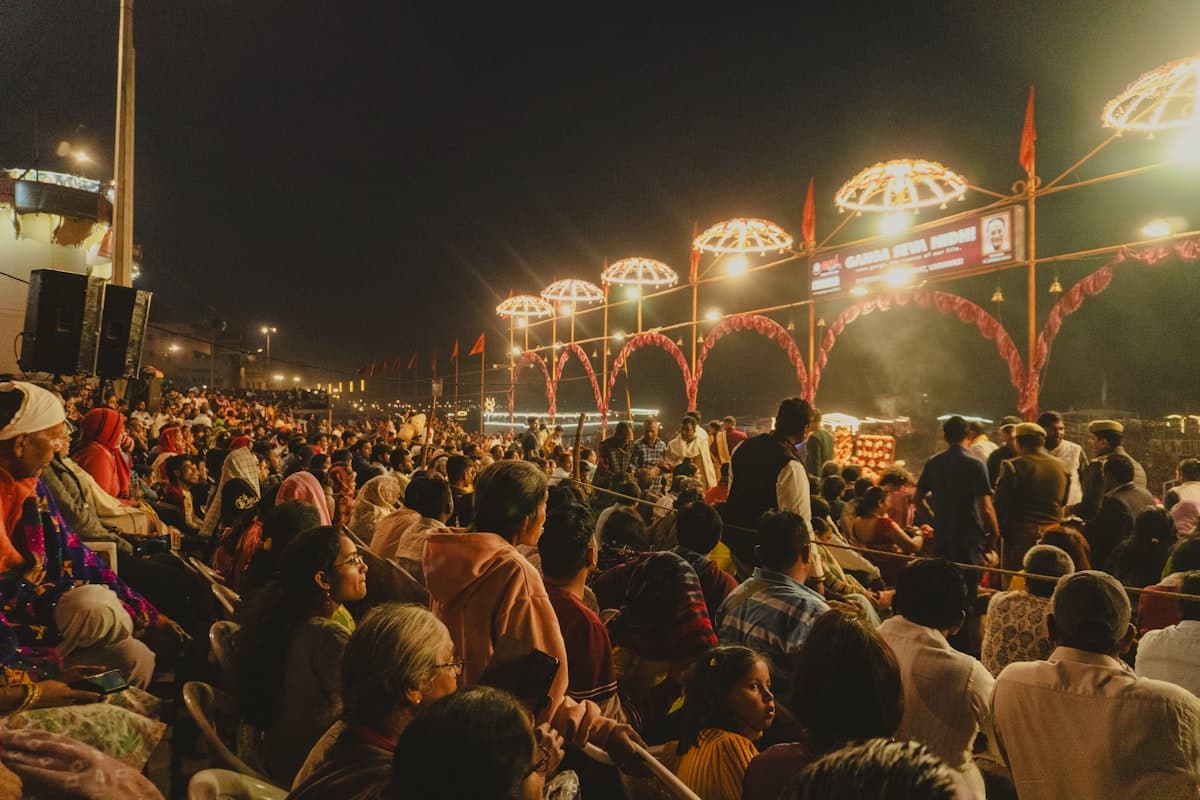
The annual moulid of Ibrahim Dessuqi is one of the largest religious festivals in Egypt, drawing an estimated three to four million visitors over approximately two weeks in Sha'ban. To put that in context: Lollapalooza Chicago draws around 100,000 people per day. The Dessouk moulid, at its peak, draws comparable daily numbers to a small city's entire population, into a city of roughly 100,000 people.
The organization is largely self-managed and has been for centuries. Families from across the Delta arrive in caravans, set up tents on the outskirts of the city, cook communal meals, attend religious ceremonies, and visit the shrine in rotating shifts. The economy of the moulid is its own phenomenon: temporary market stalls, traveling performers, food vendors, sellers of religious paraphernalia, and craftspeople who follow the moulid circuit across Egypt, moving from Dessouk to Tanta to Luxor's Moulid of Abu el-Haggag and back again. There is an entire profession built around this circuit.
For the traveler, arriving during the moulid is an experience of a completely different order than arriving on a quiet Tuesday. The city becomes a temporary metropolis with its own logic. Navigation is by sound and crowd flow rather than by street signs. The intensity is real and so is the hospitality: strangers will invite you to share meals, press tea into your hands, want to know where you are from and what you think of their saint. The appropriate answer is respectful and genuine, not performative.
If you are researching the Sidi Ibrahim Dessuqi shrine guide for a visit during moulid season, book any accommodation in Kafr el-Sheikh city at least three weeks in advance. During the peak nights, even Kafr el-Sheikh fills up.
---
The Connections
Dessouk sits in the Nile Delta, a landscape that reads entirely differently from Upper Egypt. The Delta was the breadbasket of the ancient Mediterranean world: Rome's grain supply depended on Delta agriculture, and the Roman imperial administration maintained a dedicated grain fleet running from Alexandria to Ostia. The flat, densely farmed land you pass through on the way to Dessouk was already intensively cultivated when Ibrahim Dessuqi was born in 1235.
The Dessuqiyya Sufi order he founded has a specific theological lineage that connects to four major Sufi chains: the Qadiriyya (founded by Abd al-Qadir al-Jilani in Baghdad), the Shadhiliyya (founded in North Africa and then centered in Alexandria), the Rifaiyya (centered in Iraq and Syria), and the Ahmadiyya Badawiyya (centered in Tanta, where Ahmad al-Badawi, another of the four poles, is buried). Ibrahim Dessuqi is said to have personally met Ahmad al-Badawi, who was his contemporary. Two of the four poles of the Islamic world lived within 80km of each other in the Egyptian Delta during the same generation. That geographical concentration is not coincidence. The Delta in the thirteenth century was a center of Sufi intellectual life, partly because its agricultural wealth supported the kind of settled religious communities where intensive spiritual practice was possible.
The Ottoman-era expansion of the mosque connects Dessouk to a wider pattern visible across Egypt: Mamluk and Ottoman rulers who were often skeptical of Sufi saint veneration in its popular forms nonetheless invested heavily in shrine complexes because the political loyalty of local populations was partly organized around those shrines. To fund the shrine was to fund local stability. The same logic explains why Mamluk-era mosques appear next to Coptic churches in Old Cairo, and why Roman forts became Byzantine monasteries in Upper Egypt.
---
Common Mistakes
Photographing inside the shrine chamber without permission. This is not about legal prohibition; it is about the fact that you are in an active place of worship where some visitors are in states of intense emotional or spiritual engagement. Ask the attendants first. If they hesitate, do not photograph. The consequence of not doing this is being asked to leave, which is fair.
Arriving without a basic knowledge of who Ibrahim Dessuqi was. The shrine attendants and local visitors will talk to you, and you will get far more from those conversations if you can demonstrate that you came with genuine curiosity rather than as a spectator at an exotic attraction. Reading the outline of his life and the structure of the Dessuqiyya order beforehand takes thirty minutes and transforms every conversation.
Skipping the Nile embankment. The stretch of corniche north of the mosque, where the Nile is visible through a row of old trees, is where local families gather in the late afternoon. It is also where you understand why Dessouk matters to the people who live here, not just to pilgrims who pass through.
The commercial "Sufi show" packages sold from Cairo. Several Cairo-based tour operators market overnight trips to Dessouk framed as Sufi experience packages, with private guides, organized access to ceremonies, and hotel accommodation. They cost EGP 1,500 to 2,500 per person. You do not need them. The shrine is free, the ceremonies are public, and a microbus from Kafr el-Sheikh costs EGP 10. What you are paying for in those packages is the feeling of having someone manage your discomfort, which is a legitimate purchase but not necessary and not how this place actually works.
Coming only during moulid season without understanding what you are signing up for. The moulid is real and significant and worth experiencing if you have the temperament for it. But four million people in a small Delta city means genuine crowd pressure, noise that does not stop, and logistical complexity. If your travel style requires controlled environments, come in a quieter month and visit a Thursday evening dhikr instead.
Treating this as a half-day detour from Alexandria. Dessouk is two hours from Alexandria, but treating it as a quick stop means you arrive rushed and leave before the afternoon light hits the mosque facade, before the evening dhikr begins, and before you have had a single real conversation. Give it a full day or stay overnight in Kafr el-Sheikh.
Assuming the shrine is purely medieval and therefore expecting architectural grandeur. The building has been renovated repeatedly and is not a preserved medieval monument. If you come expecting the formal architectural drama of a Mamluk mosque in Cairo, you will be confused. What the shrine offers is not architectural; it is social and spiritual, a place that has been continuously inhabited by devotion for seven centuries. Those are different kinds of significance.
---
Practical Tips
Wear modest clothing: shoulders and knees covered for both men and women. Women are not required to cover their hair to enter the mosque, but doing so is respectful and reduces unsolicited attention. Remove shoes before entering the main prayer hall; there are attendants and shoe racks near the entrance.
The best time of day to visit is between 9am and noon on a weekday. The morning light in the Delta is flat and white, good for seeing the mosque without shadows. The shrine chamber is relatively uncrowded, and the attendants have time to speak.
Bring cash in small denominations. There are no card payment facilities in or around the shrine. EGP 100 to 200 is more than sufficient for donations, food, and small purchases.
The food near the shrine is worth eating. The fish restaurants on the streets approaching the mosque serve Delta-style fried fish with bread, pickles, and tahini for EGP 60 to 100 per person. This is not tourist food. The Nile Delta produces some of the best freshwater fish in Egypt, and Dessouk's cooks know what to do with it.
If you want to attend a dhikr ceremony, ask at the mosque about the schedule. Thursday evenings are most reliable. Arrive thirty minutes before the stated start time, sit quietly at the edge of the gathering, and do not attempt to join the physical movement unless specifically invited. Observers are genuinely welcome; uninvited participants are disruptive.
For accommodation, the Kafr el-Sheikh city hotels are functional and cheap, around EGP 400 to 700 per night for a clean private room. Do not expect amenities beyond running water and a bed. If that is not workable, Alexandria is a reasonable base for a long day trip.
Frequently Asked Questions
The Weekly Dispatch
More on Egypt, every Friday.
Cultural depth and places most guides never mention.
No spam. Unsubscribe anytime.