Sidi Ibrahim Dessuqi Shrine: Egypt's Living Sufi Heart
Four million pilgrims visit Dessuqi every year. Most Egyptians consider him one of the four poles of Islamic sainthood. Most foreign visitors have never heard his name.

Quick Facts
- Best time to visit
- During the moulid in Sha'ban (shifts annually, check Islamic calendar) for the full experience. Thursday evenings year-round for dhikr ceremonies. Avoid Friday midday if crowds are not your preference.
- Entrance fee
- Free. No ticket required for mosque or courtyard. Tomb chamber open to respectful visitors at custodian discretion.
- Opening hours
- Daily from Fajr prayer (approximately 5am) to Isha prayer (approximately 10pm). Tomb chamber may have restricted access during prayer times.
- How to get there
- GoBus or Superjet from Cairo Turgoman station to Kafr el-Sheikh (EGP 120-150, approx $2.50-3 USD, 3 hours). Microbus or tuk-tuk Kafr el-Sheikh to Dessouk (EGP 10-15). Shared taxi from Alexandria to Kafr el-Sheikh (EGP 60-80).
- Time needed
- 2-3 hours for a focused visit. Full day or evening if visiting during moulid or staying for Thursday dhikr.
- Cost range
- Budget EGP 300-500 per day including transport, street food, and local tea. No mid-range tourist infrastructure exists in Dessouk.
Sidi Ibrahim Dessuqi Shrine: Egypt's Living Sufi Heart
Four million pilgrims arrive in Dessouk every year. They come from the Delta villages, from Upper Egypt, from Sudan and Libya and Saudi Arabia. They sleep on the mosque's marble floors, they beat drums until 3am, they weep at a tomb that has been continuously visited for seven hundred years. This is not a relic of Egyptian religious life. It is Egyptian religious life, happening right now, in a Delta city that does not appear on most tourist itineraries.
Sidi Ibrahim al-Dessuqi was born in 1255 in the city that now bears his name, on the western bank of the Damietta branch of the Nile, in Kafr el-Sheikh Governorate. He died in 1296. Within a generation of his death, Egyptians were calling him one of the four Aqtab, the four poles or axes around which Sufi cosmology organizes all spiritual life on earth. The other three are Ahmed al-Badawi of Tanta, Abd al-Qadir al-Gilani of Baghdad, and Ahmed ibn Idris of Morocco. To be in that company is to occupy a position in Egyptian Islam that has no real Western equivalent. Not a saint, exactly. Not a prophet. Something older and harder to translate.
Quick Facts
Best Time to Visit: The Moulid of Sidi Ibrahim Dessuqi falls in the Islamic month of Sha'ban, typically in late winter or spring depending on the lunar calendar. This is when the shrine is most alive. Outside moulid season, Friday mornings draw the largest local crowds.
Entrance Fee: Free. The shrine and mosque are open to all Muslims and to respectful non-Muslim visitors. There is no ticket, no booth, no audio guide for sale.
Opening Hours: The mosque is open daily from Fajr prayer (roughly 5am) until Isha prayer (roughly 10pm). The tomb chamber maintains slightly restricted hours and may be closed to non-Muslims during specific prayer times at the discretion of the custodians.
How to Get There: Dessouk is 160km north of Cairo in Kafr el-Sheikh Governorate. From Cairo's Turgoman bus station, Superjet and GoBus run services to Kafr el-Sheikh city (roughly EGP 120-150, about $2.50-3 USD). From Kafr el-Sheikh, a microbus or tuk-tuk to Dessouk costs EGP 10-15. From Alexandria, shared taxis run to Kafr el-Sheikh from Midan el-Gomhoreya for EGP 60-80. Total journey from Cairo: 3 to 3.5 hours.
Time Needed: Two to three hours for a focused visit. A full day if you arrive during the moulid season, want to explore the surrounding market, or intend to stay for an evening dhikr ceremony.
Cost Range: Budget EGP 300-500 per day in Dessouk including transport, food from street stalls, and tea. There is no mid-range tourist infrastructure here. That is the point.
Why This Place Matters
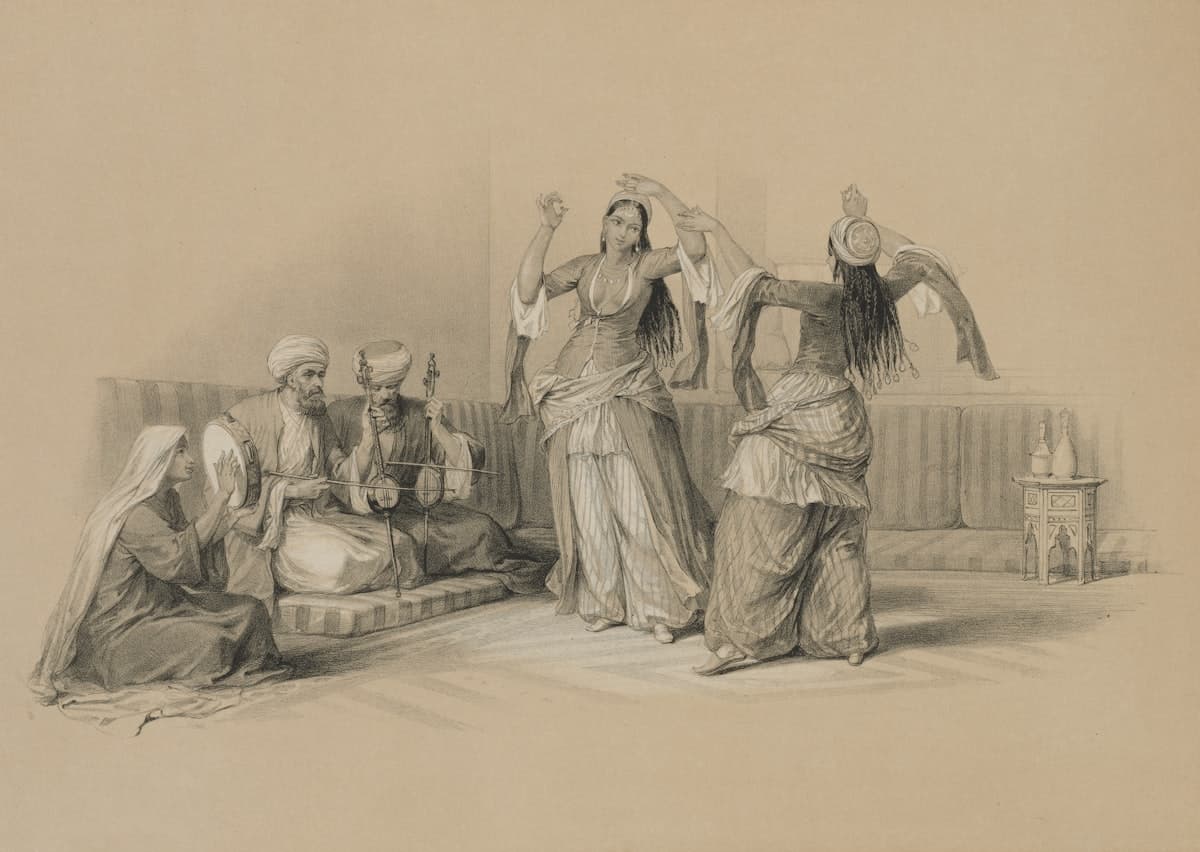
Egyptian Sufism has been producing saints since the twelfth century, when the Ayyubid dynasty actively encouraged the construction of khanqahs, Sufi lodges, as part of a deliberate policy to consolidate Sunni Islam against Shia Fatimid influence. The Fatimids, who ruled Egypt from 969 to 1171, had built al-Azhar as a Shia institution. When Saladin took Cairo, he began the long project of reorienting Egyptian religious culture. Sufism, with its emphasis on personal devotion, its local saints, and its networks of popular loyalty, was a useful tool. The shrines that spread across Egypt in the thirteenth and fourteenth centuries were not purely spiritual phenomena. They were also political infrastructure.
Ibrahim al-Dessuqi arrived in this context. He studied Islamic sciences from an early age in a city that sat on one of the most commercially active branches of the Nile. The Damietta branch was, in the thirteenth century, Egypt's main artery to the Mediterranean. Crusader armies used it as their invasion route in 1218 and 1249. Dessouk was not a quiet Delta backwater. It was a city that had watched armies march past and watched them retreat.
Dessuqi founded his own Sufi order, the Burhaniyya, which remains active today with branches across Egypt, Sudan, and East Africa. This is the thing that separates him from many saints whose shrines attract pilgrims: his institutional legacy is living. The Burhaniyya order has a functioning hierarchy, a practice of dhikr with specific rhythms and texts, and an international membership that attends the moulid not merely out of folk devotion but as a formal religious obligation within their order.
What You Will Actually See
The mosque complex that houses Dessuqi's tomb is not old in the way that Egyptian antiquity tourists understand old. The current structure dates largely from the nineteenth and twentieth centuries, rebuilt and expanded under successive patrons including Khedive Ismail, who funded a major renovation in the 1870s as part of his broader program of modernizing Egyptian religious infrastructure. What you are looking at, architecturally, is Ottoman and Khedival Egyptian. What you are feeling, spiritually, is considerably older.
The tomb chamber itself is covered in green silk and brass fittings. It smells of rose water and musk. Men press their hands and foreheads against the wooden grille surrounding the sarcophagus and speak quietly, sometimes weeping. Some are reciting specific prayers from the Burhaniyya tradition. Others are conducting a more personal conversation with someone they believe can intercede for them before God. The theological debate about whether this is permissible in Islam is centuries old and still unresolved among Egyptian scholars. Inside this room, that debate is irrelevant. What is happening is older than the debate.
Outside the tomb chamber, the main prayer hall fills with worshippers for all five daily prayers. The mosque's minaret is visible from most of the city, a useful landmark for navigating Dessouk's dense market streets. On Thursday evenings and during the moulid, Sufi brotherhoods gather in the courtyard and in the streets outside for dhikr: the rhythmic chanting and movement that constitutes Sufi devotional practice. Different orders have different styles. Some sway. Some use percussion. Some chant in unison. Some produce a sound closer to controlled breathing than singing. Watching three or four different orders conducting separate dhikr ceremonies in adjacent spaces is one of the more genuinely unusual things you can witness in Egypt.
The Moulid: What It Actually Is
The word moulid means birthday, but the moulid of Dessuqi is not a birthday party. It is a week-long convergence that functions simultaneously as religious festival, trade fair, family reunion, and theological conference. Sufi sheikhs deliver lectures. Vendors sell amulets, incense, and devotional literature printed on cheap paper. Families from villages throughout the Delta set up camps in the streets surrounding the mosque. Children eat candy and ride carnival rides that appear overnight in the squares nearby.
The moulid draws an estimated two to four million visitors over its duration, concentrated in the final days and the laylat al-kabira, the great night, when attendance in the shrine's immediate vicinity becomes genuinely dense. Egyptian public health and security forces deploy in large numbers. It is not dangerous for visitors who are attentive and respectful, but it is physically intense. The crowd moves with its own logic.
For anyone interested in how religion actually functions in contemporary Egypt, rather than how it is described in academic papers or newspaper articles, a moulid visit is irreplaceable. This is not performance for outsiders. Most of the people here have never met a foreign tourist. They are not adjusting their behavior for your camera.
The Connections
Dessouk sits on the Damietta branch of the Nile, and the history layered beneath this city is considerably older than its most famous resident. Ptolemaic and Roman settlements occupied this stretch of the western Delta. The agricultural infrastructure of the Delta, its canal networks and flood management systems, was already several thousand years old when Ibrahim al-Dessuqi was born here.
The broader network of Egyptian moulids that Dessuqi belongs to represents one of the most underexamined aspects of Egyptian religious geography. Ahmed al-Badawi's shrine in Tanta, 60km to the southeast, draws a claimed three million visitors for its own moulid and is considered by some accounts the largest religious gathering in Egypt after the Hajj pilgrimage itself. The two shrines are connected by road, by devotional tradition, and by the fact that al-Badawi and al-Dessuqi were near-contemporaries. Some oral traditions hold that they knew each other. The Burhaniyya and the Ahmadiyya orders that emerged from each saint maintain distinct but historically intertwined practices.
The Sufi institutional network these shrines anchor was also central to Egypt's conversion dynamics. The Delta's rural population, already Christian in significant numbers when the Arab conquest arrived in 641 AD, converted to Islam gradually over several centuries. Sufi saints and their shrines provided a framework for that conversion that preserved local practices, local sacred geographies, and local community structures. When Egyptian Copts today venerate local saints at moulids that follow very similar patterns to their Muslim neighbors' celebrations, this is not coincidence. It is the product of shared sacred geography that predates the theological divide.
Common Mistakes
Arriving without covering your shoulders and knees. The mosque staff will not necessarily turn you away, but you will be asked to borrow coverings at the entrance, which are clean but uncomfortable. Bring your own. Women should bring a headscarf regardless of their personal practice.
Attempting to photograph inside the tomb chamber. People are praying. Some are in states of genuine emotional vulnerability. Taking photographs in the tomb chamber is a serious breach of the etiquette of this space. It will generate hostility and it deserves to. Photograph the architecture outside. Leave the interior alone.
Coming specifically for the moulid without any preparation for crowd density. The final three days of the moulid, and particularly the laylat al-kabira, involve crowd densities that can be physically dangerous near the mosque entrance if you are not experienced with large Egyptian public gatherings. Go with someone who knows the area or arrive well before peak evening hours.
Hiring a tour guide from Cairo. Every tour operator running excursions to the Delta will offer a guide who will explain Sufism to you in English using approximately the same words as the Wikipedia article. The shrine's real texture comes from watching and being patient, not from narrated explanation. Go without a professional guide. If you want context, read before you arrive.
The sound and light show at nearby Pharaonic Delta sites. This is the honest take: the broader Kafr el-Sheikh Governorate is promoted in some itineraries as a package including minor Pharaonic Delta sites alongside Dessuqi. The Delta Pharaonic sites, while historically interesting, are largely unexcavated mounds or poorly presented ruins with minimal visitor infrastructure. Unless you are specifically a Pharaonic Delta specialist, they will not add to your experience. Dessuqi is the reason to come here. Give it the time it deserves rather than diluting the visit.
Visiting only during non-prayer times and leaving before the evening. The shrine at midday on a Tuesday is interesting. The shrine at Maghrib prayer on a Thursday, when the light drops and the dhikr begins in the courtyard, is something else entirely. If you can only come once, come on a Thursday afternoon and stay through the evening.
Treating this as a museum visit. There is no interpretive signage in English. There is no narrative arc designed for tourists. If you arrive expecting to consume information and leave, you will find the experience thin. This is a functioning devotional space. Adjust your expectations accordingly and the visit becomes extraordinary.
Practical Tips
Dessouk has modest local hotels charging EGP 200-400 per night for a clean room. Do not expect international amenities. The better option for most visitors is to stay in Kafr el-Sheikh city, which has slightly more developed accommodation, and take a microbus to Dessouk for the day or evening.
Street food around the mosque is excellent and cheap. Look for ful medames vendors in the morning and grilled kofta stalls in the evening. The tea is served sweet and strong. If you ask for it without sugar you will receive it with slightly less sugar.
The Sidi Ibrahim Dessuqi shrine guide for moulid timing requires checking the Islamic lunar calendar each year, since Sha'ban shifts approximately eleven days earlier annually against the Gregorian calendar. Local Egyptian Islamic calendar apps will give you the specific dates. The moulid's peak typically falls in the final week of Sha'ban.
Learn three Arabic phrases before you come: salam alaykum (greeting), mumkin asawar (may I photograph, asked outside), and shukran (thank you). Egyptians in Dessouk are not accustomed to foreign tourists and respond well to any effort at basic courtesy in Arabic.
If you are not Muslim, be straightforward about it if asked. Most custodians and worshippers will welcome a respectful non-Muslim visitor who is genuinely curious. Pretending to be something you are not is neither necessary nor advisable.
Frequently Asked Questions
The Weekly Dispatch
More on Egypt, every Friday.
Cultural depth and places most guides never mention.
No spam. Unsubscribe anytime.