Sidi Ibrahim Dessuqi Shrine Guide: Sufi Egypt Revealed
Four million Egyptians come to Dessuqi every year. Most Western travelers have never heard his name. That gap tells you everything about whose Egypt gets written about.

Audio Guide: Sidi Ibrahim Dessuqi Shrine Guide: Sufi Egypt Revealed
Quick Facts
- Best time to visit
- Outside moulid if you prefer calm: October through February for mild Delta weather. During Sha'ban (the month before Ramadan) for the full moulid experience, with the first three days of the week being less overwhelming than the final night.
- Entrance fee
- Free. No admission charge. Donations to the shrine are welcome and customary.
- Opening hours
- Daily, from before Fajr prayer (approximately 4:30am) to midnight. Tomb chamber access may be limited during specific prayer congregations.
- How to get there
- Bus from Cairo Turgoman Station to Kafr el-Sheikh: EGP 80 to 120 (approx $2 to $3 USD). Microbus Kafr el-Sheikh to Dessuqi: EGP 10 to 15. Taxi Kafr el-Sheikh to Dessuqi: EGP 60 to 100. From Alexandria by road: approximately 90 minutes, microbus EGP 30 to 50.
- Time needed
- 2 to 3 hours for the shrine and immediate market area. Full day if combining with Kafr el-Sheikh Regional Museum and Delta exploration.
- Cost range
- Budget EGP 300 to 500 for a day trip from Alexandria including transport, street food, and incidentals. EGP 800 to 1,200 for a full day trip from Cairo.
Every August, the Delta city of Dessuqi receives more pilgrims than Luxor receives tourists in an entire year. The shrine at the center of this convergence belongs to Sidi Ibrahim al-Dessuqi, born around 1255, dead by 1288, and still considered one of the four poles of Sufi Islam, the qutb al-aqtab, the axis around which spiritual authority rotates. He was thirty-three years old when he died. In three decades of life, he founded an order, the Burhaniyya, that now operates in seventeen countries from Sudan to Germany. The shrine that holds his tomb is neither a tourist site nor a museum. It is a functioning center of devotion that has operated without interruption for over seven hundred years. You will not find it in most Western Egypt travel guides. That is their failure, not yours for not knowing.
Quick Facts
Location: Dessuqi (also spelled Dasuq or Desouk), Kafr el-Sheikh Governorate, Nile Delta Best time to visit: Outside of moulid season unless you specifically want the festival. The main moulid falls in Sha'ban, the month before Ramadan on the Islamic calendar. During moulid week, the city holds approximately 300,000 to 400,000 people in a space built for far fewer. Entrance fee: Free. The shrine complex charges no admission. Donations are accepted and welcome. Opening hours: The mosque and shrine are open daily from before Fajr prayer (roughly 4:30am) until late night, closing around midnight. The tomb chamber itself may restrict access during certain prayer times. How to get there: From Cairo, take a bus from Turgoman Station or a microbus from Cairo's outskirts toward Kafr el-Sheikh city, then connect to Dessuqi by local microbus or taxi. Total journey roughly 3 to 4 hours. The bus to Kafr el-Sheikh costs approximately EGP 80 to 120 (under $3 USD). The microbus from Kafr el-Sheikh to Dessuqi runs EGP 10 to 15. Taxis from Kafr el-Sheikh cost EGP 60 to 100 depending on negotiation. There is no rail connection directly to Dessuqi. Time needed: Two to three hours minimum for the shrine complex and surrounding market streets. A full day if you want to sit with the experience, explore the Delta town, and catch an evening dhikr session. Cost range: Budget EGP 300 to 500 for the day including transport from Kafr el-Sheikh, meals, and incidentals. Mid-range EGP 800 to 1,200 if traveling from Cairo.
Why This Place Matters
Ibrahim al-Dessuqi was born into a family of scholars in a Delta city that already had deep Sufi roots. He is credited with founding the Burhaniyya-Desukiyya order, and he is regarded alongside Abd al-Qadir al-Jilani of Baghdad, Ahmad al-Badawi of Tanta, and Ahmad al-Rifa'i of Iraq as one of the four great poles of Sufi Islam. This designation, the four poles or al-aqtab al-arba'a, is not a title bestowed by any institution. It emerged from centuries of popular consensus across the Sunni world, which makes it more durable than any official honor could be.
The city of Dessuqi sits in Kafr el-Sheikh Governorate in the western Nile Delta, a region that most international visitors pass over entirely in their rush from Cairo to Alexandria or Cairo to Luxor. This is a significant oversight. The Delta was the agricultural engine of Pharaonic Egypt, the bread basket that fed armies and temple complexes, and it remained economically dominant through the Ptolemaic, Roman, Byzantine, and early Islamic periods. By the time Ibrahim al-Dessuqi was born in the thirteenth century, the Delta had absorbed over a millennium of Islamic scholarly life on top of its earlier layers. His shrine did not arrive in an empty landscape. It arrived in a place already dense with meaning.
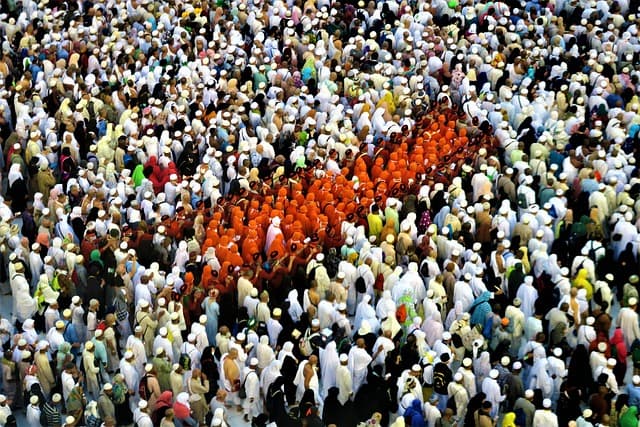
The moulid of Sidi Ibrahim Dessuqi is one of the largest religious gatherings in Africa. The Egyptian government estimates annual attendance at the main moulid between two and four million people over the full week of celebration. To put that in context, the Hajj to Mecca draws roughly two million pilgrims per year. The Dessuqi moulid does not carry the same theological obligation, but it carries comparable devotional intensity for those who attend.
What You Will Find Inside the Shrine Complex
The current mosque and shrine structure is not medieval. What you see today is largely a nineteenth and twentieth century rebuilding of a site that has occupied this ground continuously since the late thirteenth century. Do not come expecting a medieval architectural monument. Come expecting a living religious space where the architecture serves devotion rather than aesthetics.
The mosque is large and green-domed, visible from considerable distance as you approach through the market streets surrounding it. The green dome over the tomb chamber is a deliberate signal: green is the color of the Prophet's family and of Sufi sacred space across the Sunni world, from Morocco to Indonesia. Inside, the floors are carpeted, the air carries incense, and the sound shifts noticeably from the street chaos outside to something quieter and more deliberate.
The tomb chamber of Sidi Ibrahim al-Dessuqi is the emotional center of the complex. The maqam, or shrine enclosure, is draped in green and gold cloth. Visitors press close, some placing their hands on the enclosure, some praying silently, some weeping. This is not performance. Egyptian Sufi devotional culture treats the awliya, the saints, as intercessors whose spiritual presence persists after death. The theological debates about this practice within Islam are long and real, but inside this room, the debate is irrelevant. What you witness is grief and gratitude directed at someone people believe can hear them.
Outside the main tomb chamber, the mosque holds regular Sufi dhikr sessions, particularly on Thursday nights, which are considered especially spiritually significant across Egyptian Sufi tradition. Dhikr, the rhythmic repetition of divine names or Quranic phrases, can last for hours. The sound is unlike anything in formal mosque worship: percussive, breath-centered, collectively produced. If your visit coincides with a Thursday evening, attending even part of a dhikr session will give you more insight into living Egyptian religious culture than any number of ancient sites.
The Market Streets Around the Shrine
The streets radiating outward from the mosque are the secondary reason to visit. They sell religious goods specific to shrine culture: printed images of Sufi saints (Ibrahim al-Dessuqi included), bottles of blessed water or oil, prayer beads in every material from plastic to amber, small amulets, and recordings of dhikr music. The food sellers are also worth your attention. Dessuqi has a local flatbread tradition, and the street food near the shrine runs to ful, ta'amiyya, and grilled liver with spiced tomato, all priced for the local pilgrimage economy rather than tourist margins. A full meal here will cost you EGP 40 to 80.
The Moulid: What It Actually Is
The word moulid translates roughly as birthday celebration, though in Sufi practice it refers to the commemoration of a saint's birth or, more theologically accurately, their birth into the divine presence through death. The Dessuqi moulid follows the Islamic lunar calendar, falling in the month of Sha'ban. The date shifts by approximately eleven days each Gregorian year, so check the specific calendar year before planning.
During moulid week, the city transforms into something that has no easy Western parallel. Sufi orders, the turuq, arrive in organized groups from across Egypt and from Sudan, where the Burhaniyya order has particularly deep roots. Each order camps in designated areas, sets up their own ceremonial space, and conducts their own dhikr traditions. The orders do not all practice identically: some use specific instruments, some use only voice, some incorporate movement that outside observers might describe as trance states.
Arriving during the final night of the moulid, called the laylat al-kabira or great night, means encountering something close to controlled chaos. The crowds are dense. The sound is continuous. The police presence is significant. And the devotional sincerity is total. People have walked, traveled by microbus, come from Sudan by train, to be in this specific city on this specific night. That is not a detail to be romanticized. It is a fact about the weight that Ibrahim al-Dessuqi carries in this part of the world.
The Connections: Sufi Egypt and Its Layers
The Dessuqi shrine sits within a Delta landscape that connects to every period of Egyptian history in ways that are not immediately visible. The western Delta where Kafr el-Sheikh Governorate sits was, during the Pharaonic period, home to the city of Sapi-Res, and later became part of the Ptolemaic agricultural administration. Roman-era papyri found in this region document tax records and land disputes in Greek and Demotic Egyptian simultaneously, a reminder that the Delta was always a place of administrative layering.
By the time of Ibrahim al-Dessuqi's birth in 1255, Egypt was ruled by the Mamluk Sultanate, which had come to power only three years earlier after defeating the Mongol forces of Hulagu Khan at the Battle of Ain Jalut in 1260, one of the few decisive defeats the Mongols suffered anywhere in the world. The Mamluks were themselves former enslaved soldiers, largely of Turkic and Circassian origin, who converted to Islam and became its most effective military defenders in the medieval period. This is the political context in which Sufi orders flourished: Mamluk sultans were often enthusiastic patrons of Sufi shaykhs, seeing in the orders a tool for popular legitimacy and social organization that pure military power could not provide.
The Tanta shrine of Sidi Ahmad al-Badawi, Ibrahim al-Dessuqi's near-contemporary and fellow pole, sits roughly sixty kilometers south in the central Delta. The two moulids draw from overlapping constituencies. Many Egyptian pilgrims attend both in the same year. Understanding Dessuqi in isolation from Badawi, and from the broader Sufi geography of the Delta, is like understanding one instrument without hearing the orchestra.
Common Mistakes
Visiting only during moulid peak without preparation. The moulid is worth attending, but arriving without knowing which nights are which, or without a local contact who can help with orientation, means you will be a confused foreigner in a crowd of hundreds of thousands. Go for the first three days of moulid week rather than the final night if you want the experience without the maximum intensity.
Treating the shrine as a museum. Photography inside the tomb chamber is technically possible but ethically questionable when active prayer is happening. Ask before raising a camera. Many visitors are there for profound personal reasons. Framing them as composition elements is a choice you should make consciously.
Assuming women cannot access the complex. Women visit the Dessuqi shrine in large numbers and have dedicated access areas. The main tomb chamber has sections where both men and women approach, though during peak times the crowd separates somewhat organically by gender near the maqam itself.
Skipping the surrounding Delta context. Most visitors who make it to Dessuqi come solely for the shrine and leave immediately. The Kafr el-Sheikh Governorate has a regional museum in the city of Kafr el-Sheikh itself, containing Delta-specific archaeological material including Ptolemaic and Roman-era finds that are almost never discussed in Cairo-centric Egypt guides. It is EGP 20 to enter (under $1 USD) and it is almost always empty of tourists.
The sound and light comparison trap. Some tour operators sell a version of the Dessuqi moulid as an exotic spectacle packaged for foreign visitors. Avoid any tour that frames the moulid as a performance or that promises VIP viewing positions. The moulid is not staged for you. Attending as a respectful guest costs nothing and requires no intermediary.
Underestimating the Delta heat in summer. The moulid falls in Sha'ban, which in recent years has aligned with July and August in the Gregorian calendar. The Delta in high summer is humid in ways that Upper Egypt is not. Bring water. Dress in breathable, modest clothing. Heat exhaustion in a dense moulid crowd is a real risk.
Expecting a quick visit. The shrine complex is not large, but the experience is not efficient. If you are rushing through in forty-five minutes between two other Delta stops, you will leave with nothing. The place requires you to slow down.
Practical Tips
Dress conservatively and without exception. For women, a headscarf is appropriate inside the mosque. For men, long trousers. Shoulders should be covered for both. This is not a suggestion for foreign visitors specifically; it is how Egyptian visitors also dress at this site.
Leave your shoes at the designated rack before entering the prayer hall. Someone will watch the rack; a small tip of EGP 5 to 10 is standard.
If you speak no Arabic, find a basic phrase before arriving. "Alhamdulillah" as a greeting response and "is-samah" (excuse me) for navigating crowds will serve you well. English is not widely spoken in Dessuqi. French is occasionally understood by older Egyptians from the Delta who were educated in the mid-twentieth century system.
For accommodation, Dessuqi itself has modest guesthouses rather than hotels. During moulid, these fill weeks in advance and prices roughly triple. Most visitors traveling from Cairo do the trip as a day trip from Alexandria (90 minutes by microbus) or from Kafr el-Sheikh city. If you are serious about attending the moulid across several days, arrange accommodation in Kafr el-Sheikh city itself and commute to Dessuqi daily.
The shrine's WhatsApp contact for the Burhaniyya order in Egypt circulates through Sufi community networks and can sometimes provide guidance on dhikr session schedules, though this is informal. The Egyptian Ministry of Endowments (Awqaf) website lists official moulid dates, though it is in Arabic only.
The Sidi Ibrahim Dessuqi shrine guide you find in most Western travel resources, if it appears at all, will describe the site in three sentences and move on. Those three sentences cannot carry what this place actually is. Arrive with time, arrive with curiosity, and arrive understanding that you are entering someone else's living devotional world. That is the only preparation that matters.
Frequently Asked Questions
The Weekly Dispatch
More on Egypt, every Friday.
Cultural depth and places most guides never mention.
No spam. Unsubscribe anytime.