Best Time to Visit Egypt: A Month-by-Month Truth
July in Luxor hits 43°C and the temples are yours alone. January in Cairo means queues, cold nights, and half the sites under scaffolding. Neither fact appears in most guides.

Quick Facts
- Best time to visit
- February for best balance of weather, light, and lower crowds. October to November for reliable warmth. Summer (June to August) for empty sites in Upper Egypt if you can manage extreme heat before 10am and after 5pm.
- Entrance fee
- Varies by site: Giza Plateau EGP 360 (approx $12 USD), Great Pyramid interior EGP 600 ($20 USD), Valley of the Kings EGP 240 ($8 USD) for 3 tombs, Karnak EGP 450 ($15 USD), Egyptian Museum EGP 400 ($13 USD). 50% student discount with ISIC card at most state-run sites.
- Opening hours
- Most major sites 6am to 5pm (October to April), 6am to 6pm (May to September). Grand Egyptian Museum 9am to 9pm daily.
- How to get there
- Cairo International Airport served by major international carriers. Airport taxi to downtown EGP 250 to 400 ($8 to $13 USD). Domestic flights Cairo to Luxor EGP 1,200 to 2,500 return ($40 to $80 USD). Watania Sleeper Train Cairo to Luxor EGP 900 to 1,400 first class ($30 to $45 USD).
- Time needed
- Cairo: minimum 3 days. Luxor: minimum 3 days. Aswan: 2 days. Full Nile Valley itinerary including Abu Simbel: 10 to 12 days. Egypt with Sinai and Alexandria: 3 weeks.
- Cost range
- Budget EGP 600 to 1,000 per day ($20 to $33 USD). Mid-range EGP 2,500 to 5,000 per day ($80 to $165 USD). Luxury Nile cruises from $200 USD per person per night in peak season, from $120 USD in summer.
Egypt gets roughly 14 million visitors a year, and the majority of them arrive in the same three-month window: October, November, and March. The result is that the sites those visitors came to experience in solitude are, during those months, the most crowded they will ever be. The calendar advice you have probably read is correct in climate terms and almost useless in experience terms. This is the fuller picture.
Quick Facts
Best overall months: October to November and February to March for a balance of bearable heat, lower crowds than peak, and stable weather. January is technically "peak season" but overrated for reasons explained below.
Entrance fees (vary by site): Giza Plateau: EGP 360 (approx $12 USD); Great Pyramid interior: EGP 600 (approx $20 USD) Valley of the Kings: EGP 240 (approx $8 USD) for three tombs, EGP 100 each additional Karnak Temple: EGP 450 (approx $15 USD) Egyptian Museum, Cairo: EGP 400 (approx $13 USD); Royal Mummies Hall: EGP 600 additional Student discounts are 50% at most state-run sites with a valid ISIC card
Opening hours: Most major sites open 6am to 5pm October through April, 6am to 6pm May through September. The Egyptian Museum in Tahrir closes at 5pm daily; the Grand Egyptian Museum near Giza operates 9am to 9pm with extended Friday hours.
How to get there: Cairo is served by EgyptAir and dozens of international carriers. A taxi from Cairo International Airport to downtown costs EGP 250 to 400 (approx $8 to $13 USD). Uber and Careem operate reliably. For Luxor and Aswan, domestic flights run EGP 1,200 to 2,500 return ($40 to $80 USD); sleeper trains from Cairo to Luxor depart nightly, first-class cabin EGP 900 to 1,400 ($30 to $45 USD).
Time needed: Egypt is not a two-week country if you want to go beyond the surface. Cairo alone rewards three to four days. Luxor needs three. Aswan two. The Western Desert, if you include Siwa, adds five more.
Cost range: Budget traveler EGP 600 to 1,000 per day ($20 to $33 USD) including accommodation, food, and site entry. Mid-range EGP 2,500 to 5,000 per day ($80 to $165 USD).
---
Why When You Go Matters More Than You Think
Egypt sits at the intersection of three climate zones: Mediterranean along the northern coast, desert across the interior, and semi-arid along the Nile Valley. The consequence is that "Egypt" as a weather destination does not exist. Alexandria in January is cold and sometimes wet, with temperatures dropping to 9°C at night. Aswan in January is 24°C at noon, dry and windless. Cairo in June is dusty and 38°C. Luxor in June is 42°C and genuinely uncomfortable between 10am and 4pm. These are not the same country in climatic terms.
The ancient Egyptians understood this. Their calendar was structured around three seasons: Akhet, the flood, when the Nile inundated the fields; Peret, the growing season; and Shemu, the harvest. The flood came in late July and receded by October, which is precisely why that month feels alive along the Nile even now: the agricultural cycle that has not changed in 5,000 years still dictates a kind of seasonal rhythm.
What this means practically: the best time to visit Egypt depends not on a single answer but on what you are going there to see, how you tolerate heat, and whether you want company or solitude.
---
The Honest Season Breakdown
October and November: The Received Wisdom, and Why It Is Half Right
October and November are genuinely good months. Temperatures in Luxor drop from summer highs of 42°C to a comfortable 28 to 33°C. The light in Upper Egypt in November is extraordinary: low-angled, golden, and long. If you are arriving from northern Europe or North America, the warmth feels like relief rather than assault.
The problem is that everyone knows this. Tour groups fill the Valley of the Kings by 8am. The hypostyle hall at Karnak, which contains 134 columns and was designed to make a single human feel cosmically small, becomes difficult to experience as anything other than a crowd management exercise. The hall was built over roughly 150 years by a succession of pharaohs from Seti I through Ramesses II and beyond, each adding columns and carving over their predecessor's name where politically convenient. It deserves more than 20 minutes with 200 strangers.
If you travel in October or November, arrive at every site at opening time. The difference between 6am and 9am at the Valley of the Kings is the difference between standing alone in a tomb decorated with the Book of the Dead and standing in a queue to look at it briefly.
December and January: The Overrated Peak
December and January are marketed as peak season for good reason: Christmas and New Year holidays drive European and American arrivals, the weather in Cairo is mild (16 to 20°C), and the Nile cruise industry runs at full capacity.
Here is what that means on the ground: cruise ships queue at Luxor and Edfu temples, sometimes four or five deep, and the 400 passengers from each vessel all arrive at the same monument within the same two-hour window. The Temple of Horus at Edfu, which is the best-preserved temple in Egypt and therefore worth taking seriously, gets treated as a photo stop between lunch and dinner.
January also carries a specific problem that no brochure mentions: Cairo in January is scaffolding season. Major restoration projects, which slow during the summer heat, accelerate in winter, and it is not unusual to arrive at a site to find a significant facade partially obscured. The colossi of Memnon were under partial scaffolding for restoration work across several recent winter seasons.
For independent travelers with time to be strategic, December to January is the worst value proposition in Egypt. You pay high-season prices for a crowded, occasionally obstructed experience.
February and March: The Undervalued Window
February is Egypt's best-kept seasonal secret, which makes saying so counterproductive, but it is true. Post-Christmas tour groups have gone home. Temperatures in Luxor run 25 to 30°C. The light is already good. The Valley of the Kings at 7am in February has a quality of stillness that November cannot match.
March brings the khamsin, the hot desert wind that carries sand from the Western Desert and can reduce visibility in Cairo to a few hundred meters. Khamsin events typically last two to three days and are largely unpredictable more than 48 hours in advance. They are not dangerous, but they are deeply unpleasant, and they make photography at outdoor sites nearly impossible. Budget a contingency day if you are traveling in March.
April and May: The Competent Traveler's Choice
April and May are when Egypt becomes genuinely interesting to visit if you are not primarily motivated by comfort. Temperatures climb: Cairo reaches 33°C in May, Aswan 40°C. But the crowds thin dramatically. Prices at hotels drop. The Nile in April has a particular clarity, and the agricultural fields along the river are green in a way that only exists during the growing season.
The Sinai in April is close to perfect: Red Sea water temperatures hover around 23°C, ideal for diving, and Ras Mohammed National Park, which sits at the tip of the Sinai Peninsula and contains some of the most biodiverse coral reefs in the world, has its clearest visibility of the year. The park was established in 1983 as Egypt's first national park, partly in response to dynamite fishing that had destroyed portions of the reef during the 1970s.
June Through September: The Honest Summer Case
Summer in Egypt is not for everyone, and it should not be sold as such. Luxor in July is genuinely brutal between 10am and 4pm, with temperatures regularly hitting 43 to 45°C and no shade in the Valley of the Kings. Anyone with cardiovascular conditions, young children, or a low heat tolerance should not attempt Upper Egypt in summer.
But for travelers who can operate from 5am to 9am and again from 5pm to sunset, summer in Luxor is extraordinary. The temples are nearly empty. The light at dawn on the columns of Karnak, with no one else present, is the experience most visitors are trying to find in November but rarely do. Hotel rates in Luxor in July are sometimes 60% lower than in December. A room that costs $150 in peak season costs $60 in summer.
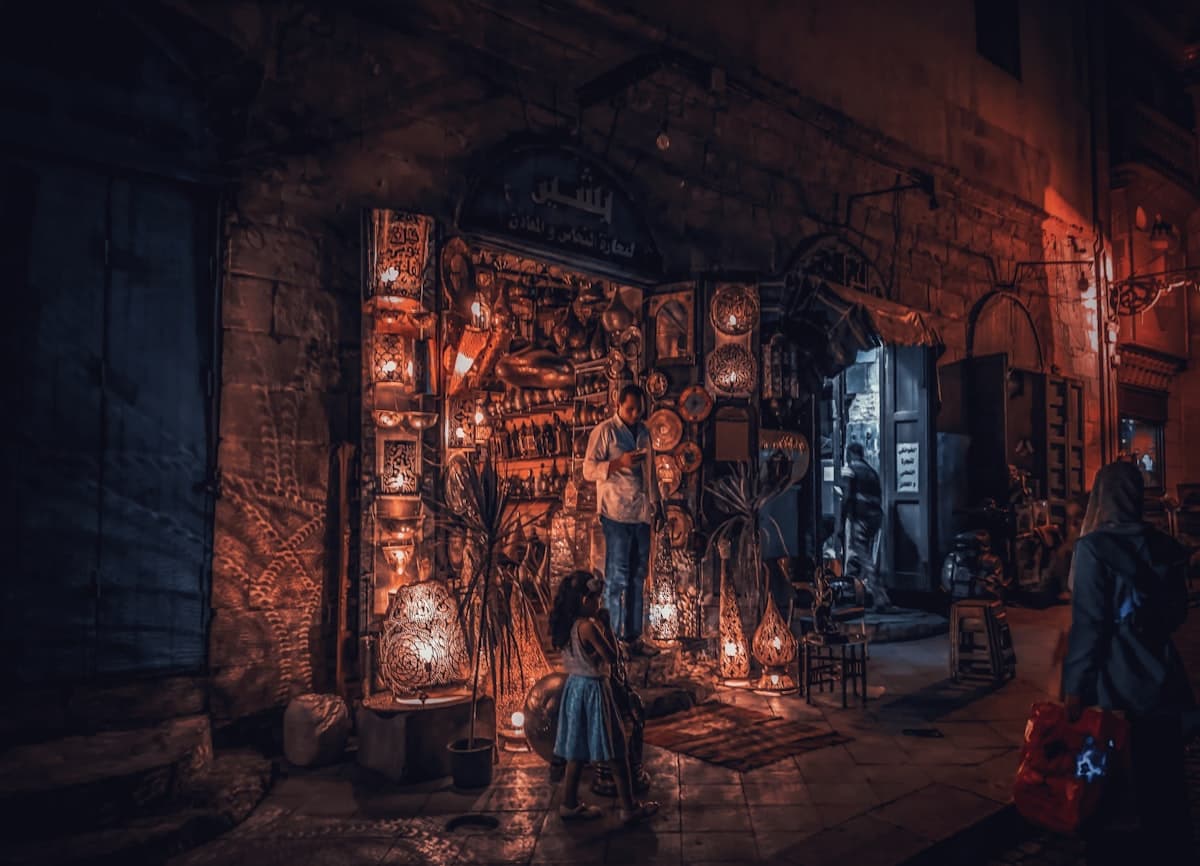
Cairo in summer is more manageable than Luxor. The city does not stop for the heat; it reorganizes around it. Cairenes eat dinner at 11pm and stay out until 2am. The Khan el-Khalili bazaar, which has operated as a commercial center since the Mamluk sultan Barquq established it in 1382 on the site of a Fatimid royal cemetery, is busiest at midnight during summer. That version of Khan el-Khalili, lit by lanterns and smelling of oud and roasted corn, is not available in December.
---
The Connections: How Egypt's Calendar Links to Its History
The Islamic month of Ramadan changes date each year relative to the Gregorian calendar, moving approximately 11 days earlier annually. When Ramadan falls in winter months, as it will across several coming years, it creates a genuinely complex travel dynamic: many restaurants close during daylight hours, some sites reduce their hours, and Egyptian hospitality becomes concentrated in the evenings with an intensity that has no off-season equivalent. The iftar meal at sunset, taken in a tent outside a Mamluk mosque in Islamic Cairo, is one of the most specific and unrepeatable experiences Egypt offers. Several travelers I know schedule their visits specifically around Ramadan for this reason.
The Coptic Orthodox calendar maintains its own seasonal rhythms. Coptic Christmas falls on January 7th, and the weeks around it see pilgrimage traffic to the Monastery of Saint Catherine in Sinai, which was established by Emperor Justinian in the 6th century and has operated continuously since 565 AD, making it one of the world's oldest continuously inhabited monasteries. The chapel inside the monastery walls is built over what the Coptic tradition identifies as the site of the Burning Bush. The monastery's library contains the second-largest collection of early Christian manuscripts in the world, after the Vatican.
---
Common Mistakes
Arriving in Luxor at noon in any season. Overnight trains from Cairo arrive at 7am. Flights from Cairo arrive whenever you book them. Always choose morning arrival. The two hours between 6am and 8am are worth more in Luxor than the entire afternoon.
Booking a Nile cruise in December or January without checking ship density. During peak season, the locks at Esna have queues of cruise ships waiting to pass. A four-day cruise that should include leisurely temple visits can become a schedule hostage. Check with operators about how many ships are passing the same route simultaneously.
Skipping the Luxor sound and light show. This is not a mistake in the sense that it costs you an experience. The Karnak sound and light show costs EGP 400 and delivers a 45-minute narration you could read in ten minutes. Skip it and use the evening to eat at one of the Nile-facing restaurants on the corniche, where the same temple is visible across the water for free.
Underestimating Cairo. Most itineraries give Cairo one or two days before rushing south. The Egyptian Museum alone contains over 120,000 objects, the majority of which have never been studied by a Western scholar. The Coptic neighborhood of Old Cairo, built over a Roman fortress whose circular towers are still visible in the Church of St. Sergius, rewards a full day. Islamic Cairo's medieval streetscape is the largest surviving medieval urban environment in the world. One day in Cairo is not a visit; it is a gesture.
Overestimating Abu Simbel as a day trip from Aswan. The convoy from Aswan departs at 4am. You arrive at 7am, have roughly two hours before the heat and other groups make the experience unpleasant, and return to Aswan by 2pm exhausted. The temples are genuinely worth seeing: Ramesses II had them constructed at a location specifically calculated so that sunlight penetrates the inner sanctuary and illuminates the statues on two specific dates each year, February 22nd and October 22nd, believed to correspond to his birthday and coronation. That precision, across 3,200 years, is worth honoring with more than two hours. Fly to Abu Simbel, stay one night, and arrive at the temple at dawn without having woken at 3am.
Ignoring Alexandria entirely. Every Egypt itinerary ends in Aswan or Cairo. Alexandria, which was the intellectual capital of the ancient world for three centuries and where the Royal Library once held an estimated 400,000 scrolls, gets treated as optional. The Catacombs of Kom el-Shoqafa, where Greek, Roman, and Egyptian burial iconography appear on the same wall because three generations of a single Alexandrian family could not decide which afterlife they believed in, are among the most genuinely strange archaeological sites in the country. Two hours from Cairo by train. Almost never crowded.
---
Practical Tips
Book internal flights and Nile cruises at least six weeks in advance for October through March. For summer travel, two weeks is usually sufficient. The sleeper train from Cairo to Luxor is operated by Watania Sleeper Trains; book online at wataniasleepers.com or through a local agent. First-class cabins include dinner and breakfast and are perfectly adequate.
For the Western Desert, including the White Desert and Siwa Oasis, October through February is non-negotiable. Summer temperatures in the desert interior reach 48°C and camping, which is the primary way to experience the White Desert properly, becomes life-threatening.
Carry cash in Egyptian pounds. Many sites do not accept cards, and the exchange rate at official exchange offices in airports and hotels is close to the street rate since the pound's liberalization. ATMs in Cairo, Luxor, and Aswan are reliable; in Siwa and some rural areas they are not.
For photography, the light in Upper Egypt is best in the first 90 minutes after sunrise and the 45 minutes before sunset. Midday light in any season bleaches the sandstone to near-white and flattens the relief carvings entirely. Plan site visits accordingly and do not let a tour itinerary force you onto the temple floor at 11am if you have any choice.
Frequently Asked Questions
The Weekly Dispatch
More on Egypt, every Friday.
Cultural depth and places most guides never mention.
No spam. Unsubscribe anytime.