Coptic Christianity Egypt History Guide: The Faith That Survived
Coptic Christianity predates Islam in Egypt by six centuries. The church that sheltered the Holy Family still holds weekly Mass. Most tourists walk past it.

Quick Facts
- Best time to visit
- October through March. Coptic Christmas (January 7) and Easter are worth scheduling around for the liturgical experience.
- Entrance fee
- Coptic Museum EGP 200 (approx $4 USD), students EGP 100. Most churches free, donation of EGP 20 to 50 appropriate.
- Opening hours
- Coptic Museum daily 9am to 5pm, closed Friday 11:30am to 1pm. Most churches daily 9am to 4pm, variable during Holy Week.
- How to get there
- Cairo Metro Line 1 to Mar Girgis station, EGP 10 flat fare. Taxi from downtown Cairo EGP 60 to 100 depending on traffic.
- Time needed
- 4 hours minimum for main sites. Full day recommended. Add half a day if combining with the Citadel or Khan el-Khalili.
- Cost range
- Budget EGP 400 to 700 per person including transport, entrance, and lunch. Mid-range EGP 1,200 to 2,000 with a licensed Coptic guide.
Christianity arrived in Egypt before it reached Rome. The Apostle Mark founded the church in Alexandria around 42 AD, roughly two decades before Paul wrote his letter to the Romans. That is the baseline fact the Coptic Christianity Egypt history guide most visitors carry never mentions. Egypt did not convert to Christianity. Egypt was Christian before most of Europe had heard the word.
The Copts, whose name derives from the Greek "Aigyptos" and then Arabic "Qibt," are not a minority community that appeared after the Arab conquest. They are the direct descendants of pharaonic Egypt, the last living link to a civilization that predates the Greeks. When you stand inside a Coptic church in Old Cairo and hear the liturgy in Bohairic Coptic, you are hearing a language whose grammar was set before the birth of Christ. The script uses Greek letters with seven additional characters borrowed from Demotic, the administrative language of late-period pharaohs.
This is not a religious guide. It is a guide to understanding Egypt completely, which is impossible without understanding the Copts.
Quick Facts
Best time to visit: October through March. Coptic sites are often indoors or in shaded compounds, but Cairo's summer heat makes the walk between churches and museums genuinely difficult. Coptic Christmas falls on January 7 and Easter on a different calendar from Western Easter: experiencing either in Old Cairo is worth building a trip around.
Entrance fees: The Coptic Museum costs EGP 200 (approximately $4 USD), students EGP 100. The Hanging Church and most active churches are free to enter, though a donation of EGP 20 to 50 is appropriate. The Church of Abu Serga (Saint Sergius) is free. Ben Ezra Synagogue, often visited alongside Coptic sites, costs EGP 50.
Opening hours: The Coptic Museum opens daily 9am to 5pm, closed Friday 11:30am to 1pm for prayers. Most churches are open daily 9am to 4pm, though hours vary around religious festivals. Always confirm before visiting during Holy Week.
How to get there: Take the Cairo Metro Line 1 to Mar Girgis station (EGP 10 flat fare anywhere on the network). The station opens directly onto the Roman fortress of Babylon and the entrance to the Coptic quarter. From downtown Cairo this is a 15-minute ride that costs less than a glass of tea in a tourist cafe.
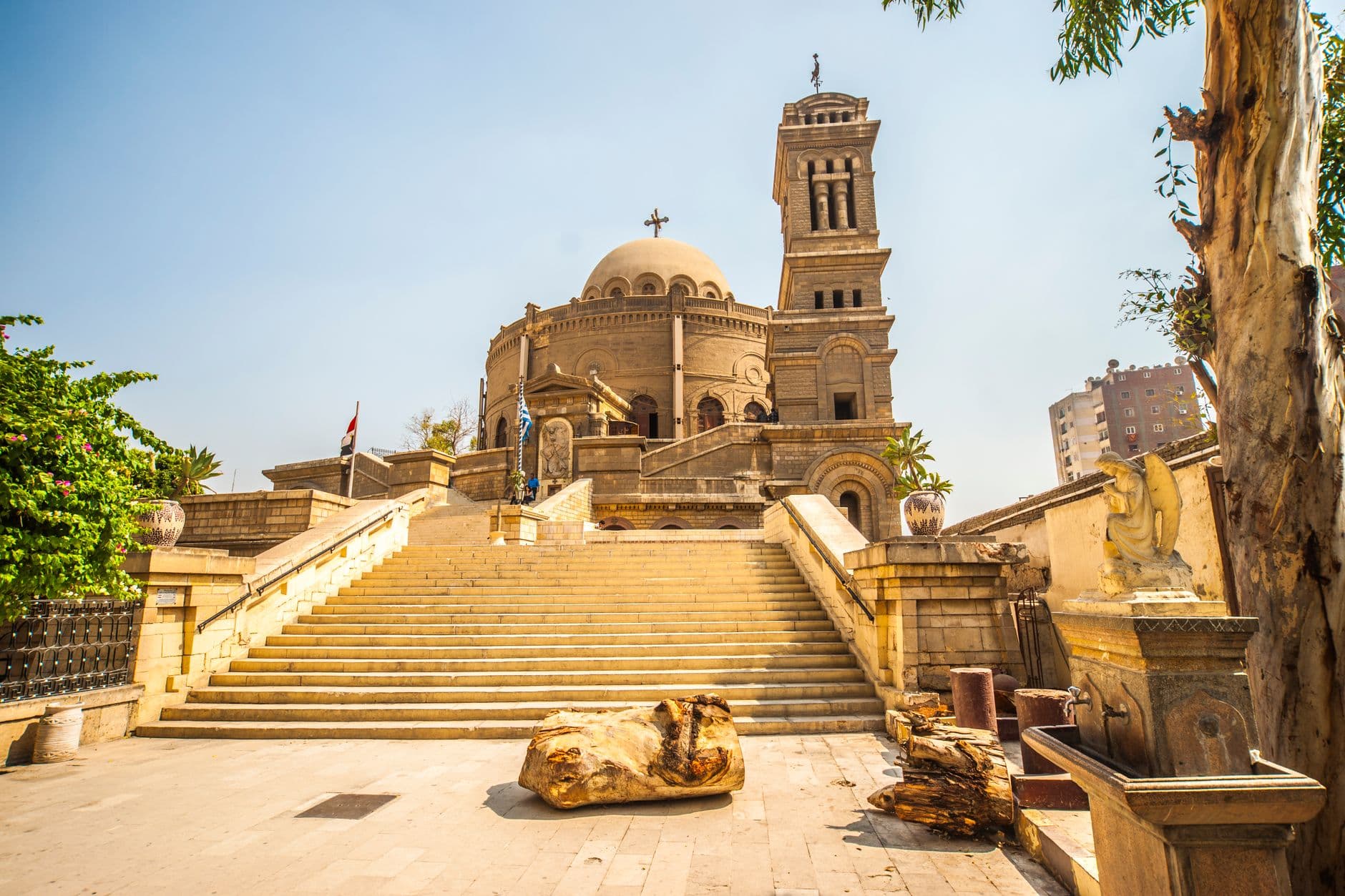
Time needed: Half a day for the Coptic Museum and three to four main churches. A full day if you add the Ben Ezra Synagogue, the Greek Orthodox Church of St. George, and lunch at one of the small restaurants inside the compound.
Cost range: Budget EGP 400 to 700 per person including transport, entrance, and lunch. Mid-range EGP 1,200 to 2,000 if you add a licensed Coptic guide, which is genuinely worth it here in a way it is not always worth it elsewhere.
Why This Place Matters
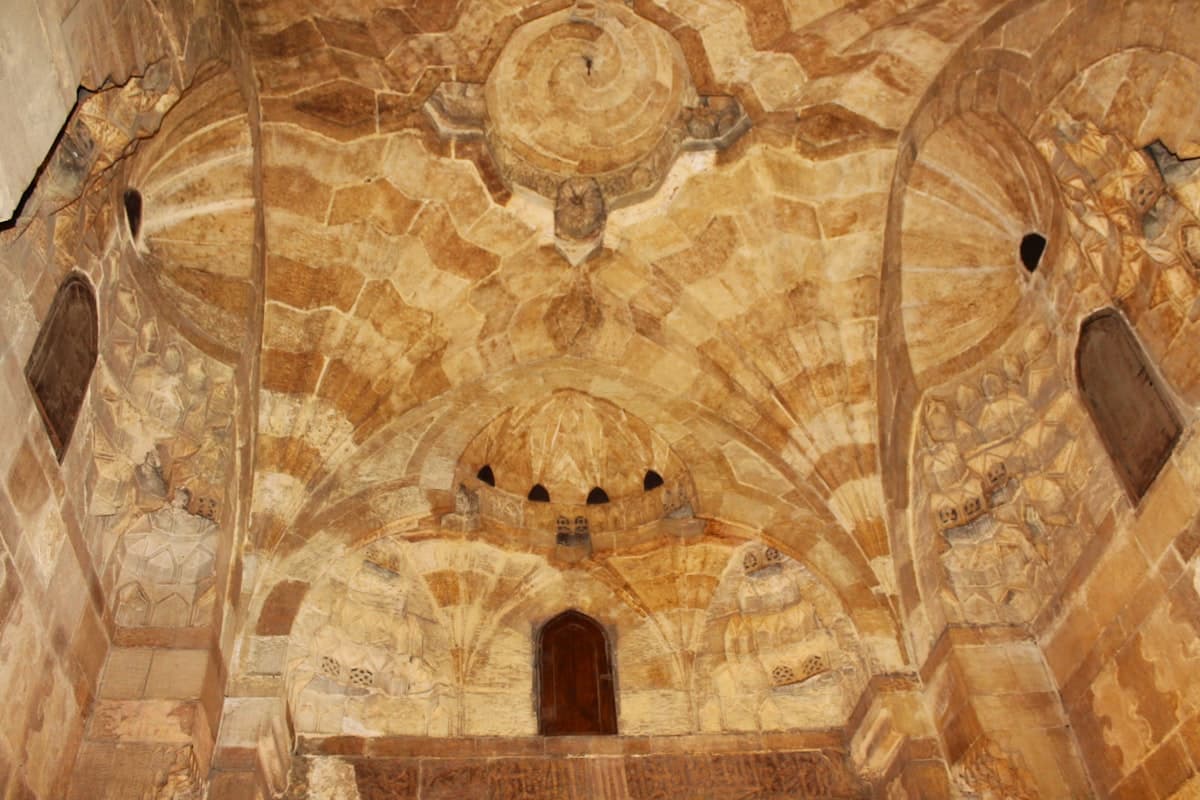
Old Cairo, known in Arabic as Masr al-Qadima, sits on top of the Roman fortress of Babylon, which itself was built on an earlier Persian fortification from the sixth century BC. The Romans expanded it around 30 BC after Augustus defeated Cleopatra. The Copts built their earliest churches inside its walls because the Roman fortification offered protection. The Hanging Church, Al-Muallaqah, is named for the fact that its nave is literally suspended over the southern gatehouse towers of that Roman fort. You are standing on Rome while praying in a church that predates Islam by six centuries.
The Arab general Amr ibn al-As conquered Egypt in 641 AD. He camped directly adjacent to the Babylon fortress, and his negotiations with the Coptic Patriarch Cyrus effectively handed him the country without a prolonged siege. The Copts were not passive victims of this conquest: many welcomed Arab rule as relief from Byzantine religious persecution, because Constantinople had been forcibly imposing Chalcedonian theology on the Coptic church since 451 AD. The theological dispute was about the nature of Christ, whether he had one nature (miaphysite, the Coptic position) or two (the Chalcedonian position). Egypt suffered two centuries of Byzantine-imposed religious violence over this question before the Arabs arrived.
That context matters because it explains why Coptic culture survived as coherently as it did. The Arabs, at least initially, left the church alone.
What You Will Actually See
The Coptic Museum
Opened in 1910 by Marcus Simaika Pasha, the Coptic Museum holds the world's largest collection of Coptic art and artifacts: over 16,000 objects across two buildings. The new wing, added in the 1940s, is built into the Roman towers themselves. Stand at the right window on the upper floor and you are looking down into the actual Roman gatehouse.
The collection rewards slow attention. The textiles are extraordinary: fourth and fifth century linen and wool pieces with figural weaving that shows pharaonic motifs transforming into Christian iconography in real time. Ankh crosses becoming crux ansata. Isis nursing Horus becoming Mary nursing Christ. Scholars have debated for decades whether these visual parallels are coincidental or deliberate transmission. The textiles suggest the latter.
The most important object in the museum is arguably the Nag Hammadi Codices, or rather the display materials explaining them, since the codices themselves are at the Egyptian Museum. In 1945, a farmer near Nag Hammadi in Upper Egypt unearthed thirteen leather-bound papyrus books dated to around 350 AD. They contained 52 texts, including the Gospel of Thomas, a collection of sayings attributed to Jesus that does not appear in the canonical New Testament. The codices were Gnostic texts, part of a theological tradition the emerging orthodox church had declared heretical. Someone buried them, probably a monk from the nearby Pachomian monastery at Chenoboskion, almost certainly to protect them from destruction. They survived 1,600 years in a jar.
The Churches
The Hanging Church is the most visited and, honestly, the most beautiful. Its interior uses a wooden roof shaped like an inverted ark, supported on columns of different heights and materials, some pharaonic, some Roman, some Byzantine. The iconostasis, the carved wooden screen separating nave from sanctuary, dates to the 13th century and uses inlaid ivory in geometric patterns that are visually indistinguishable from the woodwork you will see in contemporary Mamluk mosques. The craftsmen were sometimes the same people.
Do not skip the Church of Abu Serga (Saint Sergius and Bacchus) for the Hanging Church's more famous interior. Abu Serga is older, plainer, and contains a crypt where, according to Coptic tradition, the Holy Family rested during their flight into Egypt. The tradition is specific: they stayed 74 days in Egypt, traveling from Sinai through the Delta to Assiut in Upper Egypt and back. The flight into Egypt route is documented in Coptic religious texts and matches actual geography. Whether you hold this story as history or theology, the crypt itself dates to at least the fourth century, and the water that rises in it during Nile flood season still forces the church to periodically close its lowest level.
What Most Visitors Walk Past
The convent of Saint George (Mari Girgis) sits above the Church of St. George and is still an active convent. If you knock at the right door, a nun will sometimes show you the chain room, where a tradition of wrapping worshippers in chains as an act of empathy for the saint's martyrdom is still practiced. It is not performed for tourists. But if you arrive quietly, respectfully, and not as part of a tour group, you may be invited to witness something that has no equivalent anywhere else in Christian practice.
The graffiti on the walls of the compound's older structures is also worth examining. Some of it is medieval Coptic, names of pilgrims scratched into plaster. You are looking at the Twitter of the 11th century.
The Connections

Monasticism as a global Christian practice was invented in Egypt. Saint Anthony the Great, born in Middle Egypt around 251 AD, retreated to the desert around 270 AD and established the model that every subsequent monastic tradition, from the Benedictines to the Jesuits, traces back to his example. The Monastery of Saint Anthony in the Eastern Desert, roughly four hours from Cairo, is still active, still holds his relics, and still receives novice monks who follow a rule of life recognizably descended from Anthony's own. When a Trappist monk in Kentucky observes the canonical hours, he is practicing a rhythm invented by an Egyptian peasant in the third century.
The connection between Coptic Egypt and Islamic Egypt is architectural as well as historical. The Fatimid dynasty that founded Cairo in 969 AD brought artisans from across the Islamic world, but Coptic craftsmen were already here and already expert in wood carving, textile production, and stone cutting. The carved wooden ceilings in the Mosque of al-Azhar and the geometric screens in the Ibn Tulun Mosque owe something to Coptic workshop traditions. The dividing line between Coptic art and early Islamic art in Egypt is more permeable than museum labels suggest.
The Coptic calendar, still used to schedule agricultural seasons in parts of Egypt, is a direct descendant of the ancient Egyptian civil calendar. It has 13 months: 12 of 30 days each and one of five or six days. The Egyptian farmer who plants by the Coptic calendar is using a time system invented by the pharaohs.
Common Mistakes
Visiting on a Friday morning. The Coptic Museum closes from 11:30am to 1pm on Fridays for Islamic Friday prayers (the museum staff are Muslim, the museum is government-run). Many visitors arrive at noon and find the main building shut. Plan around this.
Taking a guided tour from a hotel. Hotel-arranged tours of Coptic Cairo typically spend 45 minutes total, cover the Hanging Church and the museum gift shop, and leave. A licensed Egyptologist with a Coptic specialization, bookable through the Egyptian Tourist Authority or reputable agencies for around EGP 800 to 1,200 for a half-day, will change what you understand about the place permanently.
The sound and light show at the Citadel instead of an evening in Old Cairo. The sound and light show costs EGP 350 and adds nothing you could not learn from reading a Wikipedia article in the dark. An evening in Old Cairo during Coptic vespers, when the churches are lit and largely empty of tourists, costs nothing and is irreplaceable.
Skipping Upper Egypt's Coptic sites. The White Monastery (Deir al-Abyad) near Sohag, built by Saint Shenouda around 440 AD from stones taken from a nearby pharaonic temple, is one of the most important Coptic structures in Egypt and receives perhaps two hundred foreign visitors per year. The Monastery of Saint Simeon in Aswan, partially carved from rock, was home to a community of 300 monks in the 10th century. Both are reachable by train from Cairo and both will give you something Old Cairo, with its tourist infrastructure, cannot.
Assuming the liturgy is inaccessible. Coptic Mass is held in Bohairic Coptic and Arabic, with printed Arabic-English translations available in some churches. Visitors are welcome at most services if they sit quietly at the back. You do not need to be Christian. You do need to cover your shoulders and knees.
Photographing inside churches without asking. Some churches permit photography, some prohibit it near the altar or during services. Ask a deacon or church attendant. They will tell you clearly. Ignoring this rule will get you asked to leave and will make the next visitor's access harder.
Conflating Coptic with Catholic. The Coptic Orthodox Church is not in communion with Rome and never has been. It is theologically and organizationally distinct from the Coptic Catholic Church, a separate body that entered communion with Rome in 1741. When you visit Old Cairo, you are primarily in Coptic Orthodox space. The distinction matters to the people whose church it is.
Practical Tips
Dress conservatively regardless of season. Shoulders and knees covered is the minimum. Women do not need to cover their hair in Coptic churches, though a scarf in your bag costs nothing and signals respect.
The Metro is genuinely the best way to reach Mar Girgis. Cairo traffic on a weekday morning can add 40 minutes to a taxi ride for a journey the Metro completes in 15. The EGP 10 flat fare is one of the great travel bargains in the country.
Bring cash. The Coptic Museum accepts cards at the ticket window but the small vendors and donation boxes inside do not.
If your visit falls near Coptic Christmas (January 7) or Easter, expect the Hanging Church to be genuinely crowded from 10am onward. Arrive before 9am or after 3pm. The quality of light in the late afternoon in the church compound, when the stone catches the western sun and the tourist groups have largely departed, justifies the timing alone.
Water is available from small shops just outside the Metro station. There are no reliable food options inside the compound itself beyond one or two small cafes that keep inconsistent hours. Eat before you arrive or plan to exit for lunch.
The Coptic Christianity Egypt history in these streets is not performed for visitors. It is lived. The people you see are going to church, not to a museum. Treat the space accordingly and you will be welcomed. Treat it as a photo opportunity and you will feel, correctly, like an intruder.
Frequently Asked Questions
The Weekly Dispatch
More on Egypt, every Friday.
Cultural depth and places most guides never mention.
No spam. Unsubscribe anytime.