Coptic Christianity Egypt History Guide: The Oldest Church Tradition in Africa
Egypt's Copts have been Christian since 42 AD, predating Rome's conversion by 270 years. The church they built still exists. Most tourists walk past it.

Quick Facts
- Best time to visit
- October to March for comfortable temperatures. January 7 for Coptic Christmas atmosphere. Avoid the June to August heat if visiting multiple sites in one day.
- Entrance fee
- Coptic Museum: EGP 200 (approx $4 USD), students EGP 100. Hanging Church: free. Church of St. Sergius: free. Ben Ezra Synagogue: EGP 100 (approx $2 USD).
- Opening hours
- Most Old Cairo churches daily 9am to 5pm. Coptic Museum daily 9am to 5pm, closed Friday 11:30am to 1pm. Hours shift during major Coptic festivals.
- How to get there
- Metro Line 1 to Mar Girgis station, EGP 10. Exit is at the Roman towers entrance. Taxi from Downtown Cairo EGP 80 to 150. Ride-share EGP 60 to 100.
- Time needed
- Half day for Old Cairo churches and Coptic Museum. Full separate day for Wadi El Natrun monasteries. Two days to do both properly.
- Cost range
- Old Cairo: EGP 400 to 600 covering entry, transport, and a meal. Adding Wadi El Natrun: EGP 300 to 500 extra in transport. Monasteries have no entry fees.
Quick Facts
Best time to visit: October to March, when Cairo's heat is manageable and Coptic Christmas (January 7) brings extraordinary atmosphere to Old Cairo churches.
Entrance fees: Coptic Museum: EGP 200 (approx $4 USD), students EGP 100. Hanging Church: free. Ben Ezra Synagogue (adjacent, worth including): EGP 100 (approx $2 USD). Church of St. Sergius and Bacchus: free.
Opening hours: Most Old Cairo churches open daily 9am to 5pm, though hours shift during Coptic religious festivals. The Coptic Museum closes Fridays 11:30am to 1pm.
How to get there: Metro Line 1 to Mar Girgis station (EGP 10 per trip), the exit deposits you directly at the Roman towers that frame the entrance to Old Cairo. Taxis from Downtown Cairo cost EGP 80 to 150 depending on negotiation. Ride-shares run EGP 60 to 100.
Time needed: Half a day minimum for Old Cairo. A full day if you combine it with the Coptic Museum and the Monastery of Saint Macarius, which requires a separate day trip to Wadi El Natrun.
Cost range: Old Cairo itself is nearly free. Budget EGP 400 to 600 for entry fees, transport, and a meal. Adding desert monastery visits: EGP 300 to 500 in transport on top.
---
Why This Matters: The Church That Predates Rome's Conversion
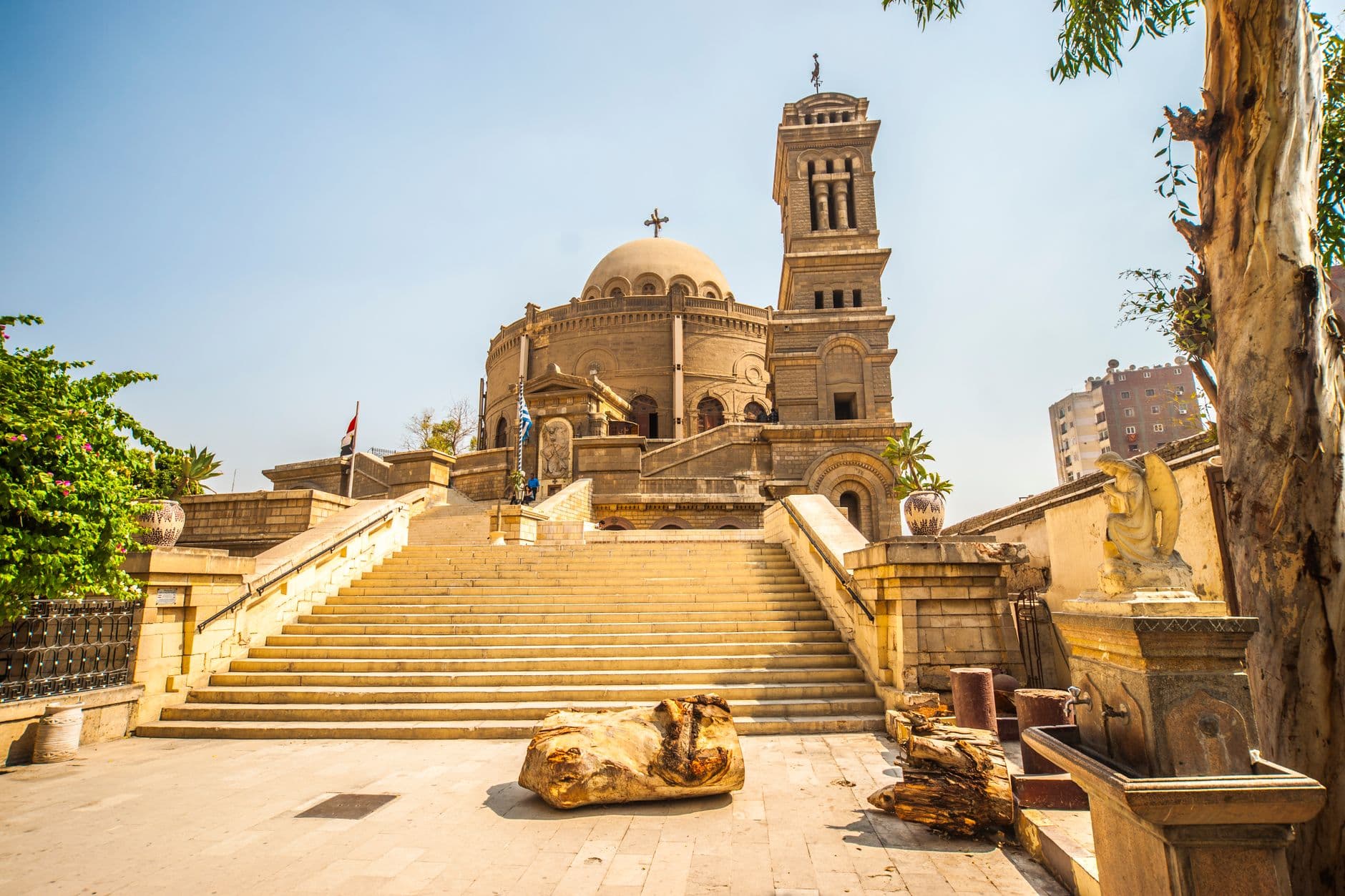
Saint Mark arrived in Alexandria in 42 AD and was martyred there in 68 AD. By that point, the church he founded had already spread along the Nile. Rome would not officially adopt Christianity for another 270 years. This means Coptic Christianity is not a branch of Roman Catholicism that wandered south. It is a separate, older lineage, with its own patriarch, its own liturgical language derived directly from ancient Egyptian, and a theology that diverged from Rome and Constantinople at the Council of Chalcedon in 451 AD over a dispute about whether Christ had one nature or two.
The Copts said one. The rest of the Christian world said two. The Coptic Church has held its position ever since, which makes it one of the only pre-Chalcedonian churches still functioning at scale anywhere on earth.
This is the Coptic Christianity Egypt history guide that most tours skip past. They show you the churches as architecture. They rarely explain that the Coptic liturgy, chanted in the same churches where it has been chanted for sixteen centuries, contains phonetic echoes of the language the builders of the pyramids spoke. Coptic is ancient Egyptian written in Greek letters with a handful of borrowed Greek words. When the priest chants at the Church of Abu Serga on a Sunday morning, the vowel sounds in his mouth are the closest thing alive to what Ramesses II's scribes heard.
---
Old Cairo: What You Are Actually Walking Through
The neighborhood called Coptic Cairo or Old Cairo sits inside a Roman fortress called Babylon, built by Emperor Diocletian around 300 AD to control river traffic and suppress the region's persistent Christianity. The irony is complete: the fortress built to contain Christians became their neighborhood. The Roman towers still stand. You walk through them to reach the churches.
The Hanging Church, or Al-Moallaqa, gets the most attention and partly deserves it. It was built in the 4th century over the gatehouse of the Roman fortress, suspended above the older structure, which is why it hangs. Its nave is divided by twenty-four columns representing Christ and his apostles, and the pulpit rests on thirteen columns representing Christ and the twelve apostles minus Judas. One column is slightly shorter than the others. The Copts say it represents Judas. Egyptologists say it is a structural variation. Both can be true.
What most visitors miss is the Church of Saint Sergius and Bacchus, a five-minute walk from the Hanging Church. It was built over the crypt where tradition holds that the Holy Family sheltered during their flight into Egypt, a flight documented in Matthew 2:13 that the Copts take with intense geographic specificity. The crypt floods seasonally from the Nile water table. You can descend into it when the water is low. The smell of damp limestone and old incense in that underground space is unlike anything else in Cairo.
The Coptic Museum adjacent to the churches holds 16,000 objects and is badly undervisited. Its wooden screens from the 7th century, its textile fragments showing saints painted in a style that is simultaneously Byzantine and Pharaonic, and its collection of Gnostic Nag Hammadi texts give you the intellectual architecture that the churches themselves can only gesture toward. Spend an hour here before entering the churches and everything shifts.
---
The Desert Monasteries: Where the Tradition Was Preserved
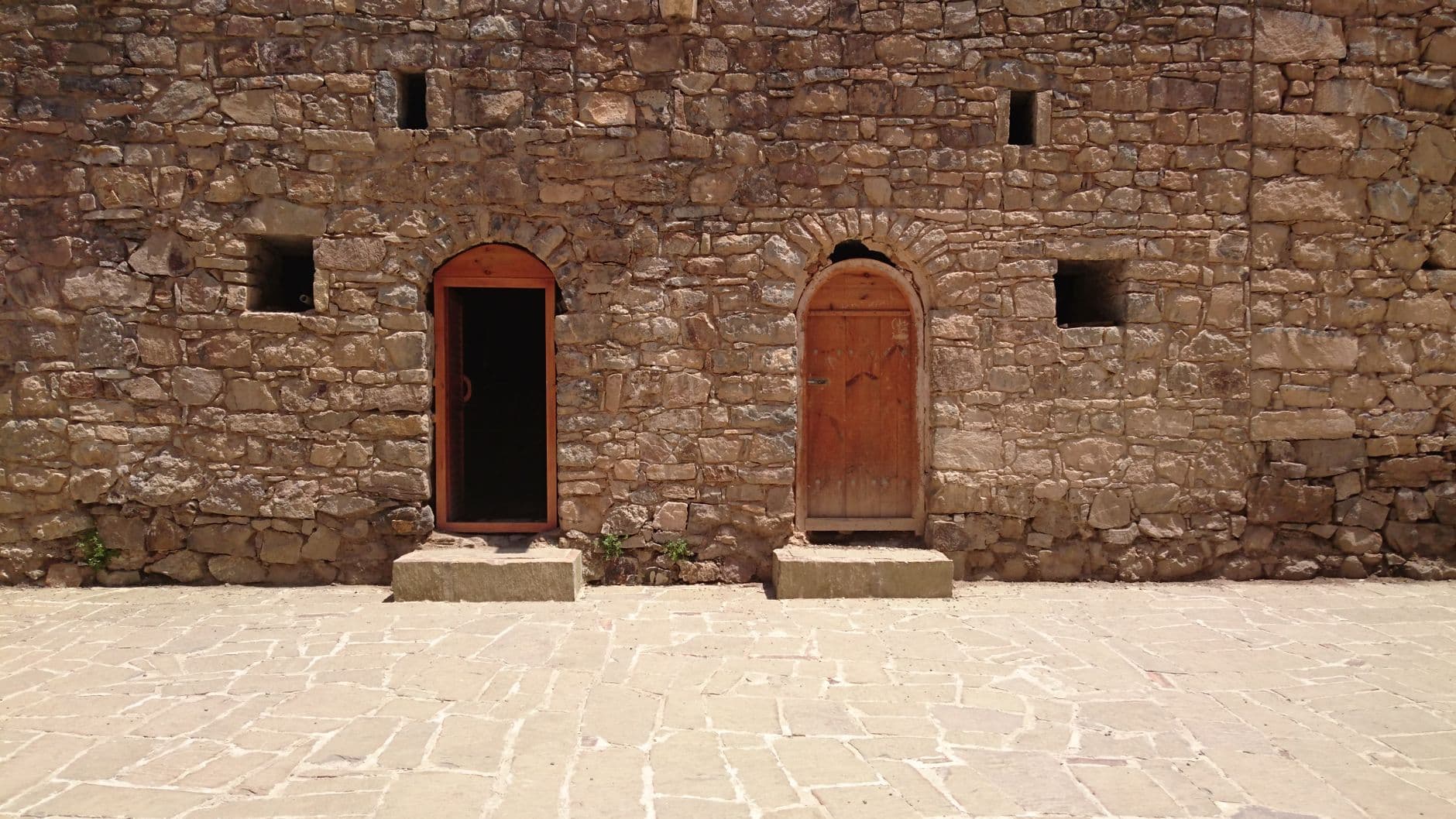
Egypt invented Christian monasticism. Saint Anthony of Egypt retreated to the Eastern Desert around 270 AD, roughly thirty years before Constantine legalized Christianity in Rome, and established the model of solitary contemplative life that would eventually produce every monastery in Europe. Saint Pachomius, in Upper Egypt around 318 AD, went further and created communal monasticism, writing the first monastic rule that Benedict of Nursia would later adapt into the Rule of Saint Benedict, the foundational document of Western European monastic life.
The Monastery of Saint Macarius the Great in Wadi El Natrun, roughly 110 kilometers northwest of Cairo on the desert road to Alexandria, has been continuously inhabited since the 4th century. It survived Arab conquest, Bedouin raids, a period in the 9th century when the entire monastery was destroyed and rebuilt, and the general indifference of modernity. Today it houses around 120 monks. You can visit on Fridays and Sundays. The church inside contains what the monks identify as the relics of forty-nine martyred monks killed by Berber raiders in 444 AD. The mummies of three early patriarchs rest in a side chapel, preserved by the desert air, their faces wrapped but their posture still suggesting individual people who died at specific moments and were placed here by specific hands.
Wadi El Natrun deserves a full separate day from Cairo. Shared taxis leave from Turgoman bus station for around EGP 50 to 80. The journey takes ninety minutes. There are four monasteries in the valley. Saint Macarius is the most historically significant. Deir Anba Bishoi is the most visited and the least rewarding for that reason.
---
The Connections: Nothing in Egypt Is Only One Thing
The Ben Ezra Synagogue inside Old Cairo's Coptic enclave was originally a Coptic church, sold to the Jewish community in the 9th century to raise funds to pay a tax imposed by the Tulunid governor Ibn Tulun, the same man whose mosque stands in another part of Cairo and whose spiraling minaret was modeled on the minarets of Samarra in modern Iraq, where he was raised as a Turkish slave soldier. The synagogue's geniza, a storage room for worn-out Hebrew texts, contained 300,000 documents when it was discovered in the 1890s, including letters, contracts, and medical prescriptions that gave historians the most detailed picture ever recovered of medieval Islamic-Jewish-Coptic daily life. The geniza documents are now scattered between Cambridge, Oxford, and the Jewish Theological Seminary in New York.
The Pharaonic connection runs underneath everything. Coptic crosses frequently incorporate the ankh, the ancient Egyptian symbol of life. The Coptic word for God is Noute, directly descended from the ancient Egyptian ntr, which meant divine power. The liturgical calendar the Coptic Church uses is the ancient Egyptian calendar, with its months named after Egyptian gods: Thoth, Hathor, Khoiak. The Copts call it the Calendar of the Martyrs, marking years from Diocletian's persecutions, but its bones are pharaonic. Every Coptic Christmas celebrated on what the Western calendar reads as January 7 is simultaneously a Pharaonic calendar event.
The Islamic conquest of 641 AD is often presented as a rupture. It was not, for the Copts, entirely unwelcome. The Byzantine rulers who controlled Egypt before the Arabs imposed the Chalcedonian theology at sword point. Arab rule, initially, was more tolerant of Coptic practice than Byzantine rule had been. The Coptic patriarch Benjamin I, who had spent ten years hiding from Byzantine persecution, came out of hiding to cooperate with the Arab general Amr ibn al-As. Their meeting is documented in Arabic chronicles and Coptic hagiography simultaneously.
---
Common Mistakes
Visiting only the Hanging Church. It is the most famous and the most crowded. The Church of Saint Sergius and Bacchus, fifty meters away, is older, quieter, and contains the underground crypt that is the whole point of this neighborhood. The Hanging Church is impressive. Abu Serga is haunting.
Going on a Sunday morning without preparing for a service. The churches are active places of worship. Sunday Liturgy at the Hanging Church begins around 7am and runs until 10am or later. You are welcome to observe, but entering during active liturgy means silence, modest dress, and not treating the worshippers as a photographic opportunity. This is not optional politeness. It is the basic condition of entry.
Skipping the Coptic Museum. Most tours walk past it. The entry fee is EGP 200 and the collection is one of the most important in Africa for understanding early Christianity. The Nag Hammadi codices on display here, 4th-century Gnostic texts discovered by a farmer in Upper Egypt in 1945, rewrote scholarly understanding of early Christian diversity. Give it an hour.
Taking a tour that combines Old Cairo with Khan el-Khalili in the same morning. These are not adjacent neighborhoods in spirit or in historical logic. You will rush both. Old Cairo requires slow attention. Book them separately.
The Nile dinner cruise with a Coptic Cairo stop. This is a real product sold by several operators, pairing a thirty-minute walk through the churches with a buffet cruise. It is not worth the EGP 600 to 900 ticket price. The churches deserve more than thirty minutes, and the cruise teaches you nothing you could not learn from reading this article. Skip it.
Assuming all Coptic sites are in Cairo. The White Monastery near Sohag in Upper Egypt, built by Saint Shenouda around 440 AD, is one of the most architecturally significant early Christian buildings in the world, constructed deliberately to resemble an Egyptian temple, with sloping outer walls and a cornice that mirrors Pharaonic design. It is almost entirely unknown to international tourists and completely worth the detour if you are traveling between Luxor and Aswan.
Visiting Wadi El Natrun without calling ahead. The monasteries regulate visitor access during prayer hours and retreat periods. A phone call to Deir Anba Maqar (+20 2 3592 9658) confirms current visiting hours before you make the journey.
---
Practical Tips
Dress conservatively for all Coptic sites: covered shoulders and knees for both men and women. Scarves are available at the entrance to most churches but bringing your own avoids the negotiation.
Photography is generally permitted in the churches when no service is in progress, but ask before raising your camera. The Coptic Museum prohibits photography in some galleries; signage is in Arabic and not always obvious to foreign visitors. When in doubt, ask the attendant.
Coptic Christmas on January 7 and the Easter period (dates vary by the Coptic calendar, usually one to two weeks after Western Easter) bring extraordinary atmosphere to Old Cairo but also larger crowds and adjusted hours. The midnight Christmas mass at Saint Mark's Cathedral in Abbassiya, attended by the Coptic Pope and often by the Egyptian president, is one of the most remarkable events in Cairo's calendar and is open to respectful observers.
The metro to Mar Girgis is the right way to arrive. Traffic in that part of Cairo makes taxis slow and frustrating, and the walk from the metro exit to the Roman towers takes ninety seconds.
Frequently Asked Questions
The Weekly Dispatch
More on Egypt, every Friday.
Cultural depth and places most guides never mention.
No spam. Unsubscribe anytime.