Coptic Christianity in Egypt: A Complete History Guide
Coptic Christians have prayed in Egypt for longer than Islam has existed anywhere on earth. Their oldest church predates the Quran by 500 years. Most tourists walk past it.

Quick Facts
- Best time to visit
- October to March for comfortable temperatures. January 7 (Coptic Christmas) and Coptic Easter (typically April to May) for active liturgical experience.
- Entrance fee
- Coptic Museum: EGP 200 adults, EGP 100 students (approx $4 / $2 USD). Most churches free. Ben Ezra Synagogue: EGP 150 (approx $3 USD).
- Opening hours
- Coptic Cairo churches: daily 9am to 5pm. Coptic Museum: daily 9am to 5pm, closed Fridays 11:30am to 1pm. Wadi Natrun monasteries: generally 9am to 5pm but call ahead.
- How to get there
- Metro Line 1 to Mar Girgis station (approx EGP 8 from Downtown). Taxi from Downtown EGP 50 to 80. Uber EGP 60 to 90. Private car to Wadi Natrun EGP 900 to 1,400 round-trip.
- Time needed
- Coptic Cairo alone: 3 to 4 hours. With Coptic Museum: full day. Wadi Natrun: separate full-day trip. St. Simeon Monastery Aswan: half day from Aswan waterfront.
- Cost range
- Budget EGP 400 to 700 per day including transport and entry. Mid-range EGP 1,200 to 2,000 with guide and lunch.
Quick Facts
Best time to visit: October to March, when Cairo's heat drops to bearable levels and Coptic Christmas (January 7) offers a rare chance to witness liturgy in full.
Key entrance fees: Hanging Church (Al-Muallaqah): Free entry, donations accepted Coptic Museum: EGP 200 adults, EGP 100 students (approx $4 / $2 USD) Ben Ezra Synagogue (within the compound): EGP 150 adults (approx $3 USD) Church of St. Sergius and Bacchus (Abu Serga): Free White Monastery, Sohag: Free
Opening hours: Most Coptic Cairo churches open daily 9am to 5pm. The Coptic Museum opens 9am to 5pm, closed Fridays 11:30am to 1pm. Abu Serga keeps irregular hours; arrive before noon.
How to get there: Metro Line 1 to Mar Girgis station, exit directly into Coptic Cairo. From central Cairo, approximately EGP 8 by metro. Taxis from Downtown run EGP 50 to 80. Uber averages EGP 60 to 90.
Time needed: Coptic Cairo alone requires 3 to 4 hours. Add the Coptic Museum and you need a full day. Extending to Wadi Natrun monasteries requires a separate day trip by car (roughly EGP 800 to 1,200 for a private driver round-trip from Cairo).
Cost range: Budget EGP 400 to 700 per day including transport and entry. Mid-range EGP 1,200 to 2,000 if adding a guide and lunch.
---
Why This Place Matters
Coptic Christianity is not a footnote in Egyptian history. It is the bridge. For roughly six centuries, between the Roman conversion and the Arab conquest of 641 CE, Egypt was one of the most theologically fertile places on earth. Alexandria produced Origen, Clement, and Athanasius, three of the most consequential thinkers in early Christian doctrine. The Nicene Creed, the statement of belief that still defines Christian orthodoxy for two billion people, was shaped in significant part by arguments that came out of Egypt.
The word "Copt" itself tells you something most visitors do not know: it derives from the Greek "Aigyptos," meaning Egyptian. When Arab armies arrived in the seventh century, they called the native Christian population "Qibt," their rendering of the same word. To be Coptic was simply to be Egyptian. The distinction between Copt and Muslim Egyptian came later, slowly, as conversion shifted the religious landscape over centuries. Today's Coptic community, roughly 10 to 15 percent of Egypt's population, is therefore not a religious minority that arrived from elsewhere. They are the oldest continuous residents of the Nile Valley who kept the faith of late antiquity.
The Coptic language, still used in liturgy today, is the last surviving form of the ancient Egyptian language, written in a modified Greek alphabet with seven additional letters taken directly from Demotic script. When a Coptic priest chants in church, the phonemes in his throat are the direct descendants of the language spoken by the builders of Karnak. No other African language has that unbroken a written record.
---
What You Will Actually See in Coptic Cairo
Coptic Cairo is a walled compound in Old Cairo, built on the site of the Roman fortress of Babylon, which the Romans constructed to guard the point where the Nile met the road to the Red Sea. The fortress walls are still partially visible, incorporated into the foundations of several churches. The Hanging Church, Al-Muallaqah in Arabic, is literally suspended: its nave sits atop two of the fortress's old gatehouse towers, which is where it gets the name. This is not a metaphor or a legend. You can walk down into the towers and see the stonework supporting the church floor above you.
The church dates to the late third or early fourth century CE in its original form, making it contemporary with the conversion of Constantine. The current structure reflects renovations from the seventh through thirteenth centuries, but the basic spatial logic, the iconostasis, the wooden screens dividing the nave, the side sanctuaries for different rites, has remained consistent. The screens inside are inlaid with ebony and ivory in geometric patterns that look, to an eye trained on Islamic art, remarkably similar to Mamluk woodwork. This is not coincidence. Coptic craftsmen and Muslim craftsmen worked the same ateliers and traded the same techniques for centuries.
One level below the Hanging Church, the Church of St. Sergius and Bacchus (Abu Serga) contains a crypt that Coptic tradition identifies as the place where the Holy Family rested during their flight into Egypt. Whether or not you accept the theology, the crypt is genuinely old, cut from living rock, and partially flooded with groundwater for most of the year. In spring, you descend into it by ladder. The smell is cold stone and old water. It is one of the few places in Coptic Cairo where the crowds thin out because most tour groups skip it in favor of the Hanging Church above.
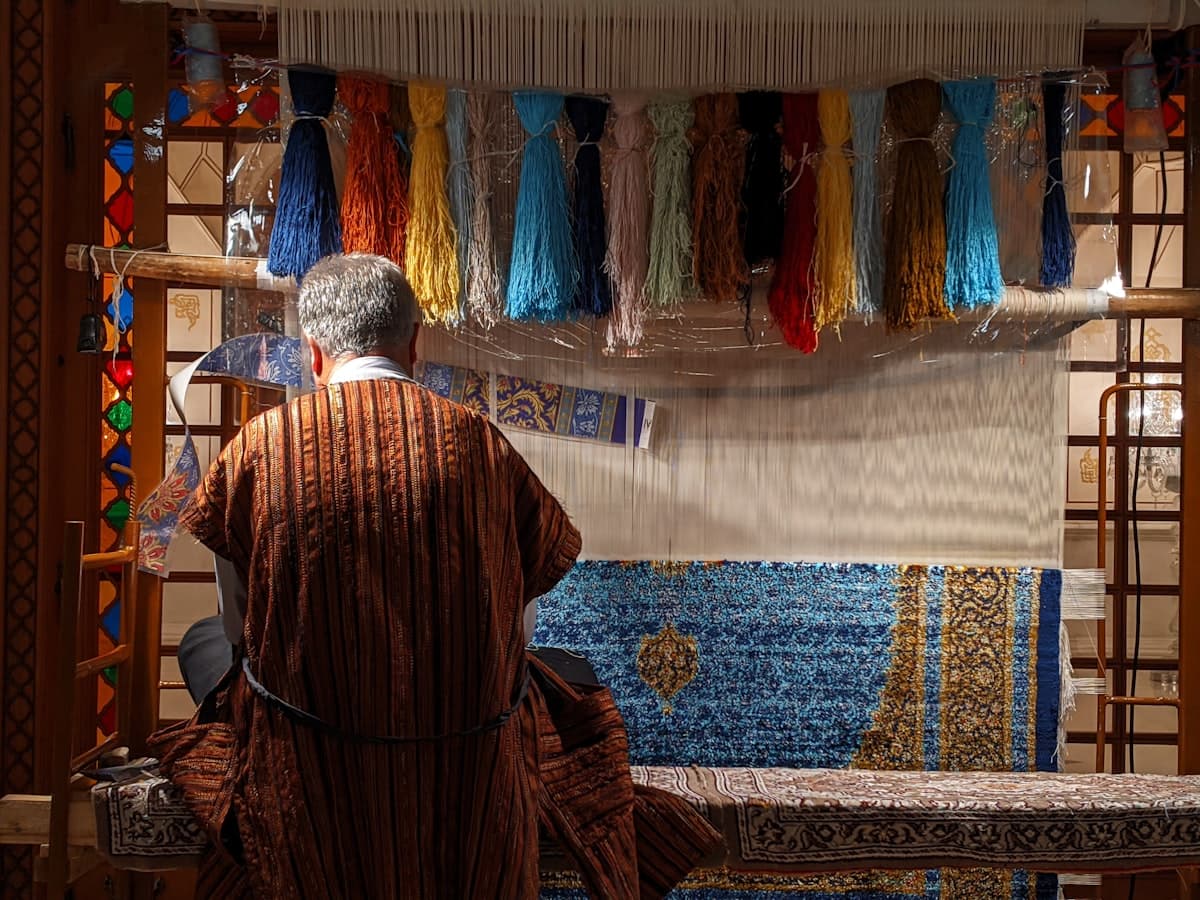
The Coptic Museum, opened in 1910 and renovated in 2006, holds the finest collection of Coptic art outside the Vatican. Its real revelation is Room 3, dedicated to textiles. Coptic weavers between the fourth and eighth centuries produced some of the most technically sophisticated cloth in the ancient world, with portrait medallions woven in wool at a density of up to 80 threads per centimeter. The faces in those medallions look startlingly modern, direct, psychologically present. They are the visual ancestors of Byzantine icon painting, not its imitators.
---
Beyond Cairo: The Desert Monasteries and Upper Egypt
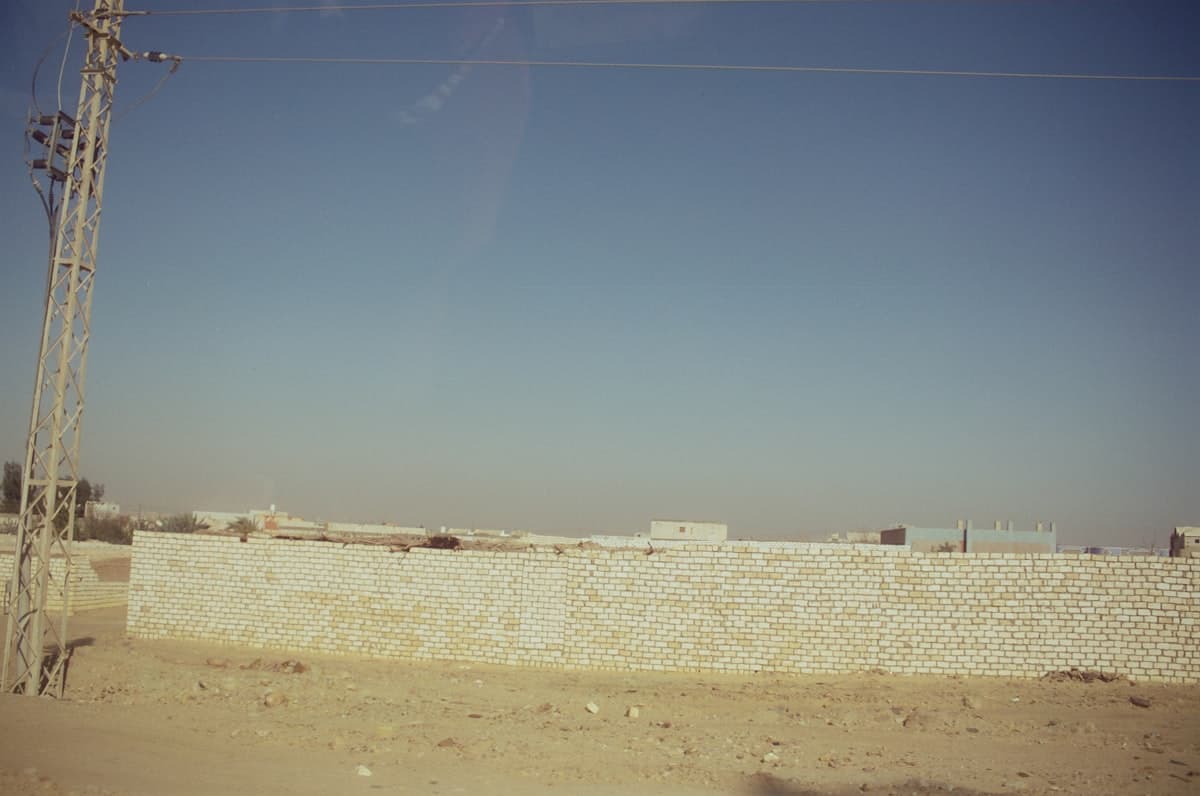
The most significant Coptic sites are not in Cairo. They are in the desert.
Wadi Natrun, a depression in the Western Desert roughly 100 kilometers northwest of Cairo, contains four still-functioning monasteries: Deir Anba Bishoy, Deir Abu Makar, Deir Al-Baramus, and Deir Al-Suryani. These were founded between the fourth and sixth centuries during the period of the Desert Fathers, the Christian monks who essentially invented the concept of organized monastic life. St. Pachomius, an Egyptian soldier who converted around 312 CE, wrote the first monastic rule in the Nile Valley. His rules, transmitted through Benedict of Nursia two centuries later, are the direct ancestors of the rules that govern European monasteries today, including Monte Cassino and Cluny. The entire tradition of Western monasticism traces a direct line back to Upper Egypt.
Deir Al-Suryani (the Syrian Monastery) holds a collection of Syriac and Coptic manuscripts that include a sixth-century Gospel leaf that is among the oldest surviving illustrated Christian manuscripts in existence. The monastery sells it, modestly, in a small gift shop pamphlet. The monks do not emphasize it.
In Upper Egypt, the White Monastery (Deir Anba Shenouda) near Sohag was built largely from recycled blocks taken from a Pharaonic temple, a fact visible in the exterior walls where you can still see cartouches and hieroglyphic reliefs incorporated into the Christian stonework. The abbot Shenouda, who led the monastery in the fifth century, wrote theological texts in Coptic rather than Greek, a deliberate nationalist statement in an era when Greek was the language of ecclesiastical power. He was also capable of extraordinary violence: his monks destroyed a local temple in 401 CE, an act recorded disapprovingly by Cyril of Alexandria.
---
The Connections
Nothing in Coptic Egypt exists in isolation from the larger story of this civilization. The Coptic Museum sits on ground that was a Pharaonic town before it was a Roman fortress before it was a Christian compound before it was embedded in a medieval Islamic city. The church of Abu Serga is built over a Roman foundation that was built over a canal spur from the Pharaonic Period.
The relationship between Coptic and Islamic Egypt is also not one of simple replacement. When Amr ibn al-As conquered Egypt in 641 CE, he did so with significant cooperation from the Coptic population, who had been persecuted by the Byzantine Orthodox establishment over the Christological controversy of whether Christ had one nature or two. The Copts held the minority "Miaphysite" position, condemned at the Council of Chalcedon in 451 CE. Two centuries of Byzantine oppression made Arab rule, initially at least, preferable. The Arab general famously promised to protect the churches, and for the first century of Arab rule, that promise was largely kept.
Fatimid Cairo, the city founded in 969 CE, shows the complexity of this relationship: Fatimid Caliph Al-Hakim bi-Amr Allah ordered the destruction of the Church of the Holy Sepulchre in Jerusalem in 1009 CE and persecuted Copts severely, yet his own mother was a Coptic Christian. His successors reversed most of his edicts. The Mamluk period brought new restrictions. The Ottoman period brought relative stability. Each wave of rulers negotiated a different arrangement with the Coptic community, and the churches, monasteries, and institutions that survive today are the ones that proved flexible enough to endure all of them.
---
Common Mistakes
Skipping the Coptic Museum for the churches. Most visitors walk through the walled compound, photograph the Hanging Church, and leave. The museum is where the intellectual substance lives. Give it two hours minimum.
Visiting on Sunday morning. The churches are active places of worship. Sunday liturgy starts before dawn and can run past 10am. If you arrive at 9am on a Sunday expecting a quiet tourist experience, you will be navigating around several hundred worshippers. This is either exactly what you want or exactly what you should avoid. Know which before you go.
Paying for a guide at the compound entrance. The unofficial guides who approach at the Mar Girgis metro exit are inconsistent in quality and typically add nothing beyond a rehearsed recitation of the same three facts. Hire a proper licensed Egyptologist guide in advance or invest the reading time beforehand.
Taking the sound and light show at any Coptic site. There is one occasionally offered at the Coptic Museum during special events. Skip it. It is a promotional film with pleasant music and no analytical content.
Treating Wadi Natrun as a day trip afterthought. The monasteries close to tourists on Coptic fasting days, which are frequent and not always well-publicized online. Call ahead to Deir Anba Bishoy (002 046 290 3595) the day before you plan to visit. Arriving at a closed gate after a 90-minute drive is a specific kind of misery.
Ignoring Upper Egypt's Coptic sites entirely. Every itinerary funnels tourists to Coptic Cairo and ignores Sohag, Luxor's Coptic remains near the Valley of the Queens, and the ancient monastery of St. Simeon in Aswan. The Monastery of St. Simeon, a fortified sixth-century complex that housed up to 300 monks, is reachable by camel or boat from Aswan's west bank. It is larger than most Crusader castles and almost nobody visits it.
Conflating Coptic with Ethiopian or Eritrean Orthodox Christianity. They share a theological heritage: the Ethiopian and Eritrean Orthodox churches were under the Coptic Patriarch of Alexandria until 1959. But the liturgies, the artistic traditions, and the historical experiences are distinct. Egyptian Copts find the conflation mildly offensive and factually embarrassing.
---
Practical Tips
Dress conservatively at all sites, shoulders and knees covered regardless of gender. This is not a suggestion; several of the smaller churches will turn you away or hand you a robe to wear over your clothes. Accept the robe gracefully.
The light inside the Hanging Church is dim and warm, best photographed in the late morning when sun comes through the high clerestory windows. Tripods are not permitted, but phones handle the low light adequately.
Coptic Christmas falls on January 7 and Coptic Easter moves on a different calendar calculation than Western Easter, typically falling one to five weeks later. Both periods bring heightened liturgical activity. Christmas Eve mass at the Cathedral of St. Mark in Abbasiyya, Cairo's main Coptic cathedral, is broadcast on Egyptian television and draws thousands. Attending requires advance coordination; contact the cathedral office several weeks ahead.
At the Wadi Natrun monasteries, photography of monks without explicit permission is considered intrusive and will damage the relationship between visitor and community that makes access possible. Ask first. The monks are generally welcoming but not obligated to perform for cameras.
For a Coptic Christianity Egypt history guide that goes beyond surface level, the single best English-language preparation is Otto Meinardus's "Two Thousand Years of Coptic Christianity," available at the Coptic Museum gift shop and worth every pound. It is dense, scholarly, and exactly the right level of detail for a serious visitor.
Frequently Asked Questions
The Weekly Dispatch
More on Egypt, every Friday.
Cultural depth and places most guides never mention.
No spam. Unsubscribe anytime.