Coptic Christianity in Egypt: A Cultural History Guide
Coptic Christians have worshipped in Egypt since the 1st century AD, making them older than Islam, older than the Byzantine church, and older than Rome's conversion. Most visitors never learn this.

Quick Facts
- Best time to visit
- October to March for manageable temperatures. January for Coptic Christmas (January 7) and associated liturgies at major Cairo churches.
- Entrance fee
- Coptic Museum: EGP 200 (approx $4 USD), students EGP 100. Hanging Church and most compound churches: free. Ben Ezra Synagogue: EGP 50 (approx $1 USD). Desert monasteries: free, donations welcomed.
- Opening hours
- Coptic Museum: Saturday to Thursday 9am to 5pm, closed Friday. Compound churches: daily 9am to 4pm, with reduced access Sunday mornings during services.
- How to get there
- Cairo Metro Line 1 to Mar Girgis station, EGP 8. Taxi from central Cairo EGP 40 to 70. Ride-share from Giza EGP 80 to 120. Bus to Wadi Natrun monasteries from Turgoman station EGP 30 to 50.
- Time needed
- Coptic Cairo compound alone: 3 to 4 hours. Add Coptic Museum: full day. Wadi Natrun monasteries: full day trip or overnight. Saint Anthony's Monastery near Red Sea: overnight recommended.
- Cost range
- Budget EGP 400 to 700 per day including transport, entry, and food. Mid-range EGP 1,200 to 2,000 with licensed guide. Monastery overnight stays are free or donation-based.
Quick Facts
Best time to visit: October to March, when Cairo's heat is manageable and Coptic festivals cluster around the winter calendar. Coptic Christmas falls on January 7; attending a midnight mass at Saint Mark's Cathedral in Abbasiyya is an experience that requires no ticket and no guide.
Key entrance fees: The Coptic Museum in Old Cairo costs EGP 200 (approx $4 USD), students EGP 100. The Hanging Church (Al-Muallaqah) is free, as are most active churches in the area. The Ben Ezra Synagogue, inside the same walled compound, is EGP 50 (approx $1 USD).
Opening hours: The Coptic Museum opens Saturday to Thursday, 9am to 5pm; closed Fridays. Most churches in the Coptic Cairo compound are open daily from 9am to 4pm, though service schedules can restrict access on Sunday mornings.
How to get there: The Cairo Metro to Mar Girgis station (Line 1, EGP 8) drops you at the compound gate. Taxis from central Cairo run EGP 40 to 70. From Giza, budget EGP 80 to 120 by ride-share.
Time needed: Coptic Cairo alone needs three to four hours. Add the Coptic Museum and you need a full day. Combining with the nearby Amr ibn al-As Mosque and the Fustat archaeological site makes for one of Cairo's most layered single-day itineraries.
Cost range: Budget EGP 400 to 700 per day including transport, museum entry, and a meal. Mid-range EGP 1,200 to 2,000 if adding a licensed guide, which for this subject is worth every pound.
---
Why This Place Matters
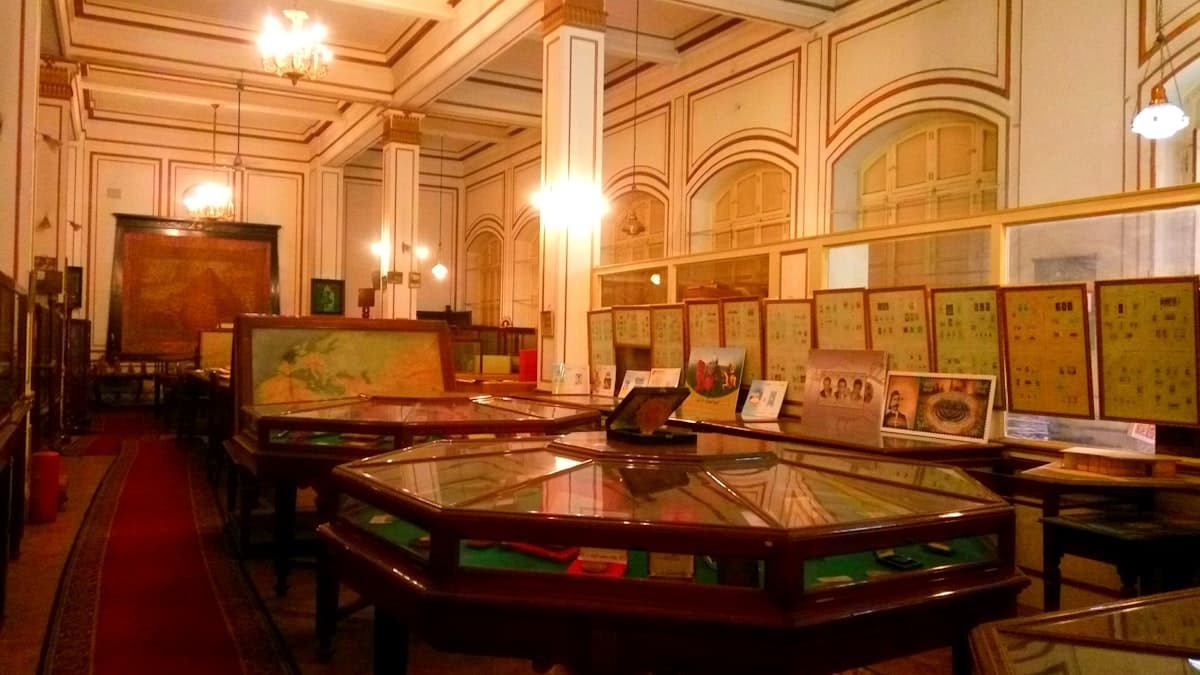
Coptic Christianity is not a medieval survival. It is not a colonial import. It predates the Arab conquest of Egypt by six centuries, predates the Council of Nicaea by nearly three hundred years, and according to its own tradition was founded by Saint Mark the Evangelist in Alexandria around 42 AD, making it one of the oldest continuous Christian communities on earth.
The word "Copt" itself is not a religious term in origin. It derives from the Greek Aigyptos, meaning Egyptian, filtered through Arabic into Qibt. For centuries, to be Coptic simply meant to be Egyptian. When the Arab armies arrived in 641 AD and the country gradually converted to Islam, those who retained the older faith kept the name. They are, in the most literal sense, the indigenous Egyptians.
This is the frame through which the Coptic Christianity Egypt history guide makes sense. These are not a minority community grafted onto Egypt. They are the thread connecting the pharaonic scribes who developed the world's second oldest alphabet to the modern dentist in Heliopolis who attends liturgy in a language closer to ancient Egyptian than anything else spoken on earth. Coptic liturgical language retains grammar and vocabulary from the Demotic script used in Cleopatra's time. When a Coptic priest chants in church today, he is using phonemes that have not otherwise been heard since the Roman conquest.
Approximately 10 percent of Egypt's population, roughly 10 million people, identify as Coptic Christian. They are concentrated in Cairo, Alexandria, and Upper Egypt, particularly around Assiut and Luxor, where some of the oldest monasteries still function as working religious communities.
---
What You Will Actually See in Coptic Cairo
The compound known as Coptic Cairo, or Old Cairo, sits on the foundations of the Roman fortress of Babylon. This is not metaphor. The towers you walk past to enter the Hanging Church are Roman military construction from the first century AD, the same stones that Roman legionnaires touched. The Copts did not build on Roman ruins; they built within them, using the fortress walls as protection during the waves of persecution under various Roman emperors before Constantine.
The Hanging Church, Al-Muallaqah in Arabic, meaning the suspended one, gets its name from the fact that its nave is suspended over the gatehouse of the old Roman fortress. It was constructed in the fourth century, rebuilt substantially in the seventh, and has been in continuous use since. Its wooden iconostasis screens, carved in alternating black and white ivory inlay, date to the eleventh century. The forty-three icons inside are arranged according to a theological program, not decoration. Reading them requires knowing which saints appear together, and why, and what theological argument their proximity makes. Most visitors walk past this in eight minutes. Budget forty.
The Church of Saint Sergius and Bacchus, Abu Serga, sits below street level because the surrounding city has risen around it for seventeen centuries. The crypt beneath it is venerated as the resting place of the Holy Family during their flight into Egypt, a journey that the Coptic tradition maps in extraordinary detail across seventeen specific sites from Sinai through the Delta to Upper Egypt. Egypt is the only country outside the Levant mentioned by name in the New Testament as a place Jesus lived, and Egyptian Christians have been marking that geography since at least the fourth century.
The Coptic Museum holds the world's largest collection of Coptic art: textiles, manuscripts, icons, stonework, and woodcarvings spanning five centuries. The second floor contains pages from the Nag Hammadi Library, the collection of Gnostic texts discovered by a farmer near Luxor in 1945 buried in a sealed jar. These fourth-century manuscripts, including the Gospel of Thomas, sat in Egyptian soil for sixteen hundred years. They are now forty minutes from where they were found, largely ignored by tourists who have not been told they exist.
---
The Desert Monasteries: Where Coptic History Goes Deeper
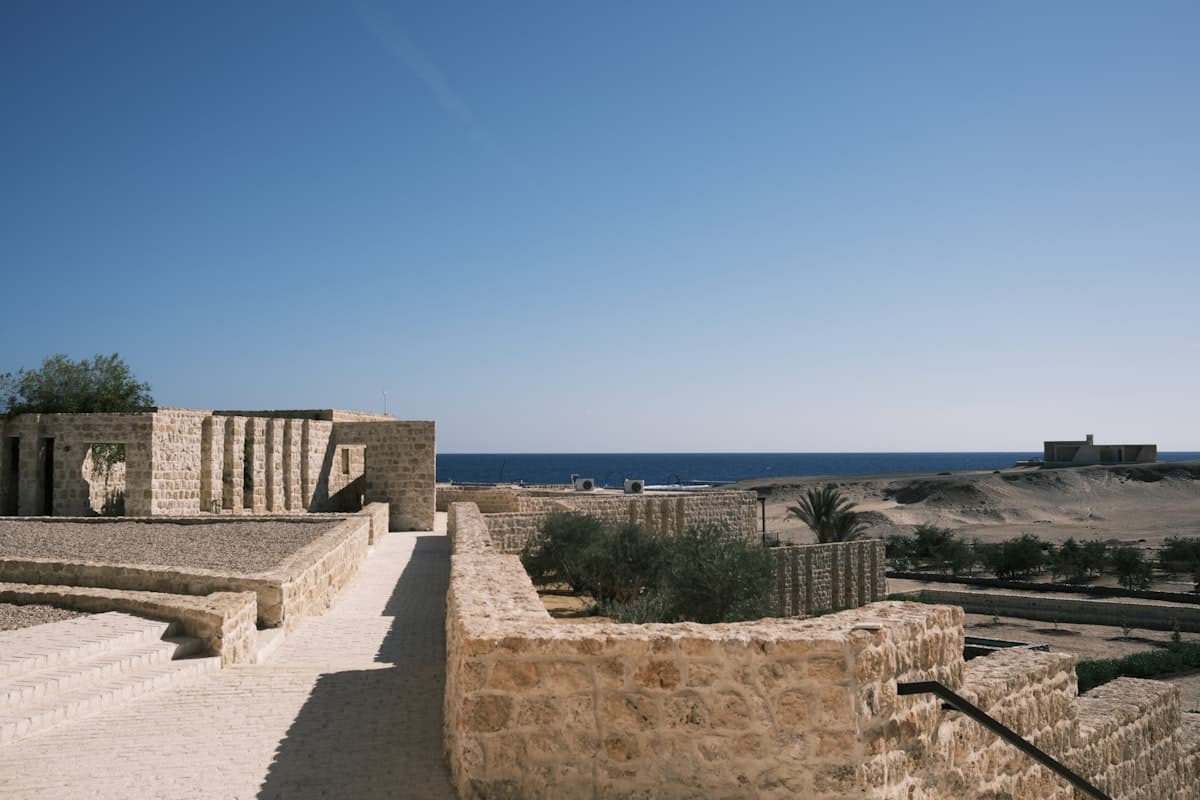
If Coptic Cairo is the front door, the desert monasteries are the interior. And the interior is where the most significant chapter of this story was written.
Egyptian Christianity invented monasticism. This is not a contested claim. The word "monk" comes from the Greek monachos, meaning solitary, and the concept of withdrawal to the desert as a spiritual practice was systematized in Egypt by Saint Anthony of the Desert in the third century and Saint Pachomius in the fourth. Pachomius established the first communal monastery at Tabennisi in Upper Egypt around 320 AD, writing the first monastic rule. Every monastery in Europe, every Benedictine community, every Cistercian abbey, traces its organizational DNA to what Pachomius built in the Egyptian desert.
The four monasteries of Wadi Natrun, situated in the desert depression northwest of Cairo, are the most accessible of the ancient foundations. The oldest, the Monastery of Saint Macarius the Great, was established in the fourth century and has housed the papal see of the Coptic Church since the eighth. Every Coptic Pope, including the current Pope Tawadros II, has emerged from its monastic community. The library at Saint Macarius holds thousands of manuscripts, some dating to the fifth century, in Coptic, Arabic, Syriac, and Ethiopic.
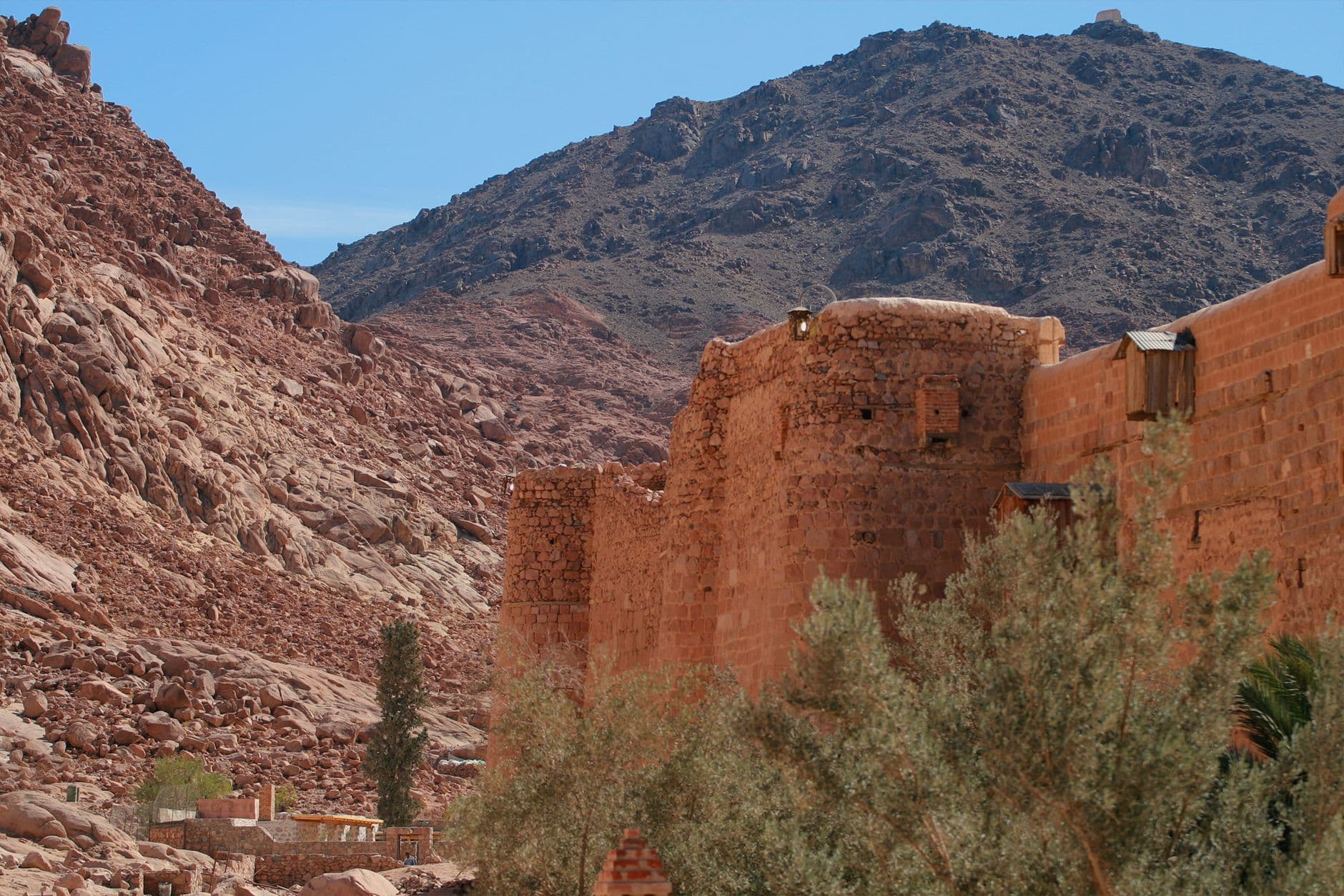
The Monastery of Saint Anthony near the Red Sea coast, the oldest Christian monastery still functioning in the world, was founded over the cave where Anthony spent decades alone. The wall paintings inside its Church of the Holy Virgin date to the seventh through thirteenth centuries and were discovered beneath layers of later painting during a restoration in the 1990s. They are among the most important examples of medieval Christian art in existence, and the majority of visitors to Egypt have never heard of them.
Getting to Wadi Natrun requires a car or a bus from Turgoman station in Cairo (EGP 30 to 50). Saint Anthony's Monastery near the Red Sea requires a full day trip from Cairo or coordination from Hurghada. The drive from Cairo takes approximately four hours. Entrance to the monasteries is free, though donations are welcomed and earned.
---
The Connections
Nothing in Egypt exists in isolation, and Coptic history is the proof.
The site of Fustat, the first Arab capital of Egypt, established in 641 AD by Amr ibn al-As directly adjacent to Coptic Cairo, was chosen partly because the existing Coptic community there provided urban infrastructure the Arab army needed. The relationship between the early Muslim rulers and the Coptic population was transactional and sometimes protective; Amr reportedly returned confiscated churches after intervention from the Coptic patriarch. The first Egyptian census under Arab rule counted a population that was almost entirely Coptic. The Islamization of Egypt was gradual, taking several centuries, and the Copts administered the country's finances and bureaucracy long after conversion began.
The Fatimid caliphs who built medieval Cairo in the tenth and eleventh centuries employed Coptic architects and craftsmen. The intricate woodwork in the Al-Azhar Mosque shows techniques identical to those used in contemporary Coptic churches. The shared visual vocabulary of medieval Cairo is not coincidence; it is the product of a single artisan class serving multiple patrons across religious lines.
In Upper Egypt, the ancient temple complex at Luxor contains a Coptic church built inside the hypostyle hall. The column bases of a pharaonic temple became the foundation for a Christian altar. Later, a mosque was added to the same structure. Three religions occupy the same stones. This is not unusual in Egypt. It is the default condition.
---
Common Mistakes
Treating Coptic Cairo as a two-hour add-on to a Pyramids day. This is the most common itinerary mistake in Cairo. The compound deserves its own day, particularly if you add the Coptic Museum. Rushing through to tick a box means you will leave without understanding what you saw.
Skipping the museum to spend more time in the churches. The Coptic Museum contextualizes everything else. The Nag Hammadi manuscripts alone are worth the EGP 200. Go there first, then walk the compound.
Visiting only during peak tourist hours, 10am to 1pm. The compound fills with tour groups between these hours. Arriving at 9am or after 2pm changes the experience entirely. The churches are quieter, the light is different, and the handful of resident monks and nuns who are occasionally visible go about their work without the backdrop of camera shutters.
Taking the guided tour offered at the gate. The unofficial guides who approach visitors at the Metro exit or the compound entrance are often unlicensed and provide generic information that you could read on any website. A licensed Egyptologist guide booked in advance, costing approximately EGP 800 to 1,200 for a half-day, will connect the layers in ways that transform the visit.
Paying for the sound and light show at the Citadel instead of attending an actual Coptic service. The sound and light show at the Citadel costs EGP 350 and is produced entertainment about Islamic Cairo. A Coptic Sunday liturgy at the Hanging Church is free, lasts two to three hours, is conducted in ancient Coptic with Arabic portions, and is one of the few genuinely unrepeatable experiences available in this city. It is not a performance. Attend with respect, not a camera.
Assuming the monasteries are day-trip attractions. The desert monasteries, particularly Saint Anthony's and Saint Paul's near the Red Sea, require overnight stays in the guest houses to be experienced properly. The guest houses are free or accept donations. Arriving at 11am and leaving at 2pm is logistically possible and experientially pointless. Stay a night. The midnight prayers in a fourth-century stone church in the Egyptian desert are not something you replicate at home.
Conflating Coptic Egypt with Christian tourism. This is a living community navigating complex social and political circumstances in contemporary Egypt. Some neighborhoods in Assiut and Minya have significant Coptic populations that see few foreign visitors. The most honest engagement with Coptic Christianity Egypt history means engaging with people, not only artifacts. Ask the museum curator what she thinks. Accept the tea offered at the monastery guesthouse. The community is not a historical exhibit.
---
Practical Tips
Dress conservatively for all church and monastery visits. Shoulders and knees must be covered for both men and women. Monasteries sometimes require women to cover their hair; bring a scarf.
Photography inside most churches is permitted without flash, but ask first, especially during services. Photography inside active liturgies without permission is intrusive and will be noticed.
Coptic Cairo is accessible, relatively flat, and manageable on foot. The compound itself takes thirty to forty-five minutes to walk end to end at a leisurely pace.
For the monasteries, bring water, food, and cash. ATMs do not exist near Wadi Natrun or Saint Anthony's Monastery. The monastery guesthouses serve simple meals, but availability is not guaranteed without advance coordination. Call ahead; most monasteries have phone contacts listed on the Coptic Orthodox Church website.
The Coptic calendar runs thirteen months, with the thirteenth being five or six days long, which is why Ethiopia and Egypt both claim the oldest calendar systems still in use. Major Coptic feast days, including the Feast of the Apostles in early July and Epiphany in January, draw large congregations. If your interest is the living religion rather than the architecture, time your visit accordingly.
Frequently Asked Questions
The Weekly Dispatch
More on Egypt, every Friday.
Cultural depth and places most guides never mention.
No spam. Unsubscribe anytime.