Greco-Roman Alexandria: Egypt's Most Misunderstood City
Alexandria was the world's largest city for three centuries. Almost nothing from that era survives above ground. Knowing where to look changes everything.

Quick Facts
- Best time to visit
- October to April. Mediterranean climate means mild winters and humid summers. July and August bring Egyptian holiday crowds and heavy humidity.
- Entrance fee
- Catacombs of Kom el-Shoqafa EGP 180 (approx $3.50 USD). Pompey's Pillar and Serapeum EGP 180 (approx $3.50 USD). Greco-Roman Museum EGP 100-200 depending on current reopening status. Alexandria National Museum EGP 80 (approx $1.60 USD). Bibliotheca Alexandrina exhibitions EGP 200 for foreigners (approx $4 USD).
- Opening hours
- Most sites daily 8am-5pm. Catacombs close around 4pm in winter. Confirm locally as hours shift seasonally.
- How to get there
- Spanish Train from Cairo Ramses Station: 2 hours, EGP 175-250 second class. From Alexandria's central station, taxis to Corniche sites cost EGP 50-80. Full-day private driver EGP 600-900.
- Time needed
- 2 full days minimum for the major Greco-Roman sites. 3 days to include Coptic quarter, Anfushi neighborhood, and Montaza area.
- Cost range
- Budget EGP 400-700 per day covering entry fees, local food, trams. Mid-range EGP 1,500-2,500 per day with private driver and Corniche restaurants.
The greatest library ever assembled, housing an estimated 700,000 scrolls, stood somewhere beneath the streets you are walking right now. Not metaphorically beneath. Literally. The Bibliotheca Alexandrina, the modern reimagining opened in 2002, was built partly because archaeologists believed the ancient Library was somewhere in that same coastal quarter. They are still not certain. That uncertainty is, in its way, the central fact of visiting Greco-Roman Alexandria: you are always standing above something you cannot see, in a city that destroyed itself so thoroughly that its greatest monuments survive only in the words of people who saw them before they fell.
This is not a consolation-prize city. It is a city that requires a different kind of attention.
Quick Facts
Best time to visit: October through April. Alexandria sits on the Mediterranean coast and operates on a different climate register than Cairo: summers are humid and sticky rather than dry and scorching, and winters are genuinely mild with occasional rain. Spring and autumn are ideal. July and August are crowded with Egyptian families on summer holiday and the humidity is punishing.
Key entrance fees: Greco-Roman Museum (when fully reopened after renovation): approximately EGP 100-200 (approx $2-4 USD). Verify at the door; the museum has had intermittent partial openings. Pompey's Pillar and Serapeum complex: EGP 180 (approx $3.50 USD) Catacombs of Kom el-Shoqafa: EGP 180 (approx $3.50 USD) Royal Jewelry Museum: EGP 100 (approx $2 USD) Bibliotheca Alexandrina permanent exhibitions: EGP 70 (approx $1.50 USD), foreigners EGP 200 (approx $4 USD)
Opening hours: Most sites open daily 8am-5pm. The Catacombs close earlier in winter, around 4pm. Confirm at each site as hours shift seasonally and without warning.
Getting there: From Cairo, the best option is the Spanish Train (the branded high-speed service) from Ramses Station, running roughly 2 hours and costing EGP 175-250 (approx $3.50-5 USD) for second class. Taxis from Alexandria's main Mahattat Masr station to the Corniche area cost EGP 50-80 by meter. A private car with driver for a full day of sites costs EGP 600-900 (approx $12-18 USD) and is worth it given the geographic spread of the Greco-Roman sites.
Time needed: Two full days minimum to cover the major Greco-Roman sites meaningfully. Three days if you include the Corniche archaeology, the Coptic quarter, and the Montaza area.
Cost range: Budget EGP 400-700 per day covering entry fees, local food, and trams. Mid-range EGP 1,500-2,500 per day with a driver and sit-down restaurants along the Corniche.
Why This Place Matters
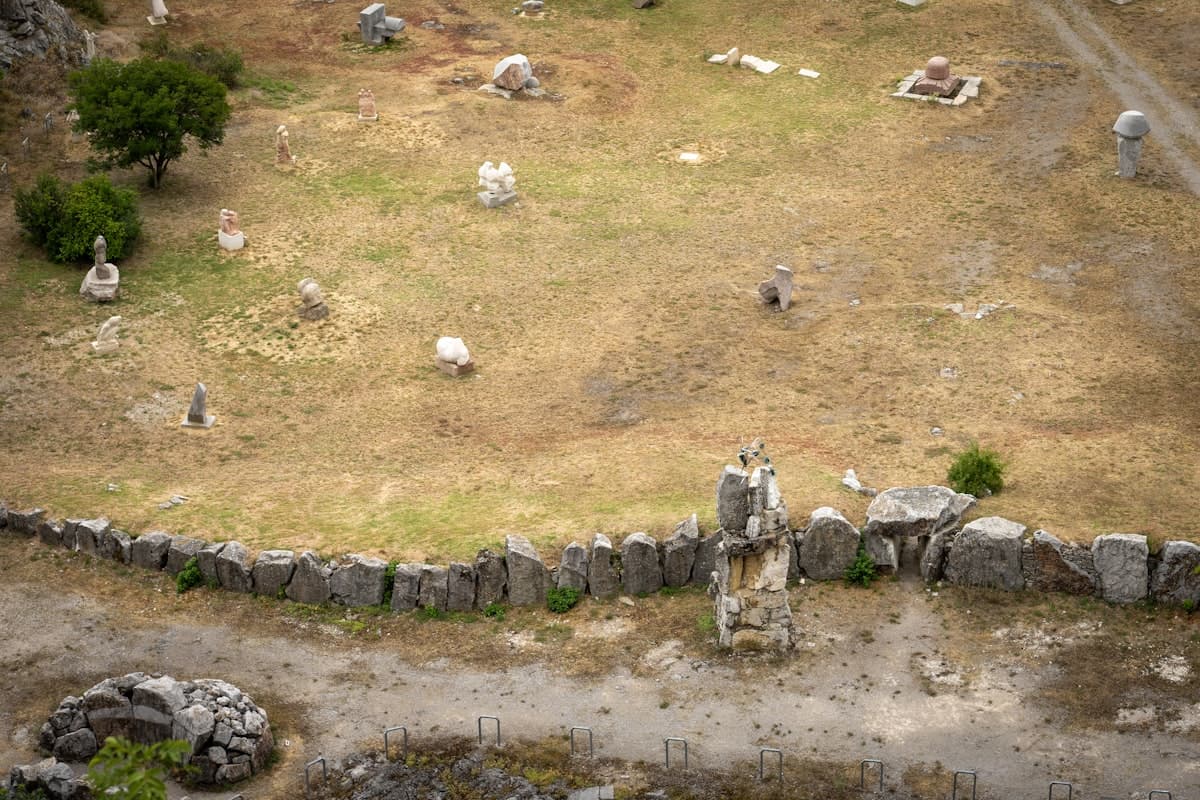
Alexander the Great founded Alexandria in 331 BC and never saw it finished. He died in Babylon eight years later, aged thirty-two, and his body was eventually brought back to the city he had imagined. For six centuries, pilgrims came specifically to see his tomb, and every Roman emperor of consequence visited it. Julius Caesar wept there, reportedly because he was thirty-two years old and had achieved nothing Alexander had not already accomplished by that age. The tomb disappeared sometime in late antiquity, and despite serious archaeological efforts, nobody has found it. It is either beneath the modern city, beneath the sea, or destroyed entirely.
What this tells you about Alexandria is something no other city in Egypt demonstrates so starkly: the Greco-Roman world here was not a layer deposited on top of Egyptian civilization. It was a synthesis, often a violent and contested one, in which Greek rulers adopted pharaonic titles, Egyptian priests absorbed Hellenistic philosophy, and new gods like Serapis were invented from whole cloth to bridge both cultures. Serapis was a deliberately engineered deity, created by Ptolemy I in the early third century BC by fusing Osiris and Apis into something that Greek and Egyptian populations could both venerate. His cult spread across the Roman Empire. The syncretic instinct that produced him is the defining intellectual legacy of this city.
This Greco-Roman Egypt Alexandria history guide is necessarily incomplete, not because the history is thin, but because so much of it is underground, underwater, or simply lost. The Royal Quarter, where Cleopatra VII lived and died, is now beneath the Eastern Harbour. Archaeologists led by Franck Goddio have been mapping it since 1996 and have identified palace foundations, statues, and temple remains at depths of 6 to 8 meters below the current sea surface. You cannot dive there as a tourist. You can stand at the edge of the harbour and understand that the city that invented the lighthouse is now, partly, a reef.
What Actually Survives: The Sites Worth Your Time
The Catacombs of Kom el-Shoqafa
This is the site that earns its entrance fee without qualification. Cut into the bedrock in the first century AD, the Catacombs of Kom el-Shoqafa represent the most complete surviving example of the cultural fusion that defined Greco-Roman Alexandria. The burial chambers descend three levels, and the decoration is unlike anything else in Egypt: Anubis, the jackal-headed god of embalming, is depicted wearing Roman legionary armor. The god Sobek appears with a Greek face. The central burial chamber holds a triclinium, a Roman-style dining room where families would eat funeral banquets with their dead, a practice that was neither purely Egyptian nor purely Roman but something this city invented for itself.
The site was discovered accidentally in 1900 when a donkey fell through the ceiling. This detail is not trivial: it means the site had been sealed, unfound, for roughly 1,500 years. What you are seeing has not been significantly altered by centuries of medieval building, Ottoman reuse, or colonial-era tourism. Go early, before the group tours arrive around 10am.
Pompey's Pillar and the Serapeum
The name is wrong, which is itself instructive. Pompey's Pillar has nothing to do with Pompey. It was erected in 297 AD to honor the Emperor Diocletian, and the misattribution was made by medieval Crusader-era travelers who needed a famous name to attach to the largest ancient monument they could see. The pillar is 26.85 meters tall and made from a single piece of red Aswan granite, which means it was cut 900 kilometers upstream and floated down the Nile. It is the largest monolithic column surviving from antiquity outside of Rome itself.
The more important history is what surrounds it. The Serapeum, the great temple to Serapis, once stood on this hill and was considered one of the most important religious complexes in the ancient world. It was destroyed in 391 AD by a Christian mob acting on an edict by the Emperor Theodosius, who had declared paganism illegal. The Library's daughter collection, housed within the Serapeum, was destroyed at the same time. What you see now are foundation walls, subterranean galleries that once held the cult statue, and a handful of sphinx fragments. The contrast between what stood here and what remains is the entire story of late antique Alexandria in one site.
The Greco-Roman Museum
When it reopens fully (it has been in a long renovation cycle; check current status before visiting), this is the essential anchor for the whole Greco-Roman Alexandria history guide. The collection holds more than 40,000 objects, but the ones to seek out are the Tanagra figurines showing everyday Alexandrian life, the mummy portraits from the Fayum that are the direct ancestors of Byzantine icon painting, and the statues of Serapis, which let you see exactly how the engineered god was visualized: Zeus's face, Osiris's symbols, all fused into something that was simultaneously familiar and new to everyone who worshipped him.
What to Skip Without Guilt
The Montaza Palace gardens are pleasant for a walk but have no Greco-Roman content whatsoever. Every guide lists them because they are on the eastern Corniche road and fill time. Skip them on a focused historical itinerary. The sound and light show at various sites in Alexandria tells you nothing you will not have learned by the end of this article, costs EGP 250-350, and involves sitting in the dark for 45 minutes while a narrator describes things you cannot see. The time is better spent at the Catacombs in late afternoon when the crowds have left.
The Connections
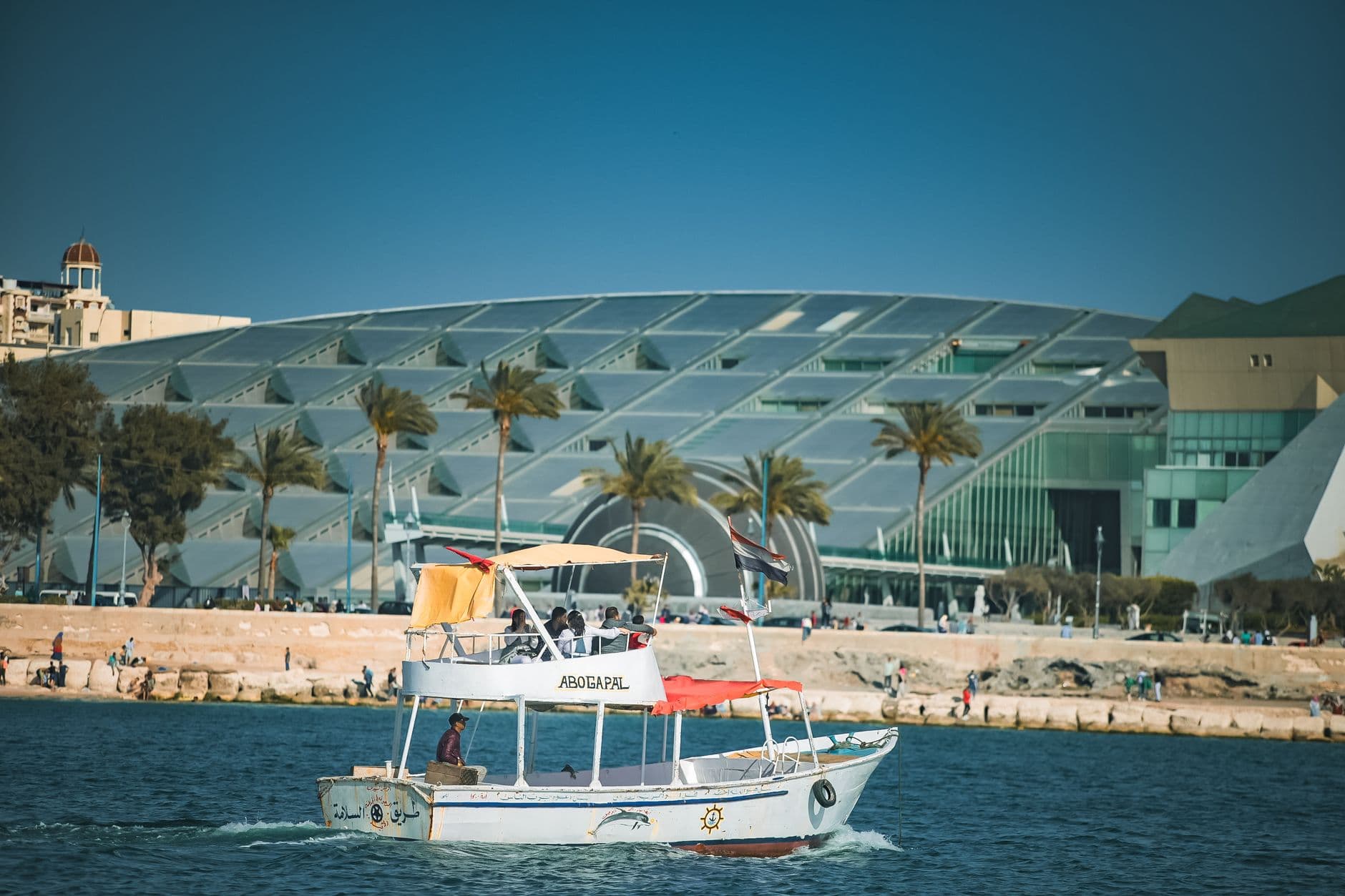
Alexandria refuses to be only one era. The mosque of Abu al-Abbas al-Mursi, the largest mosque in Alexandria, was built over a site that archaeologists believe holds the remains of the ancient Pharos lighthouse, one of the Seven Wonders of the Ancient World. The lighthouse fell in stages between the tenth and fifteenth centuries AD, damaged by a series of earthquakes. In 1477, the Mamluk Sultan Qa'it Bay built a fortress on the same promontory using stones from the lighthouse's ruins, some of which still bear ancient Greek inscriptions. You can walk into that fortress and put your hands on limestone blocks that were part of a wonder of the world.
The Coptic Orthodox community of Alexandria traces its founding to Saint Mark, who was martyred here in 68 AD, which means Christianity arrived in Alexandria before it arrived in Rome. The Saint Mark Cathedral in the Anfushi district sits in a quarter that in the Ptolemaic era was a Jewish neighborhood: Alexandria held the largest Jewish diaspora population in the ancient world, and it was here, in the third century BC, that a team of seventy-two Jewish scholars translated the Hebrew scriptures into Greek, producing the Septuagint, the version of the Old Testament that the early Christian church used. The Anfushi neighborhood is still religiously mixed in ways that make visible, in a single afternoon's walk, three thousand years of the city's role as a place where identities were not erased but layered.
Common Mistakes
Treating this as a day trip from Cairo. The train from Cairo takes two hours, and most visitors allocate a single day. The Catacombs alone need ninety minutes. Pompey's Pillar needs an hour. The Greco-Roman Museum needs three hours minimum. You cannot do this city in a day without doing it badly.
Hiring a guide at the site gate. The unofficial guides at Pompey's Pillar and the Catacombs routinely tell visitors that the sites connect underground, which they do not. The misinformation is confidently delivered. Book a licensed Egyptologist through your hotel or through a certified agency in advance.
Assuming the Bibliotheca Alexandrina is a recreation of the ancient Library. It is not, and it makes no claim to be. It is a modern institution built near the ancient site, opened in 2002, and it is genuinely excellent on its own terms: the permanent exhibitions on the history of the book, on Egyptian manuscripts, and on the ancient city are among the best-curated in the country. Visit it for what it is, not for what you hoped it might be.
Eating along the tourist Corniche strip. The restaurants facing the Eastern Harbour that cater to tour groups serve overpriced, mediocre fish. Walk inland two blocks to the parallel street and you will find the same fresh Mediterranean catch cooked by people who are feeding the people who live here. Prices drop by roughly 40 percent.
Visiting in July or August. Egyptian families take their summer holiday in Alexandria en masse during these months. The city is genuinely overcrowded, accommodation prices spike, and the humidity makes archaeological site visits actively unpleasant by mid-morning.
Skipping the Alexandria National Museum. This is a genuine oversight made by most itineraries. The National Museum, housed in a restored Italianate palace in the central city, has an excellent Greco-Roman floor that contextualizes the underwater finds from the Eastern Harbour with scale models and recovered artifacts. Entry is EGP 80 (approx $1.60 USD) and the palace building alone is worth it.
Staying only in the modern downtown. The Anfushi quarter, the old Jewish neighborhoods, and the area around the Attarine Mosque, which is built on the site of an ancient church that may itself have been built on a temple, reward slow walking in ways that the Corniche hotels do not show you.
Practical Tips
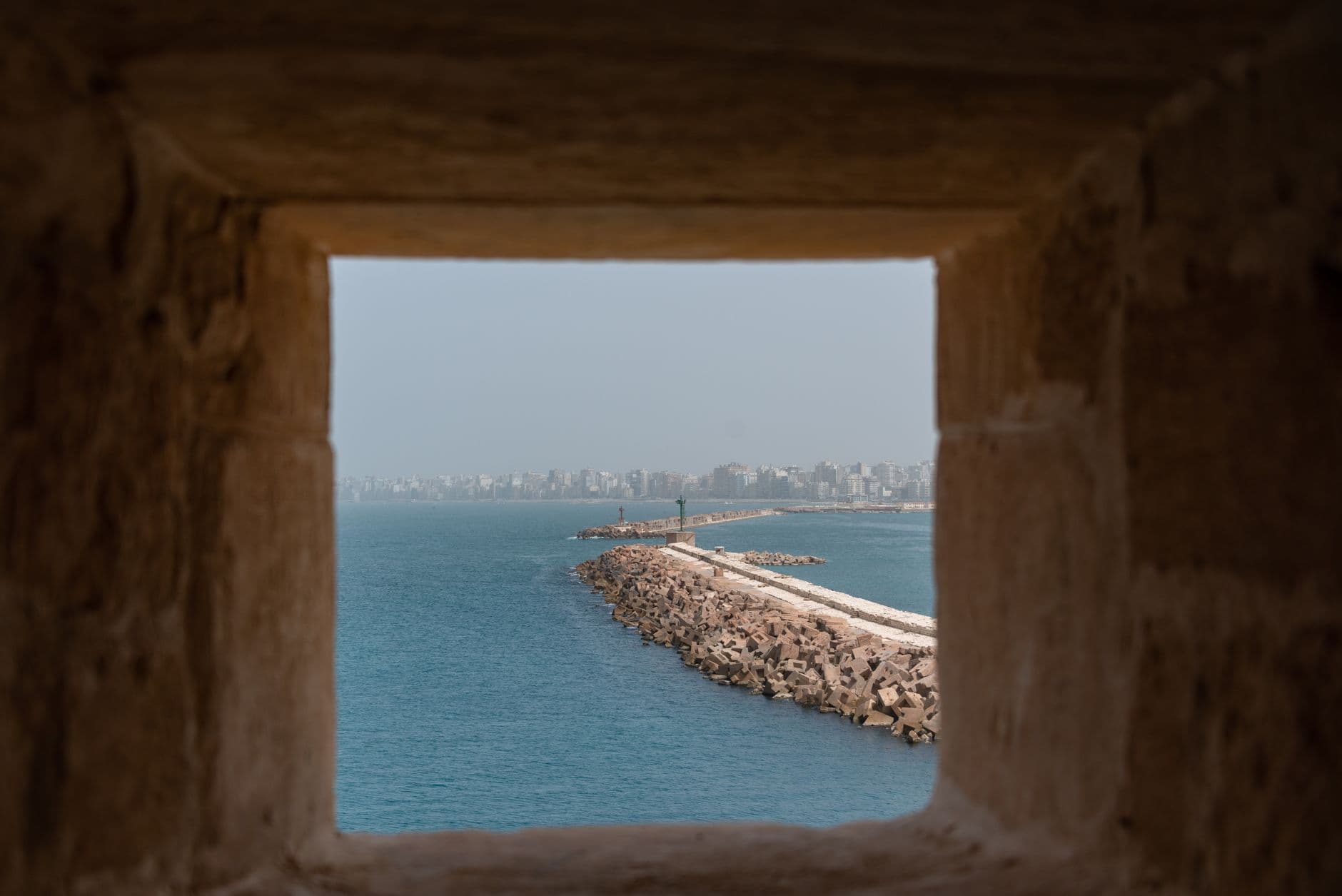
The Greco-Roman sites are geographically scattered across a city that runs 20 kilometers along the coast. A taxi or private driver is not a luxury here; it is the practical decision. The tram system is charming and historically interesting (Alexandria has operated trams since 1863, making it one of Africa's oldest tram networks) but too slow for covering the main sites in limited time. Use it for the pleasure of it on a slow afternoon, not as your primary transport.
Wear shoes you can remove easily at mosque entrances and comfortable soles for the catacomb stairs, which are steep, narrow, and occasionally damp. Carry water: the Serapeum hill offers no shade and the hill climb in warm weather is more demanding than it looks on the map.
The Greco-Roman Museum's renovation has been ongoing for years. Before visiting, check whether it has reopened fully or partially; the Egyptian Ministry of Antiquities website and the museum's own social channels are the most reliable sources. A partial opening may mean key collections are in storage.
Photography is generally permitted at all the major sites for personal use, but the Catacombs have low and variable lighting. A phone with a strong night mode or a small flashlight improves the experience considerably.
Alexandria's taxi drivers use meters, unlike Cairo. Insist on the meter, which starts at EGP 8-10, or agree on a price before departing. From the central station to any major Greco-Roman site should cost no more than EGP 60-80.
Frequently Asked Questions
The Weekly Dispatch
More on Egypt, every Friday.
Cultural depth and places most guides never mention.
No spam. Unsubscribe anytime.