Greco-Roman Alexandria: History Guide to Egypt's Lost Capital
Alexandria was once the largest city on earth. Almost none of it survives above ground. What remains is stranger and more layered than anything the postcards prepare you for.

Quick Facts
- Best time to visit
- October to April. Mediterranean winters are mild and clear; summers are humid and attract large domestic tourist crowds from Cairo.
- Entrance fee
- Catacombs of Kom el-Shoqafa: EGP 360 (approx $7.50 USD). Pompey's Pillar and Serapeum: EGP 180 (approx $3.75 USD). Roman Theatre at Kom el-Dikka: EGP 180 (approx $3.75 USD). Greco-Roman Museum: EGP 200 (approx $4 USD). Student discounts 50% at all sites with valid ID.
- Opening hours
- Catacombs and Pompey's Pillar: Daily 8am to 5pm. Kom el-Dikka: Daily 9am to 4pm. Greco-Roman Museum: Daily 9am to 5pm, closed Fridays 12pm to 1:30pm for prayers.
- How to get there
- Express train from Cairo Ramses Station to Alexandria Misr Station: EGP 85 to 150 depending on class, approximately 2.5 hours. From Misr Station, taxis to the Catacombs cost EGP 60 to 100. Half-day taxi hire for multiple sites: EGP 400 to 500, negotiate before departure.
- Time needed
- Two full days minimum for all main Greco-Roman sites. Three days recommended if adding Bibliotheca Alexandrina, Qaitbay Citadel, and the Corniche waterfront.
- Cost range
- Budget EGP 700 to 1,200 per day including accommodation, transport, and entry. Mid-range EGP 2,000 to 3,500 per day.
Alexandria was the largest city on earth for several centuries and the intellectual capital of the ancient world. Almost none of it survives. The Royal Quarter, the great Library, the Museion where Archimedes and Euclid worked, the Soma where Alexander's body lay in a gold sarcophagus: all of it is now under the Mediterranean, under the water table, or under the foundations of a modern city of five million people who are largely unbothered by what lies beneath their feet. This is not a tragedy. It is an invitation to read the city differently.
What does survive is weirder and more layered than the ruins you were imagining. A Roman amphitheatre discovered by accident in 1963. A necropolis carved into the rock by Alexandrians who mixed Pharaonic death rituals with Greek architectural grammar and Roman decorative taste, producing something that belongs entirely to none of those traditions. A pillar misnamed for the wrong person that turns out to be one of the largest single-shaft monoliths ever erected. This Greco-Roman Egypt Alexandria history guide is not about loss. It is about what reading the surviving fragments carefully can teach you.
Quick Facts
Best Time to Visit: October through April. Alexandria's Mediterranean climate means summers are humid and crowded with Egyptian domestic tourists escaping Cairo heat. Winter light is clear and the city is at its most navigable.
Key Sites and Entrance Fees: Greco-Roman Museum: EGP 200 (approx $4 USD), students EGP 100. Reopened after two decades of renovation; do not skip it. Catacombs of Kom el-Shoqafa: EGP 360 (approx $7.50 USD), students EGP 180. Daily 8am to 5pm. Pompey's Pillar and Serapeum site: EGP 180 (approx $3.75 USD). Daily 8am to 4pm. Roman Theatre at Kom el-Dikka: EGP 180 (approx $3.75 USD). Daily 9am to 4pm. Royal Jewelry Museum (bonus): EGP 150 (approx $3 USD), worth the detour.
How to Get There: Alexandria is 220km from Cairo. The Spanish (air-conditioned) trains from Ramses Station take roughly 2.5 hours and cost EGP 85 to 150 depending on class. Taxis from Alexandria's Misr Station to the Greco-Roman sites cost EGP 60 to 100 depending on negotiation. The sites are spread across the city; budget EGP 200 to 300 for taxis across a full day.
Time Needed: Two full days minimum to do the Greco-Roman circuit properly. Three days if you are adding the Bibliotheca Alexandrina and the Eastern Harbour.
Cost Range: Budget EGP 700 to 1,200 per day including accommodation, transport, and entry fees. Mid-range EGP 2,000 to 3,500 per day.
Why This Place Matters
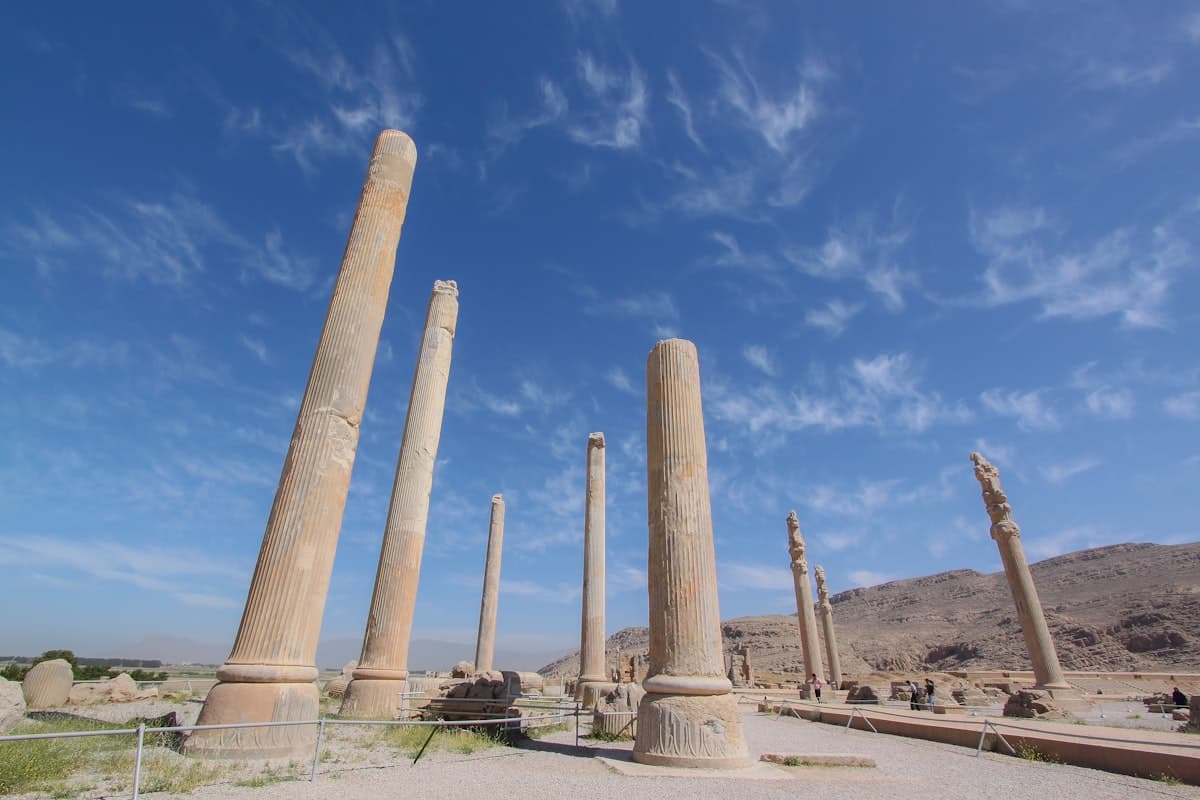
Alexander the Great founded Alexandria in 331 BC and was dead within eight years, never seeing the city completed. His general Ptolemy claimed Egypt after Alexander's death, buried Alexander in Memphis first and later in Alexandria, and founded a dynasty that ruled for three centuries until Cleopatra VII, the last Ptolemaic ruler, died in 30 BC and Rome absorbed Egypt entirely. That dynasty, Greek in origin and language, ruling an Egyptian population with deep Pharaonic traditions, produced the cultural hybrid that defines everything you will see in this city.
The Ptolemies were cynically brilliant administrators. They adopted the title of Pharaoh, built temples in the Pharaonic style at Edfu, Dendara, and Philae, and funded the cult of Serapis, a deity invented wholesale from a combination of Osiris and the sacred Apis bull, given Greek visual form, because they needed a god that both populations could worship without violence. Serapis became one of the most widely worshipped deities in the Roman Empire. The Serapeum in Alexandria was considered, by people who had seen the Pyramids, to be the most impressive monument in Egypt.
When Julius Caesar arrived in 48 BC and famously wept at seeing Alexander's corpse because he had done nothing comparable at the same age, he was arriving in a city that had held the world's largest library for two centuries, that had produced Euclid's geometry, Eratosthenes's calculation of the earth's circumference (accurate to within 2 percent), and Aristarchus's heliocentric model of the solar system, which predated Copernicus by seventeen centuries. This is the intellectual environment the surviving Greco-Roman fragments of Alexandria belonged to.
The Sites: What You Are Actually Looking At
The Catacombs of Kom el-Shoqafa
These are the best thing in Alexandria that most visitors underestimate. Discovered in 1900 when a donkey fell through the ground into the upper chamber, the catacombs date from the 2nd century AD and descend three levels into the rock, though the lowest level is permanently flooded. They were a private family tomb that expanded into a public burial complex over several generations.
What makes them architecturally extraordinary is the complete fusion of three visual vocabularies in a single space without any of them overpowering the others. The façade of the main tomb chamber is Greek in its column orders. The reliefs inside are Pharaonic in their iconography: Anubis, the jackal god of embalming, appears wearing Roman armor. Thoth stands in his ibis-headed form holding the caduceus of Hermes, because by the 2nd century AD in Alexandria, the Egyptians and Greeks had agreed that Thoth and Hermes were the same deity. The burial niches are Roman loculi. All of this is in the same room, made by the same craftsmen, for the same family.
This is not syncretism as an accident. It is syncretism as a deliberate aesthetic, the visual expression of a city that had been multicultural for four centuries and had genuinely metabolized that mixture into something new. Bring a torch, wear shoes you do not mind getting damp, and allow ninety minutes.
Pompey's Pillar: The Wrong Name and the Right Story
The pillar has nothing to do with Pompey. The Roman general was murdered on an Egyptian beach in 48 BC; the pillar was erected in 297 AD by the Roman Emperor Diocletian, according to the inscription still visible at its base, to honor the emperor who had suppressed an Alexandrian revolt and then provided grain relief to the city's starving population. The name is a medieval European misattribution that stuck.
At 26.85 meters, carved from a single shaft of Aswan red granite, it is the largest monolith erected in the Roman period outside of Rome itself. What almost nobody notices is what surrounds it: the hillside scattered with sphinx fragments, underground galleries, and the channel-carved rock that was once the foundation platform of the Serapeum, the greatest temple complex in Roman Egypt. The Serapeum was destroyed in 391 AD by a Christian mob led by Theophilus, Bishop of Alexandria, acting on an imperial edict banning pagan worship. The destruction was so complete that the pillar, which stood in the temple's courtyard, is now the only thing left at scale.
A daughter library of the great Library of Alexandria was housed in the Serapeum. Whether it survived the fire that damaged the main Library in Caesar's time and then the gradual decline of institutional funding under Roman rule is a question historians continue to argue about. The comfortable story that a single fire destroyed the Library of Alexandria in a single event is wrong. The Library died slowly, through funding cuts and the emigration of scholars, across several centuries.
The Roman Theatre at Kom el-Dikka
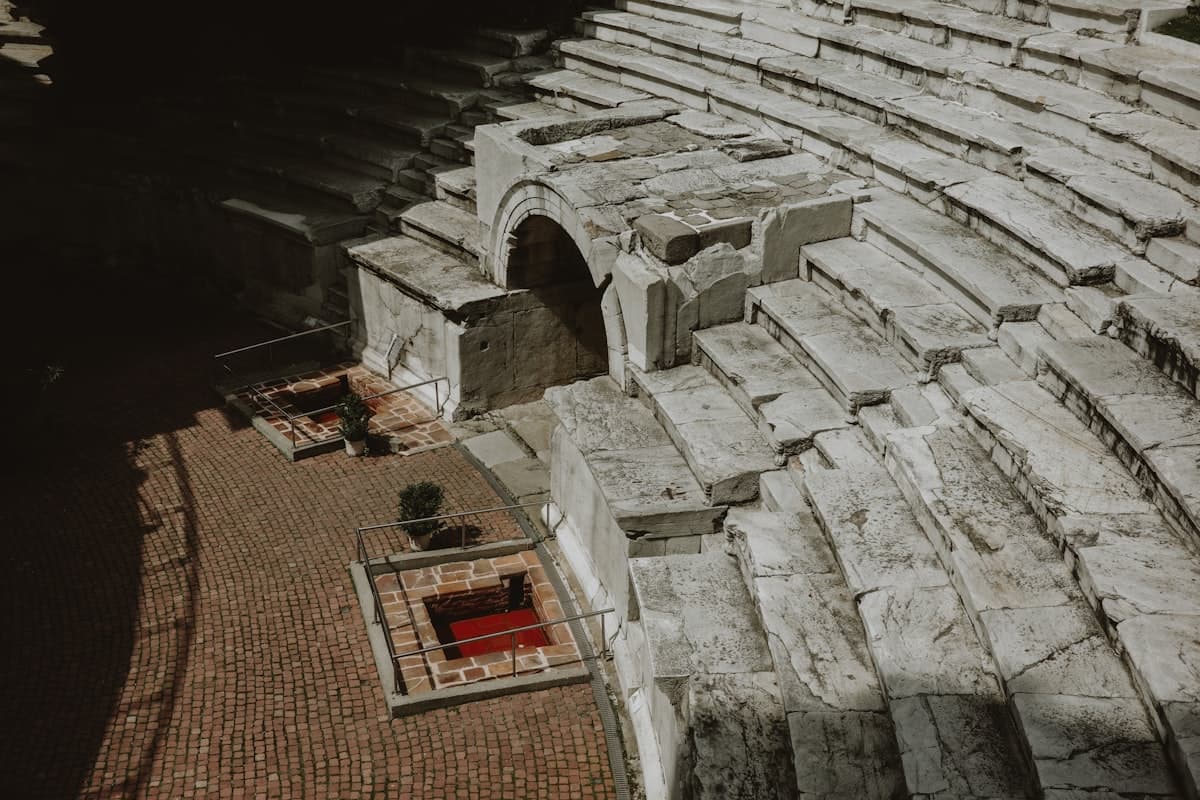
This is the only well-preserved Roman theatre on Egyptian soil. Discovered in 1963 during construction work, it seated between 600 and 800 people and dates to the 4th or 5th century AD, late in the Roman period. Thirteen of its original white marble seating rows survive, arranged in a semicircle of good acoustics.
The site also contains a residential quarter from the same period, with mosaics, cisterns, and the remains of lecture halls that archaeologists believe were part of Alexandria's late Roman university complex. A mosaic floor depicting a bird among vines, still vivid at 1,600 years old, sits exposed to the open air with only a metal canopy for shade. The whole site is walkable in forty-five minutes but deserves ninety if you take the lecture hall complex seriously.
The Greco-Roman Museum
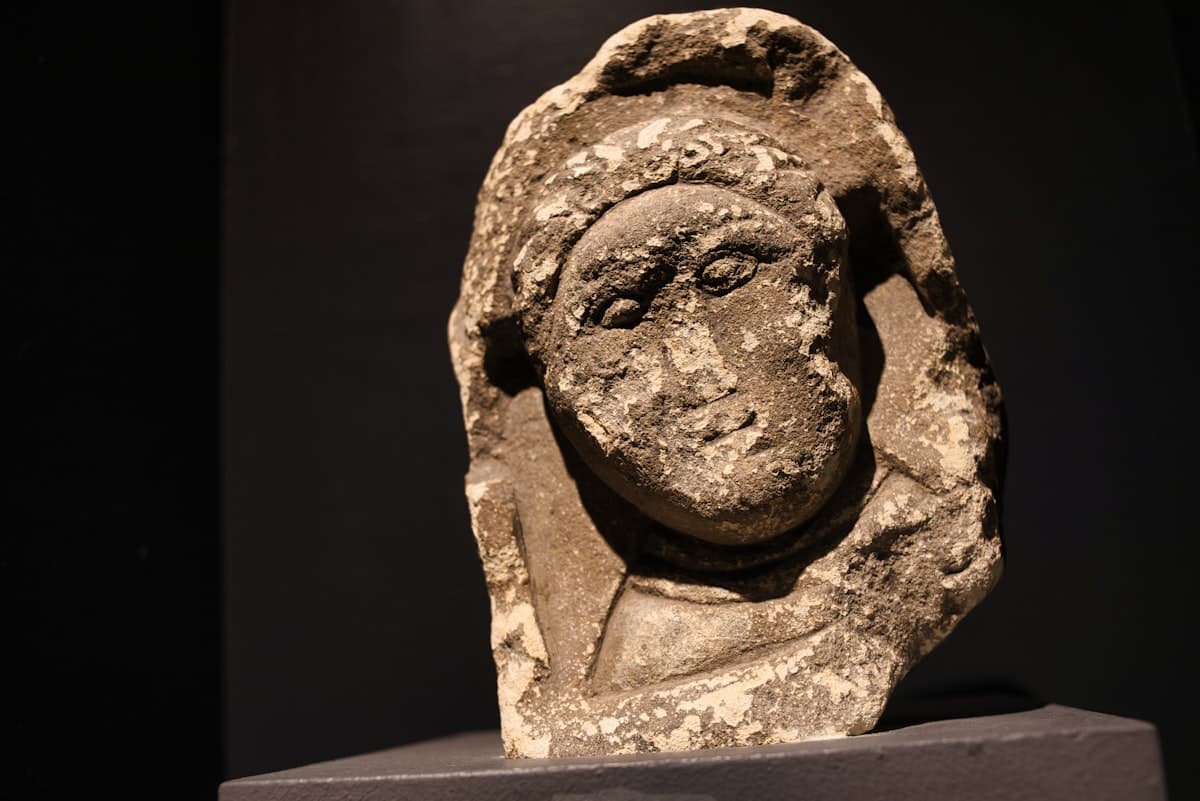
Reopened after a twenty-year renovation, this is where Alexandria's surviving portable antiquities live: statues of Serapis, terracotta figurines of Harpocrates (the child Horus absorbed into the Greek pantheon), Ptolemaic royal portraits, mummy portraits from the Fayum that look so contemporary they are startling. There are roughly 40,000 objects in the collection. Perhaps a thousand are on display. The Fayum portraits alone, painted in encaustic wax on wood to be placed over mummified faces, would justify the visit on their own terms.
The Connections
Alexandria's Greco-Roman layer does not sit cleanly on top of an Egyptian layer below it. The city was built on a site called Rhakotis, a small Egyptian settlement with a temple to Osiris that Ptolemy I absorbed, expanded, and reinvented as the Serapeum. When the Arab general Amr ibn al-As took Alexandria in 641 AD, he wrote to Caliph Umar in Medina describing a city of 4,000 palaces and 4,000 baths. The city he described was still fundamentally the late Roman city, intact.
The Arab city built on top of it repurposed its stones. The columns you see in medieval Cairene mosques frequently came from Alexandria. The Mosque of Amr ibn al-As in Fustat, the oldest mosque in Africa, was partially built with Alexandrian marble. The limestone causeways of Greco-Roman Alexandria became quarry material for the forts and walls of the medieval city.
Alexandria's Coptic community traces its founding to Saint Mark, who according to tradition came to the city in 48 AD, making the Coptic Orthodox Church of Alexandria one of the oldest Christian institutions on earth, older than the Roman Catholic Church. The Coptic community existed inside the Greco-Roman city, developed its own Greek-influenced theological tradition, and produced Origen and Clement of Alexandria, two of early Christianity's most important theological minds. The Coptic Museum in Cairo holds the physical evidence; the intellectual genealogy runs directly through Alexandria's Greco-Roman culture.
Common Mistakes
Spending a full day at the Bibliotheca Alexandrina before doing the archaeological sites. The modern library is an impressive architectural statement, but it is a contemporary building with rotating exhibitions. The Greco-Roman Museum, the Catacombs, and Kom el-Dikka are the irreplaceable archaeological evidence. Do those first, with energy and time, and save the Bibliotheca for an afternoon or a second day.
Taking the Corniche tourist minibuses. They look efficient. They are not. The sites are spread across different neighborhoods and the minibuses do not stop conveniently for any of them. Negotiate with a taxi driver for a half-day rate of EGP 400 to 500, which is reasonable, and you will cover three sites without the logistical friction.
Skipping the Greco-Roman Museum because they visited it years ago. If you last visited before 2019, you did not see the renovated museum. It is not the same building.
The Alexandria National Museum. It costs EGP 180, houses a mixed collection that covers all periods with no particular depth in any of them, and will not tell you anything that the Greco-Roman Museum does not tell you better. If your time is limited to one museum, this is not the one.
Missing the context of the Eastern Harbour. The Royal Quarter of Ptolemaic Alexandria, where the Library, the Museion, the palaces, and Alexander's Soma stood, is now underwater in the Eastern Harbour. You cannot dive it without a permit, but you can walk the Corniche at the point where archaeologists have mapped the submerged structures and understand the scale of what the city once was. Franck Goddio's underwater surveys since 1996 have mapped palace foundations, sphinxes, and obelisks on the seafloor. Standing above that water recalibrates the whole visit.
Rushing the Catacombs. Most group tours allow thirty minutes. You need ninety. Go independently.
Practical Tips
Alexandria's traffic is serious. Plan sites geographically: Pompey's Pillar and the Catacombs are in the same western neighborhood (Karmuz and Wardian) and can be done in a single morning. Kom el-Dikka and the Greco-Roman Museum are both in the central district near Saad Zaghloul Square and pair naturally for an afternoon. The Corniche walk between Silsila and the Citadel of Qaitbay takes forty-five minutes and is best at dusk.
Dress practically. The Catacombs are cool and slightly humid year-round, useful in summer, chilly in January. Kom el-Dikka is entirely open air. Pompey's Pillar site has no shade worth mentioning.
Most site guards speak limited English but respond warmly to Arabic phrases and to genuine curiosity. Learning the Arabic name of what you are looking for (Amoud al-Sawari for Pompey's Pillar, Maqabir Kom el-Shoqafa for the Catacombs) opens more doors than pointing.
Do not book a day trip from Cairo to cover Greco-Roman Alexandria. The train journey alone takes five hours return. You arrive exhausted, see two sites, and leave. The city rewards staying: walking its grid of streets that still follow Ptolemaic planning, eating at the fish restaurants on the Corniche, sitting in a café that occupies a space where a library shelf once stood. Alexandria is not a day trip. It is a residency of at least two nights.
Frequently Asked Questions
The Weekly Dispatch
More on Egypt, every Friday.
Cultural depth and places most guides never mention.
No spam. Unsubscribe anytime.