Greco-Roman Alexandria: History, Sites & What to See
Alexandria was founded in 331 BC and became the largest city on earth within a century. Almost none of it is above ground. Here is where it actually went.

Quick Facts
- Best time to visit
- October to April for cooler temperatures and fewer domestic tourists. March and April offer the best light and manageable crowds.
- Entrance fee
- Catacombs of Kom el-Shoqafa: EGP 180 (approx $3.60 USD). Pompey's Pillar and Serapeum: EGP 180 (approx $3.60 USD). Greco-Roman Museum: EGP 60 (approx $1.20 USD) when open. Anfushi tombs: EGP 40 (approx $0.80 USD) separately.
- Opening hours
- Most sites 9am to 5pm daily. Catacombs last entry 4:30pm. Fort Qaitbay 9am to 4pm. Bibliotheca Alexandrina Sunday to Thursday 10am to 7pm, Friday to Saturday 3pm to 7pm.
- How to get there
- Spanish Train from Cairo Ramses Station: EGP 90 to 150 (approx $1.80 to $3 USD), 2 to 2.5 hours. Within Alexandria: Uber or white taxis EGP 40 to 60 per journey between central sites.
- Time needed
- 2 full days minimum for main Greco-Roman sites. 3 days if combining with Islamic-era Alexandria, Montazah, or the Corniche neighborhood exploration.
- Cost range
- Budget EGP 600 to 1,000 per day including transport, entry fees, and street food. Mid-range EGP 2,000 to 3,500 per day with Corniche hotel and restaurant meals.
Alexander the Great never saw his city finished. He laid the founding stones in 331 BC, sailed away to conquer Persia, and died in Babylon eight years later without ever returning. His body was brought back to Alexandria in a gold sarcophagus and buried somewhere beneath the city you are walking through right now. No one has found it. This is the essential fact of Greco-Roman Alexandria: the most consequential city of the ancient world is almost entirely invisible, and the search for what remains is one of the most rewarding archaeological puzzles in Egypt.
Quick Facts
Best time to visit: October through April. Alexandria's Mediterranean climate makes summer months humid and crowded with Egyptian domestic tourists escaping Cairo's heat. Spring light is particularly good for photography.
Key sites and entrance fees: Greco-Roman Museum (currently under renovation, check reopening status): EGP 60 (approx $1.20 USD) when open Pompey's Pillar and Serapeum: EGP 180 (approx $3.60 USD) Catacombs of Kom el-Shoqafa: EGP 180 (approx $3.60 USD) Royal Jewelry Museum: EGP 100 (approx $2 USD) Bibliotheca Alexandrina permanent exhibitions: EGP 70 (approx $1.40 USD)
Opening hours: Most sites open 9am to 5pm daily. The Catacombs close at 4:30pm. Friday closures are rare but possible during prayer times; arrive before noon to be safe.
Getting there: Alexandria is 225km from Cairo. The best option is the Spanish Train (air-conditioned express) from Ramses or Cairo Metro stations, costing roughly EGP 90 to 150 (approx $1.80 to $3 USD) one way and taking 2 to 2.5 hours. Within Alexandria, use white taxis negotiated in advance or Uber, which operates here. A full day of site hopping by taxi should cost EGP 300 to 500 (approx $6 to $10 USD).
Time needed: Two full days to do the Greco-Roman layer justice. Three days if you want to combine it with the Corniche, the Montazah gardens, or any of the Islamic-era sites.
Cost range: Budget EGP 600 to 1,000 per day including transport, entry fees, and food. Mid-range EGP 2,000 to 3,500 per day with a decent hotel on the Corniche.
---
Why This Place Matters
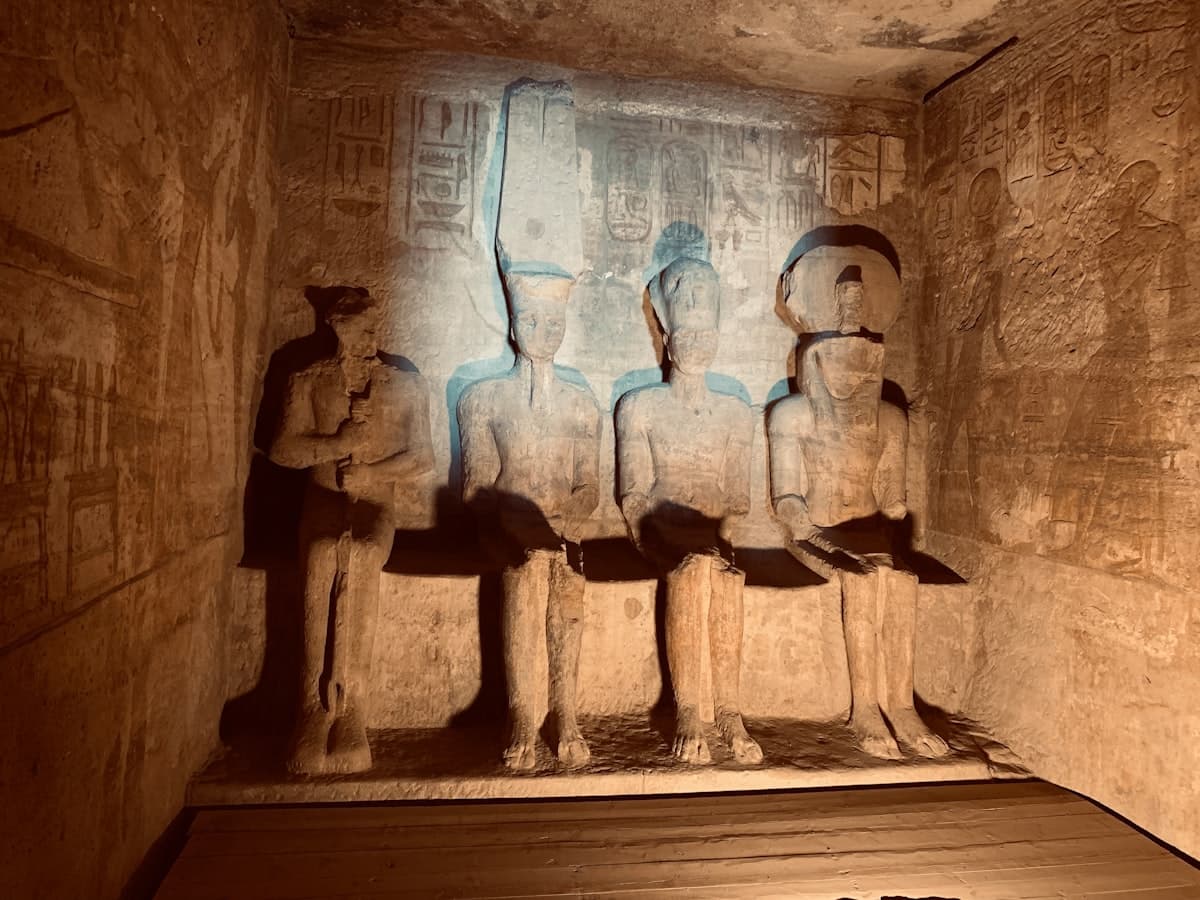
At its peak under the Ptolemaic dynasty, roughly 300 BC to 30 BC, Alexandria was home to perhaps 500,000 people, making it the largest city on earth alongside Rome. It held the Great Library, which at its height contained an estimated 700,000 scrolls. It was the city where Euclid wrote his geometry, where Eratosthenes calculated the circumference of the earth to within 2 percent accuracy using nothing but a stick and the angle of shadows in two cities, and where the astronomer Aristarchus first proposed that the earth orbited the sun, not the other way around, seventeen centuries before Copernicus got credit for the idea.
None of this is in the tourist brochures because almost none of it is above ground. Roman-era Alexandria sits 6 to 8 meters below the modern city. The Ptolemaic layers are deeper still. Ongoing construction in Alexandria regularly uncovers mosaics, columns, and burial chambers, which are documented and then often re-buried beneath apartment blocks. The city is its own archaeological archive, permanently in the process of being discovered.
What makes this a Greco-Roman Egypt Alexandria history guide worth taking seriously is the understanding that you are not visiting ruins. You are visiting a living city built on top of ruins, and learning to read the surface is the entire skill.
---
The Sites That Actually Survive
Pompey's Pillar and the Serapeum
The name is wrong. "Pompey's Pillar" has nothing to do with the Roman general Pompey, who was indeed assassinated near Alexandria in 48 BC when he fled Caesar after the Battle of Pharsalus. The pillar was actually erected in 298 AD in honor of the Emperor Diocletian, and the attribution to Pompey appears to be a medieval European misidentification that stuck. It stands 30 meters tall, is made of Aswan red granite, and remains the largest ancient column outside of Rome.
More interesting than the pillar is what is beneath it. The Serapeum was the great temple of Serapis, a deity deliberately invented by Ptolemy I as a theological bridge between Greek and Egyptian religion. Serapis combined attributes of Osiris and Apis the bull with the Greek Asclepius, creating a god that both communities could worship without abandoning their traditions. It was ancient political theology executed in stone. The underground galleries beneath the site, where Apis bulls were buried in massive granite sarcophagi, are still partially accessible. The sarcophagi themselves were moved to the Cairo Egyptian Museum, but the scale of the chambers tells you what the Ptolemies considered important.
The Catacombs of Kom el-Shoqafa
Of everything that survives from Greco-Roman Alexandria, the Catacombs of Kom el-Shoqafa are the most complete and the most philosophically strange. Discovered accidentally in 1900 when a donkey fell through the ceiling of the upper chamber, they date to the 2nd century AD and extend three levels underground, with the deepest point requiring you to descend a spiral staircase around a central shaft that was used to lower bodies.
The decoration inside is where the Greco-Roman Egypt fusion becomes physically visible. The main burial chamber features reliefs of Egyptian gods, Anubis and Thoth, rendered entirely in Roman armor. Beside them are classical Greek architectural elements: pilasters, pediments, acanthus leaves. The sarcophagi are carved with pharaonic scenes and inscribed with Greek text. This was not confusion. This was a community of 2nd-century Alexandrians who were simultaneously all three things, and who saw no contradiction in asking Anubis to weigh their souls while burying their dead according to Roman funerary law. The catacombs held at least 300 bodies in the loculi, the shelf-like niches carved into the walls, suggesting this was a family or guild burial site rather than a public necropolis.
Allow at least 90 minutes here. The lower chambers are cool, quiet, and almost always less crowded than the entry level.
The Greco-Roman Museum
The museum has been under renovation for years. When it reopens, and it will reopen, it holds the best single collection of objects from this period in Egypt: Ptolemaic coins, portrait busts, faience amulets that blend Greek and Egyptian iconography, and a remarkable collection of terracotta figurines that show ordinary Alexandrians in daily life. If it remains closed during your visit, the Bibliotheca Alexandrina's antiquities museum carries some of the contextual weight.
---
The Connections: Nothing in Alexandria Is Only One Thing
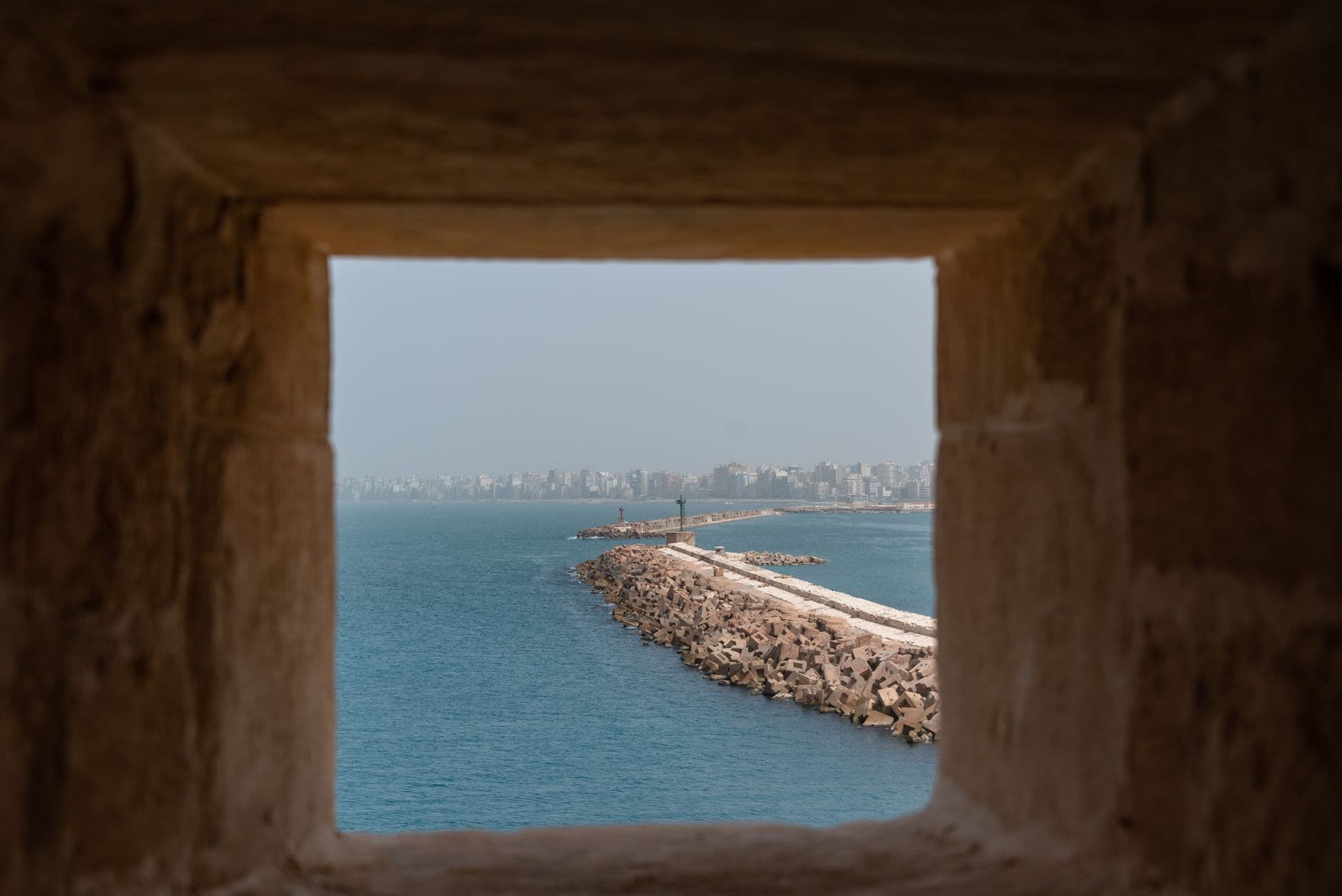
The Bibliotheca Alexandrina, the modern library that opened in 2002 on what is believed to be the approximate site of the ancient Mouseion (the research institution associated with the Great Library), is often treated as a contemporary building with a nostalgic reference. It is more than that. The ancient Library was not destroyed in a single dramatic fire, as the popular story goes. It declined across several centuries, lost funding under various Roman emperors, and the Mouseion, which was the actual working institution, was still functioning in some form in the 4th century AD. The burning associated with Julius Caesar in 48 BC likely destroyed a warehouse of books at the harbor, not the Library itself. The Library's real death was bureaucratic and financial, not cinematic.
The Abu el-Abbas al-Mursi Mosque, which dominates the waterfront near the Corniche, sits above a Ptolemaic harbor district and was built in 1767 on the site of a 13th-century mosque constructed by Andalusian Muslims who had arrived in Alexandria after fleeing the Christian Reconquista. The sheepskin prayers in its walls are written in Arabic, but the foundation stones below street level are Ptolemaic limestone. Three civilizations in one building, none of which knew the others would follow.
Fort Qaitbay, which you can see from the Corniche and which merits a visit on its own terms, was built in 1477 by the Mamluk Sultan Qaitbay using stone quarried directly from the ruins of the Lighthouse of Alexandria, one of the Seven Wonders of the Ancient World. The Lighthouse stones are literally inside the fort walls. This is the most underreported fact in Alexandria's entire tourism infrastructure.
---
Common Mistakes
Skipping the Catacombs because they sound like a footnote. They are not a footnote. Of all the surviving Greco-Roman sites in Alexandria, Kom el-Shoqafa offers the densest concentration of visible, readable, historically complex material. Visitors who spend three hours at Pompey's Pillar and twenty minutes here have inverted the value equation.
Spending money on the Bibliotheca Alexandrina's paid "grand tour." The permanent antiquities collection in the basement is worth seeing. The paid multimedia tour of the main reading room is a large glass building with books in it. The architecture is interesting from the outside. You do not need a guide to appreciate it, and the EGP 200 tour fee tells you very little that the free entry to the antiquities exhibition does not.
Assuming the Greco-Roman Museum is open. Check current status before building your itinerary around it. It has been intermittently closed for renovation since 2005 and the reopening dates have been revised multiple times.
Taking a private tour from Cairo that covers Alexandria in a single day. The drive alone is four to five hours round trip. You will see Pompey's Pillar and the Catacombs from the outside, eat lunch at a tourist restaurant on the Corniche, and return knowing less about Alexandria than you would have from reading this article. Stay overnight. The city changes completely after the day-trippers leave.
Missing the Anfushi tombs. This small Ptolemaic necropolis near Fort Qaitbay dates to the 3rd and 2nd centuries BC and is almost never on group tour itineraries. It features painted chambers with early examples of the Egyptian-Greek hybrid decoration style that you will see more fully developed at Kom el-Shoqafa. Entrance is included with the Greco-Roman Museum ticket or costs EGP 40 separately. It is often deserted.
Expecting visible archaeology at the harbor site. The royal Ptolemaic quarter, including what is believed to be the palace precinct and Cleopatra's island of Antirhodos, is underwater in the Eastern Harbor. Franck Goddio's underwater excavations since 1996 have mapped the submerged city in extraordinary detail, but you cannot dive it as a tourist without specialized arrangements. The artifacts recovered are displayed partly in the Greco-Roman Museum and partly in traveling exhibitions. Staring at the harbor and expecting to see something is a common and forgivable mistake.
Using the sound and light show at any site as a substitute for reading. There is no sound and light show in Alexandria worth the EGP 250 to 350 cost. They offer compressed, dramatized summaries of information that a good guidebook delivers with more precision and no scheduled departure time.
---
Practical Tips
Arrive at the Catacombs when they open at 9am. By 11am, school groups from Cairo fill the spiral staircase and the lower chambers become loud and slow. The site is genuinely different in quiet conditions.
The Corniche is best walked at 6am or after 9pm. During the day it is a fast road with aggressive traffic. In the early morning, fishermen cast lines from the seawall and the light on the harbor is extraordinary without being described in the words I am not allowed to use.
For food near the sites, skip the tourist restaurants near Pompey's Pillar entirely. Walk ten minutes east to Mohamed Ahmed on Sharia Shakour for ful and ta'ameya that Alexandrians have been eating since the 1950s. A full breakfast costs under EGP 80. The tahini is made in-house.
Alexandria's street grid still follows the basic Hellenistic plan laid out by the architect Dinocrates in 331 BC, with the major east-west axis corresponding roughly to modern Tariq al-Hurriya. Walking this road from the former site of the Moon Gate in the east to the approximate location of the Sun Gate in the west takes about forty minutes and covers the full width of the ancient city. You will not see ruins. You will see pharmacies, coffee shops, and apartment buildings. But knowing you are on a 2,300-year-old street does something to how the city feels.
Alexandria's taxi drivers are generally honest by Egyptian standards, but agree on a price before you get in. EGP 40 to 60 should cover any trip within the central sites. Uber is available and eliminates negotiation entirely.
If you read Arabic or travel with someone who does, the signage at many sites has information not available in the English panels. The Arabic descriptions at Kom el-Shoqafa include dating evidence and excavation history that the English version omits.
Frequently Asked Questions
The Weekly Dispatch
More on Egypt, every Friday.
Cultural depth and places most guides never mention.
No spam. Unsubscribe anytime.