Islamic Golden Age Cairo: A Cultural History Guide
Cairo's medieval Islamic quarter contains more medieval monuments than any other city on earth. Most visitors see three. Here is what the other 600 contain.

Quick Facts
- Best time to visit
- October through March. Heat in the narrow lanes becomes genuinely difficult from May onward. December and January offer the clearest light and most comfortable walking temperatures.
- Entrance fee
- Combined monuments pass EGP 450 (approx $9 USD). Ibn Tulun Mosque EGP 100 (approx $2 USD). Citadel complex EGP 300 (approx $6 USD). Student discounts of 50% available with valid ISIC card.
- Opening hours
- Most monuments daily 9am to 5pm. Citadel opens at 8am. Mosques close to visitors during Friday prayer approximately 11:30am to 1:30pm. Some sites extend to 6pm in summer.
- How to get there
- Taxi or Uber from downtown Cairo EGP 60 to 100. Metro Line 1 to Sayeda Zeinab station then 15-minute walk EGP 8. Minibus from Tahrir Square EGP 5 to 7.
- Time needed
- 4 hours minimum for Al-Muizz Street corridor. Full day if adding Ibn Tulun and Citadel. Two days recommended for serious exploration.
- Cost range
- Budget EGP 600 to 900 per day including entry fees and local food. Mid-range EGP 1,800 to 2,800 with licensed guide and sit-down meals.
Quick Facts
Best time to visit: October through March. Summer heat in the narrow lanes of Islamic Cairo is genuinely punishing, not romantically so.
Entrance fees: The Islamic Cairo monuments pass (covering Ibn Tulun, the Citadel, and several madrasas) runs approximately EGP 450 (roughly $9 USD) for foreigners; individual sites range from EGP 100 to EGP 300. The Mosque of Ibn Tulun, one of the oldest and most important in Africa, costs EGP 100 (about $2 USD).
Opening hours: Most mosques and monuments open daily from 9am to 5pm, though active mosques close to visitors during Friday prayer (roughly 11:30am to 1:30pm). The Citadel complex opens at 8am.
Getting there: A taxi from downtown Cairo to the Al-Muizz Street area costs EGP 60 to 100. The Cairo Metro does not reach Islamic Cairo directly; the closest station is Sayeda Zeinab (Line 1), a 15-minute walk. Organized minibuses from Tahrir Square run EGP 5 to 7.
Time needed: A serious pass through Al-Muizz Street and the Khan el-Khalili area requires four hours minimum. Ibn Tulun and the Gayer-Anderson Museum next door need another two. Combining both areas into one day is possible but leaves you surface-level in both.
Cost range: Budget EGP 600 to 900 per day including entry fees and local food. Mid-range EGP 1,800 to 2,800 if you add a guide (worth it) and a meal at Naguib Mahfouz Café.
---
Why This Place Matters
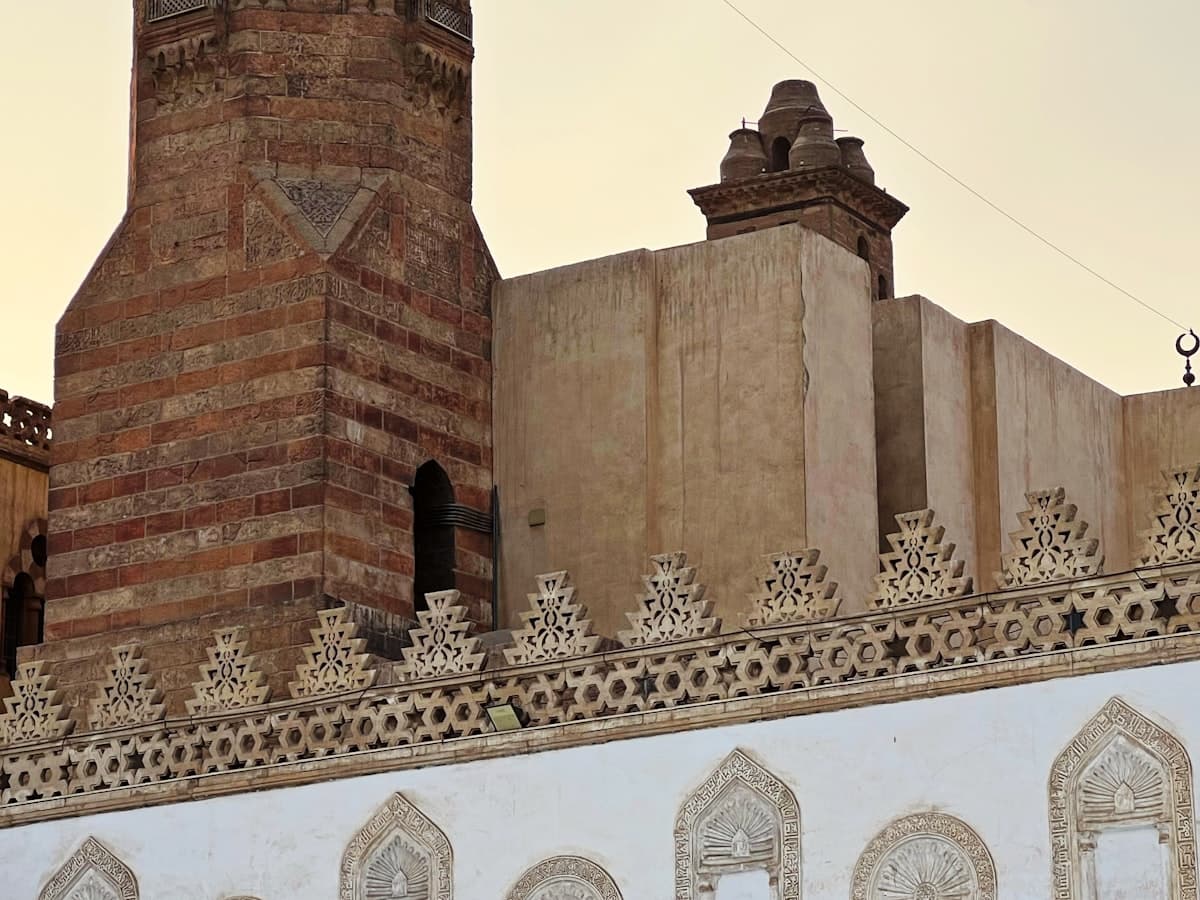
For roughly 300 years, from the Fatimid founding of Cairo in 969 CE through the height of Mamluk power in the 14th century, this city was one of the two or three most consequential places on earth. When the Mongols sacked Baghdad in 1258, they destroyed the Abbasid Caliphate and executed the last caliph by rolling him in a carpet and having horses trample him, a Mongol practice reserved for royalty that avoided spilling royal blood. Every library, every hospital, every astronomical observatory in Baghdad was burned or looted. Cairo absorbed the survivors: scholars, physicians, mathematicians, jurists, poets. The knowledge that would eventually reach medieval Europe through Arabic translations came largely through what Cairo preserved and transmitted.
This is the essential frame for understanding Islamic Golden Age Cairo history as a physical landscape. The monuments you walk past on Al-Muizz Street were not decorative. They were institutions. A madrasa was a university. A khanqah was a Sufi lodge where mystics produced philosophy alongside devotional practice. A wakala was a caravanserai-cum-warehouse where the trade wealth funding all of it actually arrived. Ibn Khaldun, widely considered the founder of sociology and historiography, lived and taught in Cairo. He revised his landmark work, the Muqaddimah, here, and met Tamerlane outside Damascus while Cairo was his base.
The city that contains all this is also built on everything that came before it. The Mosque of Amr ibn al-As, the first mosque in Africa, constructed in 641 CE in what is now Old Cairo, sits on ground that was a Roman fortress called Babylon in Egypt. The Fatimids who built Islamic Cairo's core in the 10th and 11th centuries built over Byzantine and Coptic settlements whose churches still exist in the Coptic quarter 800 meters away. Nothing here starts or ends. Everything continues.
---
Al-Muizz Street: The Spine of a Civilization
Al-Muizz li-Din Allah Street is named for the Fatimid caliph who founded Cairo in 969 CE. The street served as the ceremonial axis of the Fatimid city, and it retains the highest concentration of medieval Islamic architecture found anywhere in the world, a designation confirmed when UNESCO described the historic Cairo district in those terms upon its inscription in 1979. The street contains monuments from the Fatimid, Ayyubid, Bahri Mamluk, Burji Mamluk, and Ottoman periods stacked almost continuously for roughly one kilometer.
What most visitors miss is how to read the facades. The striped stone technique, alternating courses of red and white stone called ablaq, was imported from Syria by Saladin's Ayyubid dynasty after 1171 CE and became the signature aesthetic of Mamluk Cairo. When you see it on the facade of the Madrasa of Sultan Barquq, completed in 1386, you are looking at an architectural vocabulary that traveled 1,200 kilometers and fused with local tradition. The muqarnas inside, the honeycomb-like stalactite vaulting above doorways, derive from Persian decorative practice, arriving in Cairo via Baghdad and the survivors of the Mongol sacking.
Stop specifically at the Sabil-Kuttab of Abdel Katkhuda, built in 1744 and sitting at a slight angle because it was built at an intersection. The ground floor sabil is a public water dispensary, a form of charitable endowment called waqf. The upper floor is a kuttab, a Quranic school for orphaned children. The building is one structure serving two functions: hydrating the poor body and educating the poor mind. The Ottoman official who funded it was not being metaphorical. He was making a theological argument in stone.
---
The Mosque of Ibn Tulun: The Building That Survived By Being Inconvenient
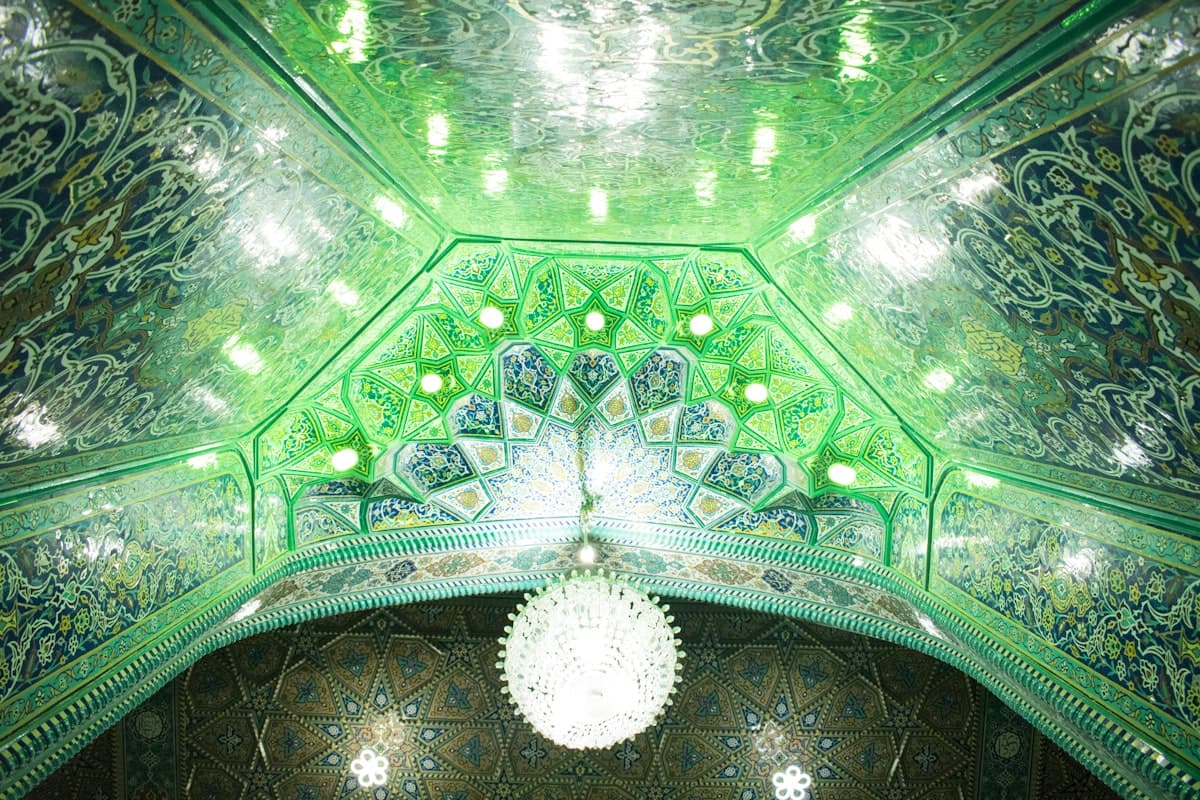
Ahmad ibn Tulun was a Turkic governor sent from the Abbasid Caliphate in Baghdad to administer Egypt in 868 CE. He promptly declared effective independence, kept Egypt's tax revenues in Egypt, and built a mosque that still stands largely intact today, making it the oldest mosque in Cairo to survive in its original form. It is also the largest mosque by area in Cairo, covering roughly 26,000 square meters.
The minaret is the strangest one in Egypt: a square tower with an external spiral staircase wrapping its exterior. The only comparable minaret in the Islamic world is the Great Mosque of Samarra in Iraq, which Ibn Tulun almost certainly saw or received reports of because he came from Samarra. He imported the aesthetic memory of his homeland and set it down in the red desert hills of western Cairo. The mosque's interior arcade uses pointed arches rather than rounded ones, predating their widespread use in European Gothic architecture by at least two centuries, though the transmission of that influence is still debated among architectural historians.
The building survived because it was repurposed. At various points it served as a caravanserai, a Crusader prison, and a salt warehouse. Being constantly occupied, even inconveniently, meant no one had reason to demolish it. The attached Gayer-Anderson Museum, free with your Ibn Tulun ticket if you ask, is a pair of 16th and 17th-century houses restored by a British colonial officer who donated them to Egypt. The juxtaposition of an Abbasid-era mosque and a Mamluk-era domestic interior tells you more about how Cairo accumulates time than almost anything else in the city.
---
The Mamluk Layer: Slave Soldiers Who Became Patrons of Scholarship
The Mamluk Sultanate, which ruled Egypt from 1250 to 1517, produced the physical Cairo you see today more than any other dynasty. The Mamluks were originally enslaved soldiers, predominantly Circassian and Turkic, purchased specifically for military service and converted to Islam. Their sultans were, technically, former slaves who had acquired power through military excellence and political ruthlessness. Sultan Barquq, who founded the Burji Mamluk line in 1382, was a Circassian purchased as a boy.
The paradox is that these men, whose origins gave them no inherited legitimacy, funded scholarship, medicine, and architecture on a scale that defined the Islamic world's intellectual center of gravity for two centuries. The reason is direct: legitimacy had to be purchased through piety and patronage. A madrasa built in your name, staffed with scholars you funded, adjacent to a mausoleum where prayers would be said for your soul for generations, was not generosity. It was a political strategy that happened to produce extraordinary buildings and institutions.
The Madrasa and Mausoleum of Sultan Qalawun, completed in 1285 on Al-Muizz Street, contains within it one of the earliest hospitals in the medieval world, the Bimaristan Qalawun. At its peak, it treated an estimated 4,000 patients per day regardless of gender, religion, or ability to pay. Qalawun's waqf endowment funded it with income from shops and properties; the legal document specifying how the hospital should be run, including that music should be played to patients who could not sleep, survives in Cairo's national archives.
---
The Connections
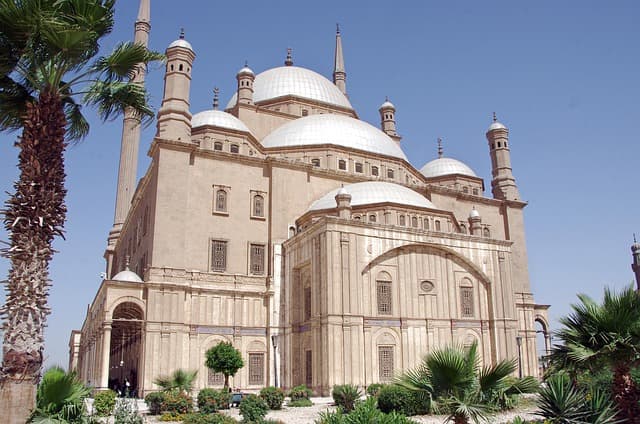
The Islamic Cairo you walk through cannot be separated from the Coptic Cairo 800 meters south, or from the Pharaonic substratum beneath both. The Fatimids who built this city were Ismaili Shia Muslims from North Africa whose capital, Mahdia, was in what is now Tunisia. When their general Jawhar al-Siqilli founded Cairo in 969 CE, he laid out the city's grid over a flat plain between the Nile's eastern bank and the Muqattam Hills. The canals that ran through early Islamic Cairo followed the same channels that had irrigated Pharaonic and Roman fields for millennia.
The Citadel, which Saladin began building in 1176 CE to defend Cairo against potential Crusader attack, was constructed partly with stones stripped from the smaller pyramids at Giza. You can see the uniform limestone blocks in the lower courses of the Citadel walls and know that some of them were cut 4,000 years earlier. Saladin's workers apparently found the demolition labor easier than the quarrying.
When Napoleon arrived in 1798, he housed his Institut d'Égypte, the scientific body that produced the Description de l'Égypte, in confiscated palaces in the Islamic Cairo district. The scholars who began the systematic study of Pharaonic Egypt did their initial work surrounded by Mamluk and Fatimid architecture. The Rosetta Stone, which made decipherment of hieroglyphics possible, was found during that same expedition. The intellectual chain connecting Islamic Cairo's translation and preservation culture to modern Egyptology is not metaphorical. It is institutional and physical.
---
Common Mistakes
Starting at Khan el-Khalili and staying there. The market is 600 years old and genuinely interesting, but most tourists treat it as the destination rather than the southern anchor of a much larger area. The significant monuments are north of Khan el-Khalili, up Al-Muizz Street toward Bab al-Futuh. Most visitors never make it that far.
Taking the sound and light show at the Citadel. It costs EGP 350 and delivers a narration available on any Wikipedia page, played to colored lights on stone walls. The Citadel in ordinary afternoon light with a knowledgeable guide is an entirely different, substantially better experience.
Hiring the touts who approach you outside the mosque entrances. Men who approach you claiming to be the official guide or asserting the mosque is closed (it is not) will take you to a perfume shop after a brief tour. Hire guides through your hotel or through the Egyptian Tour Guides Syndicate, where licensed guides are listed. A licensed guide for four hours costs EGP 800 to 1,200 and is worth the full amount.
Visiting on Friday morning. Active mosques close to non-Muslim visitors during Friday prayer, which runs from roughly 11:30am to 1:30pm. If you arrive at 11am planning a full morning, you will find locked doors.
Skipping the interiors in favor of facades. The decorative program inside the Mosque of Sultan Hassan, completed in 1363 near the Citadel, is among the finest medieval Islamic interiors anywhere. The building is so large that when it was constructed it cast a shadow over the Citadel, alarming the sultan who had funded it. He was assassinated before its completion. The interior is largely empty of tourists even when the exterior is not.
Wearing shoes that do not slip off easily. Every mosque requires shoe removal. Sandals or slip-ons save you two minutes of frustration at every entrance, multiplied by a dozen sites.
Treating the Gayer-Anderson Museum as an add-on. It is a fully realized domestic world of 16th and 17th century Cairo middle-class life, directly adjacent to Ibn Tulun, included on the same ticket area, and almost always quieter than anything else in the district. Spend an hour inside it.
---
Practical Tips
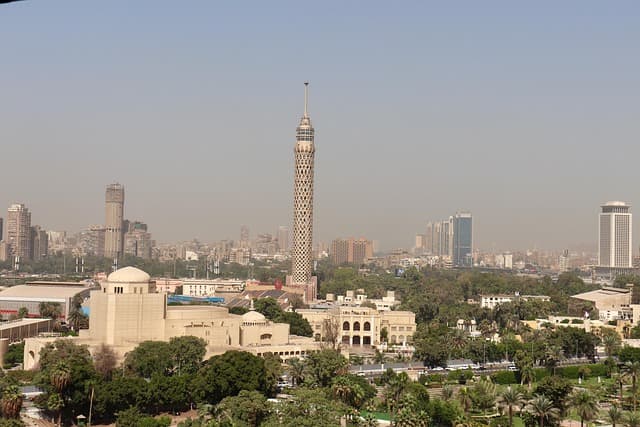
The light in Islamic Cairo's narrow lanes changes dramatically after 4pm in winter, going golden and low and making photography substantially better than the flat midday glare. Plan your more photogenic stops, the Qalawun complex facade, the Bab al-Futuh gate, the Al-Aqmar Mosque's stone-carved facade, for late afternoon.
Dress conservatively throughout the district. For women, this means covered shoulders and knees at minimum; a light scarf for the head is useful for entering mosques without borrowing one. For men, shorts are technically acceptable in some sites but draw unwanted attention and occasionally refusals of entry.
Water is available from small shops throughout Al-Muizz Street for EGP 10 to 15 per bottle. The public water dispensaries, sabils, that you will see in niches throughout the street are decorative, not functional.
If you want a specifically Islamic Golden Age Cairo history guide experience rather than a general monuments tour, tell your guide before you start. A good guide will sequence the sites chronologically rather than geographically, reading the architectural evolution from Tulunid through Fatimid through Ayyubid through Mamluk periods as a continuous argument. This transforms what can feel like disconnected old buildings into a coherent 600-year conversation about power, piety, and the preservation of knowledge.
Safety is not a serious concern in the monument district during daylight hours. The area is heavily trafficked by both tourists and local residents. Keep standard urban awareness, do not accept unsolicited escort offers, and you will have no problems.
Frequently Asked Questions
The Weekly Dispatch
More on Egypt, every Friday.
Cultural depth and places most guides never mention.
No spam. Unsubscribe anytime.