Islamic Golden Age Cairo: A History Guide to Al-Qahira
Al-Azhar has trained Islamic scholars continuously since 970 AD, making it the world's oldest operating university. Most tourists walk past its courtyard to get to Khan el-Khalili.

Quick Facts
- Best time to visit
- October to March. November is ideal: cool enough to walk the alleys for six hours without stopping, and the low winter light hits the carved stone facades at an angle that reveals the detail in the geometric patterns.
- Entrance fee
- Al-Azhar Mosque: free. Mosque-Madrassa of Sultan Hassan: EGP 100 (approx $2 USD), students EGP 50. The Citadel complex including Mosque of Muhammad Ali: EGP 450 (approx $9 USD). Bab Zuweila minarets: EGP 50. Most Mamluk mosques on Sharia al-Muizz: free or EGP 20-50 donation.
- Opening hours
- Most mosques 9am to 5pm daily, closed to tourists during Friday noon prayer (approx 11:30am to 1:30pm). The Citadel opens 8am to 5pm October to March, 8am to 6pm April to September. Khan el-Khalili bazaar shops open roughly 10am to 10pm, some staying open later.
- How to get there
- Metro to Sayeda Zeinab (Line 1, EGP 8) then 15 minute walk north. Taxi from Tahrir Square EGP 50-80. Uber EGP 40-60. Bus 72 from Ramsis runs through the district for EGP 4 but requires local navigation knowledge.
- Time needed
- Minimum one full day for the Fatimid spine and Al-Azhar. Two days to add the Citadel area and Sultan Hassan. Three days to include the City of the Dead and Qaitbay complex without rushing.
- Cost range
- Budget EGP 400-700 per day covering transport, entry fees, street food, and water. Mid-range EGP 1,500-2,500 adding a licensed guide, sit-down lunch in the medieval quarter, and the Citadel entry fee.
Quick Facts
Best time to visit: October to March. Summer heat in the medieval alleys of Islamic Cairo sits differently than elsewhere in the city: the narrow streets trap it, and the stone radiates it back at you after dark. November is the sweet spot.
Entrance fees: Most mosques are free or request a small donation (EGP 20-50, roughly $0.40-$1 USD). The Mosque-Madrassa of Sultan Hassan charges EGP 100 (approx $2 USD), students EGP 50. The Citadel complex, which includes the Mosque of Muhammad Ali, costs EGP 450 (approx $9 USD) for foreigners, EGP 40 for Egyptians. Al-Azhar Mosque is free.
Opening hours: Most mosques open daily from 9am to 5pm, closing during Friday prayer (roughly 11:30am to 1:30pm). The Citadel opens 8am to 5pm in winter, 8am to 6pm in summer.
Getting there: From downtown Cairo, take the metro to Sayeda Zeinab station (Line 1, EGP 8 flat fare) and walk 15 minutes north into Islamic Cairo. A taxi from Tahrir Square costs EGP 50-80. A Uber typically runs EGP 40-60. Do not take a calèche: they double the price and halve the experience.
Time needed: A single day covers the main corridor. Two days covers it properly. Three days covers it honestly.
Cost range: Budget EGP 400-700 per day including transport and entry fees. Mid-range EGP 1,500-2,500 if you add a guided scholar tour and a sit-down lunch in the medieval quarter.
---
For four hundred years, Cairo was the largest city on earth outside of China. Not one of the largest. The largest. At its peak under the Mamluk sultans in the fourteenth century, it held close to half a million people when London was still managing around 40,000. The Islamic Golden Age in Cairo was not an era of abstract intellectual achievement. It was a physical city, and most of it is still standing.
This is the problem with how the phrase "Islamic Golden Age Cairo history guide" typically gets packaged for tourists: it treats the period as a chapter in a book rather than a neighborhood you can walk through on a Tuesday morning, buying fool from the same alley where merchants traded manuscripts in the eleventh century.
Why This Place Matters
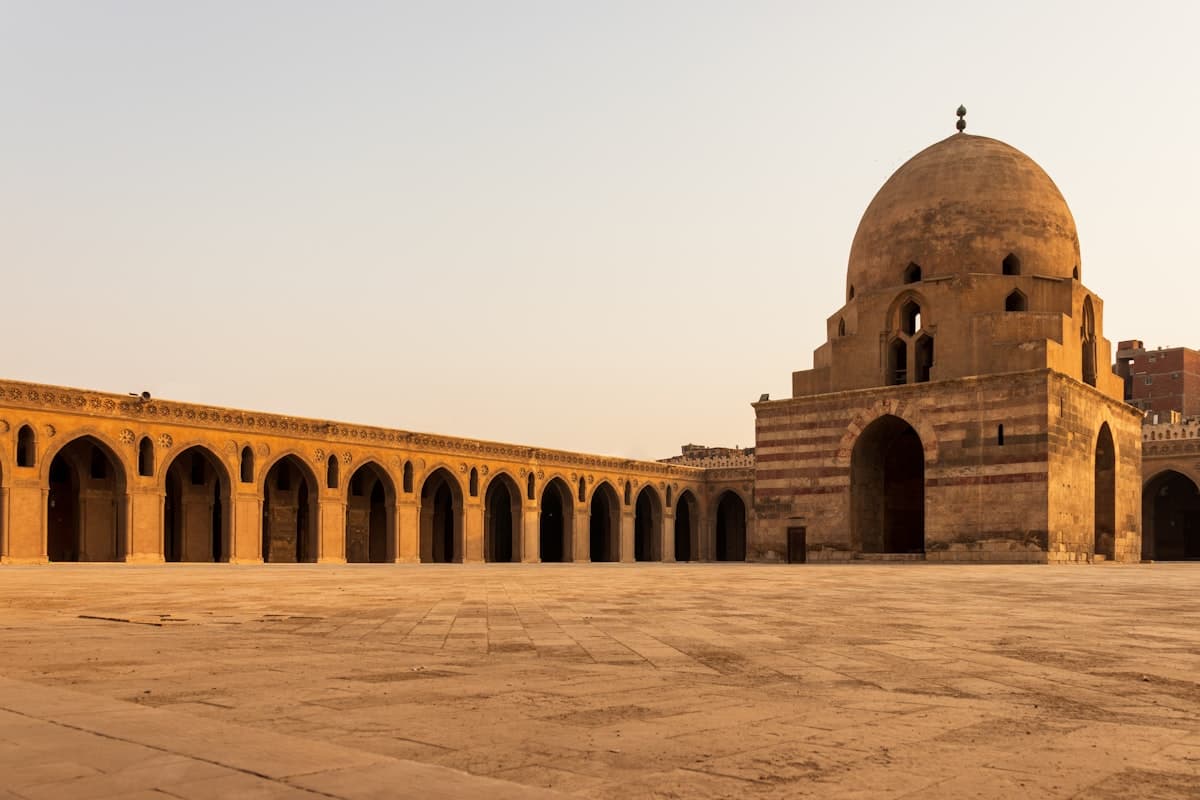
The Fatimid caliph al-Muizz founded al-Qahira, "The Victorious," in 969 AD as an imperial city deliberately sealed from the existing Egyptian population. Only the caliph's court and military lived inside the walls. The city that ordinary Egyptians inhabited, Fustat, sat to the south. Over three centuries, the two merged, and what emerged was the most intellectually dense city in the medieval Islamic world.
Al-Azhar University, founded in 970 AD and still operating, predates the University of Bologna by over a century and the University of Oxford by nearly two. It was not simply a theological school: at its height, students studied astronomy, mathematics, philosophy, and medicine under the same roof where Friday prayers were held. The astronomer Ibn Yunus, working in Cairo at the turn of the eleventh century, calculated the length of the solar year with an accuracy that European science would not match for another five hundred years. His work was done here, in this city, in these alleys.
What makes Islamic Cairo unique in the global context is the survival rate. Roughly six hundred medieval monuments remain standing in the area designated by UNESCO in 1979 as a World Heritage Site. The comparable district in Baghdad was largely destroyed. Damascus has survived better but scattered. Cairo kept its medieval core because the city simply grew around it rather than through it.
The Monuments Most Visitors Walk Past
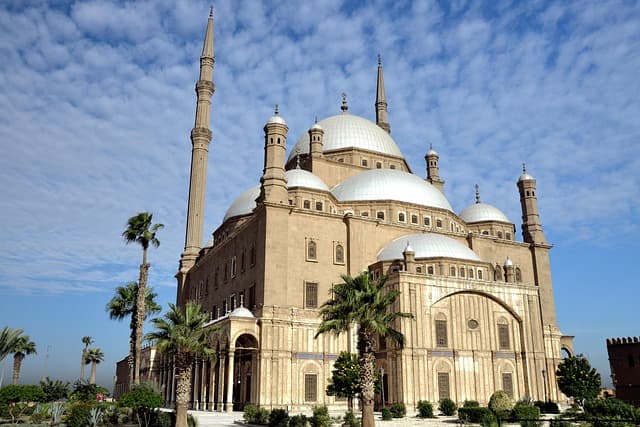
Every tour group stops at the Mosque of Muhammad Ali inside the Citadel. This is the contrarian truth you need to hear directly: that mosque is not worth your time. Muhammad Ali Pasha completed it in 1848, modeled on Ottoman mosques in Istanbul, and it contains nothing specific to Cairo, nothing from the Fatimid or Mamluk periods, and nothing that justifies the Citadel entry fee on its own. The alabaster interior is impressive for about four minutes. Skip it.
The reason to enter the Citadel is the view and the rarely-visited Mosque of al-Nasir Muhammad, built in 1318-1335 and the only intact Mamluk royal mosque in the complex. Al-Nasir Muhammad ibn Qalawun ruled Egypt for three separate reigns totaling 42 years, more than any other Mamluk sultan. He built 30 mosques in Cairo alone. The one inside the Citadel has a minaret decorated with green and white faience tiles imported from Persia, a detail so specific to his personal aesthetic that historians use it to date disputed buildings across the city.
On the street below the Citadel, the Mosque-Madrassa of Sultan Hassan (1356-1363) is one of the largest religious buildings ever constructed in the Islamic world: 7,900 square meters, with walls 36 meters high. Sultan Hassan began building it at age 19 with money confiscated from the estates of plague victims who died childless during the Black Death. The Black Death reached Cairo in 1347 and killed roughly a third of the city's population within two years. Sultan Hassan himself was assassinated before the mosque was completed, and his body was never placed in the mausoleum he built for himself. Someone else is buried there. Nobody knows who.
What the Fatimid Spine Looks Like Now
The original north-south axis of the Fatimid city survives as the street Egyptians call Sharia al-Muizz, and it is the most concentrated strip of medieval Islamic architecture anywhere on earth. Walk it from Bab al-Futuh (the northern gate, built 1087) to Bab Zuweila (the southern gate, also 1087) and you cover roughly one kilometer through eleven centuries of continuous urban life.
Bab Zuweila's twin minarets belong not to the gate itself but to the Mosque of al-Muayyad, built above it in 1415. Sultan al-Muayyad Sheikh had been imprisoned in the building that previously occupied this site when he was a Mamluk slave who had not yet become sultan. He vowed that if he ever ruled Egypt, he would tear it down and build a mosque. He did, and he did. You can climb the minarets for EGP 50 and stand above the gate he had once been chained beneath. The view takes in the entire Fatimid city.
The Connections: Nothing in Cairo Stands Alone
The ground beneath Islamic Cairo is not empty. The Fatimids built their city over a Roman fortress town called Babylon, which itself replaced a Pharaonic settlement at the head of the canal connecting the Nile to the Red Sea. The Coptic district of Old Cairo sits directly on the ruins of Babylon's fortress. The Ben Ezra Synagogue, where the Cairo Geniza was discovered (a collection of 300,000 Jewish manuscript fragments including the oldest known Passover Haggadah), occupies a site the community purchased from the Coptic church in 882 AD.
The Mamluk sultans who built the most recognizable monuments of Islamic Cairo were, almost without exception, Central Asian and Caucasian men who had been purchased as slaves, converted to Islam, trained as soldiers, and then seized power from the dynasties that owned them. The word "Mamluk" means "owned one" in Arabic. The system produced 53 sultans over 267 years, several of whom were also the most ambitious architectural patrons in Egyptian history. Sultan Qaitbay, who built the extraordinary funerary complex in the City of the Dead in 1474, had been purchased in the slave markets of Circassia as a child. He ruled for 28 years and left more standing monuments in Cairo than any ruler since Ramesses II.
The Ottoman conquest of Cairo in 1517 ended Mamluk rule, but not the Mamluks themselves. The Ottomans kept the Mamluk beys as administrators and allowed them to continue building. Most of what you see in Islamic Cairo from the sixteenth through eighteenth centuries sits in a strange hybrid space: Ottoman political authority, Mamluk architectural tradition, and Cairene craft. The city absorbed its conquerors the way it absorbed everything else.
Common Mistakes
Starting at Khan el-Khalili. The bazaar is at the southern end of the Fatimid spine and surrounded by the most important monuments in the district. Most visitors arrive at the market, spend two hours being sold papyrus and spice sets, and leave having seen nothing. Start at Bab al-Futuh in the north and walk south. The market will still be there when you finish.
Visiting only the interior of mosques. The exteriors carry as much information as the interiors. The stone-carved facades of the Madrassa of Sultan Barquq (1386) and the Complex of Sultan Qalawun (1284) use a trilobed Gothic window form that the Mamluks imported from Crusader architecture after defeating the Crusaders at Acre in 1291. They took the stonecutters, the architectural vocabulary, and the decorative forms as war trophies. These details are visible from the street and free to observe.
Hiring a guide from outside the monuments. The men who approach you at Bab Zuweila offering tours are not licensed guides. Cairo's licensed Egyptologist guides carry a government badge with a photo and number. Ask to see it. An unlicensed guide will tell you the Mosque of al-Azhar was built by Saladin (it was not; it predates him by 200 years) and charge EGP 400 for the privilege.
Going on a Friday morning. The entire district slows to a stop before noon prayers. Streets fill, mosques close to tourists, and the experience becomes impossible to navigate. Friday afternoon (after 2pm) is actually one of the better times: Cairene families are out, the light is warm, and the commercial pressure on tourists drops.
Underestimating the City of the Dead. The Qarafa, Cairo's medieval necropolis, stretches for several kilometers east of the Citadel and contains some of the finest Mamluk architecture in the city. It is also a living neighborhood where approximately half a million people have made their homes among the tombs. Sultan Qaitbay's complex there, with its dome carved in an interlocking geometric pattern that took craftsmen 14 years to complete, is less visited than it deserves on any given morning. A taxi from Bab Zuweila costs EGP 30.
Paying for the Sound and Light Show at the Citadel. It costs EGP 300 and tells you less than you will learn in the first 20 minutes of walking Sharia al-Muizz with a good book. The lights turn the Mosque of Muhammad Ali purple and pink. This is not illuminating.
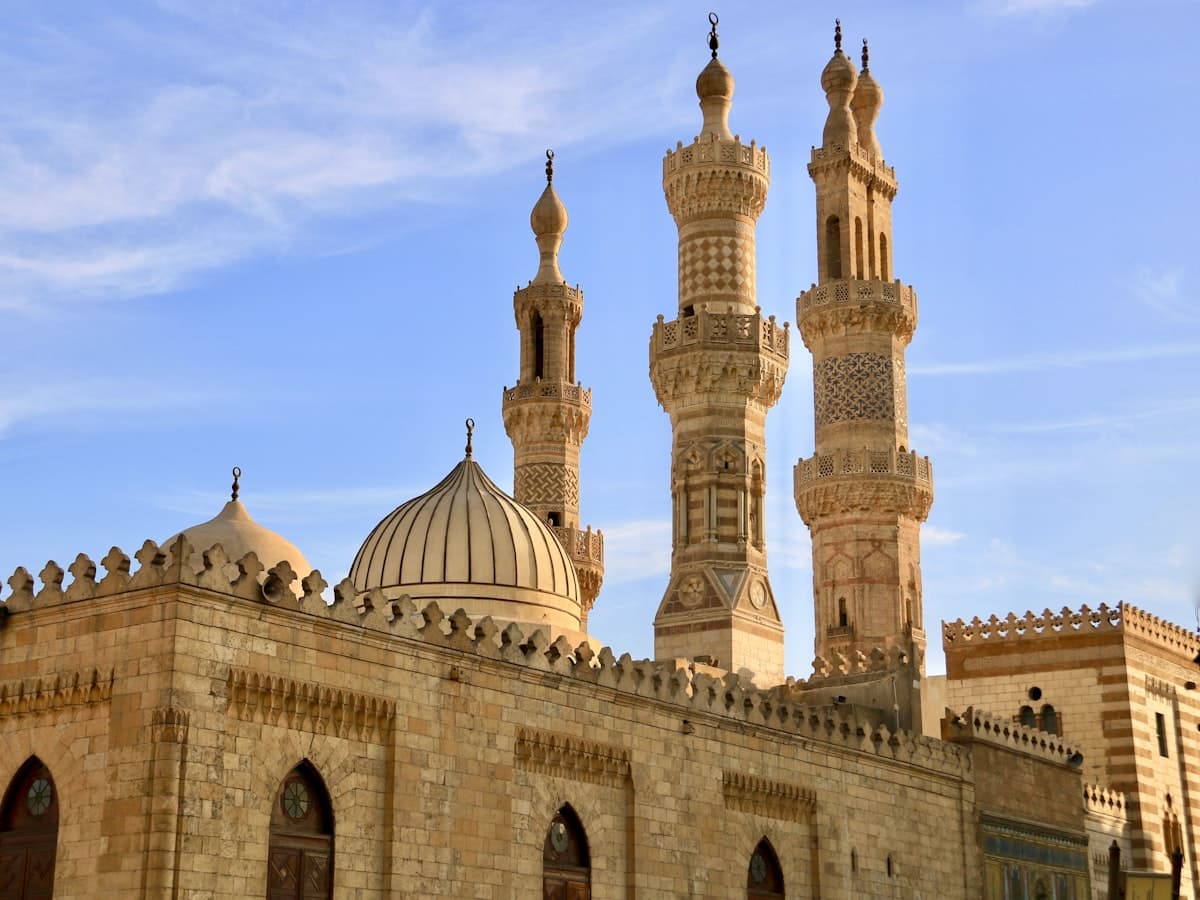
Assuming Al-Azhar Mosque is too crowded to visit. It is Cairo's most important medieval monument and receives a fraction of the tourist traffic of the Citadel. Arrive at 9am on a weekday and you may have the courtyard almost to yourself. The madrassa wings are free to enter and still contain students studying in the tradition that has continued here, with some interruptions, for over a thousand years.
Practical Tips
Dress accordingly: shoulders and knees covered for both men and women entering any mosque. Al-Azhar and some other mosques provide robes to borrow, but the ones available are often worn and the process takes time. Wear loose trousers and a long-sleeved shirt and the question disappears.
The best single investment you can make for an Islamic Cairo visit is the book "The Aga Khan's Cairo" or, more accessibly, Caroline Williams' "Islamic Monuments in Cairo: The Practical Guide," which identifies every significant structure with GPS references and opening hours. It is available at the AUC bookstore downtown for approximately EGP 350. It will save you three times that in misdirected entry fees.
Water: the tap water in Egypt is treated but heavily chlorinated. Carry 1.5 liters minimum for a full day in the medieval quarter. There are no reliable cafes in the deeper alleys.
The light in Islamic Cairo hits its best quality between 7am and 9am, when the alleys are nearly empty and the morning call to prayer is still dissolving in the stonework. If you are going to be in Cairo for more than two days, spend one morning arriving at Bab al-Futuh at 7am with nothing but a camera and an hour before the city wakes fully. This is not a practical tip. It is the most important thing I can tell you about the place.
Frequently Asked Questions
The Weekly Dispatch
More on Egypt, every Friday.
Cultural depth and places most guides never mention.
No spam. Unsubscribe anytime.