Islamic Golden Age Cairo: A History Guide to Islamic Cairo
Cairo's medieval Islamic quarter contains more medieval monuments than any other city on earth. Most visitors see two. The other 600 are extraordinary.

Quick Facts
- Best time to visit
- October to April. The October to December window combines tolerable heat (20 to 27°C) with dry air and good afternoon light. Avoid July and August unless you begin before 9am and finish by noon.
- Entrance fee
- Al-Azhar Mosque: free. Ibn Tulun: EGP 80 (approx $1.60 USD). Sultan Hassan Mosque: EGP 100 (approx $2 USD). The Citadel complex: EGP 450 (approx $9 USD). Bab Zuweila minaret climb: EGP 60. Gayer-Anderson Museum: EGP 120 (approx $2.40 USD). Combined monuments pass for twelve sites: EGP 600 (approx $12 USD).
- Opening hours
- Most mosques 9am to 5pm daily, closed to non-worshippers during Friday prayer (approx 12pm to 1:30pm). Citadel complex 8am to 5pm winter, 8am to 6pm summer. Gayer-Anderson Museum 9am to 4pm, closed Tuesdays.
- How to get there
- Metro Line 1 to Mar Girgis station, then walk north (20 minutes). Taxi or Uber from Downtown Cairo: EGP 25 to 40. Bus 72 or 174 from Tahrir Square: EGP 5. For the Citadel specifically, a taxi from Al-Azhar Mosque costs EGP 20 to 30.
- Time needed
- Minimum one full day for the core sites. Two days to walk Al-Muizz Street properly and include Ibn Tulun, the Citadel, and the Fatimid gates without rushing.
- Cost range
- Budget EGP 400 to 700 per day covering entry fees, street food, and local transport. Mid-range EGP 1,200 to 2,000 per day with a licensed guide and sit-down meals.
Quick Facts
Best time to visit: October to April, when temperatures stay below 25°C and the afternoon light turns the limestone facades amber rather than bleaching them white.
Entrance fees: The Islamic Cairo historical area is walkable for free. Individual monuments charge separately: Al-Azhar Mosque is free; the Mosque-Madrassa of Sultan Hassan costs EGP 100 (approx $2 USD); the Citadel complex costs EGP 450 (approx $9 USD); Ibn Tulun Mosque is EGP 80 (approx $1.60 USD). A combined Islamic Cairo monuments pass costs EGP 600 (approx $12 USD) and covers twelve sites.
Opening hours: Most mosques open daily from 9am to 5pm, with closures during Friday prayer (approximately 12pm to 1:30pm). The Citadel opens daily 8am to 5pm in winter, 8am to 6pm in summer.
How to get there: Take the Cairo Metro Line 1 to Mar Girgis station and walk north through the Coptic quarter into Fustat, then continue into Islamic Cairo (approximately 20 minutes on foot). Alternatively, take a taxi or Uber from Downtown Cairo to Al-Azhar Mosque (EGP 25 to 40). The 72 and 174 buses connect Tahrir Square to the area for EGP 5.
Time needed: One full day for the core circuit (Ibn Tulun, the Citadel, Sultan Hassan, Al-Rifa'i). Two days if you intend to walk the full length of Al-Muizz Street and enter the Khan el-Khalili side streets properly.
Cost range: Budget EGP 400 to 700 per day covering entry fees, street food, and transport. Mid-range EGP 1,200 to 2,000 per day if you add a guide and sit-down meals in the area.
---
Why This Place Matters
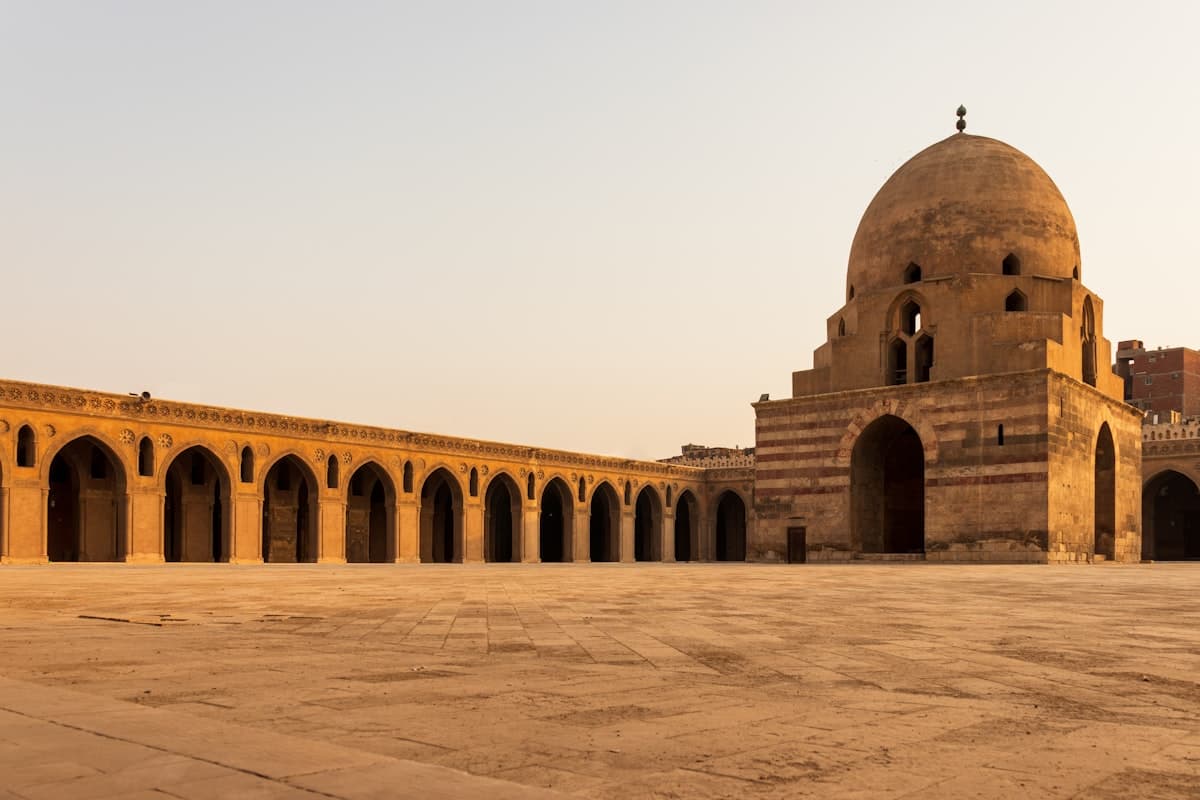
The phrase "Islamic Golden Age" conjures Baghdad, Cordoba, Samarkand. Cairo tends to enter the story late, as inheritor rather than originator. This is a mistake historians have been correcting for decades.
When the Fatimid general Jawhar al-Siqilli founded Al-Qahira in 969 CE, he did not build a city from scratch. He built directly over Fustat, the Arab garrison town established in 641 CE on the ruins of the Roman fortress of Babylon, which had itself been built on a Pharaonic settlement at the apex of the Delta. The city you walk through today is not 1,000 years old. It is a geological accumulation of at least 3,500 years of continuous urban life. Every foundation goes deeper than the building above it admits.
What the Fatimids created, and what the Ayyubids and Mamluks expanded, was the most intellectually productive Islamic city outside Baghdad. Al-Azhar University, founded in 970 CE, is the oldest continuously operating university on earth, predating Bologna by roughly a century and Oxford by nearly two centuries. At its peak in the 12th and 13th centuries, it housed scholars working simultaneously on algebra, optics, philosophy, medicine, and Islamic jurisprudence. Ibn Khaldun, often called the father of sociology and historiography, lectured here in the 14th century. His "Muqaddimah," written largely while he was based in Cairo, introduced the concept of social cohesion as the driver of historical change, 500 years before similar ideas appeared in European thought.
This is the frame for the Islamic Golden Age Cairo history guide that follows: not monuments preserved in amber, but a living intellectual and architectural tradition still operating inside the same streets.
---
What Al-Muizz Street Actually Contains
Al-Muizz li-Din Allah Street is often described as an open-air museum. This framing is both accurate and misleading. The street was named for the Fatimid caliph who conquered Egypt in 969 CE. It served as the ceremonial spine of the Fatimid royal city, the route along which rulers processed from the northern Bab al-Futuh gate to the southern Bab Zuweila gate. Every dynasty that followed built on or along it, which is why walking its full 1.2 kilometers takes you through Fatimid, Ayyubid, Mamluk, and Ottoman architecture in a continuous layered sequence.
The Mamluk monuments are the densest concentration. The Sultan Qalawun complex, built between 1284 and 1285 CE, contains a mausoleum, a madrassa, and a hospital (maristan) in a single block. The hospital deserves more attention than it gets. Qalawun endowed it specifically for the poor: it was open to men and women, offered treatment for physical and mental illness, provided music as therapy for psychological patients, and discharged recovering patients with enough money to live on for several days. This was 13th-century public healthcare infrastructure. The complex cost the equivalent of what contemporary sources described as the tax revenue of an entire province.
The Sabil-Kuttab of Abdel Katkhuda, built in 1744, sits at the street's midpoint and shows you what happened to Islamic Cairo architecture under Ottoman influence: the ground floor is a public water fountain (sabil), the upper floor a school for Quranic education (kuttab). The combination was a standard act of civic piety. Clean water and literacy in a single building, maintained by an endowment (waqf) that theoretically ran forever. Many of these waqf endowments are still technically active, administered by Egypt's Ministry of Awqaf.
The Bab Zuweila Problem
Bab Zuweila, the southern gate of the Fatimid city, was built in 1092 CE by the same Armenian architect who built the northern gates. Standing under its twin minarets, which belong to a later mosque built directly onto the gate's towers, you are looking at a structure that served as the city's main public execution site for 500 years. The last Mamluk sultan, Tuman Bay II, was hanged from this gate in 1517 after the Ottoman Sultan Selim I defeated him at the Battle of Marj Dabiq. The Ottomans reportedly had to hang him three times because the rope kept breaking, and contemporary chroniclers debated whether this was divine mercy or Ottoman incompetence. Entry to climb the minarets costs EGP 60 (approx $1.20 USD) and the view over the rooftops of Islamic Cairo is worth every piaster.
---
Ibn Tulun: The Mosque That Survived Everything
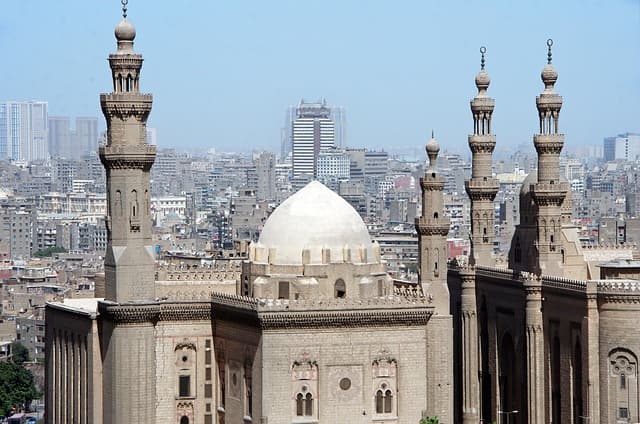
The Mosque of Ahmad ibn Tulun was completed in 879 CE and is the oldest mosque in Cairo still in its original form. Every other early mosque in the city has been rebuilt, altered, or demolished. Ibn Tulun survives because it is so large it was never financially viable to replace it. At 2.5 hectares, it remains the largest mosque in Cairo by footprint.
Ahmad ibn Tulun's story is the kind that should accompany every visit. He was born in Baghdad to a Turkic slave soldier (ghulam), rose through the Abbasid military, was sent to govern Egypt in 868 CE as a deputy to his stepfather, outmaneuvered the stepfather within a year, and proceeded to rule Egypt as a de facto independent dynasty while nominally acknowledging Abbasid authority. He founded an entirely new royal city north of Fustat called Al-Qata'i, of which the mosque is the only surviving remnant. After the Abbasids suppressed the Tulunid dynasty in 905 CE, they demolished Al-Qata'i almost completely. Soldiers were reportedly ordered to strip everything down to foundations. They left the mosque standing, likely because demolishing a mosque was religiously untenable even for a punitive army.
The spiral minaret, built to resemble the famous minaret of the Great Mosque of Samarra in Iraq, is the detail that stops most visitors. Ibn Tulun had grown up near Samarra. He built the minaret as an explicit reference to his Abbasid origins, or possibly as a statement of equivalence. The mosque's sycamore wood frieze, running around the entire interior, is one of the longest continuous carved inscriptions in any mosque anywhere. Entry costs EGP 80 (approx $1.60 USD) and the complex is almost always quiet compared to the Citadel circuit.
---
The Connections
The Citadel of Saladin, begun in 1176 CE, was built using workers who had just finished the smaller pyramids at Giza as a forced labor project under Saladin's Ayyubid administration. The limestone used in the Citadel's early walls was quarried, in part, from the outer casing stones of the smaller Giza pyramids. Medieval Arabic sources confirm this explicitly. You can stand inside a 12th-century Islamic fortress knowing its walls contain material stripped from monuments 3,500 years older.
The Mosque of Muhammad Ali inside the Citadel, completed in 1848, is often the first thing visitors photograph. It is Ottoman Baroque in style, modeled on the Sultan Ahmed Mosque in Istanbul. Muhammad Ali consciously chose this aesthetic to signal alignment with the Ottoman cultural world even as he was militarily defeating Ottoman armies. He demolished the Mamluk buildings that previously occupied that part of the Citadel, including structures that dated to the 14th century, to build it. This makes the Muhammad Ali Mosque both a monument and an act of deliberate historical erasure. Knowing this changes how you stand inside it.
Al-Azhar Mosque connects the threads most completely. Founded as a Fatimid Shia institution, converted to Sunni use after Saladin's conquest in 1171 CE, expanded by every subsequent dynasty, it is now simultaneously a functioning mosque, a university with 90,000 students, and the single most authoritative institution in Sunni Islam for issuing religious rulings. Its library contains manuscripts that have not been fully catalogued. Some of those manuscripts are almost certainly original Fatimid documents.
---
Common Mistakes
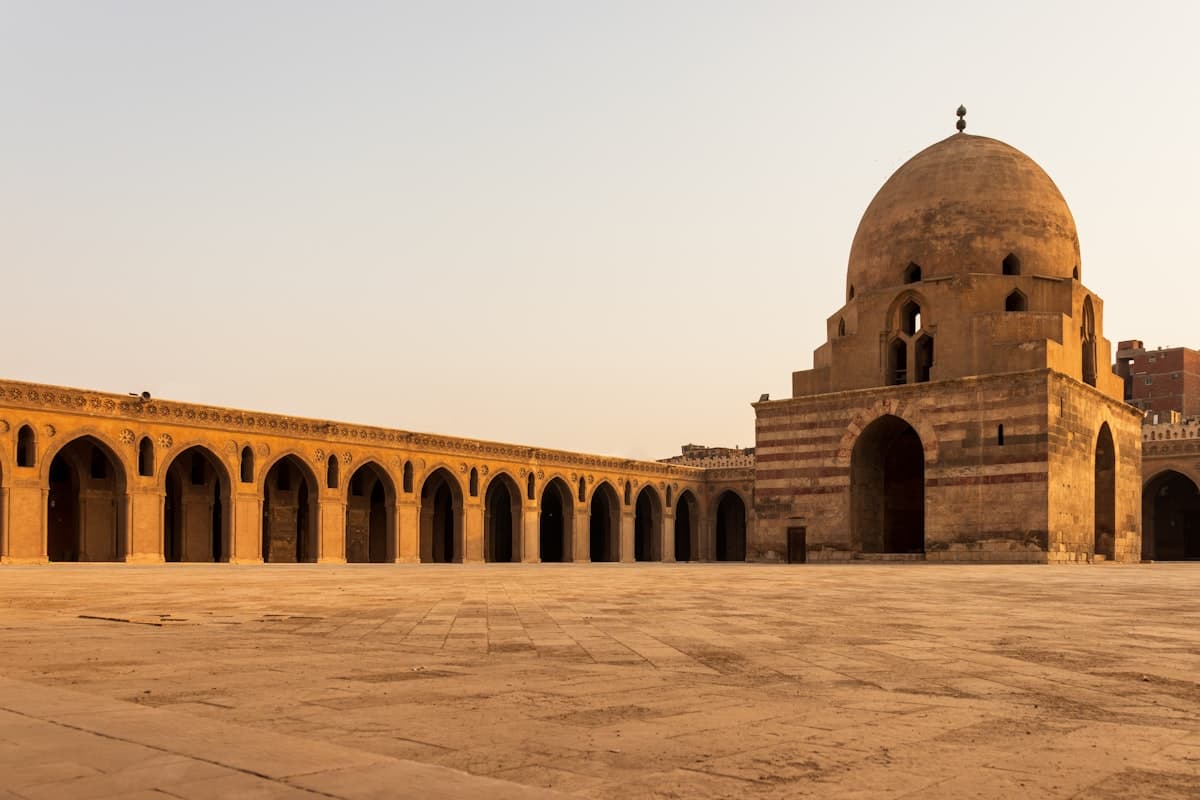
Visiting the Citadel without understanding what is free and what is not. The Citadel complex includes multiple mosques and museums under one admission ticket (EGP 450), but the ticket kiosks are confusing. Tourists often pay twice or miss the Military Museum, which contains Ottoman-era weaponry collections that are genuinely detailed.
Booking a Khan el-Khalili shopping tour as your introduction to Islamic Cairo. Khan el-Khalili is a 14th-century Mamluk market, built in 1382 by the Mamluk Emir Jarkas el-Khalili, who was later executed and whose name stuck to the market despite his disgrace. It is interesting for this reason. It is not interesting as a shopping destination. The goods are mostly made in China and the pressure from vendors is relentless. Walk through it for fifteen minutes to understand the spatial logic of a Mamluk commercial district, then leave and spend your time in the adjacent streets.
Skipping the Gayer-Anderson Museum because it sounds like a colonial oddity. It is a colonial oddity, but it is also two connected 16th and 17th-century Islamic houses filled with original architectural details: painted ceilings, mashrabiyya screens, Ottoman reception rooms, a Pharaonic collection assembled by a British army physician. It sits directly next to Ibn Tulun Mosque. Entry is EGP 120 (approx $2.40 USD) and it is usually empty.
Doing the sound and light show at the Citadel. It costs EGP 350, runs for 45 minutes, and narrates exactly the summary-level history you will have already absorbed from ten minutes of reading. It tells you nothing about the Tulunid, Fatimid, or Mamluk periods that built the city. Skip it without guilt.
Visiting only during midday in summer. The light between 11am and 3pm in July and August turns everything flat white and the heat inside stone courtyards is genuine suffering. The same sites at 9am or 4pm look and feel like different places.
Missing the northern Fatimid gates. Bab al-Futuh and Bab al-Nasr, the northern gates of the Fatimid city, are less visited than Bab Zuweila and considerably more intact in their original stonework. The interior of Bab al-Futuh contains hollow passages inside the walls where soldiers were stationed. You can walk through these passages. Most Islamic Cairo guides do not bother to mention them.
Over-relying on a single guided tour. One good guide for orientation on day one is worth the EGP 800 to 1,200 cost. But Islamic Cairo rewards slow, independent return visits. The neighborhood looks different at Friday morning prayer than it does on a Tuesday afternoon. It sounds different. Spend time in it without a schedule.
---
Practical Tips
Dress codes matter and are enforced with varying strictness. Men in shorts will be turned away from Al-Azhar and some smaller mosques. Women should carry a scarf. Disposable abayas are available at entrance gates for EGP 20 but are uncomfortable and unnecessary if you plan ahead.
Hire a local guide through the Egyptian Tourist Authority's licensed guide list rather than through a hotel or tour operator, which takes a significant commission. A licensed guide for a full day in Islamic Cairo costs EGP 800 to 1,500 depending on language and experience. Arabic-speaking guides who also speak English are frequently more knowledgeable than guides who primarily work with Western tour groups.
The neighborhood around Al-Muizz Street is genuinely safe for solo travelers, including women, during daytime hours. Evening visits to the lit sections of the street are also fine. Exercise the same judgment you would in any dense urban area.
Street food in Islamic Cairo is excellent and inexpensive. Kushari from a local shop costs EGP 25 to 40. Ful and ta'amiyya sandwiches from a cart cost EGP 10 to 15. Eating here is not a risk calculation. It is a pleasure.
If you have two days rather than one, spend the first in the southern section (Ibn Tulun, Gayer-Anderson, Sultan Hassan, Al-Rifa'i, the Citadel) and the second walking Al-Muizz Street end to end from Bab al-Futuh to Bab Zuweila, entering every open doorway. The open doorways are the point.
Frequently Asked Questions
The Weekly Dispatch
More on Egypt, every Friday.
Cultural depth and places most guides never mention.
No spam. Unsubscribe anytime.