Islamic Golden Age Cairo: A History Guide to the Medieval City
Cairo's medieval quarter contains 600 monuments in 3 square kilometers. Most tourists walk through it in 2 hours. That is not sightseeing. That is skimming.

Quick Facts
- Best time to visit
- October to April. Temperatures are manageable, morning light through mashrabiyya screens is sharp, and the streets before 10am on weekdays are navigable without crowds.
- Entrance fee
- Al-Azhar Mosque: free. Ibn Tulun: EGP 100 (approx $2 USD). Bab Zuweila towers: EGP 100 (approx $2 USD). Al-Muizz combo ticket: EGP 300 (approx $6 USD). Gayer-Anderson Museum: EGP 200 (approx $4 USD). Students with ID receive 50% discount at most state-managed sites.
- Opening hours
- Most mosques 9am to 4pm daily, closed to tourists during Friday noon prayer. Ibn Tulun 8am to 5pm. Gayer-Anderson Museum 9am to 4pm, closed Tuesdays.
- How to get there
- Metro Line 1 to Mar Girgis (EGP 10), then microbus north on Sharia Port Said (EGP 3). Taxi from Downtown Cairo EGP 50 to 80. Ride-hail app EGP 40 to 60. Walking from Khan el-Khalili to Ibn Tulun is 25 minutes and perfectly manageable in cooler months.
- Time needed
- Half day for Al-Muizz Street alone. Full day to combine with Ibn Tulun, Gayer-Anderson, and the Citadel. Two days if you want to move at a pace that lets the place make sense.
- Cost range
- Budget EGP 400 to 700 per day including entry fees, street food, and transport. Mid-range EGP 1,200 to 2,000 adding a licensed guide and a restaurant meal.
Quick Facts
Best time to visit: October to April, when temperatures sit between 15 and 25°C and the light through mashrabiyya screens is sharp rather than bleached.
Entrance fees: Al-Azhar Mosque: free. Ibn Tulun Mosque: EGP 100 (approx $2 USD). Bab Zuweila towers: EGP 100 (approx $2 USD). Al-Muizz Street monuments combo ticket: EGP 300 (approx $6 USD). Students with valid ID receive a 50% discount at most sites.
Opening hours: Most mosques open daily from 9am to 4pm, closing during Friday noon prayer (roughly 11:30am to 1:30pm). Ibn Tulun is open 8am to 5pm daily.
How to get there: Take the Cairo Metro Line 1 to Mar Girgis station (EGP 10, approx $0.20), then a microbus north along Sharia Port Said for EGP 3. From Downtown Cairo, a taxi to Khan el-Khalili should cost EGP 50 to 80. A ride-hail app will be EGP 40 to 60.
Time needed: One full day minimum for the core circuit. Two days if you intend to actually read the Arabic inscriptions, sit in the courtyards, and eat lunch at a local fuul shop on Al-Muizz rather than pushing on.
Cost range: Budget EGP 400 to 700 per day including entry fees and street food. Mid-range EGP 1,200 to 2,000 if you add a guide and a proper meal.
---
Cairo was not the capital of the Islamic Golden Age. Baghdad was, until the Mongols destroyed it in 1258, killing between 200,000 and 800,000 people and throwing the libraries into the Tigris River, which reportedly ran black with ink for days. What happened next is why Islamic Cairo exists at all. Scholars, craftsmen, and court officials fled west. Many of them came here. Cairo became, almost by accident, the inheritor of a civilization that Baghdad could no longer sustain.
This is the context that the monuments do not tell you. The medieval city you walk through now, from the mosque of Ibn Tulun in the south to the gate of Bab el-Futuh in the north, is not simply a collection of beautiful buildings. It is the physical record of a civilization that survived by relocating.
Why This Place Matters
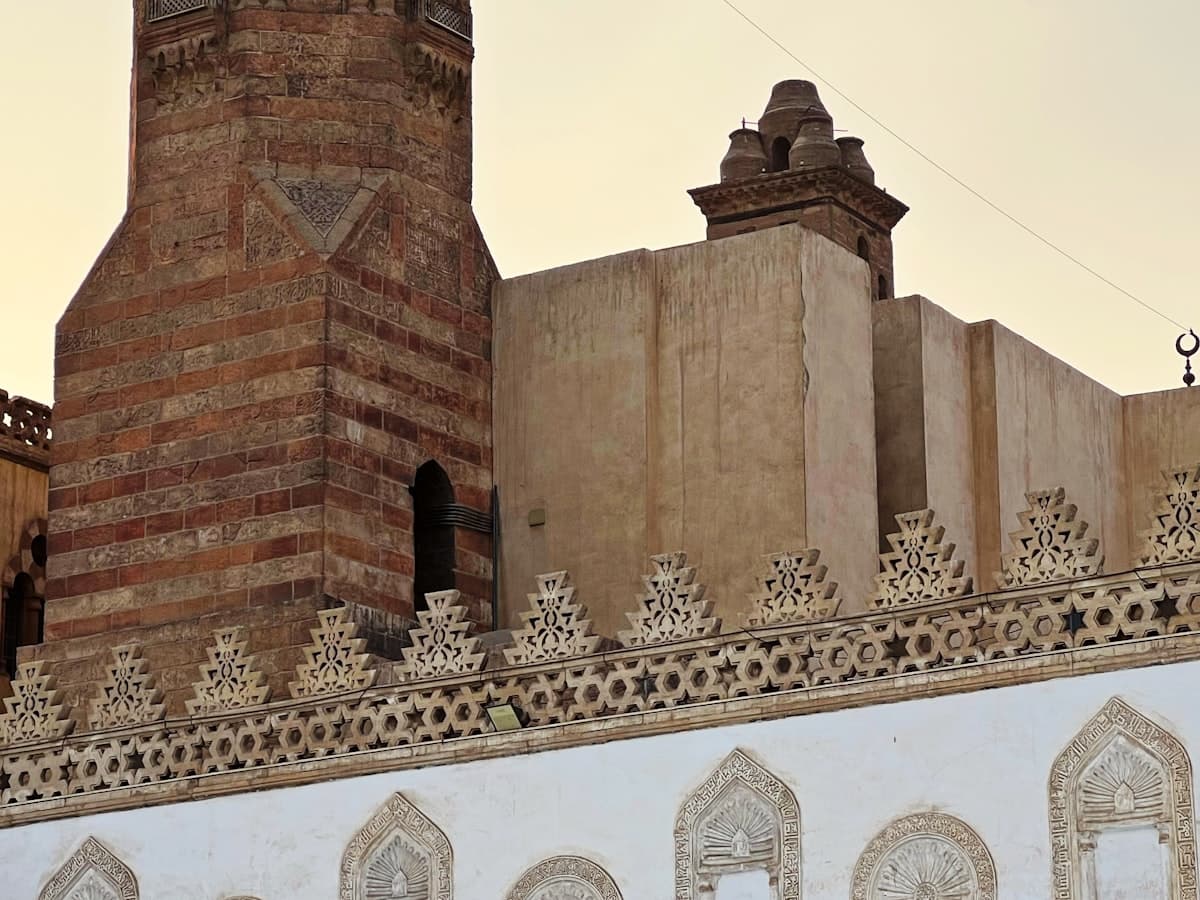
Al-Qahira, the city the Fatimids founded in 969 CE, was originally a private royal compound. It was not open to the public. The streets you walk through now, Al-Muizz li-Din Allah al-Fatimi Street in particular, did not become a commercial artery open to ordinary Cairenes until the Ayyubids dismantled Fatimid rule in 1171. Salah ad-Din, known in the West as Saladin, opened the city and built the citadel on the Muqattam hill simultaneously, one gesture of openness and one of control.
What makes this area important for understanding the Islamic Golden Age is density and continuity. The Fatimids brought Ismaili scholarship, a functioning postal system, and a library of 600,000 manuscripts. The Ayyubids replaced Ismaili theology with Sunni law but kept the architectural grammar. The Mamluks, who ruled from 1250 to 1517, took that grammar and turned it into something extraordinary: they built 36 major monuments in Cairo in less than 270 years, many of them still structurally intact today.
The Mamluks are worth pausing on. They were not a dynasty in any conventional sense. They were a military caste of enslaved soldiers, mostly Circassian and Turkic men purchased from the steppes of Central Asia and trained from childhood for warfare. They overthrew their Ayyubid masters, defeated the Mongols at the Battle of Ain Jalut in 1260 (the first significant Mongol military defeat), and then channeled their wealth into architecture on a scale that still shapes the Cairo skyline.
Walking Al-Muizz: What You Are Actually Looking At
Al-Muizz Street runs roughly one kilometer from Bab el-Futuh in the north to Bab Zuweila in the south. The two gates were built by the Fatimid caliph al-Mustansir between 1087 and 1092, using Armenian architects brought specifically from the Byzantine-influenced construction traditions of the north. Look at the corbelled machiolations above the Bab el-Futuh arch: they are not decorative. They are murder holes, slots through which defenders poured boiling oil.
Between those gates, you will pass the Madrasa and Mausoleum of Sultan Barquq, completed in 1386. Barquq was the first Burji Mamluk sultan, a man who rose from enslaved Circassian captive to ruler of Egypt, the Levant, and the Hejaz within a single lifetime. His tomb chamber is covered in geometric marble mosaic so precise that restorers in the 1990s found the original craftsmen had used a grid system with a base unit of 2.7 centimeters, maintained across 400 square meters of floor without a single major deviation.
Across the street and a few minutes south, the Sabil-Kuttab of Abdel Katkhuda, built in 1744, illustrates something most visitors miss: the Islamic city was a welfare infrastructure. A sabil was a public water fountain, funded by a private endowment, offering free clean water to anyone who asked. The kuttab above it was a free school, usually for orphaned boys. The building was simultaneously charity, public health intervention, and religious practice. There are 300 of them in historic Cairo. Most are locked. A handful still function.
Ibn Tulun: The Mosque That Outlasted Everything Around It
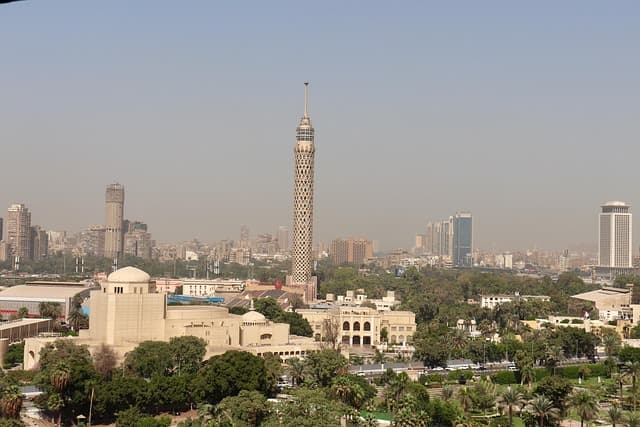
Of everything in Islamic Cairo, Ibn Tulun is what you should see if you see only one thing. Not Al-Azhar, which is holier and more famous, but Ibn Tulun, which is older, stranger, and almost entirely intact in a way that almost nothing in this city is.
Ahmad ibn Tulun was the Abbasid governor of Egypt who declared effective independence from Baghdad in 868 CE and then built an entirely new city, Al-Qata'i, north of Fustat. The mosque was completed in 879 CE. Al-Qata'i was later razed to rubble by the Abbasids when they reasserted control, and then swallowed by Cairo's expansion. The mosque survived because it was too large and too well-built to destroy easily. It is the only structure from the Tulunid period still standing.
The minaret is the detail nobody tells you about. It has an exterior spiral staircase, the only one of its kind on any mosque in Egypt. The form almost certainly derives from the Great Mosque of Samarra in Iraq, which ibn Tulun had seen before coming to Egypt. He brought the architectural memory of Iraq with him and left it in the Cairo skyline, where it has been visible for eleven centuries.
Inside the mosque, the stucco frieze running around the inner arcades is 2.5 kilometers long if you were to unroll it flat. It contains an entire transcription of the Quran in Kufic script, wound continuously around the courtyard. Most visitors do not notice it. They are looking at the courtyard's proportions, which are genuinely arresting, 92 meters on each side, enough space that the morning call to prayer takes a noticeable beat to echo back from the far wall.
The Connections: Layers Below and Above
The mosque of Amr ibn al-As in Fustat, a few kilometers south of Ibn Tulun, is officially the first mosque built on African soil, founded in 641 CE. What almost no visitors are told is that the site Amr chose for his mosque sat at the edge of the Roman fortress of Babylon, whose walls you can still see at the Coptic Museum nearby. The canal that ran alongside it was the Trajan Canal, a Roman waterway that the Pharaonic Egyptians had first cut in some form as far back as 1870 BCE to connect the Nile to the Red Sea. The Islamic city of Cairo did not start from blank ground. It started from a Roman fortress, above a Pharaonic canal, on soil that had been farmed for five thousand years.
The citadel that Saladin built in 1176 used stone quarried partly from the smaller pyramids at Giza. This is documented. You can identify the casing blocks in some of the citadel's interior walls by their angle. The Mosque of Muhammad Ali inside the citadel, the Ottoman-era building that dominates Cairo's skyline, was completed in 1857 and is modeled on the Blue Mosque in Istanbul, which was itself inspired by the Hagia Sophia, which was the dominant Christian church of the Byzantine Empire. Stand inside Muhammad Ali's mosque and you are looking at a chain of architectural influence that runs from Justinian's Constantinople to Ottoman Istanbul to Egyptian khedival ambition, built on a hill that Saladin chose using Pharaonic stone.
Common Mistakes
Skipping Ibn Tulun to spend more time in Khan el-Khalili. Khan el-Khalili is a bazaar. It has been a bazaar since the Mamluk era, yes, but today it sells the same alabaster statues and papyrus paintings available in every hotel gift shop in Cairo. The merchants are practiced and charming and the prices are aimed at people who have not yet figured out the local economy. Ibn Tulun takes 45 minutes to walk properly and costs EGP 100. Do not swap it for an hour of souvenir negotiation.
Attempting the Al-Muizz circuit on a Friday afternoon. The street fills completely with vendors, families, and school groups after 3pm on Fridays. You cannot see the facades, you cannot hear yourself think, and most of the interior monuments are closed for the second time that day. Go on a weekday morning before 10am and the street is nearly empty.
Paying for the sound and light show at the Citadel. It costs EGP 350 and tells a simplified version of Cairo's history accompanied by colored floodlights and narration written for an audience assumed to know nothing. Read this article instead and use those EGP 350 for a dinner at Naguib Mahfouz Restaurant in Khan el-Khalili where you can eat kofta six meters from where Mahfouz himself sat for decades.
Ignoring the Gayer-Anderson Museum. It is attached to the southern wall of Ibn Tulun and contains two Ottoman-era merchant houses filled with their original furniture, textiles, and manuscripts. John Gayer-Anderson, a British officer, assembled the collection between 1935 and 1942. It costs EGP 200 (approx $4 USD) and is almost never crowded. It is where the interior scenes of the 1977 James Bond film "The Spy Who Loved Me" were filmed, though you will not find that on the official signage.
Assuming you need a guide. For some sites, particularly the complex of Sultan Hassan and the Madrasa of Al-Rifai, a guide who reads Arabic adds genuine value because the inscriptions tell you which Quranic passages were chosen and why they were chosen for that specific building type. For Al-Muizz Street generally, a good map and this kind of contextual reading is sufficient, and the guides who approach tourists near Bab el-Futuh are often not licensed and frequently lead you into their cousin's papyrus shop within twenty minutes.
Treating Al-Azhar as a tourist site rather than a working institution. Al-Azhar University, founded by the Fatimids in 970 CE, is the oldest continuously operating university in the world, predating Bologna by approximately 118 years. It is also still the primary institution that issues religious rulings across the Sunni world. Non-Muslim visitors can enter the mosque itself with modest dress (abayas are available at the entrance for EGP 20), but the university buildings are not a museum. Students study there. Behave accordingly.
Practical Tips
Dress conservatively regardless of gender. In practical terms: shoulders covered, knees covered, and women should carry a loose scarf for mosques. At Ibn Tulun you will remove your shoes; bring socks or wear slip-ons.
The best single meal near the Islamic Cairo circuit is at El-Fishawy café in Khan el-Khalili, which has been serving tea continuously since 1773. Order the karkadeh (hibiscus tea, served cold) and the mint tea. Do not order food. The food is mediocre and overpriced. The tea is the point.
Hire a licensed guide if you want one through the Egyptian Tourist Authority office at the Citadel rather than from the street. Licensed guides display a metal badge with a registration number. Half-day rates should be EGP 800 to 1,200, negotiated before you start.
Photography is permitted in most sites without a fee, but asking before photographing people inside mosques is both courteous and likely to get you better photographs: Cairenes who consent to being photographed generally give you something worth seeing.
The Islamic Cairo area is safe for solo travelers including solo women. The main friction is persistent salesmanship, not physical danger. A firm, pleasant "la shukran" (no thank you) works. Engaging with an opening gambit about where you are from will extend the conversation for twenty minutes. Decide in advance what you want.
Frequently Asked Questions
The Weekly Dispatch
More on Egypt, every Friday.
Cultural depth and places most guides never mention.
No spam. Unsubscribe anytime.