Islamic Golden Age Cairo: A History Guide Worth Your Time
Al-Qahira was founded in 969 AD not as a city for Egyptians, but as a private royal capital foreigners were banned from entering. It's been hiding in plain sight ever since.

Quick Facts
- Best time to visit
- October to March. October combines manageable temperatures (22 to 28C), lower tourist numbers than December and January, and morning light ideal for photographing the stone-faced monuments.
- Entrance fee
- Al-Muizz Street walking: free. Bab Zuweila: EGP 100 (approx $2 USD). Mosque of Sultan Hassan: EGP 180 (approx $3.50 USD). Ibn Tulun Mosque: EGP 80 (approx $1.60 USD). Gayer-Anderson Museum: EGP 120 (approx $2.50 USD). Al-Hakim Mosque: free.
- Opening hours
- Most monuments daily 9am to 5pm. Ibn Tulun from 8am. Mosques may close to non-Muslim visitors Friday 11:30am to 1:30pm. Al-Azhar Mosque open to visitors outside prayer times, roughly 9am to 11am and 1:30pm to 4pm on Fridays.
- How to get there
- Metro Line 1 or 2 to Ataba Station (EGP 10), then 15-minute walk east or short microbus ride. Taxi from downtown EGP 60 to 100. Uber or Careem from Zamalek EGP 80 to 140. Arriving on foot from Midan Tahrir via Al-Azhar Road takes approximately 25 minutes walking.
- Time needed
- 4 to 5 hours for Muizz Street corridor alone. Full day if combining with the Citadel. Separate half-day for Ibn Tulun and Gayer-Anderson. Two days total for a complete picture.
- Cost range
- Budget EGP 400 to 700 per day including entrance fees, street food lunch, and metro transport. Mid-range EGP 1,200 to 2,000 with a licensed guide (EGP 600 to 1,200 for a half-day) and a sit-down meal.
Islamic Golden Age Cairo: A History Guide Worth Your Time
Al-Qahira was founded in 969 AD not as a city for its residents, but as a walled royal enclosure for the Fatimid caliphs. Common Egyptians were prohibited from entering. The markets, the mosques, the layered neighborhoods that now constitute what tourists call "Islamic Cairo" were built on the margins of that exclusion, and then eventually swallowed it whole. What you walk through today is not a preserved medieval quarter. It is a living argument about who a city belongs to, conducted in stone, plaster, and 14 centuries of accumulated repair.
This is what makes Islamic Golden Age Cairo history a genuinely strange subject to study on foot. Nothing here is from one period. A single street might contain a Fatimid minaret, a Mamluk sabil-kuttab (a fountain school), an Ottoman wikala (merchant caravanserai), and a concrete block from the 1970s sharing the same wall. Cairo does not curate its past. It uses it.
Quick Facts
Best Time to Visit: October to March. Summer heat in the narrow lanes of Khan el-Khalili and around the Muizz Street corridor reaches 38C or higher and the humidity makes the stone feel like a furnace. October mornings specifically offer low crowds and workable light by 7am.
Entrance Fees: Al-Muizz Street (walking the street itself): Free Bab Zuweila and its minarets: EGP 100 (approx $2 USD) Mosque of Sultan Hassan: EGP 180 (approx $3.50 USD), students EGP 90 Al-Rifa'i Mosque (combined ticket with Hassan often available): EGP 180 Al-Hakim Mosque: Free (maintained by the Dawoodi Bohra community, Shia Muslims from India) Mosque-Madrasa of Sultan Barquq: EGP 60 (approx $1.20 USD) Gayer-Anderson Museum (adjacent to Ibn Tulun): EGP 120 (approx $2.50 USD), students EGP 60
Opening Hours: Most monuments open daily 9am to 5pm. Some mosques close to non-Muslim visitors during Friday prayer (11:30am to 1:30pm). The Ibn Tulun Mosque complex is accessible from 8am.
How to Get There: Metro to Ataba Station (Line 1 or 2), then a 15-minute walk or a microbus east toward Al-Azhar. Metro fare: EGP 10. Taxi from downtown Cairo: EGP 60 to 100 depending on traffic. Uber or Careem from Zamalek or Garden City: EGP 80 to 140. Arriving at Bab Zuweila or Sayyidna Hussein Square by foot from Al-Azhar is the most logical starting orientation.
Time Needed: A serious walk of Muizz Street plus the Citadel area requires a full day. If you are combining Ibn Tulun with the Gayer-Anderson Museum, budget a separate half-day. Attempting everything in one day is the most common and most punishing mistake visitors make.
Cost Range: Budget EGP 400 to 700 per day (entrance fees, local lunch, transport). Mid-range EGP 1,200 to 2,000 with a licensed guide and a sit-down meal at a restaurant inside the historic quarter.
Why This Place Matters
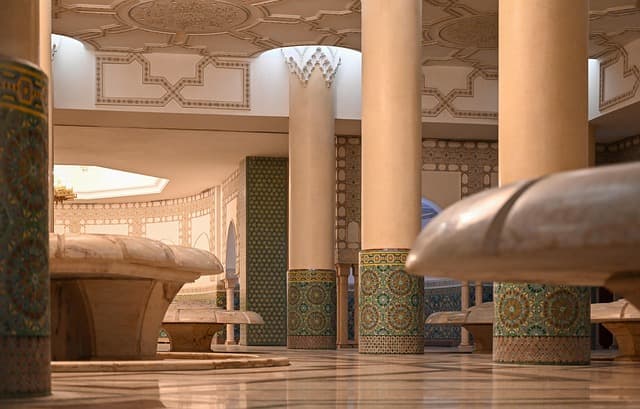
Cairo is not the oldest city in Egypt. Memphis, Thebes, Alexandria all predate it by millennia. But Cairo became, for roughly three centuries between 969 and 1258 AD, the intellectual and commercial capital of the Islamic world. The Fatimid dynasty that founded it established Al-Azhar University in 970 AD, making it the oldest continuously operating university on earth, predating the University of Bologna by more than a century.
What the Fatimids built, the Ayyubids (Saladin's dynasty) consolidated, and what the Mamluks inherited, they transformed into something extraordinary. The Mamluk period, roughly 1250 to 1517, produced more architectural monuments per decade than any other dynasty in Egyptian history. These were not Egyptian-born rulers. The Mamluks were enslaved soldiers, mostly Turkic and Circassian, purchased as boys, trained as warriors, and converted to Islam. They were legally enslaved, and yet they built the most architecturally sophisticated city in the medieval world. Sultan Hassan's mosque-madrasa, completed in 1363, required 100,000 workers and remains structurally unreplicated: no one has definitively explained how the vaulted ceilings of that scale were constructed without reinforced material.
This is the context for any honest Islamic Golden Age Cairo history guide. You are not visiting a quarter that was great and then stopped. You are visiting a city that absorbed Fatimid grandeur, Ayyubid military pragmatism, Mamluk artistic obsession, Ottoman administrative reordering, and Khedival modernization, and kept building anyway.
Al-Muizz Street: What You Are Actually Walking Through
Al-Muizz li-Din Allah Street is named for the Fatimid caliph who conquered Egypt in 969. It runs roughly north to south through the heart of the old city and has been a functioning commercial and ceremonial artery for over a thousand years. The section between Bab al-Futuh (the northern gate) and Bab Zuweila (the southern gate) contains the highest concentration of medieval Islamic monuments in the world, according to UNESCO's own designation documentation.
Most visitors walk it in one direction, look at facades, and leave. This is a waste.
The Madrasa and Mausoleum of Sultan Qalawun, built in 1285, contains a mausoleum interior modeled directly on the Church of the Holy Sepulchre in Jerusalem. Qalawun had visited Jerusalem during the Crusader period and commissioned his architects to replicate its ambulatory plan. You are standing inside an Islamic funerary monument whose spatial logic is Christian. The geometric windows use stained glass in a technique brought from Syria, and the marble floor panels are Roman spoils taken from earlier buildings on the same site.
Next to it, the Madrasa of Al-Nasir Muhammad contains a Gothic doorway. Not an Islamic interpretation of Gothic: an actual portal taken from a Crusader church in Acre after the city fell to the Mamluks in 1291 and transported to Cairo as a trophy. The Mamluks were sophisticated enough to recognize European architectural quality and confident enough to repurpose it without any anxiety about mixing traditions.
Do not rush past the sabil-kuttab complexes. These combined public water fountains with Quranic schools on the floor above, a model of civic philanthropy that predates European public fountain systems by centuries. The sabil of Abd al-Rahman Katkhuda, built in 1744 during the Ottoman period, is one of the best preserved and sits at the fork of two lanes where the light, in the late afternoon, does something specific to the carved stone that a photograph will not replicate.
The Mosque of Ibn Tulun: The One Most People Skip
If you read nothing else in this guide, read this: the Mosque of Ibn Tulun, built between 876 and 879 AD, is almost certainly the most significant Islamic monument in Cairo and the one tourists visit least. It survives as the only complete Abbasid-era mosque in Egypt, and its spiral minaret, unique in Africa, was modeled on the minaret of the Great Mosque of Samarra in Iraq.
Ahmad ibn Tulun was the son of a Turkic slave sent as a gift from the ruler of Bukhara to the Abbasid caliph in Baghdad. He became governor of Egypt, declared effective independence from the caliphate, and built a mosque that could accommodate his entire army at Friday prayer. The mosque covers 2.5 hectares. It was funded, according to one medieval account, because Ibn Tulun refused to use money from the Egyptian treasury and instead waited until a hoard of Roman gold was discovered beneath the city during construction.
The interior is almost always empty. This is not an exaggeration. On a typical weekday you may be alone in the courtyard, a courtyard of pointed arches that predates the pointed arch's widespread European use by two centuries. The Gayer-Anderson Museum, attached to the mosque complex through a medieval house, contains a room where Lawrence of Arabia was supposedly photographed. Whether that story survives fact-checking matters less than the rooms themselves, which are an Ottoman-era merchant house so fully preserved that the kitchen still smells faintly of old wood smoke.
The Connections: Nothing Here Stands Alone
The Citadel of Saladin, which dominates the eastern skyline of Islamic Cairo, was begun in 1176 on a limestone spur of the Muqattam Hills. Saladin chose the site for a specific reason: medieval sources note that meat hung there stayed fresh longer than anywhere else in the city due to prevailing winds. He was making a military and logistical decision, not an aesthetic one. The Citadel was the seat of Egyptian government for 700 years, until Khedive Ismail moved the government to Abdin Palace in 1874.
The mosque inside the Citadel that most visitors photograph, the Mosque of Muhammad Ali with its Ottoman domes and thin minarets, was built between 1830 and 1848 and is modeled on the Sultan Ahmed (Blue) Mosque in Istanbul. Muhammad Ali brought a Turkish architect and imported alabaster from the quarries at Beni Suef in Middle Egypt. He also demolished the Mamluk palace that had occupied the Citadel site for centuries to build it. Some Egyptian architectural historians consider this the single greatest act of deliberate heritage destruction in Cairo's history.
The connection runs forward, too. Ibn Tulun's mosque was restored in 1296 by a Mamluk sultan who found it derelict. The Mamluk monuments on Muizz Street were partially restored by the Comite de Conservation des Monuments de l'Art Arabe, a body established by the Khedivial government in 1881, which employed European architects who sometimes imposed their own aesthetic assumptions on the repairs. What you see today is a version of medieval Cairo, partially filtered through nineteenth-century European ideas about what medieval Cairo should look like.
Common Mistakes
Treating the Citadel's Muhammad Ali Mosque as the main event. It is not a medieval monument. It is a nineteenth-century Ottoman imitation that replaced something more interesting. Visit it, but do not let it consume half your day. The view of the city from the Citadel terrace is genuinely valuable. The mosque itself is handsome but historically shallow relative to what surrounds it.
Going to Khan el-Khalili primarily to shop. The bazaar was established in 1382 by Mamluk emir Jarkas el-Khalili as a caravanserai. Almost none of that original structure survives. What you are mostly shopping in is a nineteenth and twentieth-century reconstruction marketed as medieval. The coffee at El-Fishawi cafe is decent. The silver is usually not sterling. The papyrus is almost certainly banana leaf. Know this before you go.
Booking a group tour for Muizz Street. Group tours stop at the same six monuments and move at a pace set by the slowest member. Hire a licensed individual guide through the Egyptian Tourist Authority registry (verifiable at the Syndicate of Tourist Guides), or walk with a detailed map and this article. The monuments that matter most, like the Qalawun complex interior, require either knowing what you are looking for or having someone tell you.
Skipping the northern section of Muizz Street above Al-Azhar. The area around Bab al-Futuh and Bab al-Nasr, the two northern gates, is where the street becomes less polished and more alive. You will find working coppersmiths, a tent-makers bazaar (khayamiya) that supplies ceremonial tents for Egyptian weddings and funerals, and almost no other tourists.
Taking the sound and light show at the Citadel. It costs EGP 350 per person and tells you, in narrated form, a simplified version of the history in this article. The show ends around 10pm and leaves you no closer to understanding what you saw. Skip it.
Visiting on a Friday morning. The area around Al-Azhar and Sayyidna Hussein mosque becomes extremely crowded after Friday prayers. If you are not there for the religious experience itself, go Saturday or Sunday morning instead.
Assuming all mosques require the same level of dress. They do not, in practice. Al-Hakim Mosque is managed by the Dawoodi Bohra community and staff there are particularly attentive about dress and behavior. The Ibn Tulun complex is more relaxed but still requires shoulders and knees covered. Carry a light shawl regardless of what you are wearing.
Practical Tips
Start at Bab Zuweila before 9am. The morning call to prayer at the surrounding mosques layers into each other in a way that changes how you hear the city. The gates themselves open around 9am for climbing, but standing beneath them in the 8am light costs nothing and crowds nothing.
Water is available from street vendors throughout the quarter but carry at least one bottle. The lanes between monuments in summer are narrow enough to trap heat at ground level even when there is a breeze above.
A licensed guide for a half-day (four to five hours) costs between EGP 600 and 1,200 depending on experience and language. This is worth it specifically for the interior monuments, where the guide's relationship with the custodians often allows access to rooms that are technically closed.
The area is safe for solo travelers, including women, though the market lanes around Khan el-Khalili involve persistent vendor attention that is easier to navigate with confidence and a clear direction. Making eye contact and a brief "la shukran" (no thank you) in Arabic ends most approaches immediately.
For lunch, avoid the tourist-facing restaurants on the main Al-Azhar road. Walk two blocks in any direction and eat fuul and ta'amiyya from a local counter for EGP 40 to 60. The quality difference is significant and the price difference is more so.
Frequently Asked Questions
The Weekly Dispatch
More on Egypt, every Friday.
Cultural depth and places most guides never mention.
No spam. Unsubscribe anytime.