Nasser, the Suez Canal, and the History That Changed Egypt
Egypt nationalized the Suez Canal in 1956 with a single code word broadcast on radio. Within hours, a country reclaimed what 120,000 forced laborers had died to build.

Quick Facts
- Best time to visit
- October to April. The Delta is humid and hot from May through September. Winter months offer clear skies and manageable temperatures for walking the Corniche.
- Entrance fee
- Ismailia Suez Canal Museum: EGP 100 (approx $3 USD). Port Said National Museum: EGP 80 (approx $2.50 USD). Nasser Museum Cairo: free. Canal Corniche access: free.
- Opening hours
- Ismailia Suez Canal Museum: daily 9am to 4pm, closed Friday. Port Said National Museum: Tuesday to Sunday, 9am to 4pm. Nasser Museum Cairo: irregular hours, call ahead.
- How to get there
- Bus from Cairo Turgoman terminal to Ismailia: EGP 45 to 70, approx 2 hours. Microbus Ismailia to Port Said: EGP 20 to 30. Taxi Cairo to Ismailia: EGP 400 to 600. Train via Zagazig to Ismailia: EGP 30 to 50 with one change.
- Time needed
- One full day for Ismailia. Two days to properly cover Ismailia and Port Said. Add a third day for Delta sites at Tanis or Bubastis.
- Cost range
- Budget EGP 400 to 700 per day including transport, entry, and meals. Mid-range EGP 1,200 to 2,000 per day with Corniche hotel accommodation.
Quick Facts
Best time to visit: October to April, when the Delta heat is manageable and the Canal's industrial activity is clearest from the observation platforms.
Entrance fees: Ismailia's Suez Canal Museum: EGP 100 (approx $3 USD). The Canal Authority Headquarters in Ismailia: free exterior access. Port Said's National Museum: EGP 80 (approx $2.50 USD). The Gamal Abdel Nasser Museum in Cairo's Manshiyat al-Bakri district: free, though irregular hours apply.
Opening hours: Suez Canal Museum, Ismailia: daily 9am to 4pm, closed Fridays. Port Said National Museum: Tuesday to Sunday, 9am to 4pm. Observation points along the Canal in Ismailia: accessible from the Corniche at any hour.
How to get there: From Cairo, buses to Ismailia run from the Turgoman terminal, roughly EGP 45 to 70 one way, journey time 2 hours. Microbuses from Ismailia to Port Said cost EGP 20 to 30. Taxis from Cairo to Ismailia run EGP 400 to 600 depending on negotiation. No train connects Cairo directly to Port Said, but Ismailia is reachable by train via Zagazig for around EGP 30 to 50.
Time needed: One full day for Ismailia alone. Two days if combining Port Said and the Canal museum circuit properly.
Cost range: Budget EGP 400 to 700 per day including transport and entry fees. Mid-range EGP 1,200 to 2,000 per day with accommodation in Ismailia.
---
On the evening of July 26, 1956, Gamal Abdel Nasser stood before 250,000 people in Alexandria and gave a four-hour speech. Buried inside it was the name "Ferdinand de Lesseps," spoken casually, almost parenthetically. That name was the signal. Within minutes of hearing it on radio, Egyptian army officers and Canal workers who had been waiting in position seized every office, pumping station, and control point along the 193-kilometer waterway. The nationalization of the Suez Canal took less time than it took Nasser to finish his speech.
To understand Egypt's relationship with the Canal is to understand something that the standard Nasser Suez Canal Egypt history guide rarely captures: this was not simply a political maneuver. It was a reckoning that had been building since 1854, when Said Pasha, the Ottoman viceroy of Egypt, signed a concession that handed France and Britain the right to dig through Egyptian soil, use Egyptian labor, and collect Egyptian revenue for ninety-nine years. The nationalization was the end of that sentence.
Why This Place Matters
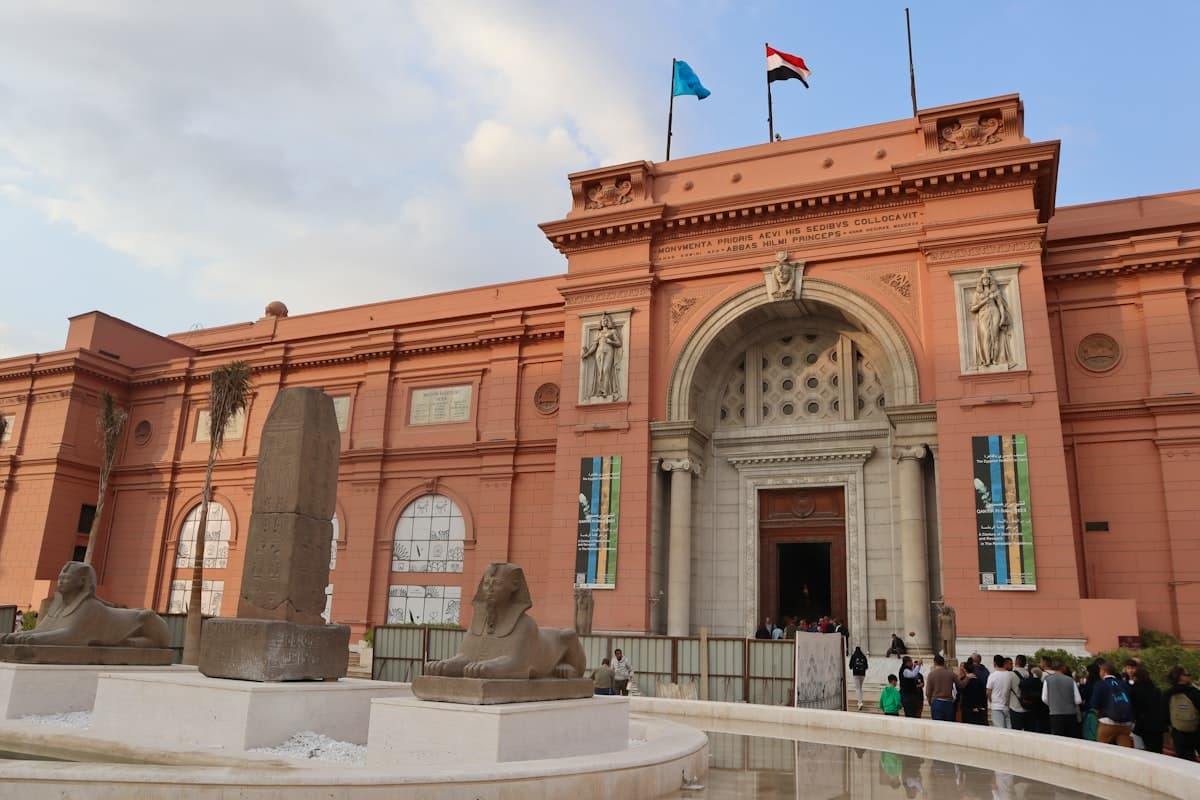
The Canal is 193 kilometers long and, at its narrowest, 300 meters wide. It carries roughly 12 to 15 percent of global trade. But the number that matters most to Egyptian history is 120,000: the estimated number of laborers, mostly Egyptian fellahin conscripted under a corvée system, who died during the Canal's construction between 1859 and 1869. De Lesseps, who gave the signal speech its code-name trigger, later described the project as a triumph of human engineering. He did not mention the labor conditions.
The Canal opened in 1869 under Khedive Ismail, who threw a party so extravagant that it bankrupted Egypt. He commissioned an opera house in Cairo for the occasion, and although Verdi's Aida is commonly said to have been written for the opening, that is a persistent myth: Aida premiered in Cairo in 1871, two years after the Canal opened. The Canal itself cost so much that by 1875, Ismail was forced to sell Egypt's 44 percent stake in the Suez Canal Company to Britain for 4 million pounds sterling. British soldiers arrived to protect the investment in 1882 and did not leave until 1954.
When Nasser nationalized the Canal in 1956, Egypt had been technically independent for thirty-four years but had never controlled its own most significant asset. The nationalization generated revenues that funded the Aswan High Dam after the United States and Britain withdrew their offer of financing in retaliation. One engineering project funded the other. The irony is not subtle.
The Landscape of the Canal: What You Actually See
Ismailia: The Colonial Blueprint, Still Standing
Ismailia was built to house the Canal's European management class, and it shows. The grid of wide streets, the old quarter's French-influenced villas with shuttered balconies and bougainvillea, the headquarters of the Suez Canal Authority: this is a city designed by people who assumed they would never leave. The Canal Authority building, still operational, sits at the edge of the Corniche. Ships pass so close you can read the names on their hulls without binoculars.
The Ismailia Museum, often skipped in favor of Port Said, contains something most visitors never encounter: the Stele of Year 400, a replica of a stele from Tanis that connects the Canal's ancient precedent to the pharaonic period. Ancient Egypt had its own version of the Canal. Necho II began a channel connecting the Nile to the Red Sea around 600 BC, and Darius I of Persia completed it. This ancient waterway fell into disuse and was rebuilt multiple times before the modern Canal superseded its route entirely. The Suez Canal is not a modern intrusion on the Egyptian landscape. It is the latest version of something Egypt has been building for 2,600 years.
Sitting on the Ismailia Corniche at dawn, with container ships sliding silently past as fishermen set their lines below, is one of the more genuinely strange experiences available in Egypt. The scale of the ships against the low green flatness of the Sinai bank is disorienting. They appear to float across desert.
Port Said: The City That Opened the Canal, and What Happened Next
Port Said was founded in 1859 specifically for Canal construction. It sits on a narrow spit of land where the Mediterranean meets the Canal's northern entrance, and its architecture reflects the trading-post ambitions of the era: wide wooden-balconied buildings, a lighthouse that once guided the first ships through, and a harbor that has always been more interested in commerce than tourism.
The city was almost completely destroyed during the 1956 Suez Crisis and again during the War of Attrition between 1967 and 1970. The British, French, and Israeli military response to Nasser's nationalization, the tripartite invasion that began in October 1956, was driven back not by Egyptian military force alone but by pressure from the United States and Soviet Union, both of whom saw the invasion as a relic of European imperialism they had no interest in supporting. Eisenhower's threat to crash the pound sterling if Britain did not withdraw is one of the more remarkable applications of economic power in modern diplomatic history.
Port Said's National Museum holds photographs from the 1956 bombardment alongside Pharaonic and Islamic artifacts from the Delta region. The juxtaposition is not curatorial sophistication; it reflects the practical reality of Egyptian museum funding. But it works. Looking at a Roman-period portrait from Fayum and then turning to find a 1956 newspaper front page framing Nasser's face is, unexpectedly, a coherent history of a country's relationship with foreign intervention.
The Nasser Dimension: What the Museums Say and Don't Say
Nasser died in 1970, reportedly from a heart attack brought on by exhaustion after mediating the Black September crisis between Jordan and the PLO. He was fifty-two. Approximately five million people attended his funeral in Cairo, the largest public gathering in Egyptian history to that point.
The Gamal Abdel Nasser Museum in Cairo's Manshiyat al-Bakri neighborhood occupies a villa near where he lived. It is modest to the point of self-effacement: personal objects, photographs, the desk where he worked, a timeline of his presidency. What it does not address directly is the cost of the Nasser period: the political imprisonments, the suppression of the Muslim Brotherhood and the left simultaneously, the disastrous military defeat of 1967. Egyptian state history has never fully reconciled the Nasser who nationalized the Canal with the Nasser who lost Sinai to Israel in six days.
The Canal nationalization itself is presented in Egyptian historical memory as an unambiguous triumph, and on its own terms it was. The Canal has been Egyptian-operated since 1956. The revenues fund the Egyptian state budget to this day, contributing approximately $9 to $10 billion USD annually. What the triumphal framing elides is the eighteen-month closure of the Canal after 1967, during which fifteen ships were trapped in the Great Bitter Lake and their crews, initially expecting days, ultimately spent eight years there, long enough to form their own postal service and Olympic team.
The Connections
The Canal's history does not begin with de Lesseps and does not end with Nasser. Tracing it backward connects you to Darius I and Necho II. Tracing it forward connects you to Sadat, who crossed the Canal in October 1973 in the military operation that restored Egyptian pride after 1967, and then to the 1975 reopening ceremony that Sadat staged with considerable pageantry, sailing through on a destroyer.
The Canal also connects physically to the Delta, the most archaeologically dense and least visited region of Egypt. Tanis, where the Stele of Year 400 was found, sits two hours northwest of Ismailia and contains royal tombs contemporary with the Valley of the Kings that were discovered intact in 1939. They are rarely visited. Bubastis, cult center of the cat goddess Bastet and capital of Egypt during the Twenty-Second Dynasty, is a forty-minute drive from Ismailia. The Delta rewards exactly the kind of traveler who finds Luxor too managed and the Canal cities too industrial.
Common Mistakes
Visiting only from Cairo as a day trip. The drive from Cairo to Ismailia takes two hours in reasonable traffic. Adding Port Said means you spend most of a single day in transit. Stay one night in Ismailia minimum.
Confusing the Suez Crisis with the Canal's construction history. The two are separated by nearly a century. Most visitors arrive knowing one story and leave confused about when the British actually showed up and why.
Taking the Suez City observation point over the Ismailia Corniche. Suez City at the southern end of the Canal is heavily industrial, less accessible, and offers no meaningful upgrade in terms of seeing actual ship traffic. The Ismailia Corniche gives you the same view with better surroundings and a working Corniche café culture.
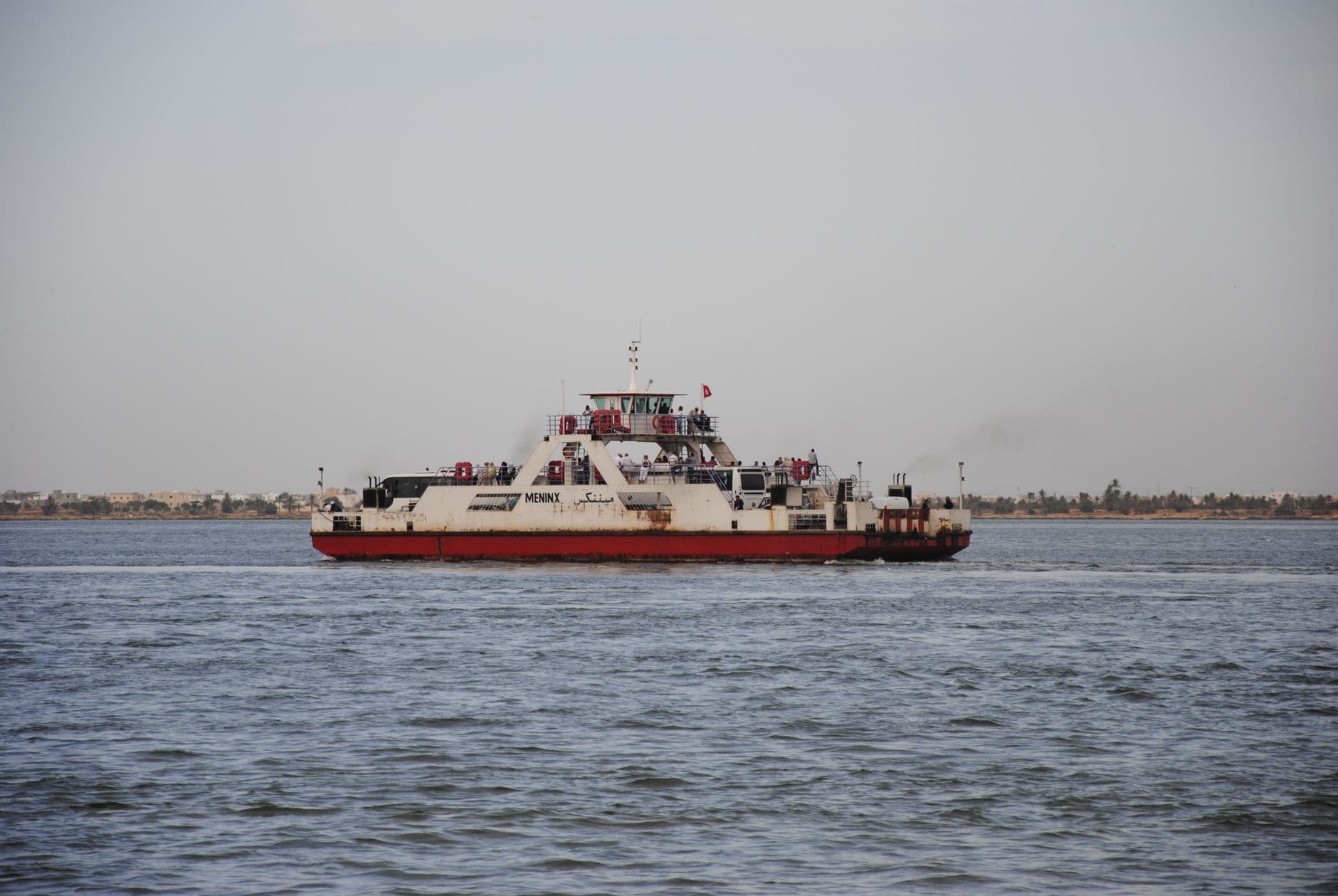
Paying for a guided boat tour of the Canal. Tours marketed from Ismailia hotels typically offer a twenty-minute crossing on a small ferry for EGP 300 to 500. The free passenger ferry crossing between Ismailia's east and west banks gives you the same experience for EGP 5. Take the ferry.
Skipping the Ismailia Museum for the Port Said Museum. Port Said is the better-known name, but Ismailia has the more interesting artifacts, including the Year 400 Stele replica and Canal construction-era equipment. Both are worth a visit, but if you have to choose one, choose Ismailia.
The sound and light show marketed in some Ismailia hotel packages. It was unreliable at time of writing and tells you nothing that a one-hour walk along the Corniche will not reveal more directly. Skip it.
Expecting Nasser's Cairo neighborhood to be a major attraction. The Nasser Museum is small, the signage is minimal, and it requires a taxi driver who knows it by name. It is worthwhile for anyone serious about this period of Egyptian history, but it is not a standalone destination. Combine it with a visit to the nearby Heliopolis neighborhood and the Baron's Palace for a half-day.
Practical Tips
Ismailia has decent mid-range hotels along the Corniche, most priced between EGP 800 and 1,800 per night. Book directly; online booking platforms often show outdated listings. Port Said has more options in the budget range but fewer worth recommending.
Friday mornings, when the Ismailia Museum is closed and the Canal Authority is quiet, are good days to simply walk the old quarter's colonial streets and visit the de Lesseps House, now a museum of sorts though opening hours are irregular. Knock and ask.
Bring water and sun protection. The Ismailia Corniche is exposed, and October through March mornings are mild but afternoons can surprise you with reflected heat off the water.
The best single experience available on this circuit, at no cost, is sitting at the northern edge of Ismailia's Corniche around 6am on a weekday. Container ships bound for the Mediterranean pass in convoy, moving at roughly 14 kilometers per hour, close enough to feel the displacement of water. There is nothing in the Egypt visitor experience quite like it. The pyramids are old stone at a distance. The Canal is the world economy in motion, 120,000 dead, one radio broadcast, and sixty years of Egyptian sovereignty, all operating simultaneously in front of you.
Frequently Asked Questions
The Weekly Dispatch
More on Egypt, every Friday.
Cultural depth and places most guides never mention.
No spam. Unsubscribe anytime.