Armenia in Cairo: A History Guide to Egypt's Forgotten Community
At its peak, Cairo's Armenian community numbered 40,000 people. Today fewer than 6,000 remain. Their churches, schools, and cemeteries are still standing. Most Egyptians walk past them daily without knowing what they are.

Quick Facts
- Best time to visit
- October to April for comfortable walking weather; April 24th specifically for genocide remembrance events
- Entrance fee
- Armenian Apostolic Church: free. Armenian cemetery Old Cairo: EGP 20 donation to caretaker (approx $0.40 USD). Community center: free during cultural events
- Opening hours
- Armenian Apostolic Church: Saturday and Sunday 9am to 12pm, weekday visits by appointment. Community club Heliopolis: Monday to Friday 10am to 4pm
- How to get there
- Haret Zuweilah church: 10-minute walk from Al-Azhar area, Uber EGP 25 to 40 from Downtown Cairo. Heliopolis community club: Bus Line 90 from Ramses Square EGP 5, Uber EGP 60 to 80
- Time needed
- Half day for church plus cemetery; full day to include Heliopolis community areas and Fatimid gates connection
- Cost range
- Neighborhood visits EGP 200 to 400 for transport; lunch in Heliopolis EGP 150 to 300 per person; overall a low-cost cultural half-day
Quick Facts
Best time to visit: October through April, when Cairo is cool enough to walk the neighborhoods on foot without losing half your day to heat exhaustion.
Entrance fees: The Armenian Apostolic Church of Cairo (Haret Zuweilah) is free to enter during visiting hours. The Armenian Catholic Church near Ramses Street is also free. The Armenian cemetery in Old Cairo requires a small donation of approximately EGP 20 to the caretaker.
Opening hours: Churches are generally open Saturday and Sunday mornings from 9am to 12pm, and by appointment during the week. The community center in Heliopolis operates Monday to Friday, 10am to 4pm. Hours shift around Easter and Christmas, both of which Armenians celebrate on different dates than the Western calendar.
How to get there: The main Armenian church near Haret Zuweilah is a 10-minute walk from the Al-Azhar metro area, or a EGP 25 to 40 Uber from Downtown Cairo. Heliopolis, where the community's social life now centers, is 20 minutes from Ramses Square by bus (Line 90, EGP 5) or EGP 60 to 80 by Uber.
Time needed: A focused afternoon covers the main church, the nearby cemetery, and a coffee stop in Heliopolis. A full day allows you to also explore the Coptic connection in Old Cairo and reach the small Armenian quarter remnants near Ezbekiyya.
Cost range: The neighborhood visits themselves cost almost nothing. Budget EGP 200 to 400 for transport, EGP 150 to 250 for lunch in Heliopolis, and EGP 50 for any community publications you find at the church.
---
Why This Place Matters
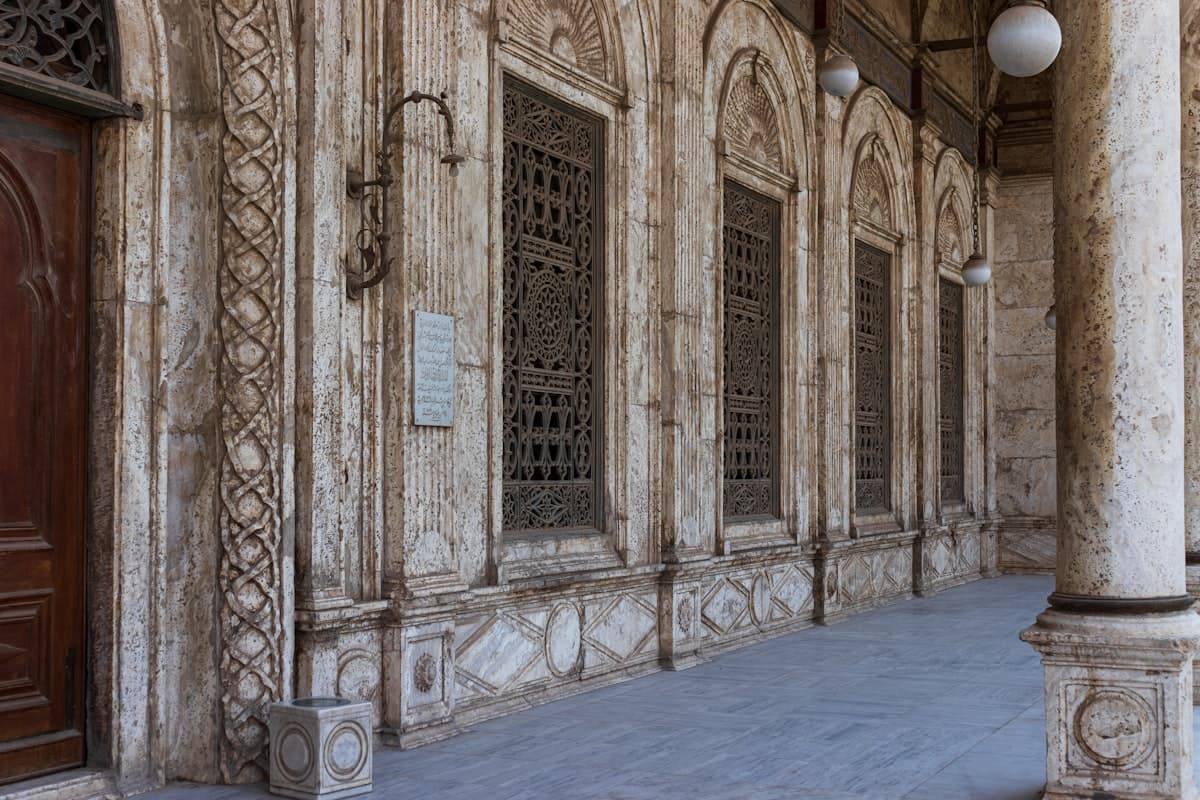
The Egyptian Empire rescued the Armenians twice. The first time was in the 11th century, when the Fatimid caliphate appointed the Armenian general Badr al-Jamali as vizier of Egypt in 1074, giving him effectively total control of the country for twenty years. Badr built the three remaining gates of Fatimid Cairo, Bab al-Futuh, Bab al-Nasr, and Bab Zuweila, all of which still stand. He imported Armenian craftsmen to build them, and some of those craftsmen stayed. A community began.
The second rescue came after 1915.
The Armenian Genocide, carried out by the Ottoman government between 1915 and 1923, killed an estimated 1.2 million Armenians. Egypt, under British control at the time and outside Ottoman reach, became one of the primary destinations for survivors. Between 1915 and 1920, tens of thousands of Armenian refugees arrived in Alexandria and Cairo, many having crossed the Syrian desert on foot. Egypt did not turn them away. The Khedivial government had already established a pattern of absorbing minorities, and the British administration processed Armenian arrivals into camps near Ismailia before allowing resettlement.
What makes the Egyptian Armenian story distinct from other diaspora communities is its depth of integration without erasure. Armenians in Cairo became Egyptian in almost every external sense: they spoke Arabic fluently, sent their children to Egyptian schools, ran Egyptian businesses, ate Egyptian food. But inside their churches, their community clubs, and their homes, they preserved a language, a liturgy, and a collective memory of catastrophe that has now persisted across five generations on Egyptian soil.
This is why the Armenian community Egypt history guide cannot be written as a single-site itinerary. The community is a neighborhood, a network, a set of institutions distributed across the city. You find it in Heliopolis over a backgammon board, in Old Cairo over a funeral, and in Haret Zuweilah during Sunday liturgy sung in classical Armenian, a language barely anyone on earth speaks outside these walls.
---
The Church on the Street of Two Palaces
The Armenian Apostolic Church of Cairo sits inside a narrow lane off Haret Zuweilah, a few hundred meters from the Mosque of Al-Mu'ayyad and a fifteen-minute walk from Al-Azhar. The building is not large. From the outside it looks like a sealed door in a stone wall, because that is mostly what it is. You knock, or you push, and suddenly you are inside a courtyard with a fountain and a church that has been in continuous use since 1830.
The Armenian Apostolic Church is one of the oldest Christian denominations in existence. Armenia became the first nation to adopt Christianity as a state religion in 301 AD, twelve years before Constantine legalized it in the Roman Empire. The liturgy performed in Cairo's Armenian church uses Grabar, classical Armenian, a language that diverged from spoken Armenian around the 5th century and has been frozen in liturgical use ever since. Hearing it is like hearing Latin Mass, except the congregation generally knows what is being said, because they grew up learning it alongside Arabic.
The church interior holds icons, some donated by Armenian merchant families in the 18th and 19th centuries, others brought to Cairo after the Genocide by families who carried them across the desert because they could carry nothing else. The priest, if he is present, will usually speak with visitors. He will tell you the congregation now numbers in the dozens on most Sundays, down from hundreds in his grandfather's time.
This is worth sitting with. The church is not a monument. It is a functioning institution, holding on.
The Community School and Its Graduates
The Kalousdian Armenian School in Cairo educated several generations of Cairo's Armenian community from the mid-20th century onward. Its graduates include engineers, architects, doctors, and at least one prominent Egyptian filmmaker. The school taught Armenian language and history alongside the standard Egyptian national curriculum, a balance that was both practical and political: it told students they were Egyptian and Armenian simultaneously, that these identities did not cancel each other out.
The school's enrollment peaked in the 1950s, when the Armenian community was large enough to fill its classrooms from within. Since then, emigration has thinned the student body. Today the school accepts non-Armenian Egyptian students to sustain its numbers. This is either a sign of institutional adaptability or of a community reaching the edge of its own demographic sustainability, depending on who you ask. Most Armenians in Cairo will give you both answers.
---
Heliopolis: Where the Community Lives Now
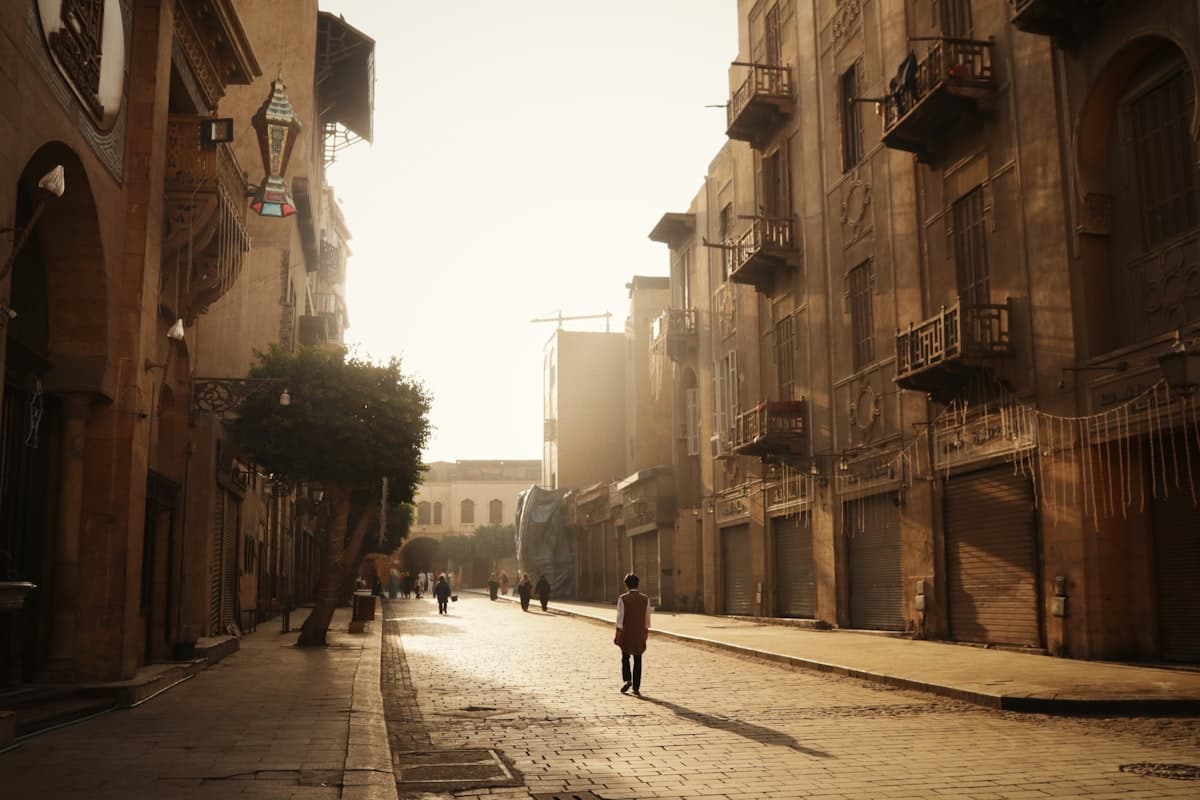
The Armenians who remain in Cairo are concentrated in Heliopolis, the early 20th-century suburb built by Baron Édouard Empain, a Belgian industrialist, between 1905 and 1910. Empain's vision was a model city for Cairo's European and Levantine middle classes, and Armenians, who were already established in commerce and skilled trades, were among the first to move in.
Heliopolis retains its distinctive architecture: arcaded streets, Islamic-Gothic hybrids, the occasional Moorish turret. Walking Baron Empain Street (now Ibrahim Laqqany Street) in the early morning, before traffic fills it, gives you a sense of the suburb as it was intended, a Mediterranean city transplanted to the Egyptian desert. The Armenian social club, still operating near Triomphe Square, is the de facto center of community life: it holds dinners, language classes, genocide remembrance events each April 24th, and the occasional wedding.
April 24th, Armenian Genocide Remembrance Day, is the most significant date in Cairo's Armenian calendar. A ceremony is held at the church, followed by a gathering at the club. It is not a tourist event, but visitors who attend respectfully are generally welcomed. The ceremony is conducted in Armenian and Arabic. It ends with the reading of names.
---
The Connections
The Armenian thread runs through Cairo's history in ways that most visitors, and most Cairenes, do not track.
Badr al-Jamali's gates on the north wall of Fatimid Cairo were built by Armenian architects using Armenian construction techniques imported specifically for the project. The interlocking stone joints in Bab al-Nasr are nearly identical to contemporaneous Armenian fortification work in Anatolia. When you walk through those gates, which most visitors do while looking for the Friday market at Khan el-Khalili, you are walking through Armenian engineering.
In the 18th and 19th centuries, Armenian merchants controlled significant portions of Cairo's textile and jewelry trade. The Bedrosian family, whose name appears in Ottoman commercial records from Cairo going back to the 1750s, operated trading networks connecting Cairo to Istanbul, Aleppo, and Venice. The route from Alexandria's port to the Khan el-Khalili bazaar passed through Armenian hands at multiple points.
The Coptic connection is less often mentioned but equally real. The Armenian Apostolic and Coptic Orthodox churches share theological roots in the Oriental Orthodox tradition and rejected the Council of Chalcedon in 451 AD for identical reasons. This common theology created historical solidarity: Coptic monasteries in Upper Egypt sheltered Armenian pilgrims and travelers for centuries, and the two communities in Cairo have maintained interfaith relations that are warmer, and more historically grounded, than most Egyptians realize.
---
Common Mistakes
Treating this as a single-site visit. There is no one Armenian Cairo. The community is distributed across multiple neighborhoods, and any single location, the church, the club, the school, gives you only a partial picture. Plan at least two neighborhoods if you want context.
Visiting without any prior reading on 1915. You will be received politely regardless of your preparation, but the conversations you can have with community members are transformed by knowing the basic history of the Genocide and the refugee period. Read the Wikipedia entry on the Armenian Genocide at minimum. Read Antonia Arslan's novel "Skylark Farm" if you want something more.
Skipping Heliopolis entirely. Most Egypt travel itineraries ignore Heliopolis because it has no pharaonic sites. This is the itinerary's failure, not Heliopolis's. The suburb is architecturally coherent in a way almost no other Cairo neighborhood is, and the Armenian community there is accessible and willing to talk.
The sound and light show near the Citadel costs EGP 350 and tells you nothing about Islamic Cairo's minority communities. Skip it entirely. If you have that time and money, hire a local guide specifically for the Fatimid Cairo walking tour, ask them to include Badr al-Jamali's contribution to the gates, and spend the difference on lunch.
Expecting an open-door museum experience. The Armenian community sites are living institutions, not heritage attractions. Call ahead. Confirm hours. If the church is locked when you arrive, knock on the adjacent community office. If no one answers, come back on Sunday morning.
Missing the cemetery. The Armenian cemetery in Old Cairo contains headstones with inscriptions in Armenian, Arabic, and French that trace family histories from Anatolia through the desert to Egypt. It is rarely visited and never crowded. The caretaker will walk you through if you ask and offer the EGP 20 donation.
Assuming the community is dying. It is smaller than it was. It is not dead. There are young Cairo Armenians who speak Armenian, attend the church, and intend to stay. They will tell you this themselves if you ask.
---
Practical Tips
The best entry point to this community is through an organization rather than a cold visit. The Calouste Gulbenkian Foundation has historically supported Armenian cultural preservation in Cairo and can sometimes facilitate introductions. Alternatively, contact the Armenian Apostolic Church of Cairo directly by phone before your visit. A brief conversation in advance, even through a translator, makes the actual visit far more productive.
April 24th is the best single day to experience the community at its most concentrated and its most candid. The mood is somber, the conversations are honest, and the gathering afterward at the club is open to respectful outside visitors.
Bring a notebook rather than a camera. People in this community have complicated feelings about being photographed, and the notebook signals that you are there to understand, not to document. You will leave with more.
If you read French, the community's historical archives contain documents in Armenian, Arabic, and French covering the refugee period from 1915 onward. Access to the archives is by appointment only and requires a specific research request, but the community is generally generous with scholars and serious independent travelers.
Eat in Heliopolis before or after your visit. The suburb has several good Lebanese and Egyptian restaurants along Triomphe and Merghany streets in the EGP 150 to 300 per person range. The Armenian community itself does not run public restaurants, but the club occasionally hosts dinners open to non-members during cultural events.
Frequently Asked Questions
The Weekly Dispatch
More on Egypt, every Friday.
Cultural depth and places most guides never mention.
No spam. Unsubscribe anytime.