Armenian Community Egypt History Guide: Cairo's Hidden Diaspora
At its peak, Egypt's Armenian community numbered 100,000. Today fewer than 6,000 remain. Their churches, schools, and cemeteries are still standing. Most Egyptians walk past them daily without knowing.

Quick Facts
- Best time to visit
- October to March for comfortable temperatures. January 6 (Armenian Christmas) and April 24 (Genocide Remembrance Day) for community events.
- Entrance fee
- Free at all Armenian churches and community sites. Armenian Club cultural events approximately EGP 50 to 100 per person.
- Opening hours
- St. Gregory Cathedral Heliopolis: daily approx 8am to 6pm. Armenian Evangelical Church Downtown: weekdays 9am to 2pm, Sunday services 10am.
- How to get there
- Metro Line 3 to Al-Ahram station for Heliopolis (10 min walk). Bolt or Uber from central Cairo to Heliopolis approximately EGP 80 to 120. Sadat Metro station (Lines 1 and 2) for Downtown Armenian Evangelical Church, 7 min walk.
- Time needed
- Half day for Heliopolis Armenian circuit. Full day to include Abbasiyya cemetery, Downtown church, and neighborhood exploration.
- Cost range
- Very low. Budget EGP 200 to 400 for transport across a full day. No significant entry fees. Add food and coffee as desired near Ibrahim Lakkis Street, Heliopolis.
Quick Facts
Best time to visit: October through March. Coptic and Armenian Christmas (January 6) brings the community together at the Armenian Cathedral of St. Gregory the Illuminator in Heliopolis for one of the few occasions you can see the full congregation assembled.
Entrance fees: The Armenian Cathedral in Heliopolis is free and open to visitors outside of services. The Armenian Evangelical Church in Downtown Cairo (Midan Bab al-Luq) charges no entry fee. The Armenian Club (Nadi al-Arman) in Heliopolis occasionally hosts cultural events open to the public, usually EGP 50 to 100 per person.
Opening hours: St. Gregory Cathedral, Heliopolis: generally 8am to 6pm daily, though hours shift around services. Call ahead: +20 2 2418 0671. The Armenian Evangelical Church, Downtown: Sunday services at 10am, open weekdays 9am to 2pm.
How to get there: For Heliopolis, take the Cairo Metro to Heliopolis (Line 3, Al-Ahram station) and walk 10 minutes to Ibrahim Lakkis Street, or take a Bolt or Uber from central Cairo for around EGP 80 to 120. For Downtown's Armenian Evangelical Church, walk from Sadat Metro station (Lines 1 and 2), 7 minutes on foot.
Time needed: Half a day for the Heliopolis Armenian circuit alone. A full day if you combine it with the Armenian cemetery in Abbasiyya, the Armenian Evangelical Church downtown, and the neighborhood of Zeitoun where several Armenian families still live.
Cost range: Low. This is not a ticketed-attraction itinerary. Budget EGP 200 to 400 for transport across the day, plus whatever you spend at the Armenian-owned patisseries and delis near Heliopolis.
---
Why This Place Matters
At the moment in 1915 when Ottoman soldiers began systematically killing Armenians across Anatolia, Egypt was under British administration and beyond Ottoman reach. That administrative accident saved thousands of lives. The first wave of Armenian survivors arrived in Alexandria and Cairo between 1915 and 1923, and they arrived not as helpless refugees but as educated professionals: doctors, jewelers, photographers, pharmacists, architects. Within a decade they had built schools, churches, newspapers, football clubs, and one of the most technically skilled artisan classes in Cairo's history.
What most visitors to Cairo do not know is that the Armenian presence here predates the genocide by centuries. Armenian merchants were trading in Cairo's Khan el-Khalili as early as the 15th century, and the Mamluk sultans specifically recruited Armenian craftsmen for the ornamental stone and metalwork that decorated their mosques. The Coptic Orthodox and Armenian Apostolic churches share communion through the Oriental Orthodox tradition, which means Armenians in Egypt found a theological cousin in Egypt's oldest Christian community. This is not a coincidence that helped them survive. It is the reason they were welcomed.
By the 1940s and 50s, the Armenian community in Egypt numbered between 60,000 and 100,000, concentrated in Cairo, Alexandria, Port Said, and Ismailia. Armenian-owned businesses dominated sectors of Cairo's economy: the Kevorkian pharmaceutical family, the Apramian jewelers on Qasr el-Nil Street, the Artinian photography studios that documented royal Egypt. Then Nasser's nationalizations after 1956 dismantled everything in two years. Armenian businesses were seized. Armenian citizens with foreign passports, many of them holding Armenian Soviet or French documentation, were expelled or chose to leave for France, the United States, and Armenia. The community went from 100,000 to fewer than 20,000 in under a decade.
---
What Still Stands: A Walk Through Armenian Cairo
Heliopolis: The Armenian Heartland
Heliopolis was designed in 1905 by Belgian entrepreneur Baron Edouard Empain as a garden suburb for Cairo's European and Levantine elite. Armenians were among the earliest and most enthusiastic residents, and the neighborhood still carries their presence in its architecture and its churches.
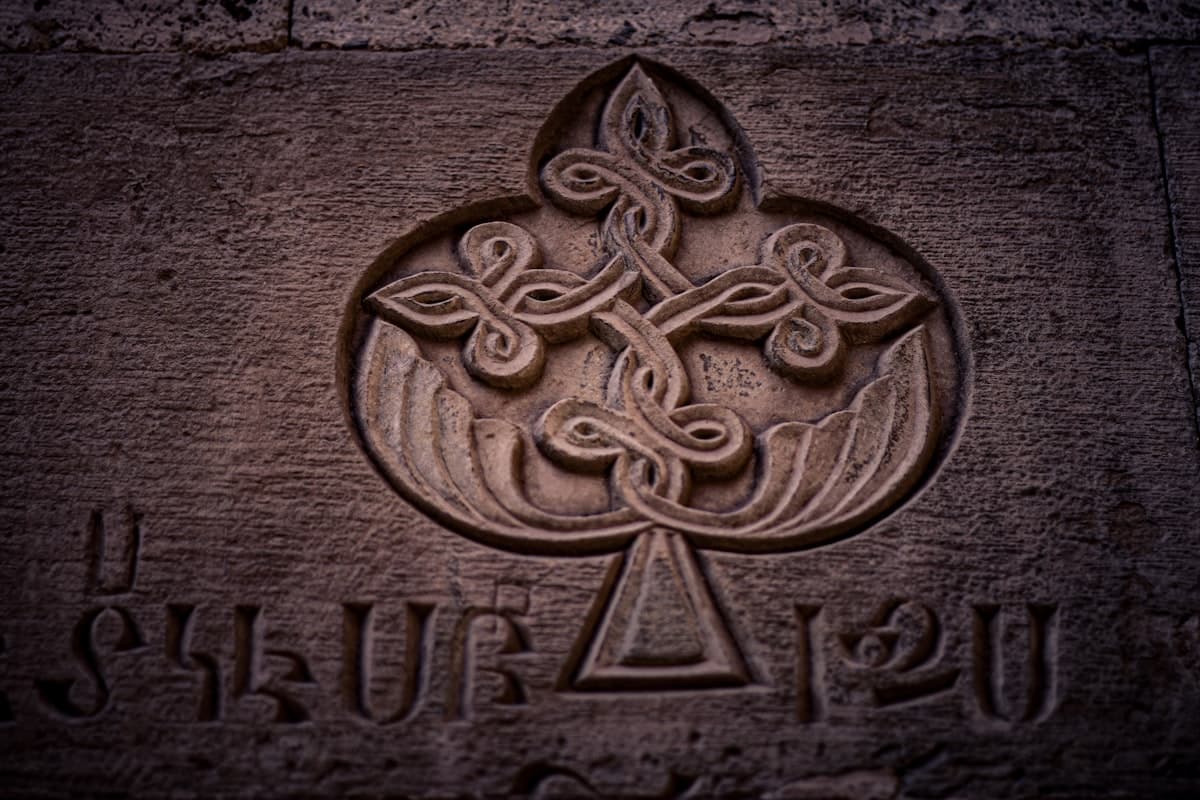
The Cathedral of St. Gregory the Illuminator on Ibrahim Lakkis Street is the spiritual center of Cairo's Armenian Apostolic community. St. Gregory the Illuminator is not an obscure figure: he is the man who converted the Armenian King Tiridates III to Christianity in 301 AD, making Armenia the first nation in history to adopt Christianity as a state religion, twelve years before Constantine's Edict of Milan. Inside the cathedral, the khachkars (Armenian cross-stones) are worth slowing down for. These carved stone crosses follow a tradition that stretches back to the 9th century; no two khachkar designs are ever identical, and Armenian craftsmen treated their creation as a spiritual act rather than a decorative one.
The Armenian community's school, the Kalousdian Armenian School on Ramsis Street, has been operating since 1928 and still teaches Armenian language alongside the Egyptian national curriculum. It is the last Armenian-language school in Egypt, and its continued existence is a minor miracle of institutional stubbornness against demographic pressure.
Downtown: The Evangelical Branch and the Lost Quarter
The Armenian Evangelical Church near Midan Bab al-Luq represents the other half of Cairo's Armenian Christians, the Protestant community that emerged from 19th-century American missionary activity. Armenian Protestants and Armenian Apostolics maintained separate institutions but shared social networks, and the downtown church hosted services in Armenian for a congregation that at its peak included several hundred families in the Bab al-Luq and Garden City neighborhoods.
One block from the church, a building at 10 Sherif Street housed the Armenian Club, the community's primary social institution through the 1940s and 50s. The building has changed hands repeatedly and shows no marker of its history. This is worth knowing because it is representative of how Armenian Cairo largely disappeared: not through demolition but through re-use, renaming, and the slow effacement of a community too small to assert its heritage publicly.
Abbasiyya: Where the Community Buries Its Dead
The Armenian cemetery in Abbasiyya is the most concentrated archive of Armenian Cairo that exists. It holds the graves of community members going back to the 1880s, and the inscriptions, many still legible in Armenian script, tell the story of a diaspora that arrived in waves: the 19th-century merchants, the genocide survivors of 1915 to 1923, the post-World War II professionals. The cemetery is maintained by the Armenian Patriarchate and is accessible to visitors; tell the caretaker you are visiting for research or cultural interest and you will be given time to walk it in peace.
Among the graves you will find the family names that shaped Cairo's commercial and cultural life: Boghossian, Gulbenkian (relatives of the oil magnate Calouste Gulbenkian, who himself spent formative years in Egypt), Kalfayan, Avedissian. This is not a tourist attraction in any conventional sense. It is a document.
---
The Connections: Armenian Cairo and the Longer Story
The Armenian community in Egypt did not exist in isolation from Egypt's other minorities. They were part of a broader Levantine world that also included Greeks, Italians, Jews, Syrian Christians, and Maltese, all of whom occupied a peculiar social position: economically integrated into Egyptian life, politically foreign, legally protected by a system of capitulations that exempted them from Egyptian courts until the 1930s.
The Greek Orthodox and Armenian Apostolic communities in particular shared neighborhoods, schools, and occasionally intermarried. The Patriarchate of Alexandria, which has deep historical roots going back to Mark the Evangelist, maintained formal relations with the Armenian Apostolic Church, and the two communities often held joint commemorations for the Armenian genocide on April 24.
Calouste Gulbenkian, the Armenian-British oil magnate whose five-percent stake in the Iraq Petroleum Company earned him the nickname "Mr. Five Percent," spent significant periods in Cairo and Alexandria and used Egypt as a base for his Middle Eastern operations. He was not the only Armenian whose Egyptian chapter shaped something larger: Nubar Nubarian, son of Nubar Pasha (who served three times as Egypt's Prime Minister under the Khedives), was born in Cairo and went on to found the Armenian General Benevolent Union, which today funds Armenian schools and cultural institutions in over 30 countries.
Nubar Pasha himself is worth pausing on. He served as Prime Minister of Egypt in 1878, 1884, and 1894. He was Armenian. He wore an extravagant beard that became a kind of caricature in European diplomatic circles. He negotiated with the British, the French, and the Ottoman court. And he did all of this as a man without a state, because Armenia as a political entity did not exist. His is not a story most people who visit Cairo know.
---
Common Mistakes
Treating this as a single-site visit. There is no single Armenian Museum in Cairo, no tidy attraction with a gift shop. The Armenian community Egypt history guide requires assembling a picture from multiple locations across the city. Plan a route that connects Heliopolis, Abbasiyya, and Downtown in a single day, and accept that this is an itinerary of context rather than spectacle.
Visiting on a Sunday morning without checking the service schedule. The cathedral in Heliopolis holds its main liturgy on Sunday mornings in Armenian. If you arrive at 10am hoping to look around, you will walk into an active service. This is not a reason to leave; Armenians are generally hospitable to respectful visitors who sit quietly at the back. But do not wander and photograph during the liturgy.
Skipping the Abbasiyya cemetery. Almost no travel guide mentions it. This is where the community's actual history is most legible. The architecture of the cathedral is beautiful. The cemetery is irreplaceable.
Assuming the community is open about its trauma. Armenians in Cairo are gracious and often happy to speak with genuine visitors, but the genocide of 1915 is not distant history for families that experienced it directly in living memory within the last generation. Do not open a conversation with it. Let it come up naturally if it does.
Paying for any organized tour that markets itself around the Armenian community. I have seen exactly two such tours available in Cairo. Both were built around thirty minutes at the cathedral and a coffee at a Heliopolis cafe. Both cost upward of EGP 800 per person. Both could be replaced by this article, a Bolt account, and a half day of curiosity.
Expecting signage. The Armenian Evangelical Church downtown has a small plaque in Arabic. The cathedral in Heliopolis is clearly marked. Everything else, the school, the former club, the older residential buildings, carries no English signage and often no Arabic signage beyond a street address. Come with the address written down and be willing to ask.
Conflating Coptic Christian Egypt with Armenian Christian Egypt. Both are Oriental Orthodox. Both use liturgical languages nobody speaks natively anymore (Coptic, Classical Armenian). But their histories, aesthetics, and relationships to Egyptian society are entirely distinct. A Coptic church in Cairo carries five centuries of Mamluk and Ottoman pressure. An Armenian church carries the memory of genocide and diaspora. The visual codes are different. Learn to read them separately.
---
Practical Tips
The best single human contact for understanding Armenian Cairo is the Armenian Patriarchate of Alexandria (which governs Cairo's Armenian Apostolic institutions). A politely worded email introducing yourself as a writer or researcher, sent in advance of your visit, will often yield an introduction to a community elder or church administrator who can provide context no article can replace.
The Kalousdian School on Ramsis Street does not welcome unannounced visitors during school hours, and you should not try to visit it without prior contact. During school holidays, the building's exterior is worth seeing.
For food with an Armenian connection, Heliopolis still has several patisseries and delicatessens founded by Armenian families, some of which have passed to Egyptian ownership but retain their Armenian recipes. Ask locally for establishments near Ibrahim Lakkis Street.
April 24, Armenian Genocide Remembrance Day, sees the community gather publicly at the cathedral for a commemoration that is deeply moving and open to respectful attendees. If your visit falls near this date, it is the single most valuable way to understand what this community carries and how it persists.
Frequently Asked Questions
The Weekly Dispatch
More on Egypt, every Friday.
Cultural depth and places most guides never mention.
No spam. Unsubscribe anytime.