British Colonial Egypt: A History Sites Guide Worth Taking Seriously
Britain occupied Egypt for 72 years but built almost nothing here. What they left instead: courts, clubs, and a cotton economy still distorting Egyptian agriculture today.

Quick Facts
- Best time to visit
- October to March. Urban walking between colonial-era sites is much easier in cooler temperatures, and Cairo's air quality improves in winter months.
- Entrance fee
- Most colonial buildings: free (exterior). Abdeen Palace Museum: EGP 100 (approx. $2 USD). Baron Empain Palace: EGP 100 (approx. $2 USD). Egyptian Museum: EGP 450 (approx. $9 USD), students EGP 225.
- Opening hours
- Abdeen Palace Museum: daily 9am to 5pm. Baron Empain Palace: daily 9am to 5pm. Egyptian Museum: daily 9am to 7pm, last entry 5pm.
- How to get there
- Cairo Metro Line 1 to Sadat Station for Tahrir and Garden City area, EGP 10. Heliopolis by taxi or ride-share from central Cairo, EGP 80 to 120. Heliopolis tram from Abbasiyya, EGP 5.
- Time needed
- Two full days minimum: one for central Cairo and Garden City, one for Heliopolis. Half-day options possible for downtown walking only.
- Cost range
- Budget EGP 600 to 900 per day including transport, entry fees, and meals. Mid-range EGP 1,500 to 2,500 per day with a private architectural guide.
Quick Facts
Best time to visit: October to March, when Cairo's air is cleaner and walking between sites is bearable. The colonial-era buildings are urban; you will spend time on foot.
Entrance fees: Most colonial-era sites are civic buildings with no entrance fee. The Egyptian Museum (home to colonial-era acquisition records) costs EGP 450 (approx. $9 USD), students EGP 225. The Abdeen Palace Museum costs EGP 100 (approx. $2 USD). The Baron Empain Palace in Heliopolis costs EGP 100 (approx. $2 USD).
Opening hours: Abdeen Palace Museum, daily 9am to 5pm. Baron Empain Palace, daily 9am to 5pm. The Egyptian Museum, daily 9am to 7pm (last entry 5pm).
How to get there: Cairo Metro Line 1 reaches Sadat Station (Egyptian Museum, Tahrir Square area) for EGP 10. Heliopolis is best reached by taxi or ride-share, roughly EGP 80 to 120 from central Cairo depending on traffic. The Garden City colonial villas are walkable from Sadat Station.
Time needed: Two full days to cover the main sites properly. One day for central Cairo (Tahrir, Garden City, downtown Khedival Cairo). One day for Heliopolis.
Cost range: Budget EGP 600 to 900 per day including transport and entry fees. Mid-range EGP 1,500 to 2,500 per day if you add a guided architectural walk.
---
Britain occupied Egypt from 1882 to 1954, and the official story of that occupation is that it was temporary. The British never called Egypt a colony. They called it a "veiled protectorate," then a "protectorate," then a "constitutional monarchy under British guidance." Lord Cromer, who effectively ran the country from 1883 to 1907, held the title of British Agent and Consul-General. Not Governor. Not Viceroy. The fiction of Egyptian sovereignty was maintained even while British officers commanded the army, British advisors controlled the treasury, and British cotton merchants dictated what the Nile valley grew. Tracking that fiction through the physical landscape of Cairo is one of the sharpest ways to understand how modern Egypt was made.
Why This Place Matters: The Colonial City Nobody Labels
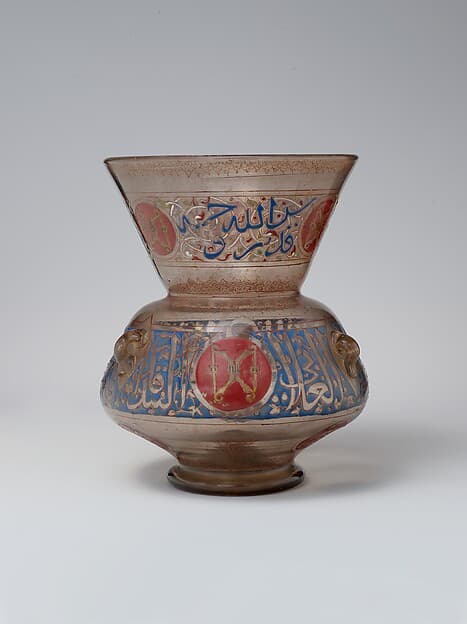
The British did not build Cairo the way the French built Algiers or the way the Belgians stamped their mark on Kinshasa. They inherited a city already mid-transformation. Khedive Ismail, who ruled Egypt from 1863 to 1879, had already begun remaking Cairo on Haussmann's Paris as his model, commissioning wide boulevards, opera houses, and a new European quarter west of the medieval Islamic city. The British arrived after Ismail's debts had bankrupted the khedivate and handed them the leverage they needed. What they built was infrastructure designed to serve extraction: railways to move cotton to Alexandria, irrigation works to expand cotton cultivation, a legal system to protect foreign property, and residential enclaves for the administrative class.
The result is a city where the colonial layer is everywhere and almost nowhere labeled. The building that housed the British Agency, where Cromer received Egyptian ministers and dictated policy, now sits in Garden City as a private institution largely unmarked. The Qasr al-Nil barracks, where British troops were stationed at the Nile's edge, were demolished and replaced by the Nile Hilton (now the Nile Ritz-Carlton) in 1959, Nasser's deliberate erasure of the garrison city. Even the Egyptian Museum on Tahrir Square, opened in 1902, was partly a colonial project: its collection was assembled under conditions that gave European archaeologists, not Egyptian ones, the authority to excavate and classify.
This is the core of any honest British Egypt colonial history sites guide: the sites are not monuments to the occupation. They are the occupation's furniture, still in use.
Downtown Cairo and Khedival Cairo: The Boulevard That Served Two Masters
Start on Talaat Harb Street, the spine of the European quarter Ismail began and the British perfected. The buildings here, from the 1890s through the 1940s, are a specific architectural dialect: French Beaux-Arts facades adapted by Italian and Greek architects for an Egyptian construction industry, financed by Levantine and Jewish merchant families, inhabited by a cosmopolitan bourgeoisie that British policy simultaneously cultivated and controlled. The pharmacy on the corner of Talaat Harb and Qasr el-Nil Street still has its original 1920s interior. The Cinema Metro, opened in 1939, was designed by the same architectural firm that built the Egyptian stock exchange.
What most visitors walk past: the Sednaoui department store building at Ataba Square, opened in 1913 by a Syrian Christian family who made their fortune under the commercial conditions British financial policy created. By guaranteeing the Capitulations (legal agreements that exempted foreign nationals and their associates from Egyptian courts and Egyptian taxes), the British effectively created a two-tier commercial system. Egyptian merchants paid taxes; Levantine and European merchants often did not. The Sednaoui family's success story and its location at the edge between the European quarter and the Islamic city encapsulates that inequality in stone.
Walk south from Talaat Harb toward Garden City and you are walking into what was the diplomatic and administrative quarter. The curved streets of Garden City were designed in 1905 on a deliberate English garden suburb model, intended to keep foreign residents in a coherent enclave separate from the Egyptian city around them. The British Embassy compound here occupies a position it has held since the Cromer era. The Corniche road along the Nile, which looks like a natural civic amenity, was built in the 1930s partly to give the Garden City enclave a clean separation from the river's working edge.
Heliopolis: The Company Town Built on Desert
Take a taxi northeast from central Cairo for about 45 minutes and you arrive at what was, in 1905, empty desert. Edouard Empain, a Belgian industrialist who had already built the Paris Metro, purchased 25 square kilometers of nothing from the Egyptian government and created an entire city. Heliopolis was incorporated as a private company, the Cairo Electric Railways and Heliopolis Oases Company, and Empain sold plots, ran the tram network, built the hotels, and controlled the utilities. It was a real estate development operating as a municipality, a model that has been repeated in Egypt's new cities ever since.
The Baron Empain Palace, finished in 1911, is the delirious architectural consequence of that wealth. Its architect, Alexandre Marcel, designed it as a Hindu temple transposed to the Egyptian desert, mixing Cambodian and Indian references in a way that makes it look like nothing else in Africa. The palace was abandoned in 1957, briefly used as a film set, and has been under intermittent restoration since 2020. The current state of the restoration is genuinely interesting: you can see the structural work alongside the decorative recovery, and the guides (informal, usually stationed outside) know the building's full strange history. Entry is EGP 100.
The Heliopolis Basilica, now a mosque, and the surrounding streets of the original Empain development show how thoroughly the colonial urban form survived decolonization. The arcaded streets, the scale of the villas, the relationship between the tram routes (still operating, on Cairo's oldest tram network) and the commercial streets: all of it was designed for a European expatriate and Egyptian elite population and was simply inherited by successive generations. The tram fare is EGP 5 and the journey from Heliopolis center toward Abbasiyya is worth taking for the street-level view of the building stock.
The Connections: Cotton, Irrigation, and the Aswan Dam's First Life
The single most consequential British engineering project in Egypt was not in Cairo. It was the first Aswan Dam, completed in 1902 and raised twice (in 1907 and 1912) because the cotton economy it served demanded more water than the original engineers had calculated. The dam was designed by William Willcocks and funded through Egyptian government bonds controlled by the British-administered Caisse de la Dette Publique. It flooded the temple of Philae annually for decades (the temples were only fully protected after the High Dam was built under Nasser in the 1960s, which moved them to higher ground in an entirely different preservation operation).
The connection most visitors to Aswan do not make: the current High Dam and the British low dam are 6 kilometers apart and represent two entirely different theories of the Nile. The British dam was a regulating structure meant to store water for cotton irrigation and release it on a schedule designed by agricultural engineers. Nasser's High Dam was a political symbol of sovereignty over water, built with Soviet financing after the United States withdrew funding in 1956 following Egypt's recognition of China. When you stand between the two dams, you are standing between two versions of what Egypt was supposed to become.
In Cairo, the connection runs through the Egyptian Museum. The museum's founding director was Gaston Maspero, a French Egyptologist who served under both Ismail and the British administration. The artifact removal policies he implemented, which sent Egyptian antiquities to European museums as diplomatic gifts and scholarly exchanges, transferred thousands of objects whose loss Egypt is still seeking to reverse. The Grand Egyptian Museum, which opened on the Giza plateau in 2023, is partly a direct response to that transfer: a deliberate act of national collection.
Common Mistakes
Visiting only the Pharaonic layer. Most itineraries treat colonial-era Cairo as background noise on the way to the Egyptian Museum. The colonial layer is the reason the Egyptian Museum exists in its current form, holds what it holds, and sits where it sits. Engage with it directly.
Skipping Heliopolis because it is far. The 45-minute taxi ride costs under EGP 120 and delivers you to one of the most architecturally coherent colonial-era urban environments in the Arab world. It is significantly more intact than equivalent neighborhoods in Alexandria.
Taking a standard tour of the Egyptian Museum without asking about acquisition history. The wall text tells you when objects were found and by whom. It rarely tells you under what legal framework they were removed or where duplicates or related objects are currently held. That gap is part of the story.
The Nile dinner cruise. This is the contrarian take worth making explicit: the colonial nostalgia marketed through Nile dinner cruises, with their 1930s jazz references and white-tablecloth aesthetics, costs EGP 800 to 1,500 per person and delivers a view of the Corniche you can get for free from any Nile-facing coffee shop. The boat is not moving through history. It is moving through a hospitality industry that has decided colonial aesthetics sell. Skip it.
Ignoring the cotton infrastructure in the Delta. If you have time for a day trip, the town of Mahalla el-Kubra in the Delta contains the Misr Spinning and Weaving Company, founded in 1927 as part of the Egyptian national industrialization movement that was a direct response to British cotton policy. It is still operating, still one of Egypt's largest employers, and still a site of major labor activism. The 2008 strikes there helped catalyze what became the 2011 revolution. That continuity from colonial cotton economics to contemporary labor politics is the real thread.
Assuming Alexandria is more colonial than Cairo. Alexandria is more cosmopolitan in its self-presentation, but Cairo holds the administrative and financial architecture of the occupation more completely. The British Egypt colonial history sites worth serious attention are primarily in Cairo.
Practical Tips
The best way to approach colonial-era Cairo is on foot with a specific itinerary rather than a general tour. The Society for the Preservation of Architectural Resources in Egypt (SPARE) occasionally runs architectural walks in downtown Cairo; check their schedule. Failing that, the book "Cairo: A Cultural History" by Andrew Beattie covers the British period with enough architectural specificity to function as a walking guide.
Wear shoes you can walk in for three to four hours on uneven pavement. Downtown Cairo's sidewalks are not maintained uniformly. Bring water; there are few places to sit in the European quarter that are not cafes expecting a purchase.
For Heliopolis, go on a weekday morning. Weekend traffic on the airport road backs up significantly. The Baron Palace opens at 9am and the early light on the facade is better than midday anyway.
If you want to understand the British financial administration, the Egyptian stock exchange building on Sheikh Ali Youssef Street in downtown Cairo is a working institution whose architecture encodes its colonial-era founding. You cannot tour it, but the exterior and the context of its surrounding streets reward an hour.
Photograph freely in public spaces. Interior photography in the Abdeen Palace Museum requires a separate camera ticket, currently EGP 50. The Baron Empain Palace allows photography throughout.
Frequently Asked Questions
The Weekly Dispatch
More on Egypt, every Friday.
Cultural depth and places most guides never mention.
No spam. Unsubscribe anytime.