British Colonial Egypt: The History Sites No One Tells You About
Britain occupied Egypt for 72 years but left almost no museums dedicated to that era. The sites exist. They're just hiding in plain sight.

Quick Facts
- Best time to visit
- October to March, when temperatures in Cairo stay below 25°C and walking the colonial districts is comfortable. July and August are brutal for any street-level exploration.
- Entrance fee
- Egyptian National Military Museum EGP 150 (approx $3 USD). Baron Empain Palace EGP 100 (approx $2 USD). Manial Palace Museum EGP 200 (approx $4 USD). Abdeen Palace Museum EGP 200 (approx $4 USD). Most colonial streetscapes are free to walk.
- Opening hours
- Most museums 9am to 5pm daily. Abdeen Palace Museum closed Fridays. Baron Empain Palace open Saturday through Thursday 9am to 5pm. Downtown Cairo streets accessible at all hours, best before 9am for photography.
- How to get there
- Downtown Cairo is walkable from Tahrir Square metro station. Heliopolis by ride-share from central Cairo costs EGP 60 to 80. Alexandria by train from Ramses Station takes 2 hours, EGP 65 to 180 depending on class. Port Said by bus from Cairo takes 3 hours, EGP 65 to 80.
- Time needed
- Minimum two full days for central Cairo colonial circuit. One additional day for Heliopolis. Half-day for Alexandria's colonial district if combined with another Alexandria visit. Full day trip required for Port Said.
- Cost range
- Budget EGP 600 to 900 per day including transport and all entry fees. Mid-range EGP 1,500 to 2,500 per day adding lunch at a colonial-era hotel and a specialist guide.
Britain controlled Egypt for 72 years. In that time, it reshaped the Nile's hydrology, built a railway network that still operates today, executed thousands of Egyptian soldiers at a village called Dinshaway for the crime of protecting their pigeons, and maintained the fiction that it was not actually in charge. Egypt had a Khedive, then a Sultan, then a King. Britain had a Consul-General who made every real decision. Lord Cromer held that post from 1883 to 1907 and ran Egypt with less formal authority than a middle-ranking British civil servant and more actual power than any pharaoh since Ramesses II.
That is the contradiction at the heart of British Egypt: an occupation that refused to call itself an occupation, a colonial project that insisted it was a financial rescue mission, a presence so thorough it reshaped Cairo's streets, its water supply, and its criminal code, yet left almost no dedicated museum or interpretive site behind. This guide is for the traveler who wants to find what remains.
Quick Facts
Best time to visit: October to March. Cairo's colonial-era districts are street-level exploration, and summer heat above 38°C makes walking them punishing.
Entrance fees: Most colonial-era sites are exterior experiences or functioning institutions. The Egyptian National Military Museum at the Citadel costs EGP 150 (approx $3 USD). The Manial Palace Museum on Rhoda Island costs EGP 200 (approx $4 USD). The Baron Empain Palace in Heliopolis costs EGP 100 (approx $2 USD) and is worth it. The Abdeen Palace Museum costs EGP 200 (approx $4 USD).
Opening hours: Most sites open 9am to 5pm. The Abdeen Palace Museum closes Fridays. The Baron Empain Palace is open Saturday through Thursday, 9am to 5pm.
Getting there: Downtown Cairo's colonial grid is walkable from Tahrir Square. For Heliopolis, take the metro to Heliopolis station or a ride-share (roughly EGP 60 to 80 from central Cairo). Rhoda Island is a short taxi ride from Garden City, the old British residential quarter.
Time needed: A serious colonial Cairo circuit takes two full days. One day for Downtown, Garden City, and the Nile-side institutions. One day for Heliopolis.
Cost range: Budget EGP 600 to 900 per day including transport and entry fees. Mid-range EGP 1,500 to 2,500 if you add lunch at one of the surviving colonial-era hotels.
Why This Period Matters More Than You Were Told
Britain did not plan to stay in Egypt. The 1882 invasion, triggered by the Urabi Revolt against Khedivial misrule and foreign debt collectors, was announced as temporary. The temporary stay lasted until 1956, when Nasser nationalized the Suez Canal and the British and French invaded, were humiliated by American diplomatic pressure, and finally left.
What makes the British Egypt colonial history sites guide genuinely difficult to write is that the period was deliberately obscured by everyone involved. The British called it a "veiled protectorate" until 1914, when they dropped the veil and declared Egypt a formal protectorate. The Egyptians who collaborated with the British had every reason to erase evidence of collaboration after independence. The nationalist movement that followed preferred monuments to resistance over monuments to complicity.
The result is that the most significant colonial infrastructure, the Aswan Low Dam completed in 1902, the Cairo sewage system, the expanded railway, the Cotton Exchange in Alexandria, now exists without adequate interpretation. You encounter it constantly. You are almost never told what you are looking at.
One fact most visitors to Egypt never learn: the 1906 Dinshaway Incident, in which British officers shot pigeons belonging to Egyptian villagers, a fight broke out, one officer died of heatstroke while fleeing, and the British military tribunal hanged four Egyptian men and publicly flogged others within sight of their families, produced more outrage in the British Parliament than it did lasting memorialization in Egypt. Wilfrid Scawen Blunt called it judicial murder. The village of Dinshaway is in the Delta, 90 kilometers north of Cairo, and there is a small monument there that almost no foreign traveler ever visits.
Downtown Cairo: Reading the Colonial Grid
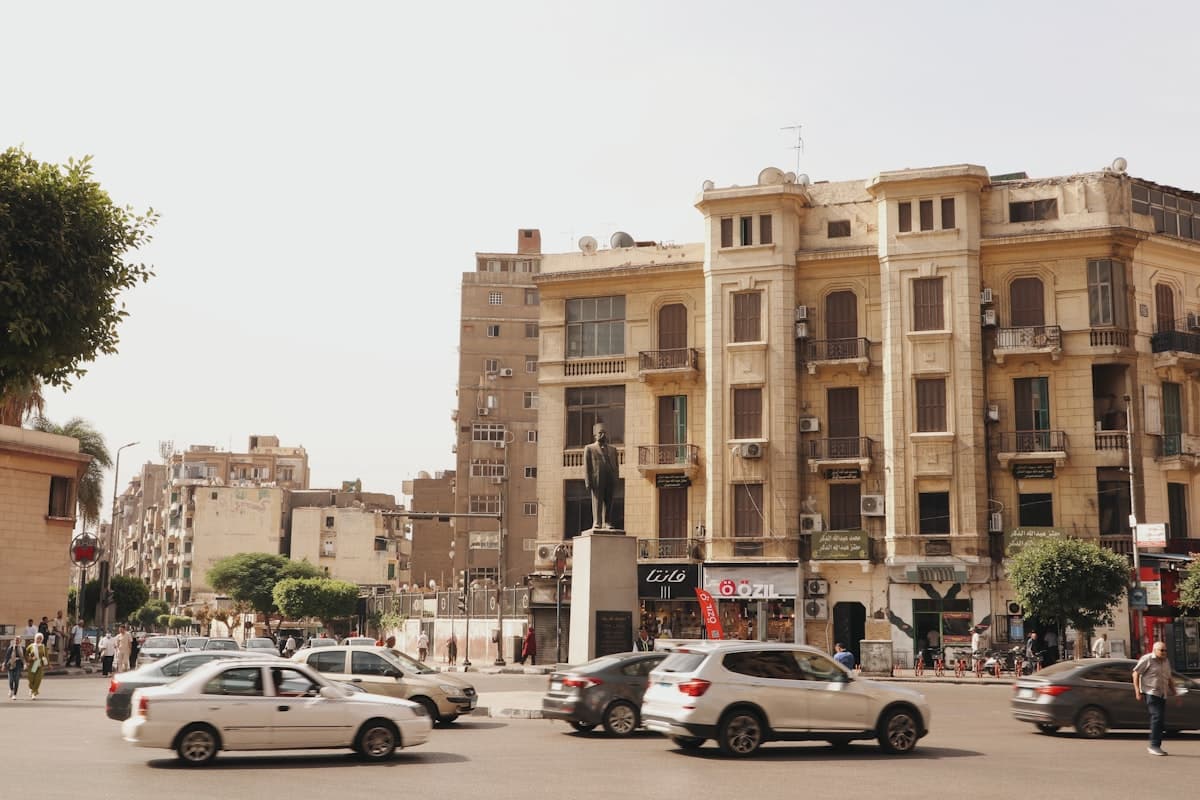
Khedive Ismail hired the French urban planner Ali Mubarak to build a European Cairo alongside the medieval Islamic city in the 1860s. The British then inherited, filled, and institutionalized it. The result is the Downtown district, Wust el-Balad, which is one of the most coherent examples of late colonial urbanism in the world and is currently falling apart in ways that are both heartbreaking and fascinating.
Start at Tahrir Square and understand what you are standing in. The Egyptian Museum on the square's north edge opened in 1902, funded partly by European archaeological interests that were simultaneously extracting Egyptian antiquities for European collections. The building's architect was the French designer Marcel Dourgnon, who won an international competition. The irony is architectural: Egypt's national collection sits in a building designed by a Frenchman during British occupation.
Walk south into Garden City, the residential quarter the British built for their administrators along a curve of the Nile. The street plan is deliberately curvilinear, which was unusual for Cairo and is often attributed to a desire to make it harder to navigate for anyone who did not live there. The British Embassy still occupies its original Garden City site, a fact that makes Garden City the longest continuously operating colonial administrative footprint in the city. The villas around it, many now converted to NGO offices or left to slowly collapse, were home to the people who ran Egypt without officially running Egypt.
The Shepheard's Hotel, where every colonial-era visitor of note stayed, from Churchill to Flaubert (who predated the British but established the hotel's mythology), was burned to the ground during the 1952 Black Saturday riots. The current Shepheard's on the Corniche is a different building on a different site. This matters if you are looking for the original. You will not find it.
Heliopolis: A Belgian Colonial City Inside Egypt
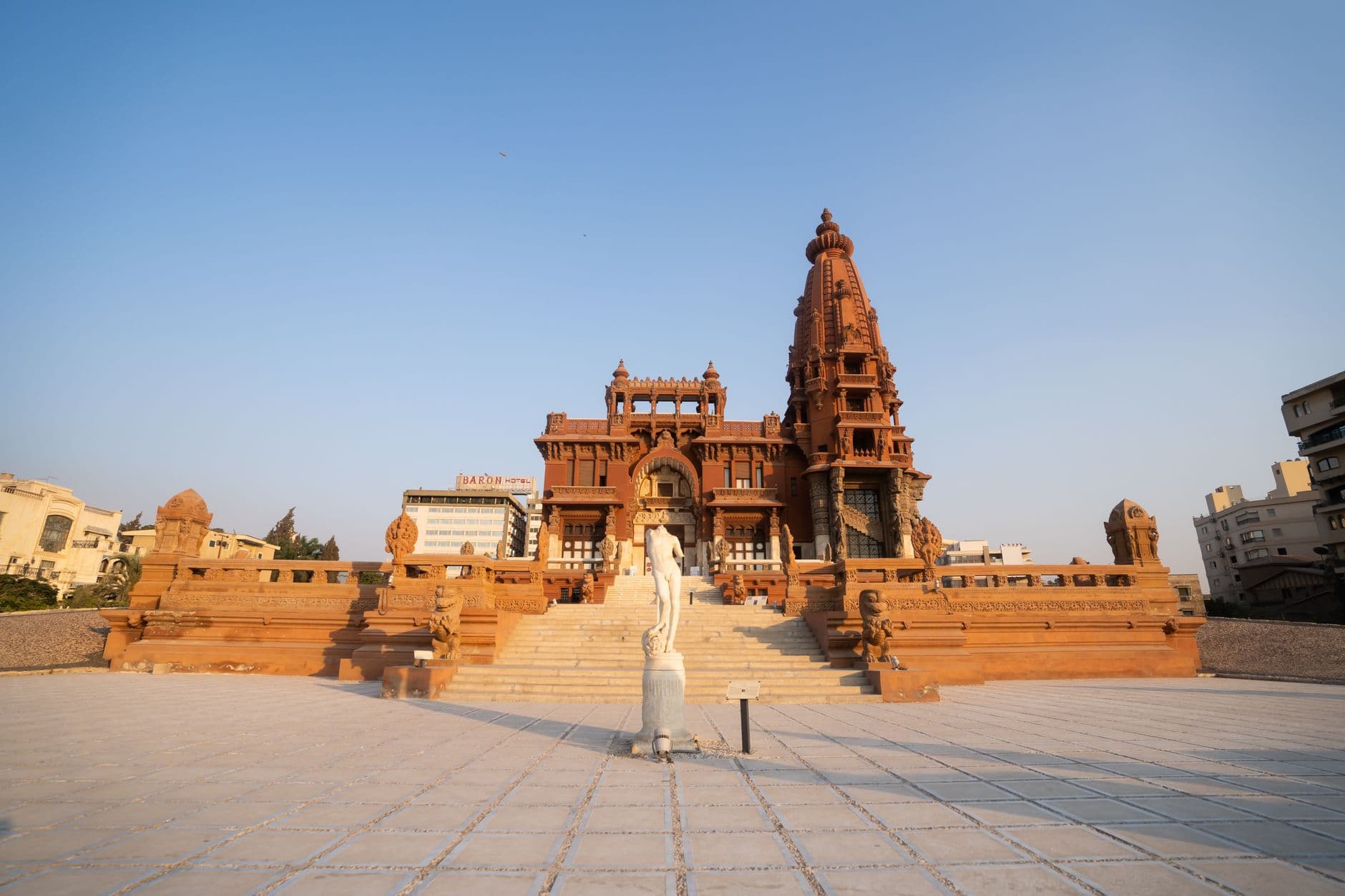
The strangest colonial district in Cairo was not built by the British at all. Baron Édouard Empain, a Belgian industrialist, bought 25 square kilometers of desert northeast of Cairo in 1905, built a tramway connecting it to the city center, and constructed an entire planned suburb in a hybrid Moorish-Byzantine-European style. He named it Heliopolis, after the ancient Egyptian city of the sun god Ra that had stood nearby.
Empain built himself a palace that looks like a Hindu temple crossed with a Flemish townhouse, with rotating statues of naked women on the upper floors that scandalized Cairo's Muslim community. The Baron Empain Palace sat abandoned for decades and has recently been restored. The restoration is worth seeing for what it reveals about the period: Empain designed a basement Hindu-style chamber because he had also built a tramway in Calcutta and borrowed architectural vocabulary freely from his other projects.
Heliopolis became the preferred residential district for upper-class Egyptians, foreign businessmen, and colonial administrators who found Garden City too obviously British. Nasser lived there after 1952. Mubarak lived and died there. The Heliopolis Palace Hotel, now the Presidential Palace, was built in 1910 and is the building Rommel expected to occupy when the Afrika Korps reached El Alamein in 1942. The battle that stopped him, 106 kilometers west of Alexandria, is why that building is still a presidential palace rather than a German field headquarters.
Alexandria: Where the Colonial Economy Lived
If Cairo was the administrative capital of British Egypt, Alexandria was where the money moved. The Cotton Exchange, established in 1861 and formalized under British oversight, made Alexandria the price-setting center for long-staple Egyptian cotton, which clothed the mills of Lancashire and generated the revenue that paid Egypt's enormous European debts. The debts were the pretext for British intervention. The cotton paid the debts. The circle was not accidental.
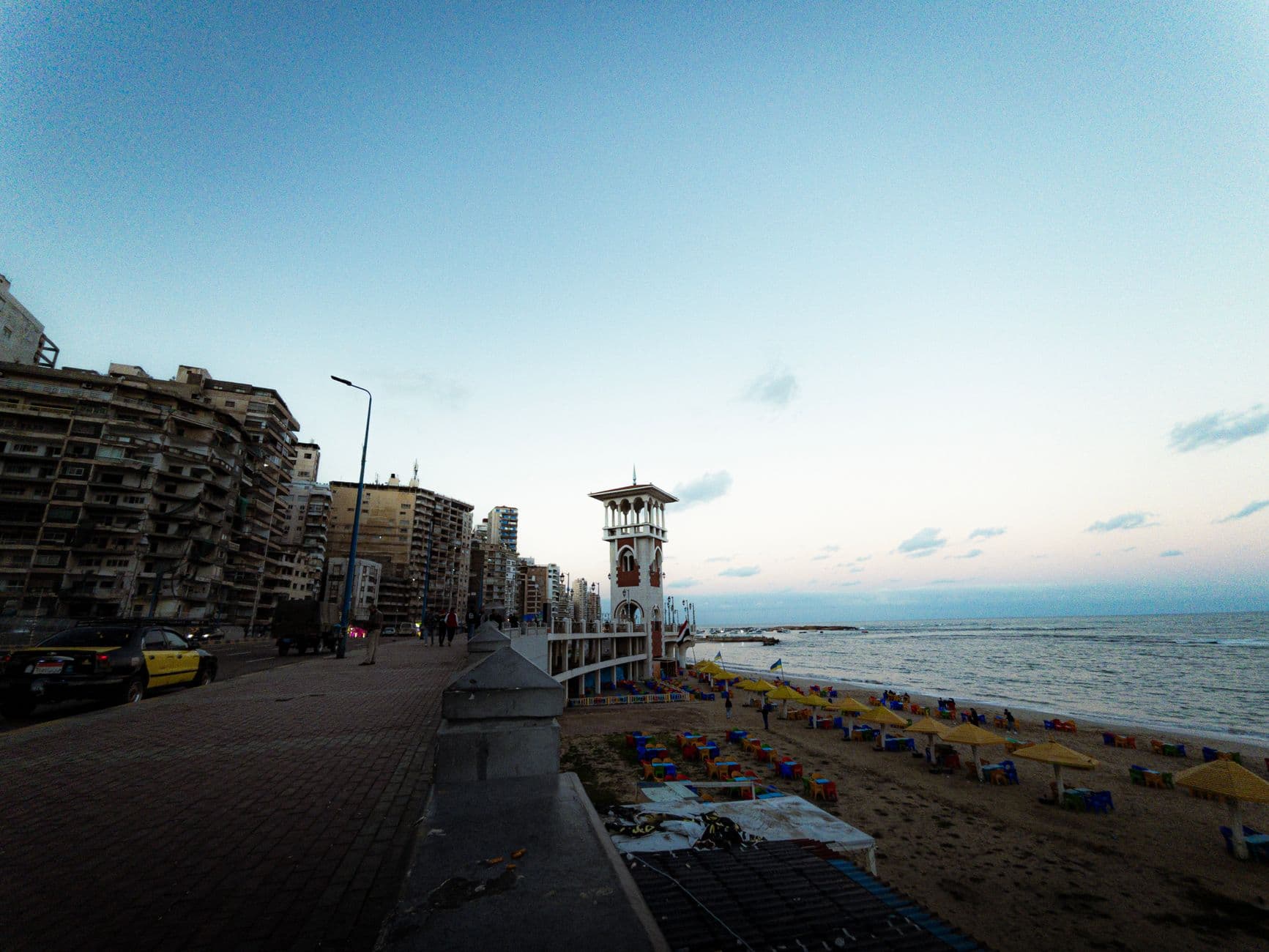
The colonial-era architecture of Alexandria's Downtown (Manshiya and Raml Station districts) is more intact than Cairo's and considerably less visited by travelers focused on pharaonic sites. The Cecil Hotel on the Corniche, where Somerset Maugham stayed and where British intelligence operated during World War II, still functions as a hotel. It is not a monument. It is a working building with peeling grandeur and a bar that serves Stella beer to businessmen who have no idea that Montgomery's officers drank there before El Alamein.
The Bibliotheca Alexandrina, the modern library built on the site of the ancient one, contains an Antiquities Museum with material from the Greco-Roman period that contextualizes how Alexandria functioned as a colonial city long before the British arrived. The Ptolemies ran Egypt as Greek-Macedonian administrators for 275 years. The British read Ptolemaic administration manuals, metaphorically speaking. Lord Cromer's Egypt was not the first foreign bureaucracy to claim it was doing Egyptians a favor.
The Connections
The British colonial period is incomprehensible without the layers beneath it. The Mohammed Ali dynasty that the British technically served, the Khedives and Sultans and Kings, were themselves Albanian-Ottoman in origin. Mohammed Ali seized power in 1805 partly by massacring the Mamluk beys at the Citadel, a site the British later used as a military barracks. The Mamluks had ruled Egypt for 267 years as a warrior caste of enslaved Central Asian and Circassian men who had been bought, converted, trained, and freed. Slavery, administration, and foreign control were Egypt's recurring architecture long before Victoria's portrait hung in Cairo offices.
The Suez Canal, which Britain did not build (Ferdinand de Lesseps built it for the French-Egyptian Suez Canal Company between 1859 and 1869) but which Britain bought into by purchasing the bankrupt Khedive Ismail's shares in 1875, is the direct line between pharaonic ambition and modern geopolitics. The canal follows roughly the path of ancient Egyptian waterways connecting the Nile to the Red Sea. Ramesses II may have used a version of that route. The British Empire ran its Indian trade through a modernized version of the same geography. Nasser's nationalization of it in 1956 was simultaneously an act of anti-colonial assertion and an act of reconnecting Egypt to control over its own most ancient geographic asset.
Common Mistakes
Skipping Heliopolis entirely. Almost every British Egypt colonial history itinerary focuses on Cairo Downtown and misses the fact that Heliopolis is architecturally more coherent, less crowded, and contains the Baron Empain Palace, which is one of the genuinely strange buildings in Africa. The tram no longer runs but a ride-share from central Cairo costs less than a museum entry.
Visiting the current Shepheard's Hotel expecting the original. The current building has no historical connection to the colonial-era hotel. If you pay for a drink at the bar hoping to absorb some atmosphere, you are paying for a comfortable modern hotel bar. The original location is a block away from the current building and is now an unremarkable stretch of street.
Taking the Nile cruise packages that mention "colonial history" but deliver only pharaonic sites. The Nile between Cairo and Aswan contains significant colonial infrastructure, particularly the Aswan Low Dam and the later High Dam, but cruise operators do not have interpretive frameworks for the colonial period. You will hear about Ramesses far more than about Lord Kitchener, who had an island in the Nile at Aswan named after him (Kitchener's Island, now a botanical garden) because he liked growing tropical plants between military campaigns.
Paying for a guided tour of Downtown Cairo from a hotel desk. The guides who work hotel desks in this circuit are trained on pharaonic and Islamic history. Ask one about the Dinshaway Incident and watch what happens. Book instead with a specialist guide from an organization like Egypt Explorers or arrange a walking tour through the American University in Cairo's cultural outreach program.
Believing that Port Said has nothing left from the colonial era. Port Said, at the northern entrance to the Suez Canal, has the most intact colonial streetscape in Egypt. The wooden-balconied buildings that line its streets were constructed for canal administration workers. Port Said is three hours from Cairo by bus (EGP 65 to 80) and is genuinely undervisited. It is not a difficult trip. It is simply not on anyone's standard itinerary.
Going to the Egyptian National Military Museum expecting British colonial coverage. The museum, inside the Citadel, covers Egyptian military history from ancient times to the present, but its treatment of the British period is filtered through nationalist framing. This is not a criticism: every country frames its military history through nationalism. It is simply a calibration. You will learn more about the 1952 Revolution than about 1882.
Practical Tips
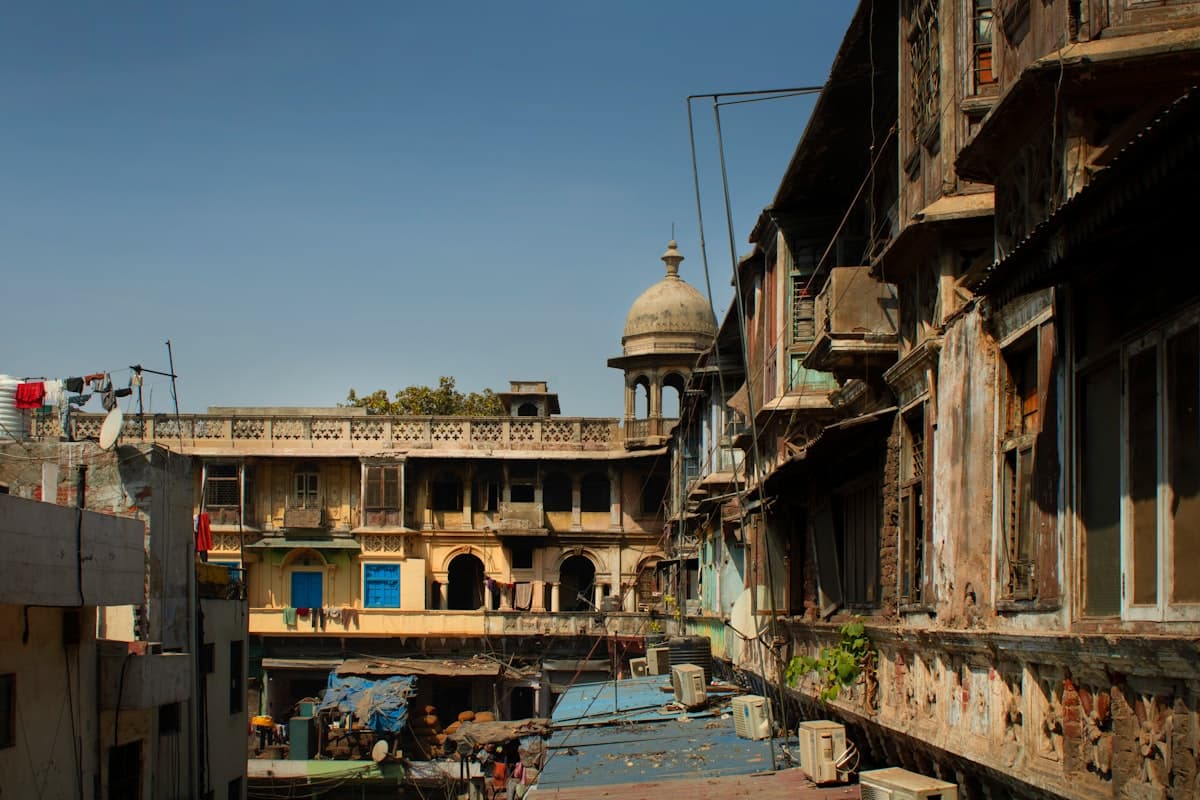
Wear comfortable walking shoes with real soles. Cairo's colonial-era streets are beautiful and broken. Broken tiles, uneven pavement, and construction debris are features, not bugs.
The best light for photographing Downtown Cairo's facades is between 7am and 9am, before the streets fill. The buildings face all directions, so you will find good angles throughout the morning.
Carry cash in small denominations. Site entry fees in Egypt are rarely card-accessible, and the ticket offices at smaller sites like the Baron Empain Palace may not have change for large bills.
For Alexandria, the train from Ramses Station in Cairo takes two hours and costs EGP 65 to 180 depending on class. The Spanish Car (second class air-conditioned) is fine. Do not take the intercity bus if you value your time.
If you are serious about this period, read Khaled Fahmy's "In Quest of Justice" or his work on Mohammed Ali before you go. For the British period specifically, Roger Owen's "Lord Cromer" is the most rigorous biography of the man who actually ran Egypt and is available as a PDF through most university library systems.
The Delta town of Dinshaway is not on any tourist circuit and requires hiring a private car from Cairo (roughly EGP 800 to 1,200 for a day trip). The monument there is modest. The experience of standing in the village square and understanding what happened there, and what Britain decided it meant, is not modest at all.
Frequently Asked Questions
The Weekly Dispatch
More on Egypt, every Friday.
Cultural depth and places most guides never mention.
No spam. Unsubscribe anytime.