British Colonial Egypt: The Sites, Stories, and What They Left Behind
Britain occupied Egypt in 1882 without a formal declaration of war. The infrastructure they built to control it still runs the country. Here is where to find all of it.

Quick Facts
- Best time to visit
- October to March. Colonial sites in Cairo and Alexandria are walkable year-round but summer temperatures above 38C make extended exterior tours genuinely difficult. Spring (March to April) offers the best combination of comfortable walking weather and manageable crowds.
- Entrance fee
- Egyptian Museum EGP 450 (approx $9 USD), students EGP 225. Abdeen Palace Museum EGP 100 (approx $2 USD). Fort Qaitbey Alexandria EGP 100 (approx $2 USD). Gezira Palace garden (Cairo Marriott) free. Heliopolis Baron Palace exterior free.
- Opening hours
- Egyptian Museum daily 9am to 5pm. Abdeen Palace Sunday to Thursday 9am to 3pm. Fort Qaitbey daily 9am to 4pm. Most colonial-era buildings in active use as offices or hotels have no formal visiting hours.
- How to get there
- Cairo: Metro Lines 1 and 2 to Sadat Station, EGP 8 per ride. Taxis from Giza or Zamalek EGP 50 to 80. Alexandria: train from Ramses Station EGP 75 to 120 depending on class, journey approximately 2 hours. Heliopolis: Metro Line 3 to Airport direction, or microbus from downtown, EGP 5 to 10.
- Time needed
- Colonial Cairo walking circuit: 6 to 8 hours minimum. Alexandria colonial sites: full day. Heliopolis: half day. Combined Cairo and Alexandria program: two separate days.
- Cost range
- Budget EGP 600 to 1,000 per day covering metro, site entries, and street food. Mid-range EGP 2,000 to 3,500 per day if adding a private architectural guide and meals at colonial-era hotels.
Britain never called Egypt a colony. For 40 years, from 1882 to 1922, and in practice for another decade beyond that, Egypt was administered by a British "Agent and Consul-General" who held no official title, answered to no Egyptian institution, and ran the country anyway. The first of them, Evelyn Baring, later Lord Cromer, governed Egypt for 24 years from a desk in Cairo while a Khedive sat nominally on the throne. He once described Egyptians as "subject races" in a published book. The book sold well in London. Understanding this architecture of polite domination is the only useful frame for visiting what the British left behind, because they left behind quite a lot, and it is still, in ways both obvious and invisible, running.
Quick Facts
Best time to visit: October to March. Cairo colonial sites are year-round but summer heat above 38°C makes exterior sites and walking tours punishing. Alexandria's British-era Corniche and downtown grid are more pleasant in spring.
Entrance fees: Most colonial-era buildings are either free to enter (functioning government offices, churches, still-operating hotels) or embedded in broader site tickets. The Egyptian Museum, home to objects collected partly under colonial-era excavation licenses, costs EGP 450 (approx $9 USD). The Abdeen Palace Museum costs EGP 100 (approx $2 USD). The Gezira Palace (now the Cairo Marriott) is freely walkable in its lobby and gardens.
Opening hours: Government buildings are not tourist sites and operate standard office hours, Sunday to Thursday 9am to 2pm. Museums typically open 9am to 5pm daily. The Marriott garden is accessible at any hour.
How to get there: Downtown Cairo (where the bulk of colonial architecture concentrates) is best reached via Metro Line 1 or 2, Sadat Station, EGP 8 per ride. From Giza or Zamalek, taxis run EGP 50 to 80. Alexandria's colonial grid is walkable from Raml Station (tram, EGP 5).
Time needed: A serious colonial Cairo walking tour requires a full day. Alexandria warrants a separate day trip. Allow two to three days if you want to read the city rather than just photograph it.
Cost range: Budget EGP 600 to 1,000 per day (transport, entries, street food). Mid-range EGP 2,000 to 3,500 per day if you add a guided architectural tour and meals in historic hotels.
Why This Place Matters
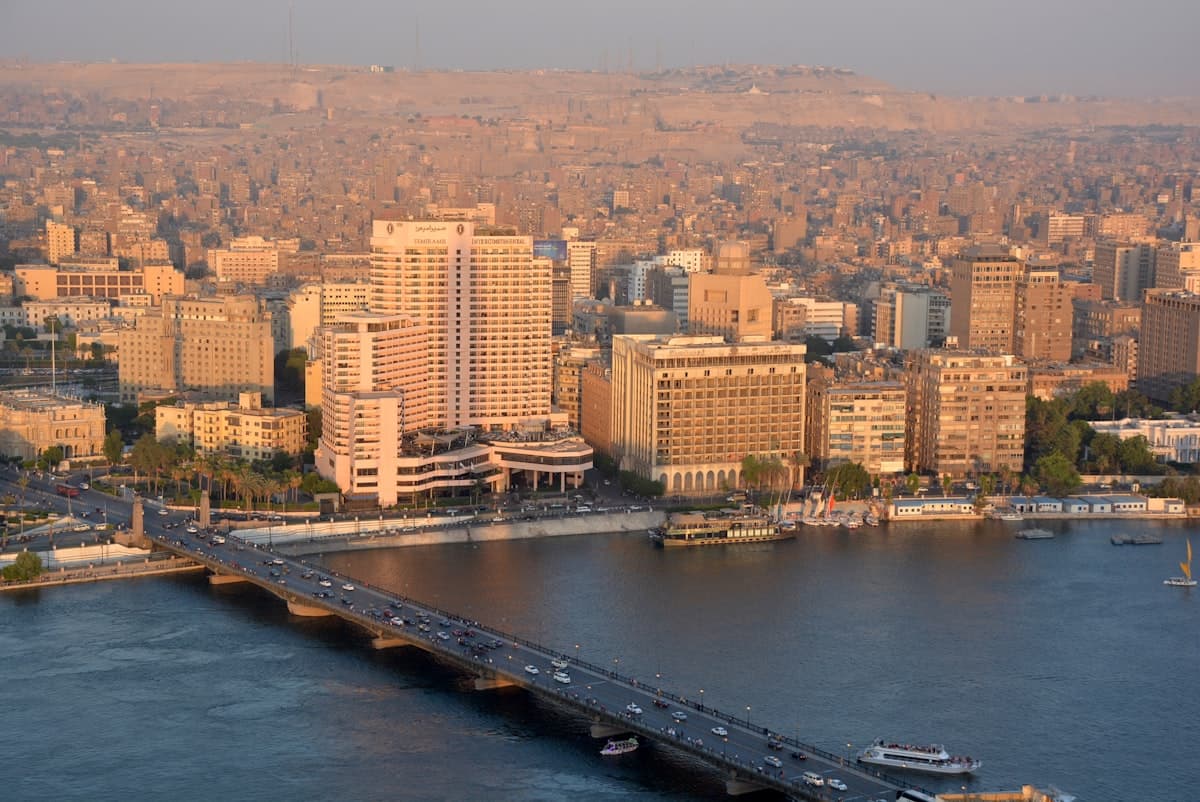
Britain's occupation of Egypt in 1882 began as a response to a nationalist military uprising, the Urabi Revolt, which threatened European financial interests in the Suez Canal. The Canal had opened only 13 years earlier, in 1869, and European bondholders held Egyptian debt so completely that the Egyptian government had been forced to sell its Canal shares to Britain in 1875. Khedive Ismail, who had borrowed to build a modern Cairo modeled on Haussmann's Paris, was removed from power by European creditors in 1879. When Colonel Ahmed Urabi organized military resistance to this financial occupation, Britain sent warships, bombarded Alexandria, and landed troops. The whole operation took less than three months. Egypt would not be formally independent again until 1952.
What makes Britain's Egyptian project distinct from other colonial enterprises is the infrastructure obsession. Lord Cromer believed Egypt's problem was mismanagement, and he set about correcting it with an engineer's certainty. Irrigation networks were expanded, the railway system was rationalized, a new legal system was introduced, and Cairo's downtown was rebuilt on a European grid. The Aswan Low Dam, completed in 1902, was at the time the largest dam on earth. These were not gifts. They were mechanisms of control, designed to make Egyptian cotton more productive, more exportable, and more profitable for the British textile industry in Lancashire. The fact that many of them still function is the complicating detail that the straightforward colonial narrative never quite resolves.
Visiting British Egypt colonial history sites means holding two things at once: the genuine engineering ambition and the explicitly extractive purpose it served.
What You Will Actually See: Cairo's Colonial Downtown
Most visitors pass through Tahrir Square without knowing they are standing at the center of a deliberate urban project. The streets radiating outward, Talaat Harb Street, Qasr el-Nil Street, Champollion Street, follow a plan commissioned in the 1860s by Khedive Ismail and subsequently formalized under British administration. The buildings along these streets are almost entirely early 20th century, a mix of Italian-influenced Art Nouveau, neo-Islamic facades added to European structures, and Beaux-Arts civic architecture.
The most important building in this landscape is the one nobody visits specifically: the Egyptian Museum on Tahrir Square, opened in 1902. It was designed by the French architect Marcel Dourgnon, selected through an international competition. The building is less interesting than what it contains and what the containment represents. Under the colonial-era Antiquities Service, which was directed by French nationals but operated under British political oversight for most of the occupation period, European archaeologists received excavation permits in exchange for splitting finds with the Egyptian state. Many of those "state" finds were then stored in this building while European museum collections absorbed the other half. The Rosetta Stone, found by French soldiers in 1799 and seized by the British in 1801, sits in the British Museum in London. Egypt has been formally requesting its return since 2003.
On Qasr el-Nil Street, the old Barclays Bank building (now a commercial bank) and the former Shepheard's Hotel site are colonial landmarks of different registers. Shepheard's was the social center of British Cairo for 70 years. Winston Churchill stayed there. Every officer passing through to the Sudan or Palestine signed the guest book. It was burned to the ground during the Cairo Fire of January 26, 1952, when mobs attacked symbols of foreign control. The fire killed 17 people, destroyed 700 buildings, and began the countdown to the revolution that ended British influence seven months later. The current Shepheard's, rebuilt on the Corniche in the 1950s, shares nothing with the original except the name.
The Gezira Palace and the Logic of the Island
Zamalek, the northern portion of Gezira Island in the Nile, was a deliberately created European quarter. Khedive Ismail built a palace there in 1869 to host dignitaries for the Suez Canal opening, including Empress Eugenie of France. The British converted the island into the primary residential zone for their administrators, a separation of European Cairo from Egyptian Cairo that was architectural policy, not coincidence. The palace became the Gezira Palace Hotel and is now the Cairo Marriott. Walk through the original 1869 ballroom, which survives largely intact, and you are standing in a room that predates the occupation but established the spatial logic the British would later institutionalize. The garden is one of the most peaceful places in Cairo and costs nothing to enter.
The Gezira Sporting Club, directly adjacent and founded in 1882, the same year as the occupation, was restricted to British members until Egyptian independence. It is now one of the most coveted memberships in Cairo. The waiting list runs to years.
Alexandria: Where Colonialism Was More Comfortable With Itself
Alexandria was always more European than Cairo, a quality that predates Britain by two millennia. By the late 19th century, roughly 25 percent of Alexandria's population was foreign nationals, mostly Greek, Italian, and French, with a significant British commercial and military community. This made the colonial project easier and stranger simultaneously: British administrators could tell themselves they were not imposing on an ancient civilization but simply governing a cosmopolitan Mediterranean port city.
The British-era buildings that survive in Alexandria's downtown, the Toussoun district particularly, are in various states of decay and ongoing use. The Cecil Hotel on the Corniche, opened in 1930, served as a headquarters for British intelligence during World War II. Somerset Maugham stayed there, as did Lawrence Durrell, who set parts of The Alexandria Quartet in its rooms and atmosphere. The hotel operates today under the Sofitel brand, with considerably less character than its reputation warrants and considerably more air conditioning. The bar still exists. The view of the Mediterranean from the upper floors is the same view British officers had in 1942 while Rommel's army was 100 kilometers west at El Alamein.
Fort Qaitbey, built in 1477 on the foundations of the ancient Lighthouse of Alexandria by the Mamluk Sultan Qaitbay, was seized by British forces in 1882 during the bombardment of Alexandria and used as a military installation. The bombardment itself destroyed roughly 60 percent of the old city. This is the specific violence that preceded the more bureaucratic violence of Cromer's administration, and it is rarely foregrounded at the site, which now presents itself as a Mamluk monument. Both things are true. Entrance costs EGP 100 (approx $2 USD).
The Connections: Cotton, Canals, and Continuity
The single most consequential physical legacy of British Egypt is not a building. It is the Aswan Low Dam, completed in 1902 by the engineering firm John Aird and Co., which also built the Blackwall Tunnel under the Thames. The dam raised the Nile's water level across a 400-kilometer stretch of Upper Egypt, enabling perennial irrigation and dramatically increasing cotton yields. It also flooded the temple complex at Philae for most of the year, a cultural loss that Egyptian intellectuals protested at the time and which British engineers noted, recorded, and proceeded past. Philae was ultimately rescued in the 1970s by UNESCO's Nubia Campaign and relocated to Agilkia Island, stone by stone. The colonially-built dam that created the problem was replaced by the Aswan High Dam in 1970, built with Soviet assistance after Nasser nationalized the Suez Canal and was refused American financing.
That thread connects: British dam, flooded temples, cotton profits, American refusal, Soviet dam, Nasser's Egypt. The colonial infrastructure is not history in the sense of being finished. It is history in the sense of still producing consequences.
In Cairo, the Qasr el-Nil Bridge, whose original iron structure was built in 1871 and replaced in 1933 by a British-designed reinforced concrete structure, is the bridge every Egyptian crosses to reach Tahrir Square. The four bronze lions at its entrances were cast in 1906 by the French sculptor Henri-Alfred Jacquemart. Egyptians have adopted them completely. They are now a standard meeting point, backdrop for engagement photos, and landmark that feels entirely local. This is how colonial infrastructure becomes national heritage: not through any formal process, but through daily use accumulating into ownership.
Common Mistakes
Visiting without a frame. The buildings mean very little if you do not know what was happening inside them. Read one book before you go. Khaled Fahmy's "In Quest of Justice" covers the Egyptian legal system under colonial rule. Roger Owen's biography of Lord Cromer is the definitive account of how the occupation actually functioned. Either one will make every building you enter more specific.
Spending money on a colonial-themed tour operator package. Several Cairo tour companies now market "colonial heritage walks" at EGP 800 to 1,200 per person. The same walk costs nothing if you download the Untold Tours Cairo app or use the detailed route maps published free by the Aga Khan Trust for Culture. The information is identical. The markup is not.
Treating the Egyptian Museum as a colonial history site specifically. It is both a colonial artifact and Egypt's primary archaeological museum. Go for Tutankhamun and the Old Kingdom galleries, not to study imperialism. There are better places for that. The museum is also genuinely overcrowded between 10am and 3pm; arrive at 9am or accept the crowd.
Visiting the Cecil Hotel in Alexandria expecting atmosphere. The rooms have been renovated past any colonial-era character. The lobby is the best surviving space. Have a coffee there, look at the photographs, and leave. Do not pay Sofitel prices for a room that has been fully refitted in contemporary hotel style because of nostalgia for a building that no longer exists inside its own walls.
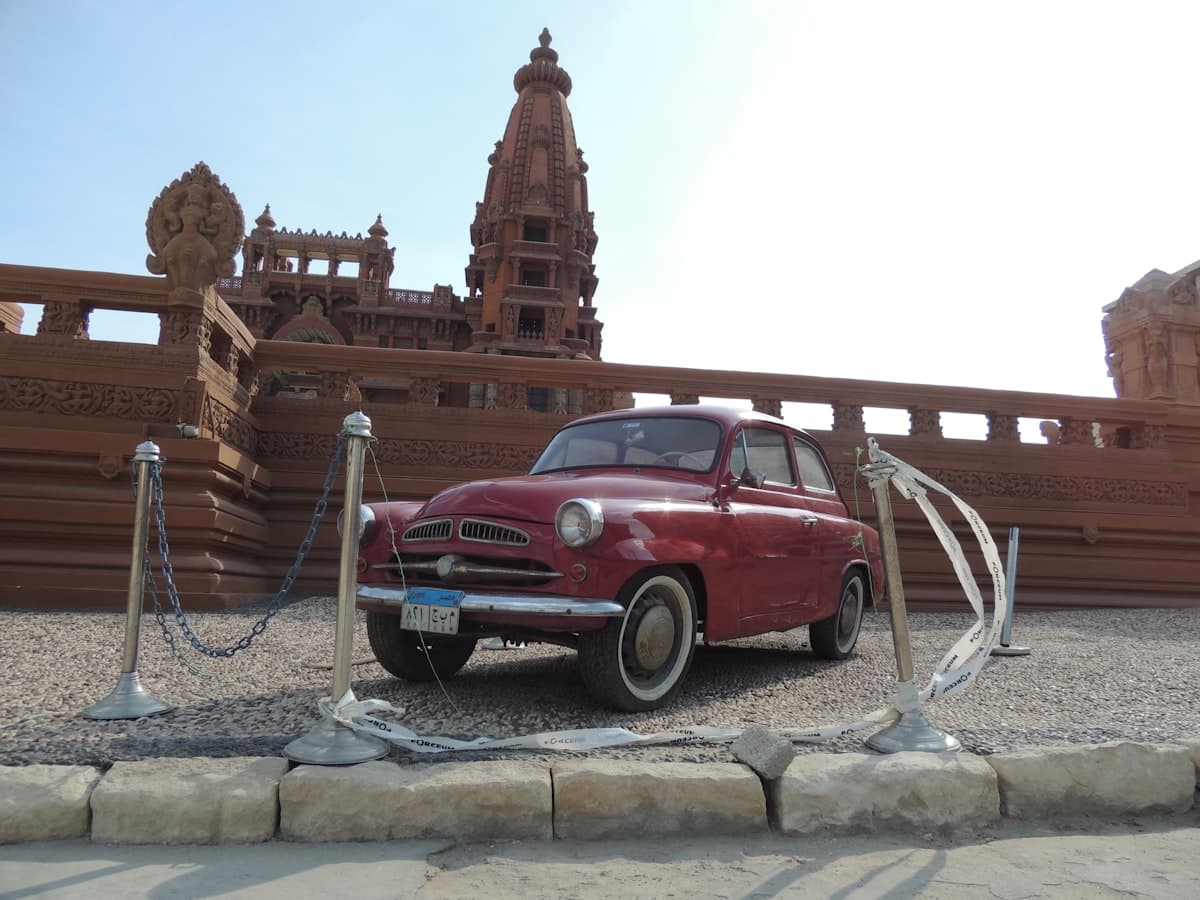
Skipping Heliopolis. The suburb of Heliopolis, built from 1905 onward by the Belgian entrepreneur Baron Edouard Empain, is the most coherent surviving example of colonial urban planning in Egypt and almost no foreign visitors go there. Empain built himself a Hindu-Moorish palace (currently under restoration, exterior viewable) surrounded by a planned garden city with its own tram system. The tram is gone but the streets and buildings survive. A half-day walk through Baron's district requires no ticket and no guide.
Confusing British history with Pharaonic history. This is specific: several tour operators market Luxor's Winter Palace Hotel, built in 1886 and expanded in 1907, as a colonial site worth a detour on its own. It is a good hotel with a pleasant garden. Howard Carter celebrated the discovery of Tutankhamun's tomb there in 1922 with a glass of champagne. That story is real and the bar is pleasant. But the hotel itself is not a museum, and Luxor's actual archaeology is so significant that spending meaningful time in the Winter Palace bar at the expense of Karnak or the Valley of the Kings is a genuine misallocation of limited days.
Practical Tips
The best single day for British colonial history sites in Cairo: start at the Egyptian Museum at 9am (buy tickets online at egyptianmuseum.gov.eg to avoid queues), spend 90 minutes in the main collection, then walk north across the Qasr el-Nil Bridge to Zamalek, stopping at the Gezira Palace garden for coffee, then return via Talaat Harb Square and walk the grid toward Abdeen Palace. This covers the essential sites in one circuit without doubling back.
For Alexandria, take the early train from Ramses Station, EGP 75 to 120 depending on class, arriving before 10am. Walk the Corniche from Cecil Hotel south to the site of the old European quarter, detour to Fort Qaitbey (open 9am to 4pm daily, EGP 100), and take the afternoon train back. A single day is sufficient for this purpose, though Alexandria deserves longer if you have it.
Wear shoes you can walk in for six hours. Downtown Cairo's pavements are uneven and the colonial-era buildings are dispersed enough that a car defeats the point. The walking is part of reading the city.
Photography: all the exterior buildings can be photographed freely. Interior photography in government buildings is prohibited and genuinely enforced. Do not photograph military installations, which in Egypt includes bridges and certain government offices that are not obviously labeled as sensitive.
If you read Arabic, the signage inside Abdeen Palace is substantially more detailed than the English versions and includes documentation of the British administration's use of the palace buildings that the English panels omit entirely.
Frequently Asked Questions
The Weekly Dispatch
More on Egypt, every Friday.
Cultural depth and places most guides never mention.
No spam. Unsubscribe anytime.