British Colonial Egypt: The Sites, Stories & What They Cost
Britain occupied Egypt for 72 years but never formally colonized it. That legal fiction shaped every building, every archive, and every street name you will walk past today.

Quick Facts
- Best time to visit
- October through March. Colonial-era sites are largely outdoor or in older buildings without air conditioning. The Egyptian Museum is year-round but brutal in summer heat during peak hours.
- Entrance fee
- Egyptian Museum EGP 450 (approx. $9 USD), Royal Mummy Room EGP 180 additional. Citadel EGP 450. El Alamein Military Museum EGP 60. Bibliotheca Alexandrina EGP 100. Garden City and Zamalek street walks are free.
- Opening hours
- Egyptian Museum daily 9am to 5pm. Citadel daily 8am to 5pm (winter), 8am to 6pm (summer). El Alamein cemetery and museum 9am to 5pm daily. Bibliotheca Alexandrina Saturday to Thursday 10am to 7pm.
- How to get there
- Cairo metro to Sadat station for Tahrir Square and Garden City, EGP 8. Taxi Zamalek to Garden City EGP 40 to 60. Alexandria by train from Ramses Station EGP 55 to 95 second class, 2.5 hours. El Alamein by car or train from Alexandria, 90 minutes. Ismailia by microbus from Turgoman station, EGP 35 to 45.
- Time needed
- Cairo colonial sites: two full days minimum. Alexandria colonial history: overnight trip of two days. El Alamein as day trip from Alexandria: four hours for museum and cemetery.
- Cost range
- Self-guided budget EGP 600 to 900 per day including entry fees and meals. Mid-range with private modern history guide EGP 1,800 to 2,800 per day. El Alamein day trip from Alexandria: EGP 400 to 600 all-in including transport and entry.
Britain occupied Egypt for 72 years and never once called it a colony. The official line, maintained from 1882 until 1952, was that British troops were guests. Temporary guests who happened to control the treasury, the army, the railways, the Suez Canal, and the appointment of cabinet ministers. This legal fiction, absurd on its face, produced something architecturally and historically peculiar: a colonial capital that never admitted to being one. Cairo is full of the evidence. You just need to know where to look.
Quick Facts
Best time to visit: October through April. The sites described here are largely outdoors or in older buildings without climate control. Cairo in August is 40°C and the colonial-era archives close earlier due to reduced staff.
Entrance fees: Garden City and Zamalek street walks are free. The Egyptian Museum (which houses British excavation records and artifacts removed and then repatriated in part) costs EGP 450 (approx. $9 USD), students EGP 225. The Citadel, relevant for the Muhammad Ali period that preceded and shaped the British presence, costs EGP 450. The Gezira Palace interior (now the Cairo Marriott) charges no entry if you order coffee in the lobby, approximately EGP 200 for a drink.
Opening hours: Egyptian Museum daily 9am to 5pm. Citadel daily 8am to 5pm (winter), 8am to 6pm (summer). Most colonial-era neighborhoods are best walked between 7am and 10am before heat and traffic.
How to get there: The metro to Sadat station puts you at Tahrir Square, adjacent to both the Egyptian Museum and the former British Agency building on the Corniche. A taxi from Zamalek to Garden City costs EGP 40 to 60. The Alexandria colonial sites require a train from Ramses Station: EGP 55 to 95 for second class, 2.5 hours.
Time needed: Cairo's British colonial sites alone require two full days done properly. Alexandria deserves a separate overnight trip of at least two days.
Cost range: Budget EGP 600 to 900 per day for a self-guided colonial history walk with museum entry and meals. Mid-range EGP 1,800 to 2,800 per day including a licensed guide who specializes in modern history rather than Pharaonic sites.
Why This Matters: The Occupation That Wasn't
The British arrived in September 1882 after bombarding Alexandria and defeating Urabi Pasha's nationalist army at the Battle of Tel el-Kebir, a confrontation that lasted under an hour and cost Egypt its independence for seven decades. Lord Cromer, who served as British Agent and Consul-General from 1883 to 1907, governed Egypt more completely than most formal colonial governors governed their territories, yet his official title contained no word that admitted as much. He referred to Egyptians in his memoirs as incapable of self-governance. He also built the first Aswan Dam, completed in 1902, which flooded Nubian villages and the Temple of Philae seasonally for fifty years.
This duality runs through every site in this guide. The British built infrastructure that Egypt still uses: railways, irrigation systems, telegraph lines, the modern sewage system of Cairo. They also extracted cotton profits, suppressed the 1919 Revolution with lethal force, and exiled Sa'd Zaghloul, the nationalist leader, to Malta and then the Seychelles. Understanding both facts simultaneously is the only honest way to walk through the architecture they left behind.
For anyone researching British Egypt colonial history sites, the key insight is this: the most important sites are not monuments. They are neighborhoods, buildings repurposed by subsequent governments, and archives that only recently became accessible.
Cairo: Reading the Colonial City
Garden City and the British Agency
Garden City was designed in 1905 by a Belgian company hired by the Egyptian government under British supervision. Its curved streets were deliberately non-grid, which confused locals and made military control easier during civil unrest. This is not speculation: the street plan was documented as a security measure in correspondence now held at the UK National Archives.
The British Agency, later Embassy, on the Corniche el-Nil was the operational center of the occupation. Lord Kitchener, who served as British Agent from 1911 to 1914, redesigned its gardens obsessively, importing plants from across the empire. He was reportedly more interested in horticulture than governance. The current British Embassy occupies a different building nearby; the original Agency compound has been partially absorbed into the Egyptian government's administrative zone. You can walk its exterior perimeter from the Corniche. The building facing the Nile with the neoclassical facade and the security barriers is what remains visible.
Few visitors realize that directly across the river from this stretch of the Corniche is Rhoda Island, where the Nilometer, a structure built in 861 CE to measure flood levels and calculate tax rates, still stands. The British used Nilometer data, combined with their own hydrological surveys, to redesign the entire Nile irrigation system. Ancient infrastructure and colonial engineering operated on the same river simultaneously.
Zamalek: The Island of Expatriates
Zamalek was not always an island of embassies and expat cafes. Before the British period, Gezira Island was largely agricultural, with the Khedivial palace (now the Cairo Marriott) as its centerpiece. The British military requisitioned sections of the island during both World Wars, and the residential grid of Zamalek as it exists today dates substantially from the 1920s and 1930s, built for British officials, Levantine merchants, and the Egyptian upper class that formed around colonial commerce.
The Cairo Marriott lobby is genuinely worth entering. The central hall was built in 1869 for Empress Eugenie of France to attend the Suez Canal opening, making it older than the British occupation itself. But the wings, the gardens, and the social function of the building all shifted during the British period, when it became a hospital in World War One and a social center for the British military establishment. Order coffee, sit under the chandeliers, and consider what it meant that this palace hosted British officers planning the North Africa campaign while Egyptian nationalists were being imprisoned two kilometers away.
The Egyptian Museum and the Question of What Was Taken
The Egyptian Museum on Tahrir Square, opened in 1902, is itself a colonial-era institution. The French egyptologist Auguste Mariette founded its predecessor, and the British period saw an acceleration of licensed and unlicensed excavation that sent Egyptian artifacts to London, Paris, Berlin, and New York. The Rosetta Stone, excavated by French soldiers and seized by the British under the Treaty of Alexandria in 1801, sits in the British Museum. Egypt has formally requested its return. The request has been declined.
What the Cairo museum does hold is the administrative record of many of those excavations, and the artifacts that were too numerous, too large, or too politically complicated to ship abroad. The Royal Mummy Room, EGP 180 additional entry, contains Ramesses II, whose remains were flown to Paris in 1976 for conservation, issued an Egyptian passport listing his occupation as "King, deceased", and returned. The colonial period did not invent the commodification of Egyptian antiquity, but it industrialized it.
Alexandria: The City Britain Bombarded and Then Rebuilt
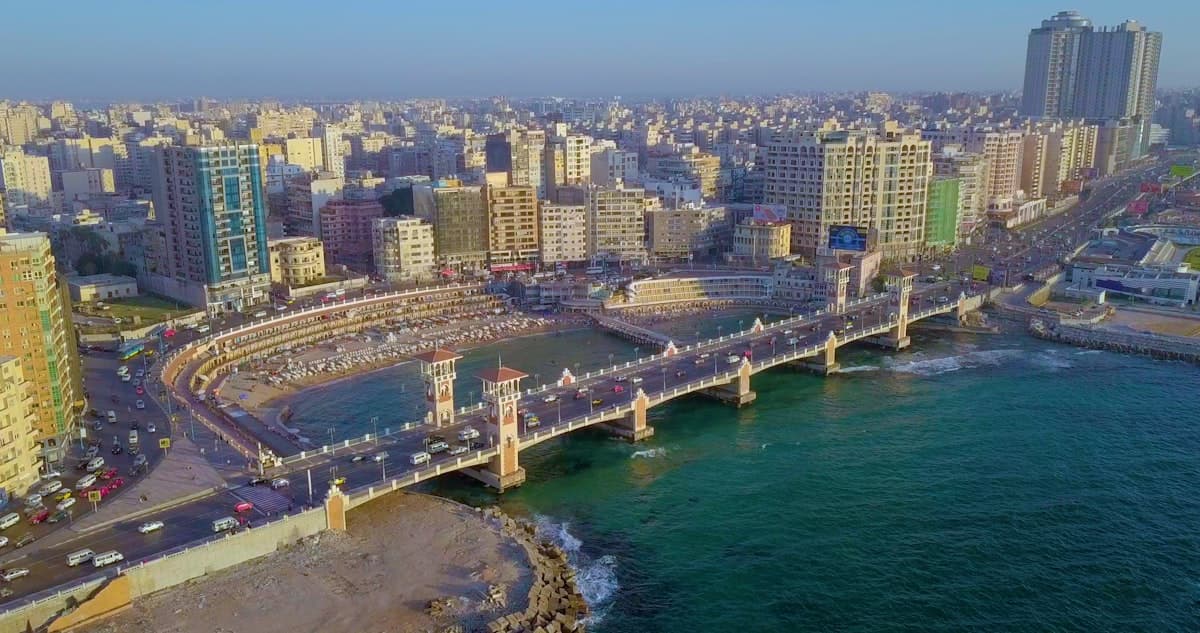
Alexandria is the most honest place in Egypt for understanding British colonial history sites, because the evidence is less buried. The British bombardment of July 1882 destroyed roughly a third of the city. The Alexandria that visitors walk through today, with its broad Corniche, its neoclassical government buildings, and its grid of downtown streets, was substantially rebuilt under British supervision in the years that followed.
The Corniche and Mohamed Ali Square
Midan Tahrir in Alexandria, known during the British period as Mohamed Ali Square (and before that by several other names), is anchored by the equestrian statue of Muhammad Ali, the Albanian-born Ottoman viceroy who modernized Egypt before the British arrived and whose dynasty the British ultimately controlled. The square's current form, with its sweeping arc of Italian-influenced facades, dates from the post-1882 reconstruction. The buildings look vaguely Mediterranean because European architects, working under British administrative oversight, built them to look European.
The Cecil Hotel, opened in 1929 and now operating as the Steigenberger Cecil, was the social center of European Alexandria. Winston Churchill stayed here. Somerset Maugham set scenes here. During World War Two, British intelligence operated from its upper floors while Rommel's forces were less than 100 kilometers west at El Alamein. The hotel bar still functions. The original cage elevator still runs. It is worth one drink and an hour of sitting with that particular weight of history.
El Alamein: Two Hours West, Required
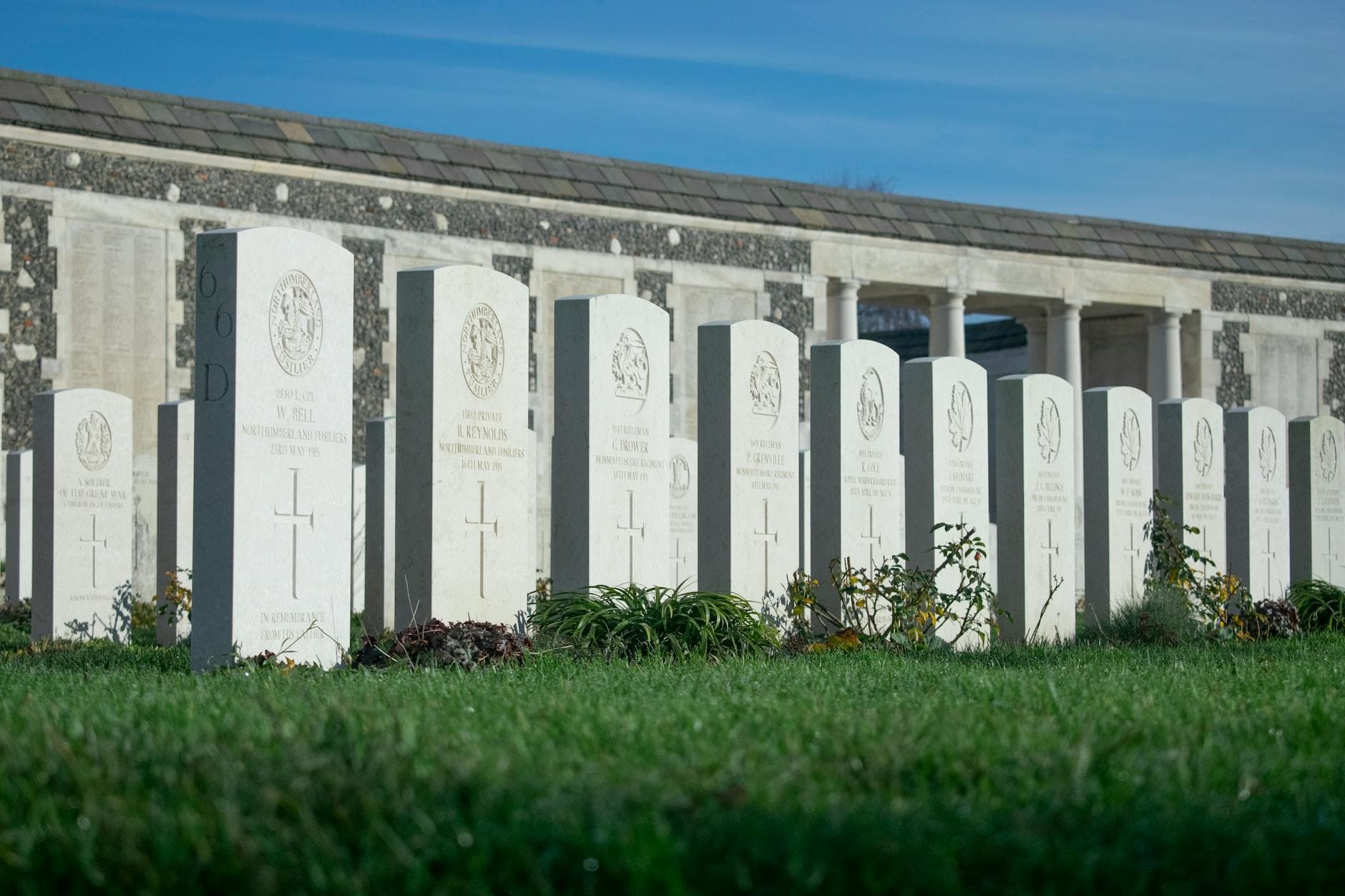
The El Alamein War Cemetery, 106 kilometers west of Alexandria, contains 7,240 Commonwealth graves. The adjacent German cemetery contains 4,280. The Italian memorial further along the coast contains over 5,000. The second Battle of El Alamein in October and November 1942 was the turning point of the North Africa campaign and cost Egypt, which had no say in the matter, an enormous amount of its territory as a battlefield.
The El Alamein Military Museum (EGP 60, open 9am to 5pm daily) is not sophisticated by international standards, but it contains original equipment, maps, and enough material to make the landscape around it comprehensible. The cemetery alone, maintained by the Commonwealth War Graves Commission with a precise and affecting austerity, justifies the drive. Go at 7am when it opens. You will very likely be alone with 7,240 names in the desert light.
The Connections: What Came Before and What Came After
The British did not arrive in a vacuum. The infrastructure they found, and the infrastructure they used, was largely built by Muhammad Ali's dynasty, which had itself engaged French engineers, Italian architects, and Armenian merchants to modernize Egypt along European lines before European control was imposed. The Suez Canal, which the British occupied to protect, was built by a French company using Egyptian corvee labor between 1859 and 1869. Approximately 120,000 Egyptian laborers worked on it; estimates of deaths range from 12,000 to 120,000, a variance that itself reflects how little Egyptian lives were counted.
After 1952, when the Free Officers Revolution ended the monarchy and began the process of ending the occupation formally concluded with the British evacuation of the Canal Zone in 1956, Egypt renamed streets, demolished some colonial buildings, and repurposed others. The building that housed the British High Commission in Cairo is now Egyptian government offices. The Shepheard's Hotel, a colonial institution burned by nationalist crowds in the Cairo Fire of January 1952, was rebuilt in a different location. The original site on the Corniche is an administrative building. The fire, which also destroyed approximately 700 other businesses catering to Europeans, is rarely discussed in tourism contexts. It was the first large public expression of rage against the occupation and its social structures. It should be part of this story.
Common Mistakes
Visiting only the Pharaonic sites and calling it Egypt. This sounds obvious when stated directly, but the entire tourism infrastructure of Egypt is organized around a 3,000-year-old civilization and treats the last 2,000 years as footnote. The British period is not a footnote. It determined which artifacts left Egypt, how the Nile was engineered, why Cairo looks the way it does, and who owns what today.
Hiring a guide who specializes in ancient history for a modern history walk. Most licensed guides in Cairo are trained primarily in Pharaonic and Islamic periods. For colonial history specifically, contact the Egyptian-British Heritage Project or look for guides who hold degrees in modern history from Cairo University. The difference in what you learn is substantial.
Taking the Colonial Cairo bus tour operated by several agencies at EGP 350 to 450. It covers six sites in three hours, which is enough time to photograph facades and absorb nothing. Walk Garden City yourself in a morning with a detailed map and two hours. You will see more and understand more.
Going to El Alamein without the museum. The cemetery is the emotional core, but without the museum's maps and context, the landscape is opaque. Do both, in order: museum first, cemetery second.
Assuming the Alexandria Corniche buildings are old. Most visitors look at the downtown Alexandria facades and assume they are looking at nineteenth-century history. Much of what stands was rebuilt or heavily modified after the 1882 bombardment, and again after the 1952 period. The layers are there but require research to parse. The Alexandria Bibliotheca has an excellent permanent exhibition on the city's modern history that costs EGP 100 to enter and takes ninety minutes. It is one of the most underused resources in Egypt for anyone interested in this period.
Reading only British accounts of the occupation. Lord Cromer's "Modern Egypt" (1908) is essential but is also the self-justification of a man who ran a country he believed inferior to his own. Read it alongside Latifa Mohamed Salem's work on the 1919 Revolution or Khaled Fahmy's writing on Muhammad Ali's Egypt. The British Egypt colonial history sites guide you walk will mean something different when you hold both perspectives simultaneously.
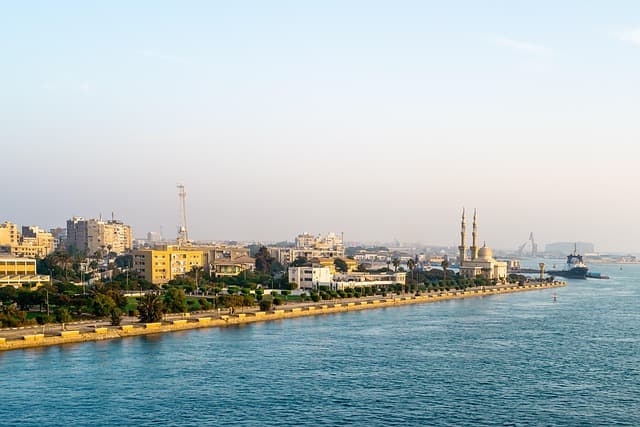
Skipping the Suez Canal city of Ismailia. The Canal Zone city built by the Suez Canal Company and later garrisoned by British troops contains some of the most intact colonial architecture in Egypt, largely because it has not been extensively redeveloped. The Ismailia Museum (EGP 60) holds objects from the Canal construction period. The residential villas built for Canal Company executives in the European Quarter survive, many still occupied. It is three hours from Cairo by car and almost nobody goes.
Practical Tips
The modern history section of the Egyptian Museum is genuinely underfunded and underlit. Bring a small flashlight if you want to read labels in the administrative history rooms.
In Alexandria, the Raml tram line runs the length of the Corniche for EGP 5 and is one of the oldest electric tram systems in Africa, installed in 1863 and electrified in 1902, during the British period. Riding it is both practical and historically resonant.
The UK National Archives' online catalogue contains thousands of documents from the Egyptian occupation, many now digitized. Reading one or two dispatches from Lord Cromer to the Foreign Office before visiting his former Agency building changes the experience of standing outside it considerably.
For Ismailia, book a microbus from Cairo's Turgoman bus station for EGP 35 to 45. The journey takes two to three hours depending on traffic. There are two adequate hotels in Ismailia in the EGP 600 to 900 per night range.
Crowd advice for the Egyptian Museum: Tuesday and Wednesday mornings are the least crowded. Friday afternoons are the worst. The museum closes for Friday prayer approximately 11:30am to 1:30pm.
Finally: the emotional register of walking these sites is complicated in a specific way. You are looking at evidence of a system that was profitable, transformative, violent, and formally denied all at once. Egypt's current government has its own reasons for not centering British colonial history in the tourist narrative. That does not mean it is less important. Bring your own framework. The stones will not provide one.
Frequently Asked Questions
The Weekly Dispatch
More on Egypt, every Friday.
Cultural depth and places most guides never mention.
No spam. Unsubscribe anytime.