British Colonial Egypt: The Sites That Tell the Uncomfortable Truth
Britain occupied Egypt for 72 years but never formally called it a colony. The sites where that contradiction played out are still standing. Most are unmarked.

Quick Facts
- Best time to visit
- October to March. Cairo and Alexandria are walkable in winter; summer heat above 35C makes a multi-site urban itinerary genuinely punishing.
- Entrance fee
- Egyptian Museum EGP 450 (approx $9 USD). Abdeen Palace Museum EGP 100 (approx $2 USD). Montaza Palace gardens EGP 40 (approx $1 USD). Ismailia Museum EGP 60 (approx $1.25 USD). British Embassy and most Garden City sites: exterior viewing only, free.
- Opening hours
- Egyptian Museum daily 9am-5pm. Abdeen Palace Museum Saturday to Thursday 9am-3pm, closed Friday. Montaza gardens daily 8am-6pm. Ismailia Museum Saturday to Thursday 9am-4pm.
- How to get there
- Garden City: 20-minute walk from Tahrir Square or EGP 40-60 taxi. Abdeen Palace: 15-minute walk east of Tahrir. Alexandria: train from Ramses Station, 2 hours, EGP 60-90 second class. Ismailia: bus from Cairo's Turgoman terminal, 2 hours, EGP 35-50.
- Time needed
- Cairo colonial circuit minimum two full days. Alexandria one full day or two if combining with the Library of Alexandria archive. Ismailia half day as a standalone stop.
- Cost range
- Budget EGP 800-1,200 per day covering entry fees, metro and taxi transport, and local restaurant meals. Mid-range EGP 2,500-4,000 per day with a specialist guide and Garden City or Zamalek accommodation.
Quick Facts
Best time to visit: October to March, when Cairo temperatures stay below 25°C and you can walk between sites without losing your mind to the heat.
Entrance fees: Many colonial-era sites are free to enter or embedded within larger complexes. The Egyptian Museum (which holds objects Britain attempted to export): EGP 450 (approx $9 USD). The Abdeen Palace Museum: EGP 100 (approx $2 USD). The Corniche and garden areas around the old British Residency site: free.
Opening hours: Egyptian Museum daily 9am-5pm. Abdeen Palace Museum Saturday to Thursday 9am-3pm, closed Friday. The Anglican All Saints' Cathedral in Zamalek: open for services and usually accessible weekday mornings.
How to get there: Cairo is your base. The Egyptian Museum is a 10-minute walk from Tahrir Square, or take the metro to Sadat station (EGP 8). Abdeen Palace is a 15-minute walk east of Tahrir. The British Residency site in Garden City is a 20-minute walk south of Tahrir or a 40 EGP taxi ride. In Alexandria, the sites concentrate around the Corniche and Raml Station district; a tram ride costs EGP 5.
Time needed: Cairo colonial circuit: two full days minimum. Alexandria: one full day.
Cost range: Budget EGP 800-1,200 per day covering entry fees, transport, and meals at local restaurants. Mid-range EGP 2,500-4,000 per day if you add guided tours or stay in Garden City.
---
Britain never officially colonized Egypt. That is the first thing to understand, and the most useful, because it explains why the physical record of 72 years of British occupation is so scattered, so unmarked, and so easy to walk past without knowing what you are looking at. The occupation began in 1882, when a British force defeated Ahmed Urabi's nationalist army at the Battle of Tel el-Kebir in just 57 minutes, and it did not fully end until 1956, when Nasser nationalized the Suez Canal and British troops finally left the Canal Zone. For the entire period in between, Egypt was technically a self-governing state, then a protectorate, then a nominally independent kingdom, and at every stage the British presence was dressed in the language of temporary necessity. The buildings they left behind carry that same ambiguity. They look permanent. The plaques, where they exist at all, are vague.
This guide is for travelers who want to read that ambiguity directly from the stones.
---
Why This Place Matters
The British arrived in Egypt ostensibly to stabilize the country's finances after Khedive Ismail, who had borrowed catastrophically to finance the Suez Canal and his modernization programme, left Egypt EGP 98 million in debt to European creditors. The occupation was meant to last two years. It lasted seven decades.
What makes Egypt's colonial history unusual within the broader British Egypt colonial history is the layering. Britain did not arrive to an empty administrative landscape. It imposed itself on an Ottoman-appointed dynasty, the Khedivate, which had itself been imposed on a Mamluk aristocracy, which had ruled for 267 years over a country that had been Arab, Coptic, Byzantine, Roman, and Pharaonic before that. The result is that British colonial sites in Egypt rarely stand alone. Lord Cromer's offices in Cairo sat near Fatimid mosques. The British-built railway terminus in Alexandria was constructed on ground the ancient Greeks had used as a harbor. When you look at the colonial record, you are always looking through multiple layers of occupation, each one convinced of its own temporary necessity.
Evelyn Baring, later Lord Cromer, served as Britain's Agent and Consul-General from 1883 to 1907 and was, by general consensus, the actual ruler of Egypt for those 24 years. He never held an official government title. He operated from a building in Cairo's Garden City district, and he wrote at length in his memoir "Modern Egypt" about how the Egyptians were not yet ready for self-governance. That book is still in print. The building is now the British Embassy.
---
Cairo: What the Buildings Are Actually Saying
Garden City and the British Residency
Garden City was designed in 1905 by the Belgian planner José Antonio Corazzi specifically to house the British administrative class. Its curved, deliberately disorienting streets, unusual for Cairo's grid logic, were intended to create a self-contained European quarter insulated from the city around it. Walk its streets now and you will find embassies, aging villas with iron gates, and a neighborhood that still feels slightly separate from the Cairo pressing against it from all sides.
The British Embassy at Garden City occupies the site of the original British Agency, Lord Cromer's residence and nerve center. You cannot enter, but standing at the gates on Latin America Street, looking at the Nile-facing facade, you are looking at the administrative heart of an occupation that reshaped Egypt's economy, its cotton monoculture, its irrigation system, and its education policy for three generations. Cromer deliberately kept Egyptian university enrollment low, arguing that educated Egyptians would become politically inconvenient. By 1906, Egypt had more lawyers per capita than England but almost no engineers, because Cromer's policy funded law schools and suppressed technical education.
The Egyptian Museum and the Antiquities Question
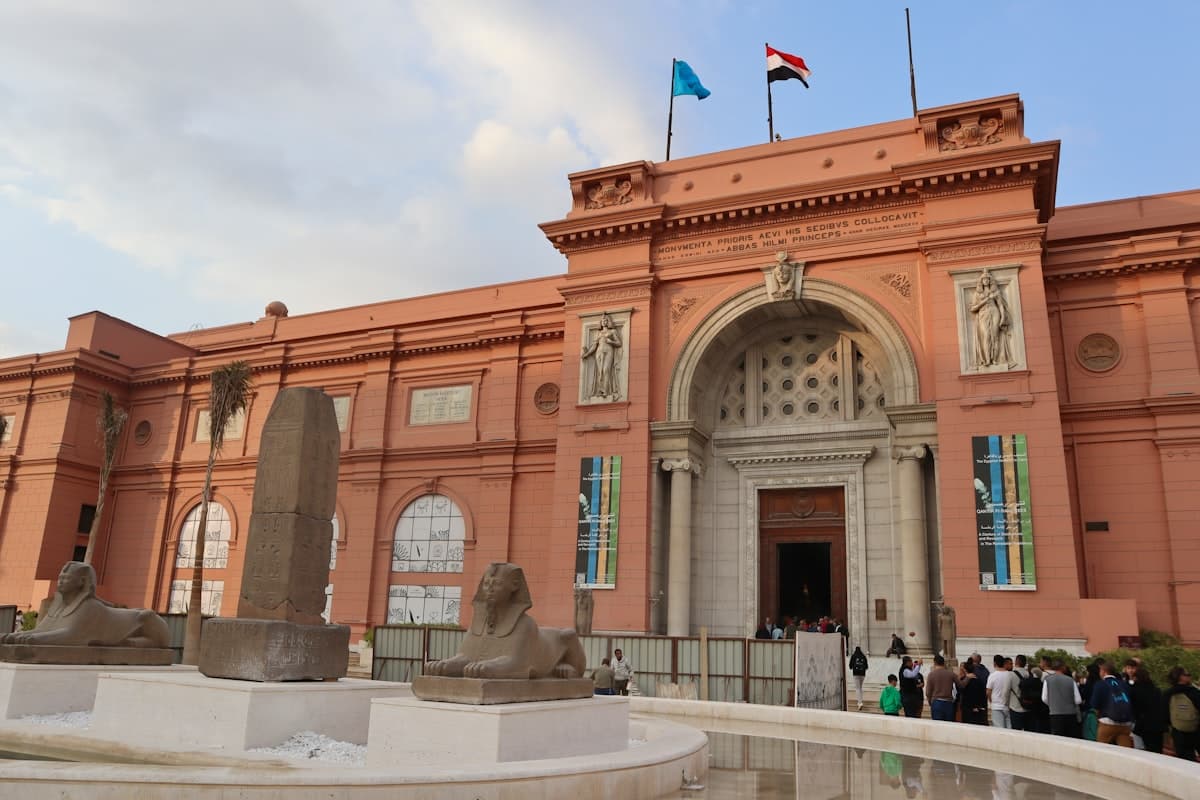
The Egyptian Museum on Tahrir Square was opened in 1902, and its location and founding logic are inseparable from British colonial ambition. Auguste Mariette, the French Egyptologist who founded the precursor institution, had spent decades fighting to keep Egyptian antiquities in Egypt rather than in European collections. The British, who dominated the political landscape by the time the current building opened, had a complicated relationship with that principle. Wallis Budge, keeper of Egyptian antiquities at the British Museum, made multiple trips to Egypt between 1886 and 1913 and exported objects through methods that Egyptian authorities of the period disputed. The Budge collection at the British Museum in London contains items that Egypt has formally requested returned. The Egyptian Museum in Cairo, therefore, is not simply a collection. It is an argument about what stayed and what left, and why.
Inside, the Amarna Room contains objects from the reign of Akhenaten, the pharaoh who moved Egypt's capital from Thebes to a new city and imposed a radical monotheism on the state. The room also reflects a 19th and early 20th century European obsession with Akhenaten as a proto-Christian, proto-rationalist figure. That interpretive framework, applied by British and German scholars who excavated Amarna extensively during the occupation period, shaped how the objects were selected, displayed, and described. The museum is, among other things, a record of what colonial-era Europeans found interesting about ancient Egypt.
---
Alexandria: The City Britain Bombarded First
The 1882 Bombardment and What It Left
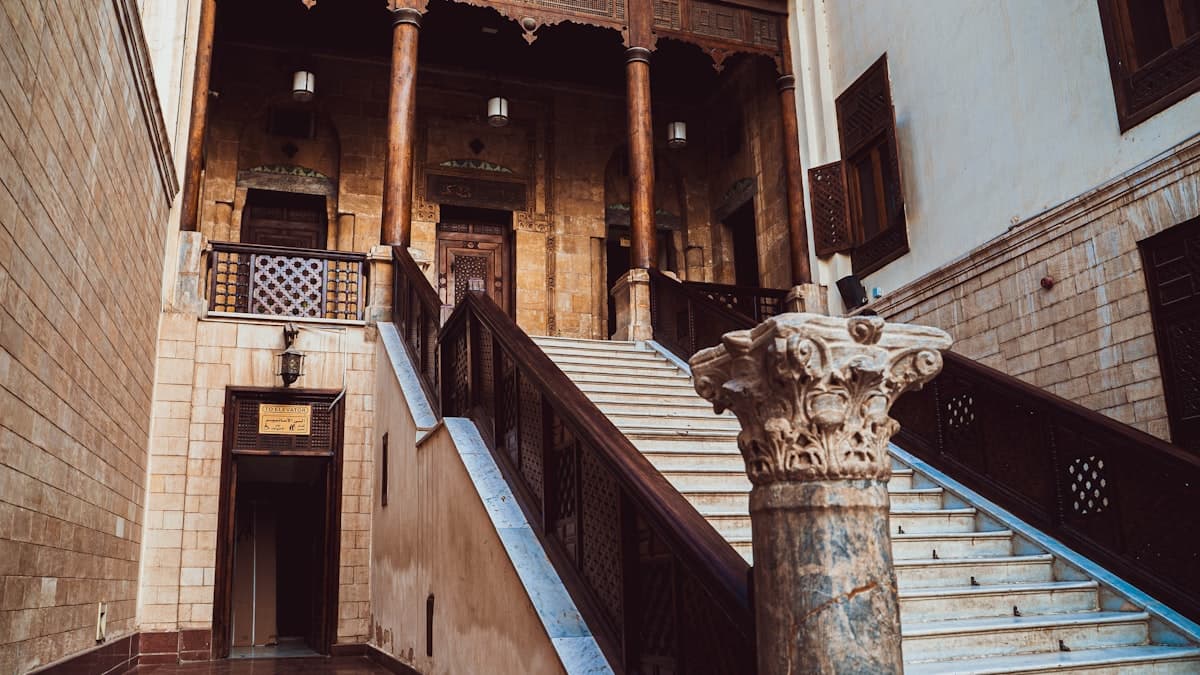
Alexandria is where the British occupation physically began, and the city carries the scar. On July 11, 1882, the Royal Navy bombarded Alexandria's forts for ten and a half hours. Much of the city then burned in the riots that followed. When British troops landed and restored order, roughly a third of Alexandria had been destroyed. The rebuilding that followed was largely European in character, funded by European capital and guided by European aesthetic preferences, which is why the downtown Corniche district around Raml Station still looks, in its bones, like a mid-sized Mediterranean European city from the early 20th century.
The Cecil Hotel on the Corniche, opened in 1929, is the most legible surviving monument to this period. Somerset Maugham stayed here. During World War Two it housed British intelligence operations. Winston Churchill used it as a base during his 1942 visit to Egypt. The hotel has changed ownership and quality repeatedly, but the building stands, and its terrace still looks out over the harbor where the Royal Navy fleet anchored in 1882. You can have a coffee there for around EGP 200 and sit with that fact.
The Montaza Palace gardens east of the city were the summer residence of Egypt's royal family, the dynasty that ruled under British supervision from 1805 until the 1952 revolution. The palace itself is closed to the public, but the gardens are open for EGP 40 (approx $1 USD) and cover 150 acres of coastal land that the royal family maintained as a private European-style retreat while the rest of Alexandria dealt with the consequences of colonial economics.
---
The Connections: Nothing Stands Alone
The Abdeen Palace in central Cairo, built between 1863 and 1874 for Khedive Ismail, became after 1882 the ceremonial seat of a ruler who answered to Lord Cromer. The palace's museum includes the throne rooms where British officials and Egyptian khedives negotiated the terms of a supervised sovereignty, and a weapons collection that documents the military gap between a British-equipped Egyptian army and the nationalist forces that eventually moved against both. The building itself was designed by a European architect, furnished with European furniture, and modeled on European palace conventions, which was the Khedival dynasty's deliberate policy of signaling modernity through European aesthetics. Britain did not introduce that impulse. It simply exploited it.
The Suez Canal, 163 kilometers long and completed in 1869, was built using forced Egyptian labor under a French concession agreement that Khedive Ismail later sold his shares in to the British government for £4 million in 1875. Benjamin Disraeli purchased those shares without parliamentary approval, financing the deal through a personal loan from the Rothschild banking house. Britain's "interest" in Egypt's stability was, from that moment, also a financial interest in the canal's operation. The Canal Zone sites near Ismailia, including the old British military barracks and the 1952 battle sites where Egyptian police held out against a British military assault for hours before the garrison was overwhelmed, are part of the British Egypt colonial history that most Cairo-focused itineraries miss entirely. The January 25, 1952 massacre at Ismailia killed 46 Egyptian policemen and wounded 72 more. It directly triggered the Cairo riots three days later that destroyed the city's European quarter, and those riots led within six months to the coup that ended the monarchy.
---
Common Mistakes
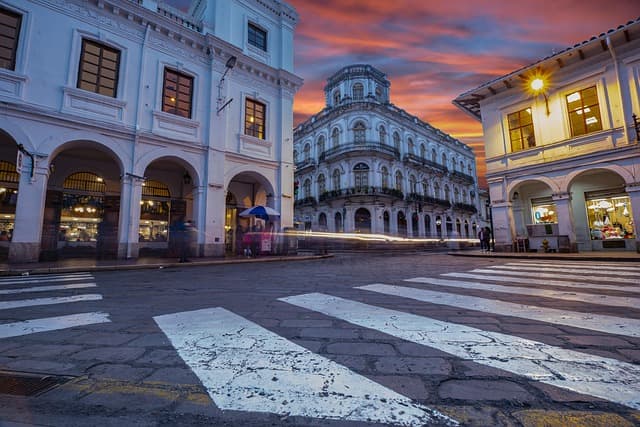
1. Expecting signage. Almost none of the colonial-era sites in Cairo are marked as such. The British Residency is now an embassy. The Shepheard's Hotel, where British officers gathered and which nationalists burned in 1952, was rebuilt in a different location. You need context before you arrive, not after.
2. Treating the Egyptian Museum as only an ancient history site. The museum's founding, its early collection decisions, and the objects missing from it are colonial history. Allocate at least 30 minutes to reading the institution itself, not just the objects inside it.
3. Taking the colonial history tour marketed by most agencies. Most organized "colonial Cairo" tours spend 90 minutes on Zamalek's European architecture and call it done. They skip Garden City, Ismailia, and the Abdeen Palace museum entirely. Hire an independent guide who knows the political history, not just the architectural styles.
4. Spending money on the Abdeen Palace sound and light show. Skip it entirely. The show is approximately 40 minutes of theatrical Egyptian nationalism that tells you nothing about the British period that you will not understand better by spending 45 minutes in the palace's actual museum during daylight hours.
5. Treating Alexandria's colonial architecture as only aesthetic. The beautiful Italianate buildings around Raml Station represent investment capital that arrived in Alexandria from the 1880s onward partly because British occupation guaranteed property rights for European investors while suppressing the political rights of Egyptian workers. The beauty and the injustice were the same economic system.
6. Ignoring Ismailia. Every British Egypt colonial history sites guide that omits the Canal Zone is giving you an incomplete picture. The Ismailia Museum (EGP 60, approx $1.25 USD) holds objects from the Suez Canal construction period, and the city's colonial-era district, built by the Suez Canal Company for its European employees, is one of the strangest and most honest colonial landscapes in Egypt. It is two hours from Cairo by bus (EGP 35-50).
7. Visiting only buildings. The real colonial history lives in institutions: the cotton price system that impoverished Egyptian farmers to supply British textile mills, the irrigation infrastructure built to serve that system, the legal codes that protected European nationals from Egyptian courts under the Capitulations agreements. The Nile Barrages north of Cairo, built and expanded under British engineering supervision, are open to visitors and far more revealing of what the occupation actually did to Egypt than any palace interior.
---
Practical Tips
Dress conservatively, particularly when visiting mosques near colonial-era sites (Garden City sits adjacent to several active mosques and the area is a mixed residential neighborhood). Carry water and a physical map; Garden City's deliberately curved streets will defeat Google Maps on a bad signal day.
For serious research, the Rare Books and Special Collections Library at the American University in Cairo holds extensive colonial-period documents, photographs, and periodicals. Access requires a reader's card, which is free for researchers.
Hire a licensed guide who specializes in modern Egyptian history rather than Pharaonic history. Ask specifically about their knowledge of the 1919 revolution, the 1952 revolution, and the Dinshaway Incident of 1906, in which British officers shooting pigeons on a village green sparked a confrontation that left one officer dead from heatstroke, and in response four Egyptian villagers were hanged and others publicly flogged. Dinshaway became an international scandal that turned liberal opinion in Britain against the occupation. A guide who knows Dinshaway knows the period.
Alexandria is best covered as a day trip from Cairo (two hours by train, EGP 60-90 second class) or as a two-night stay. The Spanish-style buildings, the Cecil, and the Montaza gardens form a coherent half-day circuit. The Library of Alexandria's modern incarnation, opened in 2002 on the approximate site of the ancient library, holds an excellent archive of colonial-period photographs of the city accessible to visitors.
The best time to walk Garden City is a weekday morning before 9am, when traffic is manageable and the light on the Nile-facing buildings is clear and low.
Frequently Asked Questions
The Weekly Dispatch
More on Egypt, every Friday.
Cultural depth and places most guides never mention.
No spam. Unsubscribe anytime.