Cairo Geniza Jewish Heritage Egypt Guide: The Ben Ezra Synagogue
A storeroom in a Cairo synagogue held 400,000 medieval documents for 800 years. They rewrote everything scholars thought they knew about Jewish, Islamic, and Mediterranean history.

Quick Facts
- Best time to visit
- October to April for manageable temperatures. Weekday mornings 9am to 11am for minimal crowds inside the precinct.
- Entrance fee
- Coptic Cairo complex: EGP 100 (approx $2 USD). Coptic Museum next door: EGP 200 (approx $4 USD). Ben Ezra Synagogue interior: free with complex ticket.
- Opening hours
- Daily 9am to 4pm. Arrive by 9:30am for the quietest experience. Closed on some Egyptian national holidays.
- How to get there
- Metro Line 1 to Mar Girgis station, EGP 8-10 one way, exits directly into the Coptic precinct. Taxi or ride-share from Downtown Cairo EGP 40-70, from Giza EGP 80-120.
- Time needed
- 45 minutes for the synagogue alone. Half-day (4-5 hours) combining synagogue, Coptic Museum, Hanging Church, and Amr ibn al-As Mosque.
- Cost range
- Budget half-day including metro, all entrance fees, and street lunch: EGP 350-500. Mid-range with private guide and sit-down lunch: EGP 1,200-1,800.
Quick Facts
Best time to visit: October to April, when Cairo's heat is manageable and the light inside Old Cairo's churches and synagogues flatters the stonework. Avoid Friday mornings when the neighborhood fills with worshippers.
Entrance fee: The Ben Ezra Synagogue is accessed via the Coptic Cairo complex. Entrance to the complex costs EGP 100 (approx $2 USD) for general admission. The synagogue interior itself is free once inside. Photography is permitted in the courtyard but check at the door regarding interior photography, as policies shift.
Opening hours: Daily 9am to 4pm. Arrive before 10am if you want the space to yourself.
How to get there: Take the Cairo Metro Line 1 to Mar Girgis station. The station exits directly into the Coptic Cairo precinct. Metro fare is EGP 8-10 depending on zones. From Downtown Cairo, a taxi or ride-share costs EGP 40-70. From Giza, budget EGP 80-120.
Time needed: The synagogue itself takes 30-45 minutes to absorb properly. Combine it with the Coptic Museum (next door, EGP 200 adults), the Hanging Church, and the Church of St. Sergius and Bacchus for a full half-day in Old Cairo. Add the Amr ibn al-As Mosque for a full day.
Cost range: Budget day in Old Cairo, including metro, entrance fees, and lunch at a local fuul and ta'ameya spot on Road 23: EGP 300-500. Mid-range with a guide and sit-down lunch: EGP 1,000-1,500.
---
Why This Place Matters
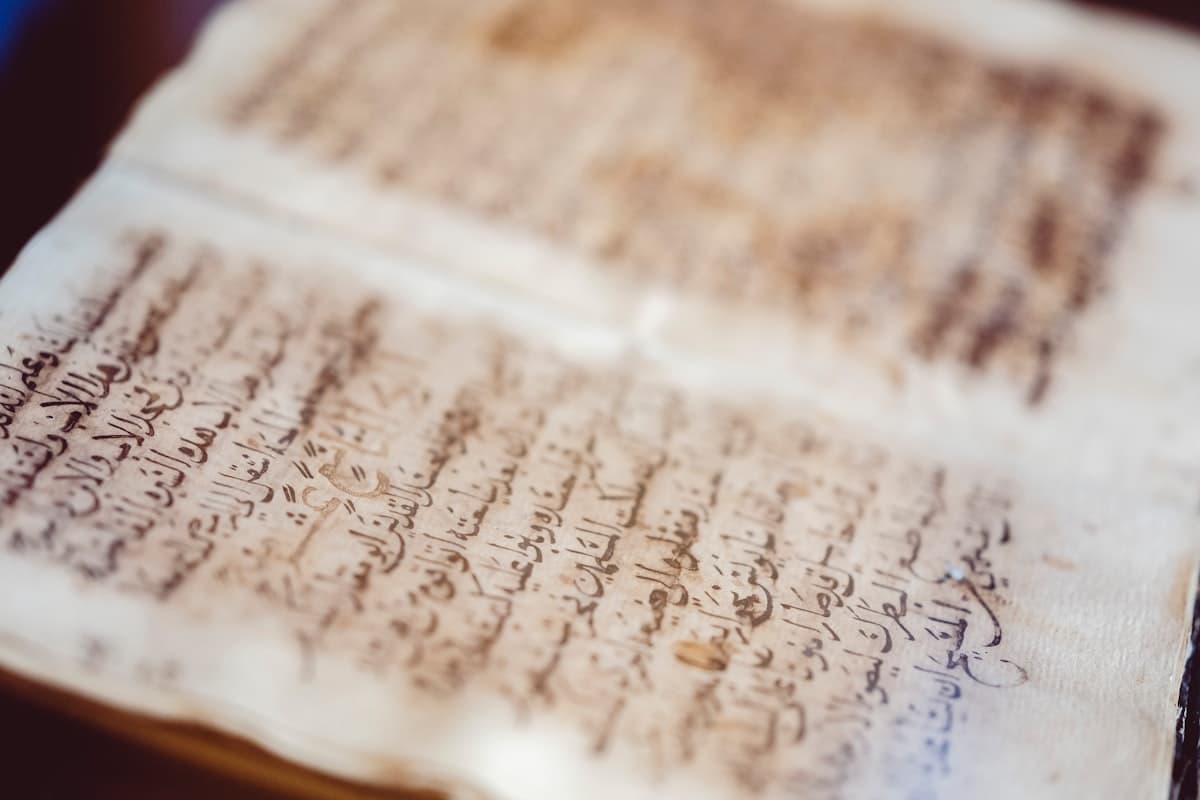
In 1896, two Scottish sisters named Agnes Lewis and Margaret Gibson bought some manuscript fragments in a Cairo antique market. They showed them to Solomon Schechter, a Cambridge scholar of Talmudic literature. Schechter recognized one fragment as a lost Hebrew version of the Book of Ben Sira, a text that had existed only in Greek translation for a thousand years. He came to Cairo immediately.
What Schechter found in the storeroom above the Ben Ezra Synagogue in Fustat, Old Cairo's oldest inhabited quarter, was not a collection. It was an accumulation. For roughly eight hundred years, the Jewish community of Cairo had deposited worn documents into this room rather than destroy them, because Jewish law prohibits the destruction of any writing that contains the name of God. The result was a sealed archive of medieval life: 400,000 documents covering roughly the years 870 to 1880 CE, written in Hebrew, Judeo-Arabic, Aramaic, and Arabic, encompassing everything from legal contracts and letters of credit to personal correspondence, poetry, medical prescriptions, shopping lists, and marriage certificates.
Schechter negotiated with the synagogue's leadership and shipped the majority of the Geniza's contents to Cambridge University Library, where they remain the core of the Taylor-Schechter Collection. The word geniza simply means "hiding place" in Hebrew. The Cairo Geniza is the largest and most significant ever found.
The reason this matters beyond Jewish scholarship: the Geniza documents revealed the daily texture of medieval Mediterranean trade in a way that no official chronicle ever could. Historian S.D. Goitein spent forty years analyzing them and produced a five-volume work, "A Mediterranean Society," which remains the definitive portrait of medieval Jewish life and, by extension, medieval Islamic commercial civilization. A single Geniza letter from the eleventh century might describe a merchant's voyage from Alexandria to Palermo to Aden, document the price of pepper, lament a delayed shipment of flax, and mention the Fatimid caliph in passing. Nothing else in the medieval archive comes close to this density of ordinary life.
---
The Synagogue and Its Layers
The Ben Ezra Synagogue you visit today is not the building Schechter ransacked in 1896, and it is certainly not the original structure. The site has been a place of Jewish worship since at least the ninth century CE, but its history is layered in the way that everything in Old Cairo is layered: a Coptic church that was sold or transferred to the Jewish community around 882 CE, built over what may have been a Roman fortress wall, in a neighborhood constructed on the sediment of the ancient city of Memphis.
The current building dates largely from a restoration completed in 1892, just four years before Schechter's visit, which is why the interior looks unexpectedly pristine and slightly over-restored. A further major restoration was completed in 2010, funded jointly by American Jewish donors and the Egyptian government, which invested in the project partly as heritage diplomacy and partly because the Egyptian state genuinely views Old Cairo's multi-religious precinct as a point of national pride.
The interior follows the Sephardic plan: two levels, with the women's gallery running around three sides of the upper floor, the Torah ark positioned at the eastern wall facing Jerusalem, and a central bimah from which the Torah is read. The woodwork, though restored, reflects Cairene craftsmanship of the Fatimid and Mamluk periods: intricate geometric lattice screens, the kind you see in mosques and Coptic churches throughout Islamic Cairo, because craftsmen in medieval Cairo built for whoever hired them regardless of faith.
The geniza room itself is no longer accessible to visitors. It was located above the women's gallery. You can see the approximate area from below, but there is nothing to see: the documents are in Cambridge, in New York, in Philadelphia, in St. Petersburg. What remains is the architectural shell and the weight of what was once stored there.
What the Documents Actually Contained
The range of the Geniza documents is the thing that still catches scholars off guard. Among the 400,000 fragments, researchers have found: a handwritten letter by Moses Maimonides, the twelfth-century philosopher and physician who lived in Fustat; the oldest known Jewish prayer book, compiled by Saadia Gaon in the tenth century; and correspondence from the so-called India Traders, a network of Jewish merchants operating between Egypt, Yemen, and the Malabar Coast of India, who used Cairo as their financial hub and wrote to each other in Judeo-Arabic with a casualness that reads, across nine centuries, as startling modernity.
One letter, from a merchant named Nahray ben Nissim who operated in the eleventh century, survives in 420 separate fragments across multiple collections. He was not a famous man. He was a businessman. The Geniza kept him.
---
Old Cairo: The Geography of Coexistence
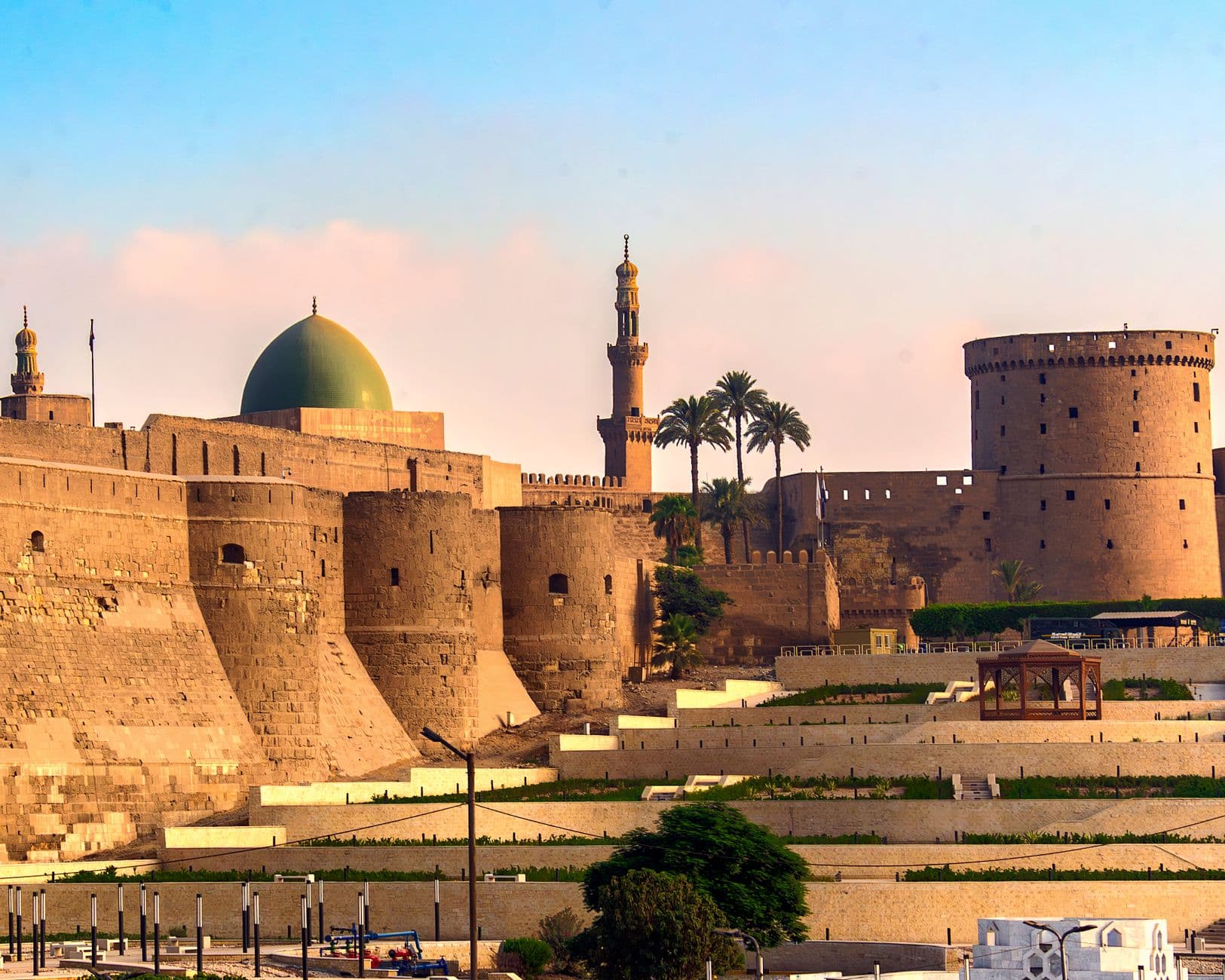
The Ben Ezra Synagogue sits inside the Roman fortress of Babylon, whose walls are still partially visible near the entrance to the Coptic precinct. The fortress was built by the Emperor Diocletian around 300 CE and controlled access to a critical Nile crossing. When the Arab general Amr ibn al-As conquered Egypt in 641 CE, he camped outside Babylon's walls before the fortress surrendered. He then built the first Arab city in Africa, Fustat, immediately adjacent. The Amr ibn al-As Mosque, which he built the same year, still stands about 400 meters from the Ben Ezra Synagogue. It is the oldest mosque on the African continent.
What this means is that within a fifteen-minute walk of the synagogue, you can stand in a Roman fortress, a Coptic cathedral that predates the Arab conquest, the oldest mosque in Africa, and a synagogue whose geniza documented eight centuries of Mediterranean Jewish life. These are not heritage sites placed near each other for tourist convenience. They are the actual, geological accumulation of a city that has been continuously inhabited and continuously layered for two thousand years.
The Jewish community of Fustat and later Cairo was one of the oldest outside Palestine, and at its peak during the Fatimid period (969-1171 CE), Jews served as court physicians, treasury officials, and international merchants. The Fatimid caliphs, who were Ismaili Shia Muslims ruling a largely Sunni and Coptic population, practiced a notably pluralist administration by the standards of any medieval state. The Geniza documents from this period reflect a community operating with significant autonomy and considerable prosperity.
The community's decline came gradually, accelerating with the Ottoman conquest in 1517, and then sharply in the twentieth century. Egypt's Jewish population, which numbered roughly 80,000 in 1948, had fallen to fewer than 200 by the 1970s. The last known Jewish resident of Fustat died in the 1980s. The Ben Ezra Synagogue now functions as a heritage site rather than an active house of worship, though occasional ceremonial services are still held.
---
The Connections
Maimonides, whose letter survives in the Geniza, lived and worked in Fustat after fleeing the Almohad persecution in Andalusia. He served as court physician to Saladin's vizier al-Fadil, which means that the man who wrote the Mishneh Torah and the Guide for the Perplexed was employed by the same administration that built the Citadel of Cairo and fought the Crusades. His synagogue in Fustat, separate from Ben Ezra, still stands about a ten-minute walk away and is open to visitors, though it receives a fraction of the attention.
The Coptic Museum next to the synagogue holds papyri and manuscripts that overlap chronologically with the Geniza documents. The museum's collection includes Gnostic texts from Nag Hammadi, found in Upper Egypt in 1945, which reframed early Christian history in roughly the same way the Geniza reframed medieval Jewish history: by surfacing documents that institutions had not intended to preserve.
The Islamic Art Museum in Downtown Cairo, recently reopened after a decade of post-bombing restoration, holds Fatimid period artifacts contemporary with the Geniza's most productive centuries. Seeing the material culture of the Fatimid city alongside the documentary culture of the Geniza makes both more legible.
---
Common Mistakes
Treating this as a quick stop between Coptic churches. Most visitors spend ten minutes inside and leave. The Ben Ezra Synagogue is not primarily a visual experience. The architecture is pleasant but not extraordinary. What is extraordinary is the intellectual weight of what happened here and what was stored here for eight centuries. If you come without having read anything about the Geniza, you will walk out mildly impressed. If you read even one article about Solomon Schechter or S.D. Goitein before arriving, the space becomes something else entirely.
Hiring a guide without vetting them on the Geniza specifically. Most general Old Cairo guides can explain the synagogue's history in broad strokes, but very few know the documentary history in any depth. Ask before you hire: what can you tell me about the Geniza documents? If they look uncertain, manage your expectations accordingly.
Skipping the Maimonides Synagogue. It receives almost no tourist attention, which is either a reason to skip it or an excellent reason to go. It is a working restoration, rough around the edges, and contains a small exhibition on the Jewish community of Cairo. The absence of crowds makes it the more affecting experience. It is roughly ten minutes on foot from Ben Ezra, heading toward the Ibn Tulun Mosque area.
Paying for the Old Cairo sound and light show. It exists, it covers all the Coptic sites, it costs money, and it adds nothing to what a good thirty minutes of reading beforehand would give you. Skip it.
Visiting on a Saturday. The synagogue is technically open, but some Jewish heritage travelers find this an uncomfortable choice, and the neighborhood is busier with religious activity at the Coptic churches. Weekday mornings are consistently quieter.
Expecting the Geniza room to be accessible or exhibiting. The documents are not here. The room is not open. Some visitors arrive specifically hoping to stand in the room where the documents were found and leave disappointed. Manage expectations: this is a building whose significance is almost entirely historical and archival, now held in libraries across three continents.
Combining this with the Pyramids on the same day. It seems logical on a map. It is exhausting in practice and does a disservice to both sites. Old Cairo and the Geniza deserve a slow morning. The Pyramids deserve a separate early start from Giza.
---
Practical Tips
Dress conservatively: shoulders and knees covered for both men and women. The synagogue shares a precinct with active Coptic churches and the expectation applies throughout.
The Mar Girgis Metro station is the cleanest and easiest entry point. The metro is fast, cheap, and air-conditioned. Use it.
The Coptic Museum is directly adjacent and genuinely worth two hours of your time. Its collection of Coptic textiles, icons, and manuscripts is one of the best in the world and remains undervisited by international tourists. The entrance fee of EGP 200 (approx $4 USD) is absurdly low for what it contains.
For lunch after your visit, walk five minutes north to the streets around the Amr ibn al-As Mosque. There are fuul carts and ta'ameya spots that have been operating in variations for generations. Eat standing up. It costs EGP 30-50 and is considerably better than anything served in the tourist restaurants near the Coptic precinct entrance.
If the Cairo Geniza Jewish heritage Egypt guide impulse that brought you here extends to serious interest, the Princeton Geniza Lab has digitized hundreds of thousands of Geniza fragments and made them freely searchable online. You can read the actual documents from the actual storeroom before or after your visit. The experience of doing so, looking at an eleventh-century merchant's handwriting from a Cairo synagogue, is its own kind of travel.
Frequently Asked Questions
The Weekly Dispatch
More on Egypt, every Friday.
Cultural depth and places most guides never mention.
No spam. Unsubscribe anytime.