Cleopatra's Alexandria: Egypt Historical Guide to a Lost City
Cleopatra ruled a city of 500,000 people. That city is now 8 meters underwater. What survived is stranger than what sank.

Quick Facts
- Best time to visit
- October to April. Mild temperatures, lower domestic tourist numbers, and better underwater visibility for harbour boat trips. Avoid July and August when the city population doubles with Cairene summer visitors.
- Entrance fee
- Graeco-Roman Museum EGP 200 (approx $4 USD), Catacombs of Kom el-Shoqafa EGP 180 (approx $3.70 USD), Pompey's Pillar EGP 100 (approx $2 USD), Alexandria National Museum EGP 150 (approx $3 USD), Bibliotheca Alexandrina EGP 70 (approx $1.50 USD). Student discounts approximately 50% at all state sites with valid ID.
- Opening hours
- Most archaeological sites and museums 9am to 5pm daily. Bibliotheca Alexandrina 10am to 7pm Saturday through Thursday, closed Friday. Qaitbay Citadel 9am to 4pm daily.
- How to get there
- From Cairo: GoBus or Alhagag coach from Turgoman station EGP 120 to 180 (2.5 hours). First-class train from Ramses Station EGP 90 to 130 (2.5 to 3 hours). Within Alexandria: city tram EGP 3 per ride, taxis EGP 60 to 100 for cross-city trips (negotiate before entering). Glass-bottom harbour boats near Qaitbay EGP 200 to 300 per person.
- Time needed
- Two full days minimum for major sites. Three days recommended to include Anfushi neighbourhood, Anfushi tombs, and a harbour boat. Combine the Graeco-Roman Museum and National Museum on day one, catacombs and Pompey's Pillar on day two.
- Cost range
- Budget EGP 600 to 900 per day including sites, local transport, and street food. Mid-range EGP 1,800 to 3,000 per day with Corniche hotel and restaurant meals.
Cleopatra VII never visited the Pyramids. She lived in a city that made Memphis and Thebes look provincial, a city where the library held 700,000 scrolls, where the lighthouse stood 137 meters tall, and where the royal quarter occupied a third of the entire urban footprint. That city is largely gone, swallowed by the Mediterranean after a series of earthquakes between the 4th and 8th centuries CE. The Alexandria you visit today is built on top of it, beside it, and in some places directly from its stolen stone. Understanding that gap between the Alexandria that was and the Alexandria that is makes every crumbling Roman column and every underwater sonar map feel like a different kind of treasure hunt.
Quick Facts
Best time to visit: October through April. Alexandrian summers are humid and crowded with Egyptian domestic tourists. Spring and autumn give you mild temperatures and manageable crowds at major sites.
Entrance fees: Graeco-Roman Museum: EGP 200 (approx $4 USD), students EGP 100 Catacombs of Kom el-Shoqafa: EGP 180 (approx $3.70 USD), students EGP 90 Pompey's Pillar site: EGP 100 (approx $2 USD), students EGP 50 Alexandria National Museum: EGP 150 (approx $3 USD), students EGP 75 Bibliotheca Alexandrina: EGP 70 (approx $1.50 USD) for the main library; special exhibitions priced separately
Opening hours: Most sites open daily 9am to 5pm; Bibliotheca Alexandrina opens 10am to 7pm Saturday through Thursday, closed Friday.
How to get there: From Cairo, take the air-conditioned Alhagag or GoBus service from Turgoman station (EGP 120 to 180 one way, roughly 2.5 hours). Trains from Ramses Station take 2 to 3 hours; first-class tickets cost EGP 90 to 130. Within Alexandria, taxis are metered but drivers rarely use the meter. Agree on a price first: cross-city trips should cost EGP 60 to 100. The tram system is antiquated and slow but costs EGP 3 and is an experience in itself.
Time needed: Two full days minimum to visit the major sites without rushing. Three days if you want to spend serious time at the Graeco-Roman Museum and explore Anfushi and the Eastern Harbour on foot.
Cost range: Budget EGP 600 to 900 per day including transport, sites, and street food. Mid-range EGP 1,800 to 3,000 per day with a decent hotel on the Corniche and restaurant meals.
Why This Place Matters
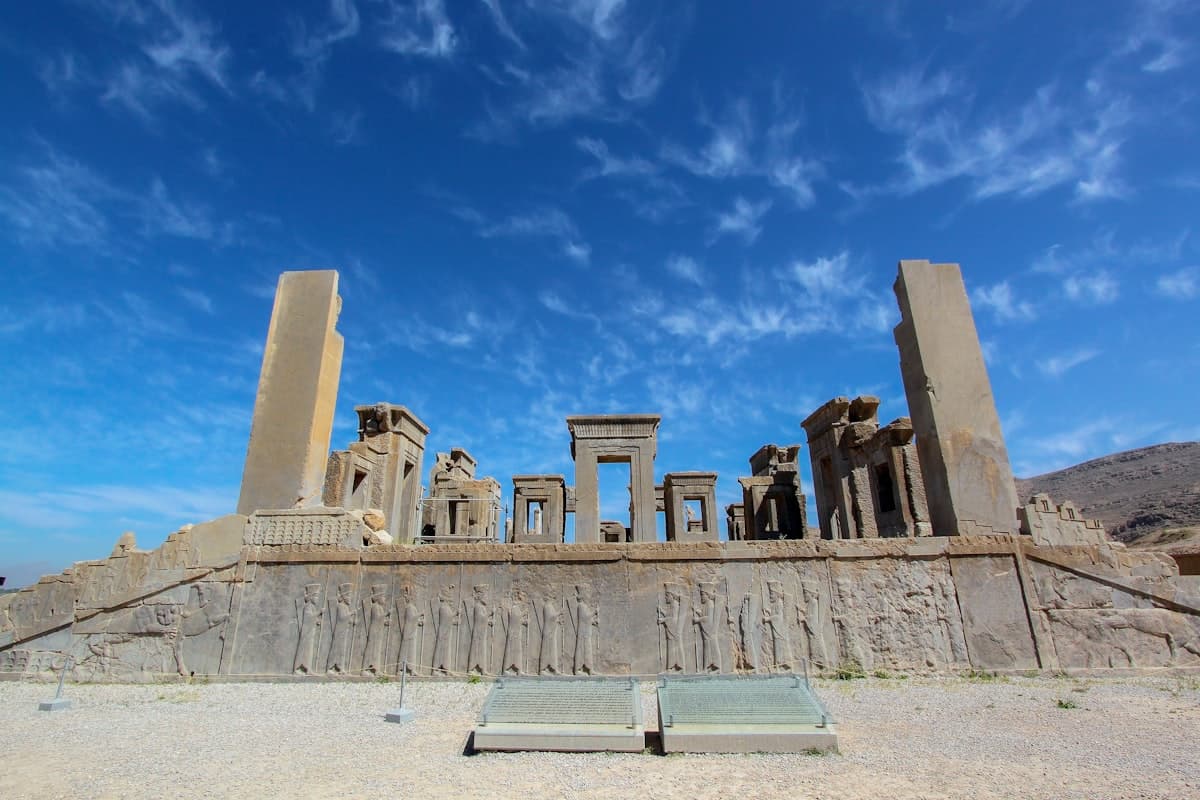
Alexander the Great founded Alexandria in 331 BCE and left four months later. He never came back. He died in Babylon in 323 BCE, and his body was eventually brought to Alexandria and interred in a mausoleum that every subsequent ruler of the ancient world made a point of visiting. Julius Caesar came to see it. Augustus Caesar came to see it. Caracalla came to see it. Then, somewhere around the 4th century CE, the tomb disappeared entirely. Nobody knows where it is. It is almost certainly under the modern city, possibly under the area now occupied by the Nabi Daniel Mosque in downtown Alexandria, possibly under the Latin Quarter. Archaeologists apply for permits regularly. They are regularly denied.
This is the essential Alexandria paradox for anyone following a Cleopatra Alexandria Egypt historical guide: the city's most important sites are inaccessible not because they have not been found, but because 5 million people are living on top of them. Every major construction project risks uncovering something significant. In 1998, workers laying a sewer pipe near the eastern harbour uncovered a cache of Ptolemaic statues. The pipe went in anyway, routed around the find. The statues went to the museum. The city kept moving.
Cleopatra VII, the seventh pharaoh to bear that name, ruled from 51 to 30 BCE. She was not Egyptian by blood. She was Macedonian Greek, a descendant of Ptolemy I, one of Alexander's generals who claimed Egypt after Alexander's death. But she was the first of her dynasty to learn to speak Egyptian, along with eight other languages. She was, by ancient accounts, primarily compelling through intellect rather than appearance. Plutarch wrote that her voice was like an instrument of many strings.
What Remains Above Water
The most honest answer to what survives of Cleopatra's Alexandria is: not much above ground, and quite a lot below it.
The Catacombs of Kom el-Shoqafa
These are the site most visitors underestimate and the one worth the most of your time. Discovered in 1900 when a donkey fell through the ground into an underground chamber, the catacombs descend three levels into the earth and represent one of the most complete examples of religious syncretism in the ancient world. The main tomb chamber, carved in the 2nd century CE, shows Egyptian gods dressed in Roman military armor, depicted in a Greek artistic style, with hieroglyphic inscriptions that are largely decorative because the artisans no longer knew how to write them correctly. Anubis appears wearing a Roman legionary's breastplate. The guardian serpents at the entrance are Egyptian cobras with Greek Medusa heads. This is not confusion. This is a community of people who buried their dead at the intersection of three civilizations simultaneously.
The catacombs were in use during Cleopatra's era and continued through the Roman occupation. They held the bodies of Alexandria's mixed-heritage merchant class, people who prayed to Serapis (a deliberately invented god, created by Ptolemy I to unify Greek and Egyptian religious practice) and were buried with both canopic jars and Roman-style funerary portraits. Bring a jacket. The temperature drops sharply underground, and the carved reliefs in the innermost chambers require slow looking.
Pompey's Pillar and the Serapeum
The pillar has nothing to do with Pompey. It was named by Crusader-era travelers who assumed any large Roman monument in Alexandria must commemorate Rome's general who was murdered here in 48 BCE, the incident that brought Julius Caesar to the city and into the life of Cleopatra. The pillar is actually a victory column erected in 297 CE to honor the Emperor Diocletian, who had just suppressed a revolt in Alexandria and promptly raised grain rations to prevent another one. At 26.85 meters, it is the largest ancient monolith column outside Rome.
More interesting than the pillar is what it stands on: the ruins of the Serapeum, once the greatest temple complex in Alexandria and home to the daughter library of the Great Library, which held an estimated 300,000 scrolls. The Serapeum was destroyed by a Christian mob in 391 CE under the leadership of Bishop Theophilus, who had received permission from Emperor Theodosius to convert the city's pagan temples to churches. The destruction of the temple library is often conflated with the destruction of the main Great Library, but these were separate events separated by centuries. The main library was already in decline by the 1st century BCE, damaged in Caesar's fire of 48 BCE and never fully restored. What Theophilus destroyed in 391 CE was its smaller sibling.
The Graeco-Roman Museum
Reopened after an eighteen-year renovation, this museum contains the artifacts that did not go to Cairo. That sounds like a consolation prize. It is not. The collection includes Ptolemaic royal statues, colossal granite figures recovered from the harbor, faience objects, coins bearing Cleopatra's actual face (not the idealized Hollywood profile, but a broad-nosed, strong-jawed, distinctly Macedonian face), and a remarkable series of terracotta figurines that show everyday Alexandrian life with more honesty than any monumental art. The Cleopatra coins alone make the admission fee worth it. She looks nothing like Elizabeth Taylor. She looks like a woman who ran a kingdom.
The Underwater City

Approximately a third of ancient Alexandria now lies in the Eastern Harbour, submerged under 6 to 8 meters of water. This includes what is believed to be the royal quarter, the site of Cleopatra's palace, and the island of Antirhodos where she may have had a personal retreat. French underwater archaeologist Franck Goddio began systematic excavation of the harbour in 1996 and has since recovered thousands of objects: sphinxes, columns, jewelry, ceramic vessels, bronze statues, and a 2,200-year-old ship. The colossal statue of a Ptolemaic queen, recovered in pieces from the harbour floor, is now at the Maritime Museum.
You cannot dive the harbour yourself without a research permit, but you can take a glass-bottom boat from near the Qaitbay Citadel for approximately EGP 200 to 300 per person. The visibility varies by season and weather. On a clear day you can see column capitals and dressed stone on the sea floor. It is less dramatic than the photographs from Goddio's excavations and more affecting than any museum exhibit, because you are looking at a city that actually sank.
The Connections
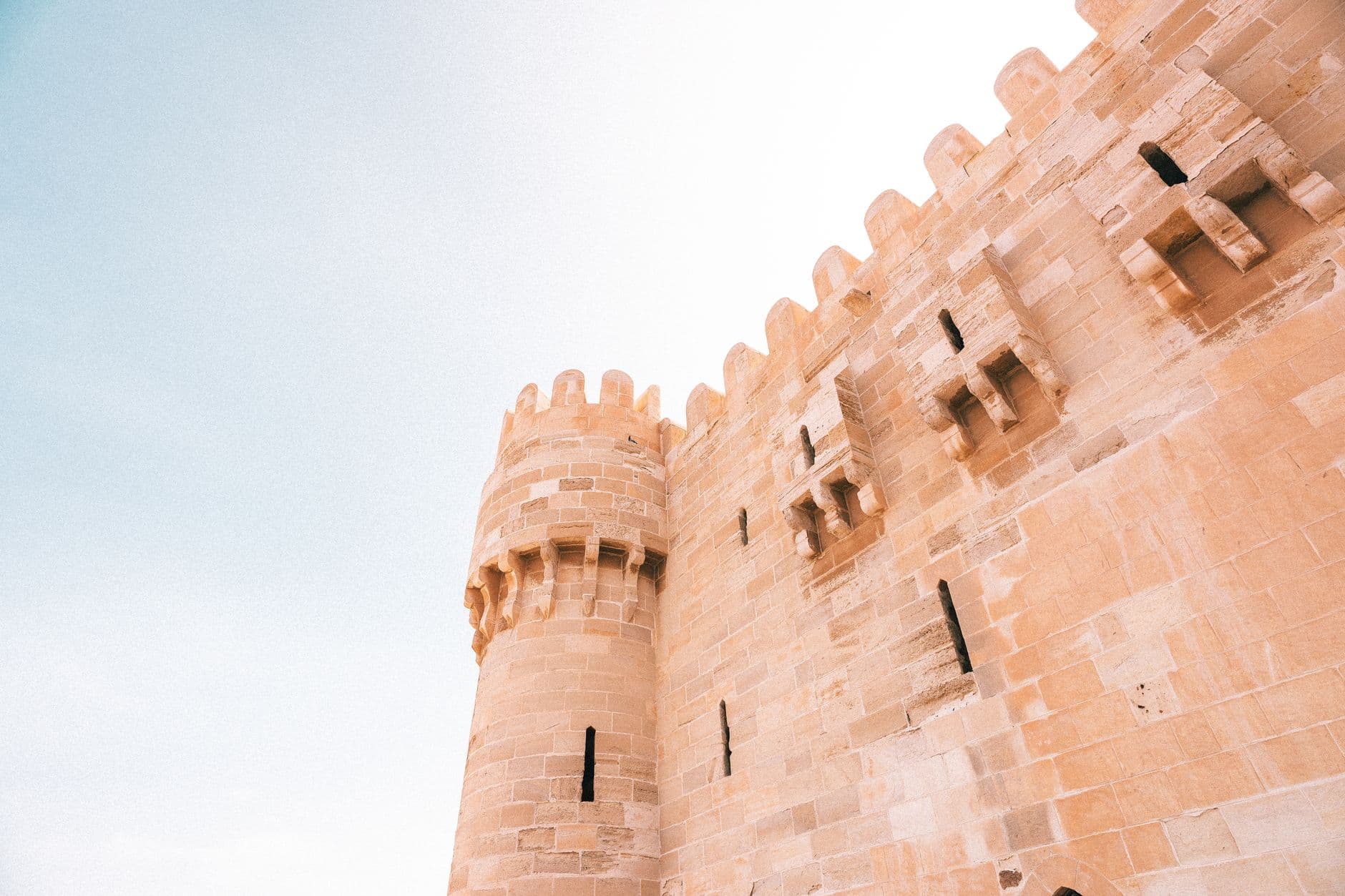
The Qaitbay Citadel, which marks the eastern point of the Corniche and contains a small but worthwhile naval museum, was built in 1477 CE by the Mamluk Sultan Qaitbay. He built it using the stones of the Pharos Lighthouse, which had been damaged by a series of earthquakes between 956 and 1323 CE and was by Qaitbay's time a ruined stump. The lighthouse, one of the Seven Wonders of the ancient world, stood on the island of Pharos and was estimated at between 103 and 137 meters tall. Its mirror system, using polished bronze, could reportedly be seen 50 kilometers out to sea. When you look at the yellow limestone blocks of the Qaitbay Citadel, you are looking at the Pharos. The medieval fort and the ancient wonder are the same building, separated by a thousand years.
The Abu el-Abbas el-Mursi Mosque in the Anfushi neighbourhood, Alexandria's most important Islamic monument, sits on ground that was once the western edge of the Ptolemaic royal quarter. The neighbourhood of Anfushi itself was a Pharaonic cemetery before it was a Roman residential district before it became an Ottoman-era merchant quarter. The Anfushi tombs, carved into the rock beneath the neighbourhood in the 3rd century BCE, are decorated with Egyptian motifs executed in a style that shows the painters copying Egyptian temple art without fully understanding the symbolic grammar. The eyes are wrong. The proportions are slightly off. This is what cultural transmission looks like in real time.
Common Mistakes
Spending your first morning at the Bibliotheca Alexandrina. The modern library, opened in 2002 and designed by a Norwegian architectural firm, is impressive as architecture and useful as a library. It is not a historical site. The original Great Library stood somewhere to the northeast, near the royal quarter, and nothing of it survives. The Bibliotheca is a tribute act. Visit it last, or not at all if your time is limited.
Skipping the Alexandria National Museum in favor of better-known sites. This three-floor museum in a restored Italian-style palace on Tariq al-Hurriya Street contains Pharaonic, Graeco-Roman, Coptic, and Islamic artifacts, and most of the signage is in English. It is rarely crowded. The Ptolemaic collection on the ground floor includes underwater finds from the harbour that are not shown elsewhere. Budget 90 minutes.
Hiring a guide at Pompey's Pillar. The site itself takes 30 minutes without a guide. The sphinx statues flanking the pillar are more interesting than they look, being originally from Heliopolis and transported here centuries after they were carved. But the site-assigned guides here push hard for tips and the information they provide is often inaccurate. Read before you go.
Taking the tourist boat promoted at most hotels as a Cleopatra's harbour tour. These boats circle the Eastern Harbour with recorded commentary that is equal parts myth and error. The glass-bottom boats near Qaitbay actually show you something. The tourist harbor cruises show you the modern waterfront from the water, which is less interesting than seeing it from the Corniche for free.
Underestimating Anfushi. Most group tours skip the Anfushi neighbourhood entirely in favor of the Corniche sites. The Anfushi tombs (EGP 80 entry) are genuinely undervisited and the neighbourhood itself, with its Ottoman-era architecture, fish market, and the mosque of Abu el-Abbas, is where Alexandria still functions as a living place rather than a set of sites. Go for lunch. The fish restaurants near the harbor charge half what the Corniche restaurants charge and serve the same fish.
Visiting in July or August. Alexandrian beaches fill with Egyptian families escaping Cairo's heat. The city's population effectively doubles. Accommodation prices rise, sites are crowded, and the sea is warm but murky from increased boat traffic. None of this makes Alexandria unvisitable, but it makes it considerably less pleasant for the kind of slow, exploratory visit that Cleopatra's Alexandria rewards.
Believing that Cleopatra's Needles are in Alexandria. The two ancient obelisks known as Cleopatra's Needles are not in Egypt. One is in Central Park in New York, installed in 1881. The other is on the Embankment in London, installed in 1878. Neither has anything meaningful to do with Cleopatra: they were carved for Thutmose III around 1450 BCE, roughly 1,400 years before Cleopatra was born. They were in Alexandria when she lived, which is the only connection. Egypt let them go as diplomatic gifts. Their absence from the city is part of the broader story of how Alexandria was disaggregated across the 19th century.
Practical Tips
Stay on or near the Corniche if your budget allows. The walk from Qaitbay in the west to the Eastern Harbour area takes about 45 minutes and passes most of what you need to orient yourself. The Hotel Union near Raml Station is cheap, clean, and has a rooftop with a harbour view that costs nothing extra.
Alexandria's tram runs east to west along the city's spine. Line 1 connects Raml Station (the central hub) to Sidi Gaber and Victoria in the east. It is slow and sometimes crowded but at EGP 3 per ride it is the cheapest transport in any Egyptian city. Useful for reaching the eastern sites without negotiating taxi fares.
The Graeco-Roman Museum requires booking in advance on busy weekends. Go Tuesday or Wednesday morning for the thinnest crowds. Photography is permitted without flash in most galleries.
For the catacombs, arrive at opening time. The site accommodates a limited number of visitors simultaneously in the lower levels for conservation reasons, and by 11am a queue forms. The lower chamber with the Macedonian-Egyptian-Roman syncretic reliefs is worth waiting for.
Alexandria's street food is different from Cairo's. The feteer meshaltet (layered pastry) at the small shops near the eastern harbour is the version to eat. The seafood at the restaurants around the fish market in Anfushi is priced by weight: know what you are ordering before you agree, and confirm the per-kilo price before the fish goes on the scale.
Frequently Asked Questions
The Weekly Dispatch
More on Egypt, every Friday.
Cultural depth and places most guides never mention.
No spam. Unsubscribe anytime.